Transforming Dough Waste into Value: Slurry Rework Systems
Slurry systems provide a controlled and efficient method to recycle dough scraps or leftover baked pieces by converting them into a pumpable liquid ingredient. These systems allow bakeries to close the loop on waste, reduce raw material usage, and improve process consistency.
The process involves collecting scraps, mixing them with a calculated amount of water, and breaking them down using high shear or grinding action until no lumps remain.
The recycled material is added as a liquid; it disperses evenly and integrates consistently into new dough formulations. Maintaining controlled temperature and pH is essential for safe and predictable performance.
What the Slurry Process Involves
Although design varies, slurry systems commonly follow these steps:
- Scrap Collection, scraps are gathered via conveyors or bins.
- Hydration, water is added in controlled proportions, often around a 1:1 ratio.
- Mixing and Homogenization, the dough is broken down into a fine suspension.
- Pumping and Storage, slurry is held in balance tanks or fed directly to mixers.
- Dosing into New Dough, slurry replaces part of the formula water and flour, typically accounting for 5 to 20 percent of total dough weight depending on product type and process conditions.
- Integration, the liquid disperses rapidly, allowing even distribution in the dough.
Dough Rheology and Fermentation
Converting scraps into slurry changes their physical state and influences the rheology of the new dough.
Structural Effects
Slurry contains broken gluten, starch, and gelatinized components (from scraps that have been baked). This gives slurry a conditioning effect, creating doughs that are:
- more extensible,
- more pliable,
- easier to sheet or mold.
Partially fermented slurry can lower pH and introduce organic acids, influencing enzyme activity and gluten behavior. If controlled, these effects improve elasticity and handling. If excessive, they weaken the dough structure.
Water Absorption
The baked portion of rework often contains pre-hydrated starch that retains water. When added back as slurry, it raises the dough hydration level and produces a softer crumb with enhanced moisture retention.
Fermentation Behavior
Slurry can contain residual yeast, organic acids, or sugars. Depending on whether the scraps were fermented or baked, slurry may:
- accelerate fermentation,
- alter gas retention,
- require yeast reduction in the new formula.
To maintain consistency, slurry pH should be monitored closely and holding time should be limited to prevent unwanted microbial activity.
Slurry can also be used as a preferment. When controlled, its natural acidity, enzymatic activity, and residual yeast contribute to flavor development, improved dough strength, and more predictable fermentation kinetics, similar to liquid preferment systems.
Advantages of Slurry Systems
Economic and Production Benefits
- Reduced waste and cost savings, less new flour needed.
- Higher dough yield, due to additional absorbed water.
- Improved dough handling, thanks to increased extensibility.
- Moisture retention, leading to softer crumb and longer shelf life.
Sensory and Functional Improvements
- Enhanced flavor when the rework has undergone controlled fermentation.
- Better crumb softness and elasticity, attributed to conditioning compounds.
- More uniform dough, as the slurry eliminates lumps or chunks of old dough.
Sustainability
Reusing scraps drastically reduces bakery waste and supports circular processing. It reduces disposal volume and lowers the production’s environmental footprint.
Challenges and Limitations
Slurry systems also require careful management to avoid quality risks.
Inclusion Limits
If too much slurry is used, dough can become overly fermented, slack, or inconsistent. Typical inclusion rates range from 5 to 20 percent of total dough weight, depending on product type and fermentation status of the scrap
Fermentation Control
Residual yeast and acids may continue fermenting in the tank. Monitoring pH, temperature, and holding time is essential to maintain stability.
Microbial and Hygiene Risks
Warm slurry is susceptible to microbial growth. Sanitary equipment design, CIP cleaning, and strict handling procedures are necessary to avoid contamination.
Operational Complexity
Installing dissolver tanks, grinders, pumps, and controls introduces capital and maintenance requirements. Staff must be trained to operate and monitor slurry quality.
Typical Applications
Slurry systems are versatile and can be used across a wide range of baked goods.
Pan Breads and Buns
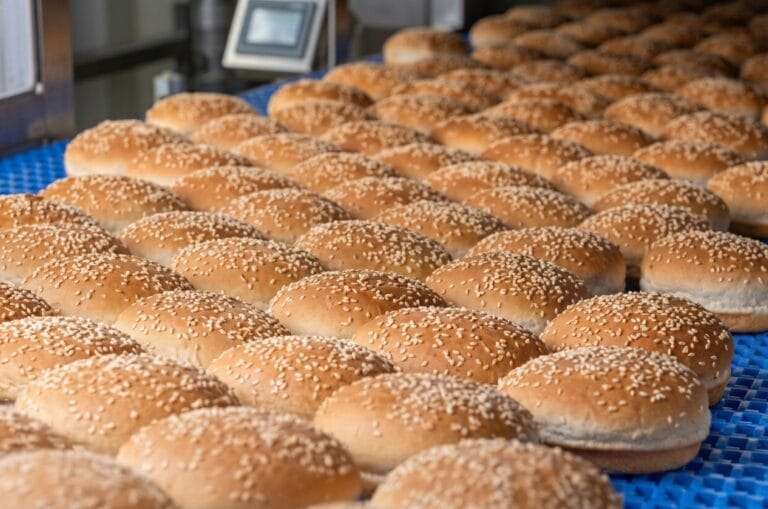
Bread production benefits significantly from slurry rework. The added moisture and pre-hydrated starch improve softness, shelf life, and overall crumb quality.
Pizza and Flatbreads
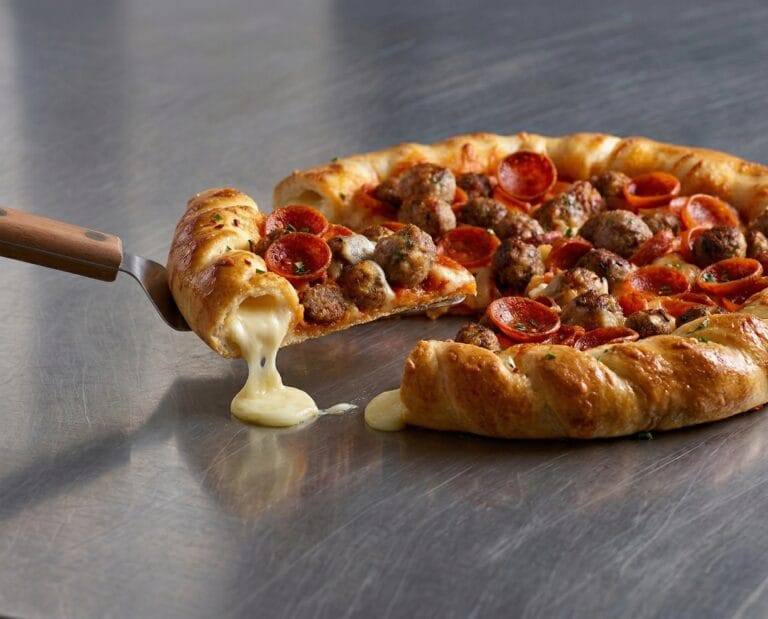
Trimmings from die cutting and shaping can be converted into slurry and reintegrated into the dough. This avoids large scrap inclusions that would disrupt crust uniformity.
Pastries and Laminated Doughs
Fat-containing scraps require careful consideration. Because fat levels alter emulsification and dough rheology, inclusion percentages are kept low, between 2 and 5%, to avoid weakening the structure.
Sweet Doughs and Enriched Products
Rework from brioche, donuts, or enriched doughs can be slurried if kept cold to avoid rapid fermentation. Small percentages improve aroma and softness.
Practical Considerations for Implementing a Slurry System
Introducing a slurry system requires technical planning and strict controls.
Rework Percentage Limits
Start with low inclusion rates, typically 5 to 10 percent of dough weight, and increase gradually. Formulas must be adjusted to account for the added water and any salt, sugar, or fermentation by products from the scrap.
When to Use Low Levels (5 to 10 percent)
Lower inclusion percentages are ideal for doughs requiring strong gluten structure or tighter fermentation control. Pan breads, burger buns, baguettes, and laminated pastries typically benefit from these moderate levels, maintaining structure while gaining extensibility.
When Higher Levels (15 to 20 percent) Are Suitable
Higher inclusion levels, usually around 15 to 20 percent, are suitable for products that tolerate or benefit from greater extensibility and moisture retention. Pizza dough, ciabatta, artisan flatbreads, and certain enriched doughs often perform well with higher slurry percentages due to increased softness and improved handling.
Hygienic Design and Sanitation
Equipment should be built from food grade stainless steel with easy access for cleaning. CIP systems, pigging lines, and regular sanitation schedules minimize microbial risk.
Temperature Management
Warm slurry accelerates fermentation. To maintain consistency, many bakeries:
- use cooling jackets,
- dosed chilled water,
- refrigerate slurry tanks,
- or control temperature intentionally when creating sour-style slurry.
👉 Thanks for reading! 💬 Any experiences to share with us?? – We’d love to hear your story!
Sources: Dissolver Tank for Scrap Dough – RGMTSI