Thermodynamic Efficiency in Vertical Baking Systems.
Industrial bakeries frequently face a conflict between production capacity and available floor space, while rising energy costs threaten profit margins. Traditional tunnel ovens often dominate plant layouts and bleed valuable thermal energy through extensive external surfaces. Vertical baking technology offers a compact solution that could significantly reduce heat loss while optimizing the production footprint.
The Vertical Thermodynamic Strategy
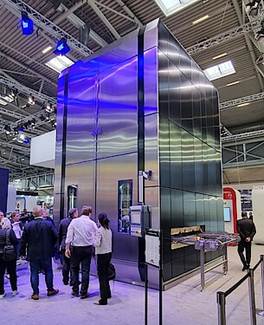
The Mecatherm M-VT vertical oven, a focal point of the 2024-2025 cycle, represents a shift in thermal engineering for industrial baking.
While its verticality is often marketed as a space-saving feature (occupying roughly 1/5 of the length of an equivalent tunnel oven) the design functions primarily as a deliberate thermodynamic strategy.
By altering the geometry of the baking chamber, the system addresses three critical areas of inefficiency found in linear designs.
Geometric Minimization of Thermal Loss
The physics of heat transfer dictate that energy loss is proportional to surface area.
Standard tunnel ovens present a massive surface area for radiation and convection losses into the bakery environment.
- Surface Area Reduction: The M-VT design concentrates the baking volume, reducing the external wall surface by approximately 80%.
This geometric shift minimizes the interface through which heat can escape, potentially lowering energy consumption by up to 30% compared to cyclothermic tunnel ovens. - Chimney Effect Management: Vertical ovens must manage the natural tendency of heat to rise. The M-VT utilizes specific airflow circuits to harness this “chimney effect” rather than fighting it, ensuring that energy remains within the active baking zones.
The Internal Enthalpy Loop
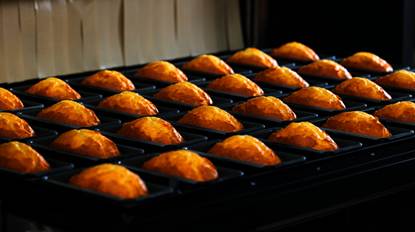
In many linear systems, the conveyor or tray return mechanism travels outside the heated chamber to return to the loading station.
This exposes the metal to ambient air, causing it to lose the heat energy absorbed during the bake.
- Enclosed Return: The M-VT features a tray handling system that is fully enclosed within the heated environment.
- Thermal Retention: Because the supports do not exit the oven, they do not require significant reheating upon each cycle.
This “enthalpy loop” ensures that fuel is consumed primarily to bake the dough, rather than repeatedly heating the steel conveyance system.
Precision in Convection (The 0.2 Δ BCU Standard)
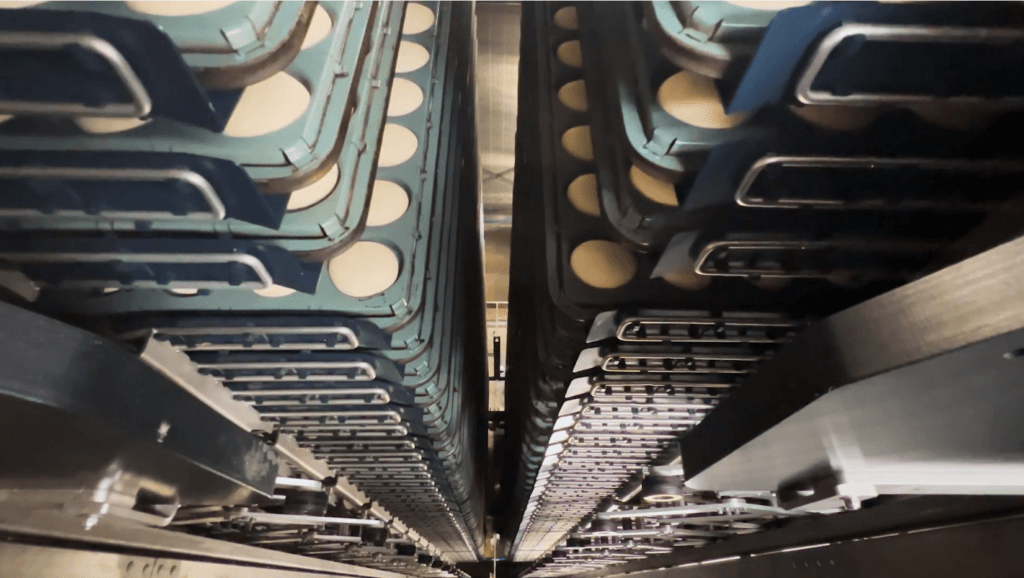
High-value bakery products require precise color uniformity.
The M-VT employs a smart airflow design to achieve homogeneity, measured by the “Baking Contrast Unit” (BCU).
- Understanding the Metric:
A BCU measures the lightness or darkness of a product (0 being dark, 5.25 being light). A variance (Δ) of 0.2 is imperceptible to the human eye. - Airflow Control:
By achieving a Δ BCU of roughly 0.2, the oven ensures that products on the top rack receive the same thermal treatment as those on the bottom. This is critical for premium pastries or crusty breads where visual consistency is a key quality indicator.
Operational Implications
Beyond thermodynamics, the vertical configuration alters the operational logic of the plant floor.
- Hygiene and Access: Unlike older vertical designs that might require rooftop maintenance, the M-VT includes large access doors at floor level. This facilitates cleaning and maintenance without the safety risks associated with working at heights.
- Shock-less Handling: The internal carousel uses a specific kinematic motion to prevent vibration. This is essential for sensitive products, such as sponge cakes or soufflés, which might collapse under the mechanical stress of traditional vertical transitions.
The shift toward vertical thermal processing is not merely about saving space; it is about tightening the thermal envelope of the production line.
For facilities looking to decarbonize or simply reduce utility overhead, this geometric approach to baking offers a compelling engineering logic.
😊 Thanks for reading!
Sources:
- Mecatherm M-VT Oven: Upstanding Oven Technology, Baking & Biscuit International, https://bakingbiscuit.com/bbi-2024-01-upstanding-oven-technology/
- Mecatherm IBA 2025 Sustainability Press Release, https://www.mecatherm.fr/fileadmin/RSE/CP_iba_2025_Sustainability_Final_version_EN.pdf
- Reducing Energy Losses with a Compact Oven, Mecatherm, https://www.mecatherm.fr/en/news/mosaique/details/reducing-energy-losses-with-a-compact-oven.html
- Film Mecatherm M VT vertical oven – YouTube
- Cusano’s Bakery – Artisan Bread and Bakery Products