
6 Typical Breads from Italy That Could Elevate Your Bakery Menu
Fighting for shelf space with basic loaves can drain your margins. The solution might lie in authentic regional sourdough. Explore six traditional Italian breads to elevate your bakery offerings and captivate your customers.
The modern bread market could be seen as saturated, with many competitors fighting for market space using simple wheat and rye sourdough.
This competition often leads to lowered prices and the perception of bread as a commodity.
Consumers increasingly want authenticity, provenance, and products linked to specific territories.
By looking to Italy, bakers might find profound inspiration. Italian food is well recognized as premium and tasty, and the country enjoys many bread varieties linked to local cereals, recipes, and traditions.
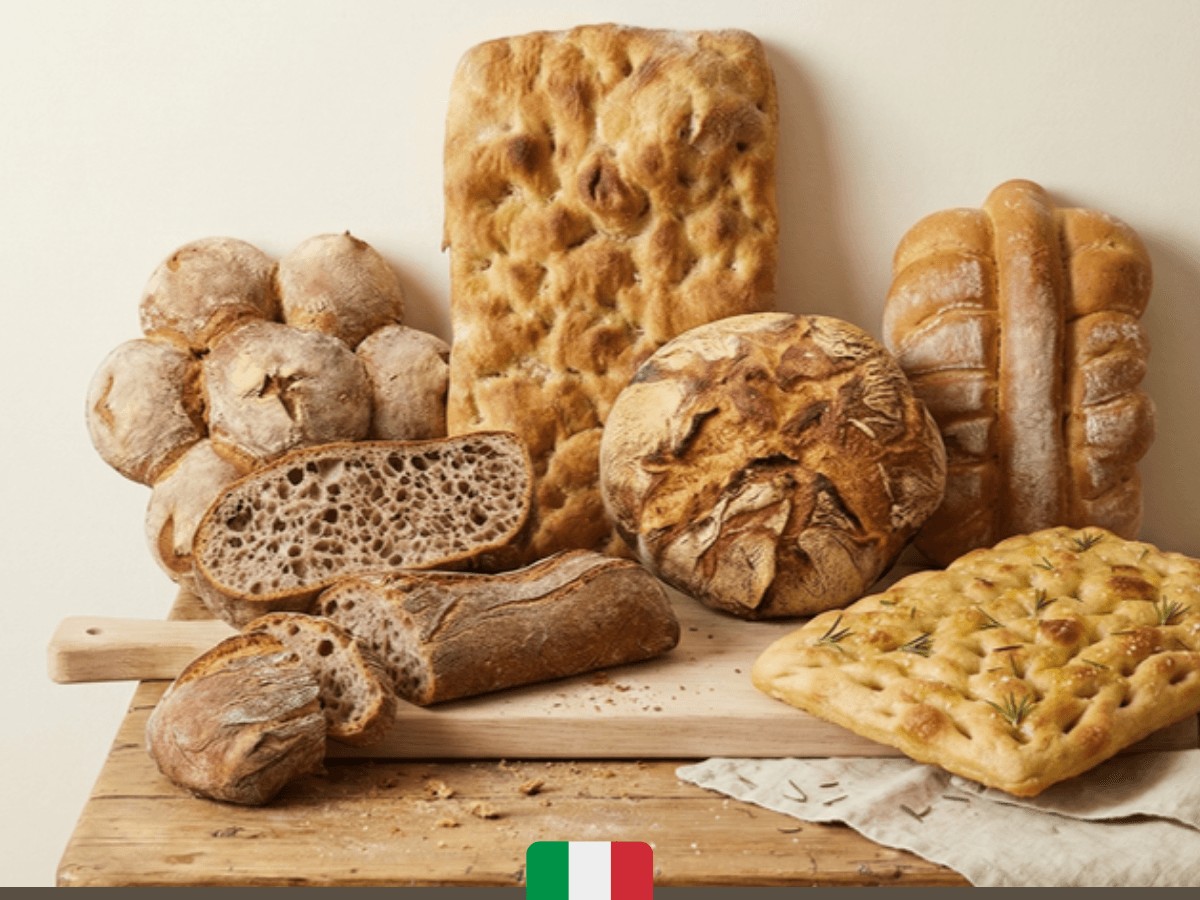
Here are six traditional Italian breads that could inspire your next premium product.
Pugliese Bread
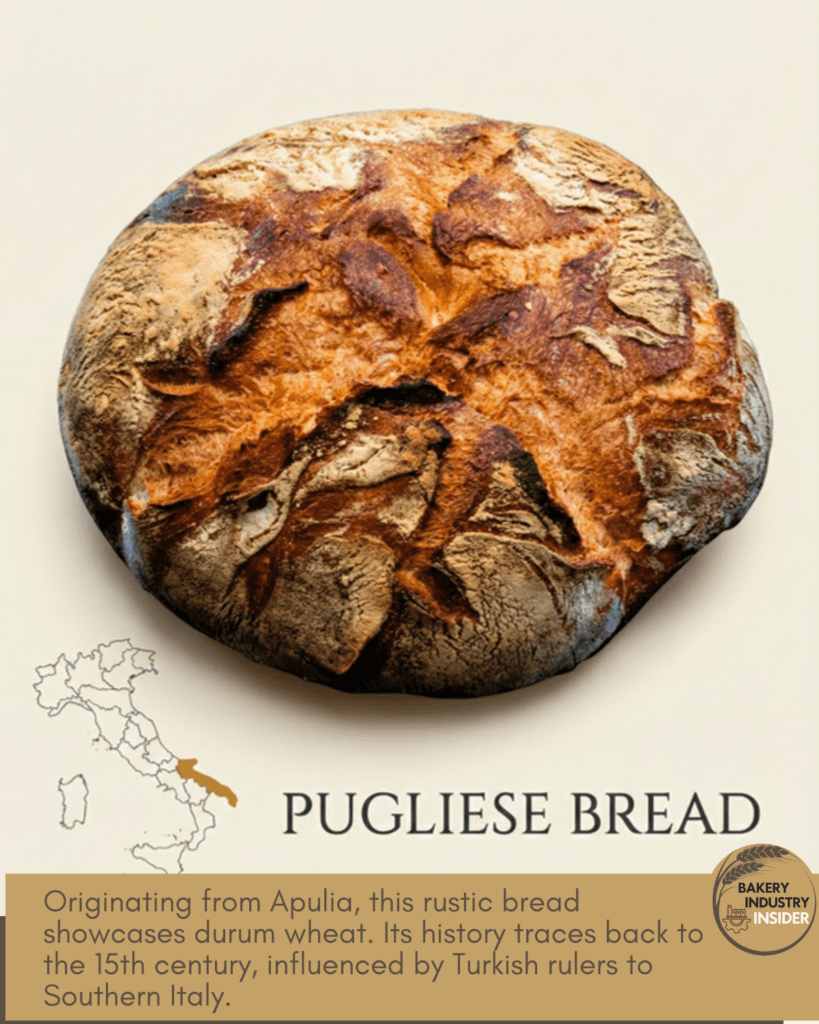
- Region: Apulia.
- History: This rustic loaf may trace its origins back to the 15th century. It is heavily influenced by the peasant traditions of Southern Italy, where simple ingredients were transformed through time and heat into daily staples.
- How it is made: Traditionally utilizing durum wheat, the dough is typically highly hydrated. Bakers fold the wet dough meticulously and allow it to ferment slowly. Baking in a scorching oven creates a thick, crunchy crust and a soft, porous interior.
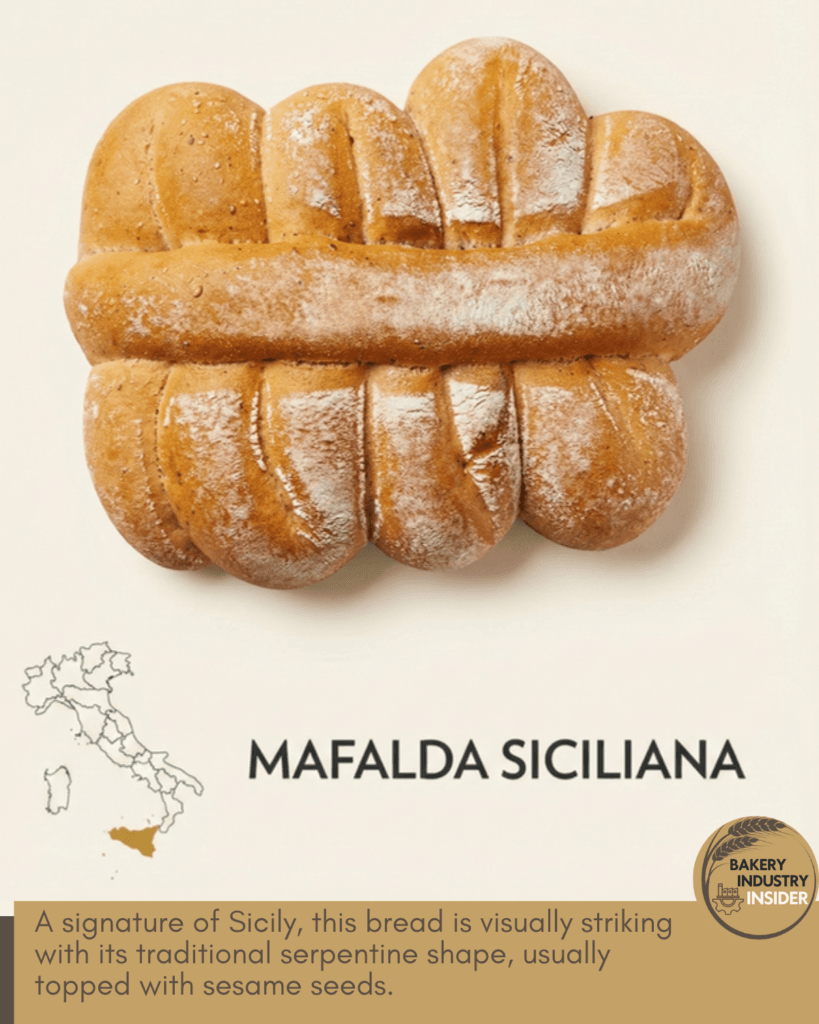
Mafalda Siciliana
Schiacciata Toscana
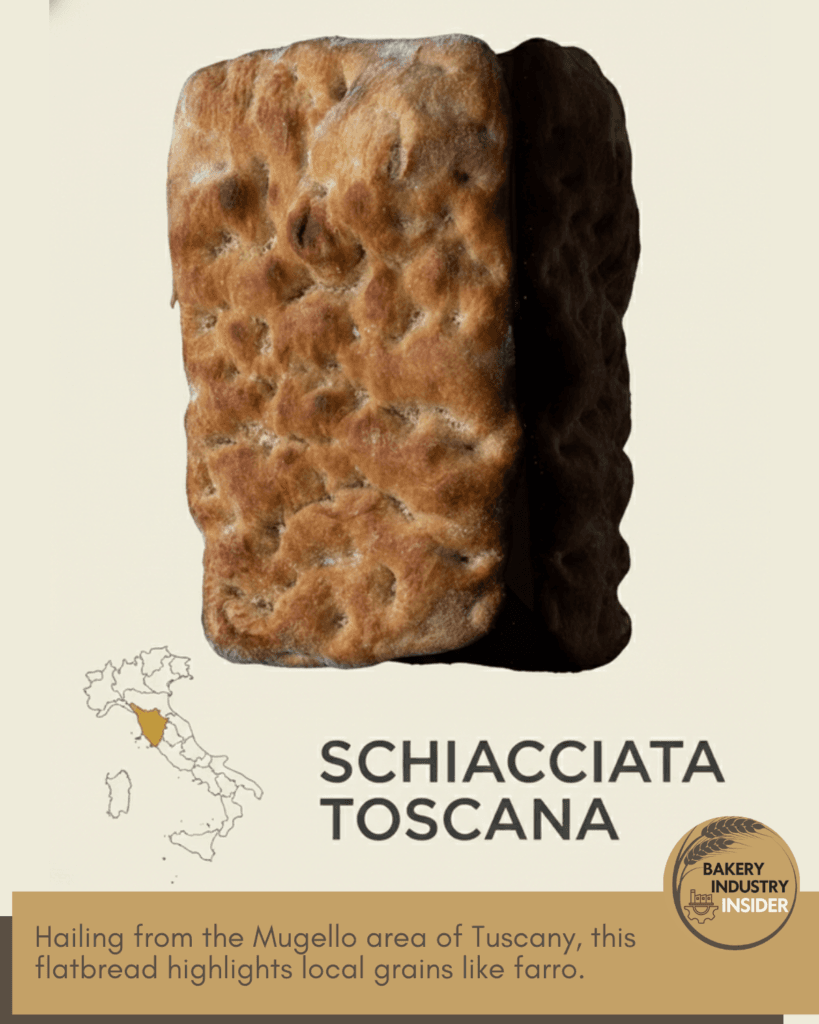
- Region: Mugello, Tuscany.
- History: The name translates to squashed or flattened. Historically, bakers might have used a small piece of flattened dough as a natural thermostat to test the oven temperature before baking their larger, unsalted loaves.
- How it is made: This flatbread variation highlights farro. The dough is pressed flat with the fingers, creating dimples that catch generous pools of olive oil prior to baking.
Ciabatta
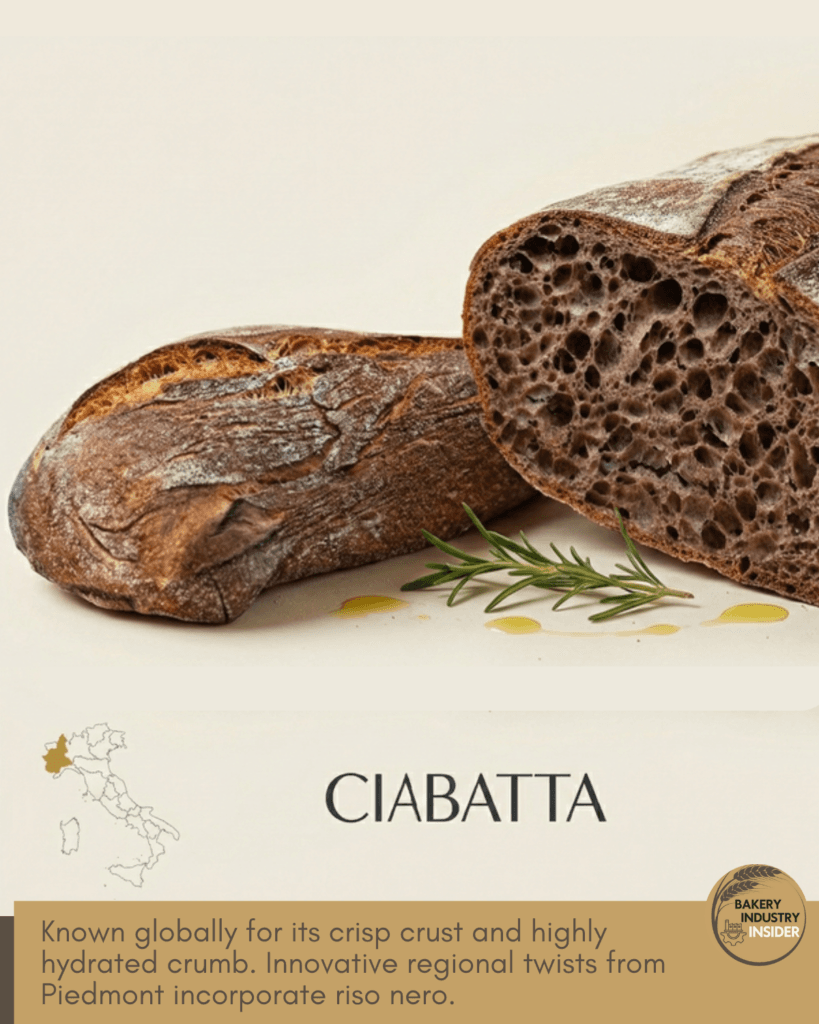
- Region: Piedmont; and broadly across Italy.
- History: Created in the 1980s by a baker near Venice to compete with the rising popularity of the French baguette. The name translates to slipper, reflecting its elongated and flat shape.
- How it is made: A unique interpretation from Piedmont incorporates riso nero, or black rice. Fundamentally, it is a loaf bread baked with wheat and often flavored with olive oil, rosemary, or other spices. The extremely wet dough requires careful handling to preserve its large gas bubbles, resulting in a very hard, crisp crust and dense crumb. It is frequently used for sandwiches, particularly Panini.
Alpino
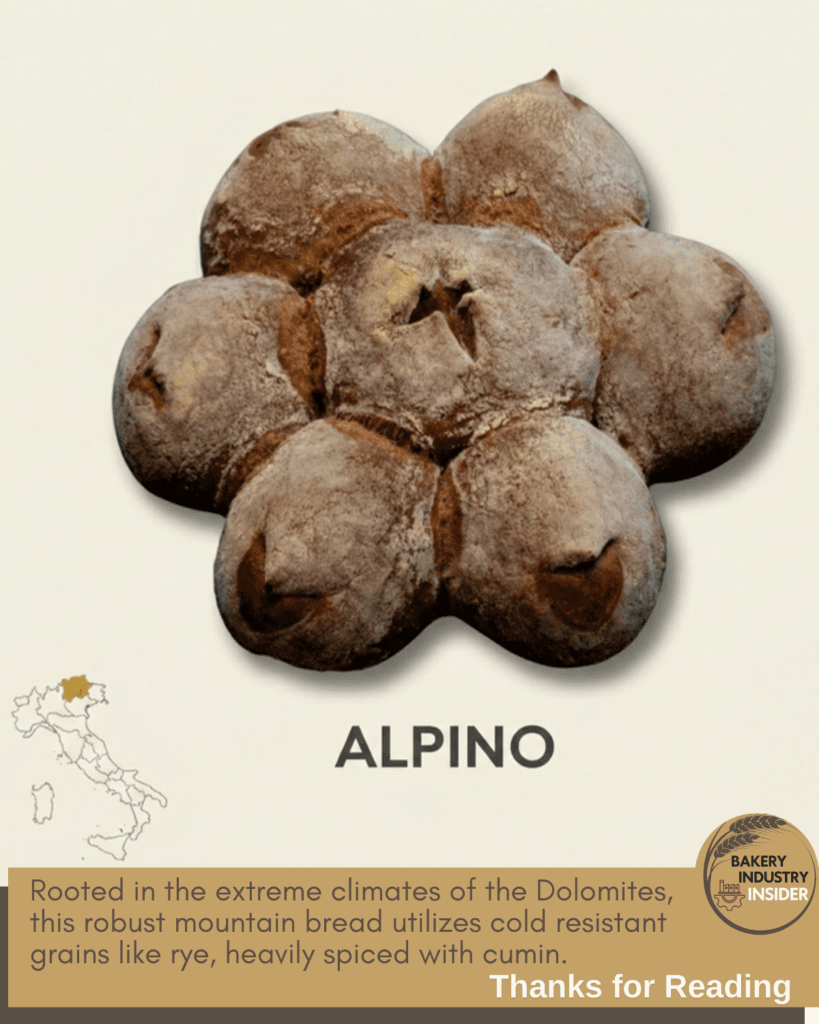
- Region: Dolomites.
- History: Born out of necessity in the rugged mountainous terrain of Northern Italy. The harsh climate favored hardy grains over standard wheat, shaping the local baking traditions for centuries.
- How it is made: This dense loaf relies on rye and cumin. The rye provides a deep, earthy foundation, while the cumin adds a distinct aromatic warmth that might also aid in digestion.
Focaccia
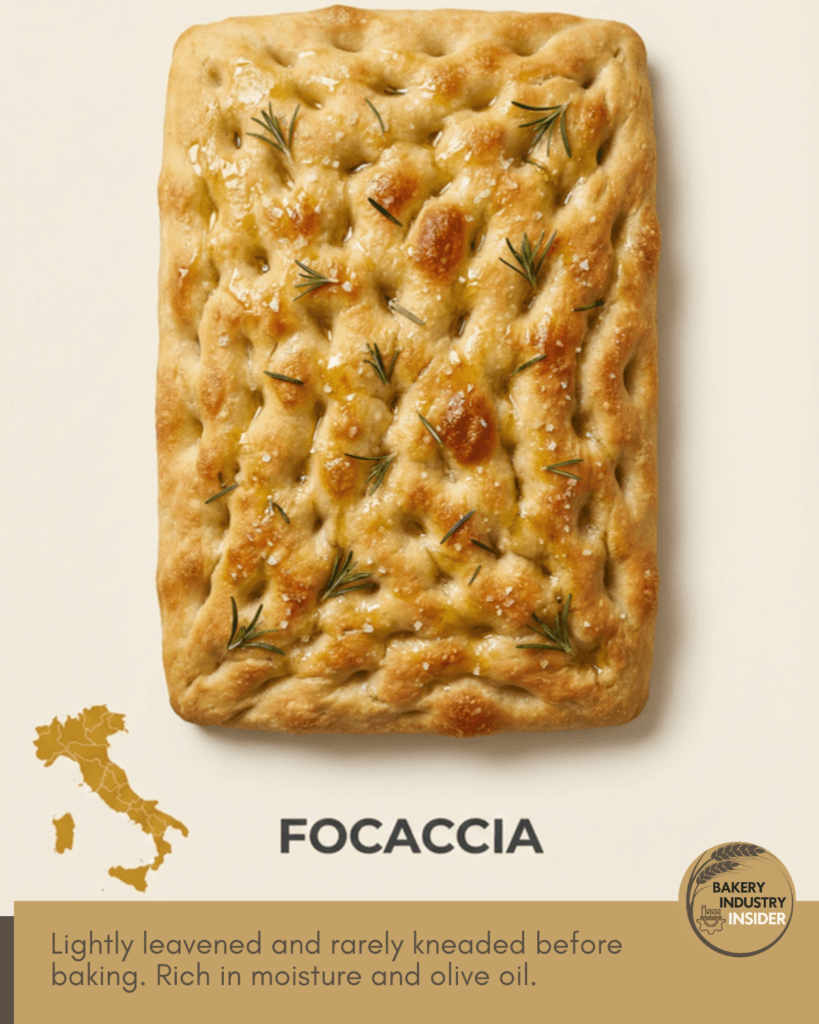
- Region: Italy.
- History: Historians suggest its lineage could reach back to the ancient Etruscans or Romans. The Latin root translates to hearth bread, indicating it was traditionally baked directly in the coals of a fire.
- How it is made: This relatively flat bread is not kneaded before baking. It contains yeast which causes it to rise slightly. Its rich flavor and moisture are often achieved by brushing the dough with olive oil before baking. Modern variations might use a long fermentation process, such as a 3 day Focaccia, to develop structure and flavor.
Incorporating these traditional methods and regional stories might just be the key to crafting a premium product that resonates with today’s discerning consumer.
😊 Thanks for reading!
Sources:
Bakery ingredients in the next 20‘
https://en.wikipedia.org/wiki/Ciabatta https://en.wikipedia.org/wiki/Focaccia https://fablesandfocaccia.com/the-fable-behind-focaccia/ https://www.itstuscany.com/en/the-tuscan-schiacciata/ https://www.tasteatlas.com/pane-pugliese