The 2026 Obsession with “Swalty” and the Architecture of the Bite.
In the dynamic landscape of food forecasting, 2026 is shaping up to be the year where flavor takes a backseat to physics. While taste remains crucial, it is no longer the primary driver of innovation. A transversal analysis of emerging market trends reveals a profound shift towards texture, contrast, and mouthfeel.
Today’s sophisticated consumer is suffering from “palate fatigue” brought on by one-dimensional sweetness.
They are urgently seeking experiences that challenge expectations and simultaneously activate multiple sensory receptors.
The most successful products are no longer just eaten; they are experienced structurally.
This phenomenon can be broken down into two major pillars:
the sophisticated evolution of sweet and salty (“Swalty”),
and the precise engineering of dough hybrids, or “Bite Architecture.”
1. The “Swalty” Imperative: Sweet + Salty 2.0
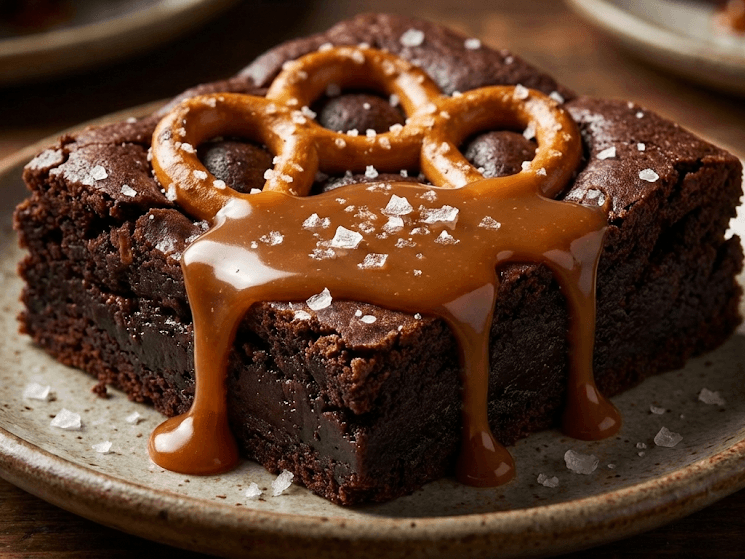
The combination of sweet and salty is not new, but in 2026, it has graduated from a novelty trend to the “gold standard” of flavor innovation.
Simple salted caramel is now considered baseline; the new frontier involves sophisticated, umami-rich ingredient integrations that create complex, lingering flavor profiles.
Data analyzed during the peak end-of-year celebratory weeks showed significant spikes in social mentions and search traffic for elevated combinations.
Pairs like “miso-caramel,” “brie cheese with honey,” and “maple with sea salt” are dominating the conversation.
The Evolution: From Saline to Umami
The critical evolution in this trend is that it is no longer just about adding salt grains to chocolate. It is about integrating savoury, umami ingredients into sweet bases to add depth.
Consumers are demanding complexity beyond mere sugar. This is evident in the rise of savory desserts that bridge the gap between dinner and the final course.
Miso as a Staple: White and red miso are being used in buttercreams, cookie doughs, and brownies to provide a funky, salty depth that cuts through richness.
Cheese as Dessert: The boundary between a cheese board and dessert is dissolving. Tarts featuring figs paired with pungent blue cheese, or cheesecakes utilizing savory goat cheese, are gaining traction.
Soy Sauce & Garum: Adventurous chocolatiers are experimenting with caramelizing soy sauce or even using garum (fermented fish sauce) in microscopic amounts to enhance the richness of cacao.
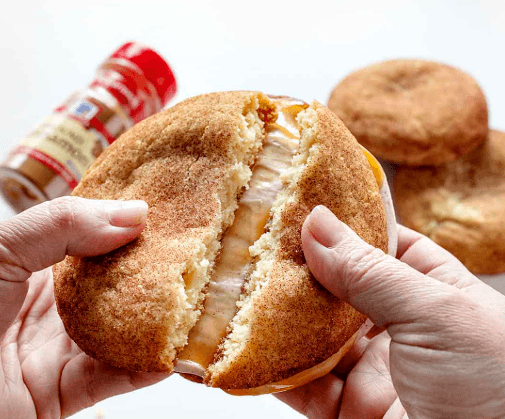
PRODUCT SPOTLIGHT: The Miso-Snickerdoodle Sandwich
This concept product features two chewy snickerdoodle cookies spiced with cinnamon and cardamom. The filling is not a standard buttercream, but a whipped miso-white chocolate ganache. The exterior is rolled in a blend of coarse Demerara sugar and flaky sea salt.
Key Texture Characteristics: The initial crunchy sugar shell gives way to a chewy cookie interior, followed by the smooth, dense, savory-sweet resistance of the miso filling.
2. The Architecture of the Bite: Engineering Mouthfeel
If flavor is the story, texture is the book’s physical binding.
“Bite Architecture” refers to the deliberate engineering of a food product to create specific physical sensations: the shatter, the chew, the snap, and the melt.
Driven by visual social media platforms like TikTok, where the sound of food (ASMR) is as important as its look, novelty formats are crucial. The 2026 consumer wants a “journey” within a single bite.
The Hybrid Hype Continues
Hybrid pastries remain a dominant force because they offer novel visual appeal and contrasting textures.
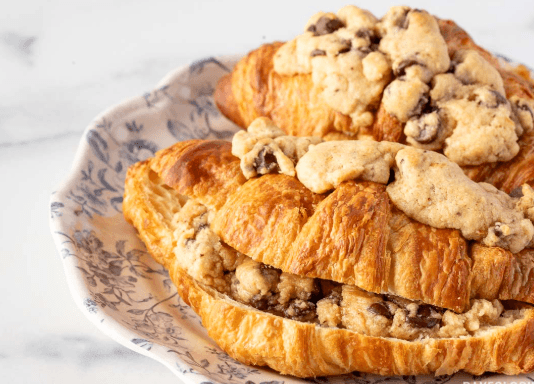
While the viral “Crookie” (croissant + cookie dough) maintains relevance, the market is actively seeking its successor.
The Cuffin: The croissant-muffin hybrid offers the flaky layers of a croissant encased in the convenient, dense shape of a muffin, often allowing for filled centers.
Flattened Croissants: A prime example of textural engineering. By taking a baked croissant, flattening it, and searing it in a pan with honey or sugar, bakers create a product that is almost entirely caramelized crust. It trades fluffiness for intense, shattering crunch and caramelized flavor.
The Data Confirms: Shred & Shatter
According to visual trend reports for 2026, two specific formats are experiencing explosive growth, confirming that format and texture drive digital interest:
The Kataifi Explosion (+298%): Mentions of “shredded filo” or kataifi dough have surged nearly 300%. This is largely attributed to the global viral phenomenon of the “Dubai Chocolate Bar”—a chocolate bar stuffed with toasted kataifi mixed with pistachio cream. The appeal is almost entirely textural: the incredibly loud, satisfying crunch of the shredded pastry contrasting with smooth chocolate and creamy filling.
The Cake Pop Resurgence (+386%): Cake pops are back, driven not just by nostalgia, but by utility. They offer “portability and portion control,” fitting the lifestyle of the on-the-go consumer who wants a dense, textural bite of cake encased in a snappy candy shell without committing to a whole slice.
Conclusion
As we move toward 2026, food producers must recognize that flavor profile is merely the entry point.
Success lies in the physical engagement of the product.
Whether through the sophisticated balance of miso and caramel or the satisfying structural integrity of crispy shredded filo, the goal is to create a multi-sensory event that captivates the consumer’s palate and commands attention in a crowded digital world.
Here are the sources used to build the article, categorized by the specific trend they support.
SOURCES:
Source for “Shredded Filo (+298%)” and “Cake Pops (+386%)”:
Tastewise – Pastry & Baking Trends 2026: This is the primary data source for the specific percentage growth mentioned in the “Texture” section.
Bakedeco Bytes: Details the mechanics of the “Flat Croissant” trend, originating in Seoul, which focuses on compressing the layers to create a “cookie-like” texture.
Since this is a visual/Mukbang trend primarily on video platforms, these links serve as the “primary source” for the description of the peeling/unrolling mechanics mentioned in the article.