Photonic Tech for Predictive Bakery Quality
Traditional quality checks often rely on subjective touch or slow lab tests. Photonic technology could offer a fix. It provides a chemical vision that might see inside your dough instantaneously, acting like a lab report for every loaf.
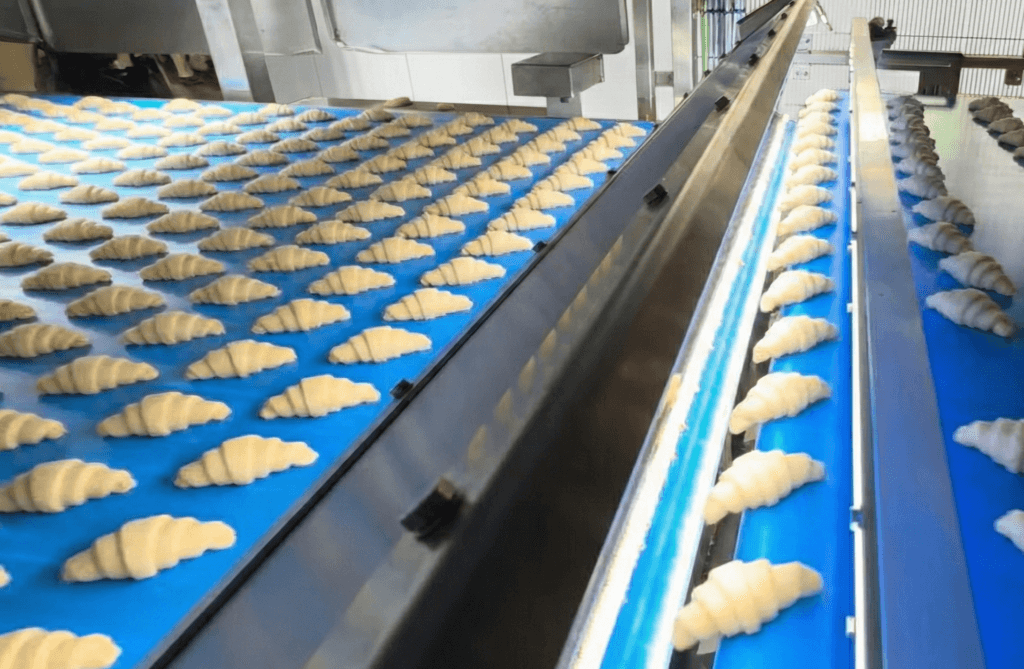
The dough looks perfect on the outside, but the internal structure might be lagging, or a moisture imbalance could ruin the shelf life of an entire batch.
For decades, bakers relied on standard machine vision to check geometry, shape, size, and color. That works fine for physical defects, but it misses the chemical reality of the product.
The PHOTONICS4BAKERY initiative might be changing this landscape.
By using Hyperspectral Analysis, facilities could move beyond seeing bread to analyzing it chemically on the fly. Here is why this technology could be the biggest leap for industrial baking since the spiral mixer.
The Invisible Chemical Lab
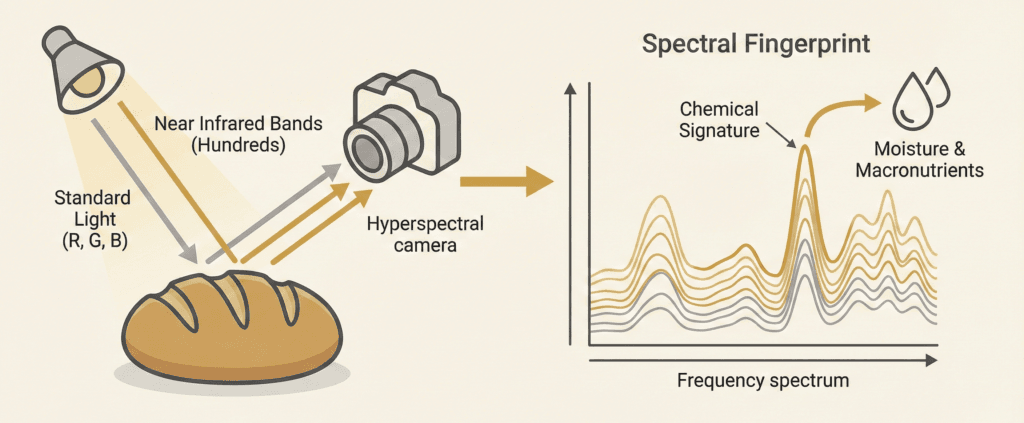
Standard cameras see Red, Green, and Blue. Hyperspectral cameras, however, capture hundreds of bands of light, including Near Infrared.
This creates a unique spectral fingerprint for every pixel. This allows you to potentially monitor critical chemical parameters without touching the product:
Navigating the Fermentation Challenge
Fermentation is notoriously difficult to automate because it is a biological process affected by minor shifts in ambient temperature or yeast activity.
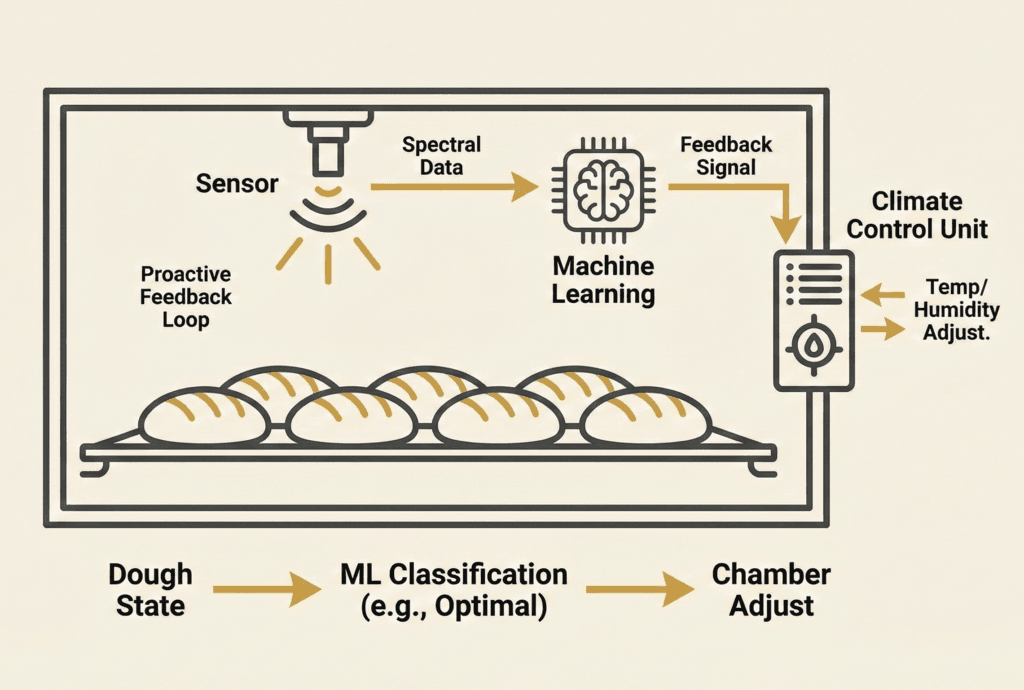
The PHOTONICS4BAKERY project utilized machine learning to train systems to recognize the specific spectral signatures of yeast activity.
- Classifying State: The system could categorize dough as underproofed, optimal, or overproofed with high accuracy.
- Proactive Feedback: Rather than just rejecting bad dough, the system might communicate with the proofing chamber. If the dough is lagging, it could signal the chamber to adjust humidity or temperature during the cycle. This creates a dynamic control loop that should save batches.
Safety Beyond the Naked Eye
Foreign body detection is usually limited to metals via metal detectors or high density objects via X ray scanners.
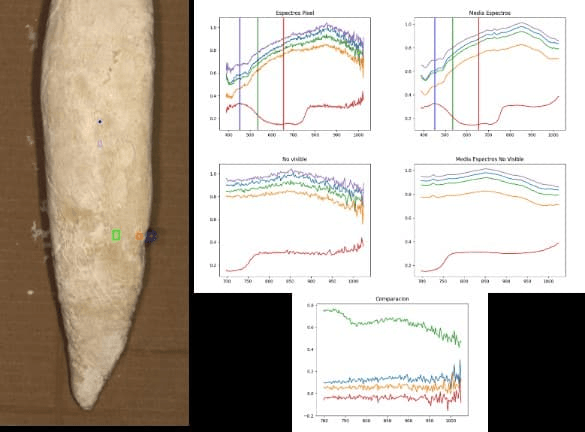
Hyperspectral imaging may excel at detecting low density contaminants that older systems miss, such as clear plastics or wood.
Because plastic has a completely different chemical spectral curve than dough, it might glow like a beacon to the computer vision system, even if it is the exact same color as the flour.
Real World Collaboration
The shift toward true digital transformation requires teamwork. The PHOTONICS4BAKERY project is a massive collaborative consortium funded by the European Union and the Spanish Ministry of Industry. Coordinated by the Galicia Food Cluster alongside the Vitartis association, this initiative bridges the gap between advanced research and daily operations on the plant floor.
On the technology side, two specialized companies bring their expertise to the table. ATRIA Innovation focuses on Hyperspectral Imaging and machine learning algorithms, while AOTECHspecializes in Near Infrared Spectroscopy, providing the precise optical sensors that might read the molecular makeup of a dough matrix in milliseconds.
Industrial Trials
Theory is fantastic, but industrial environments are notoriously unpredictable.
To prove the tech works outside a laboratory, commercial bakeries like Hornos de Lamastelle, Lugar Da Veiga, and Sanbrandán stepped in as testing grounds.
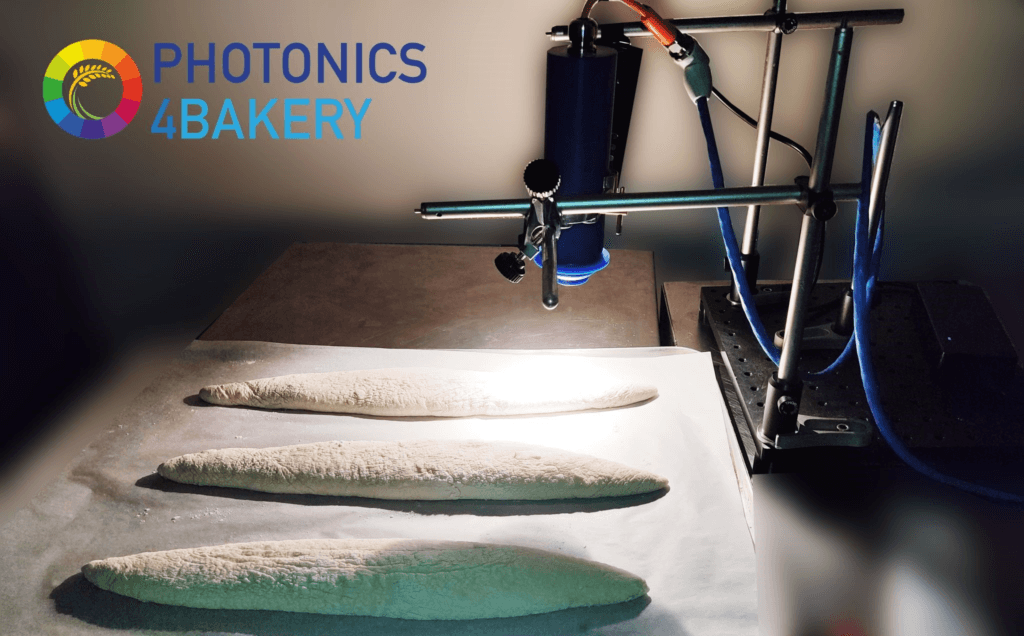
The primary struggle these bakeries face is the natural variability of raw materials.
Using photonic sensors could allow bakers to measure these variations dynamically, giving operators the power to adjust hydration or mixing times based on the actual state of the ingredients on any given day.
During the industrial trials, the teams targeted several key applications:
- Dough Composition: Monitoring the exact percentages of fat, protein, and salt in complex mixtures.
- Fermentation Timing: Pinpointing the optimal proofing stage for bread loaves to help ensure a consistent crumb structure.
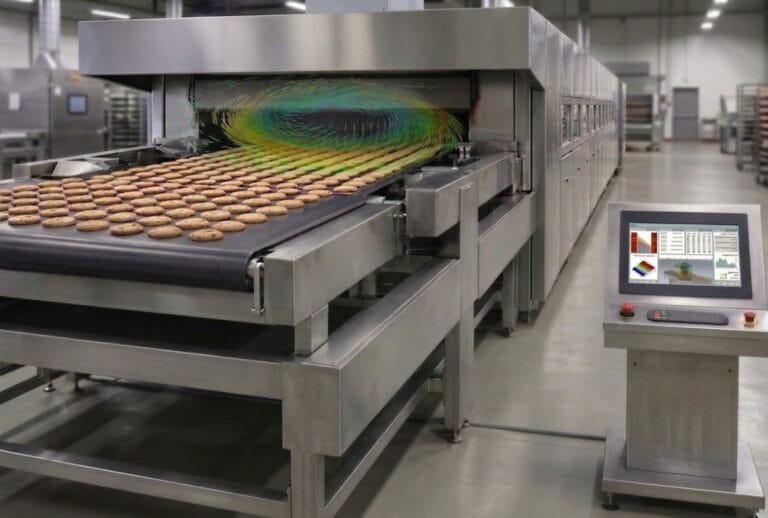
- Oven Optimization: Using real time chemical data to determine the perfect moment to load products into the oven, which should maximize energy efficiency.
Implementing advanced optics is not just about catching defects; it is about moving from reactive quality control to predictive process control.
While the initial investment may be higher than standard cameras, the return on investment through reduced waste and energy savings could be substantial for high volume lines.
Adopting these real time data tools might be the critical step to standardizing production and staying competitive in a challenging global market.
😊 Thanks for reading!
Sources:
- Galicia Food Cluster (Clusaga): Photonics4Bakery Project Details
- AOTECH: Research on Photonic Technologies in Bakery Processes
- Innovaspain: Improving the Bakery Industry Thanks to Photonics
- Interempresas: Driving Digital Transformation in Bakeries
- Using NIR Technology for Process Control in Bakeries