Shape Matters: Eliminating Downtime in Automated Bakery Packaging.
Imagine the chaos of a rapid packaging line halting because a single loaf is too wide. Geometric variations might easily cause severe profit losses and excessive downtime. Mastering the physical dimensions of baked goods could readily solve this incredibly expensive bottleneck.
The Packaging Bottleneck, When Geometry Fights the Machine
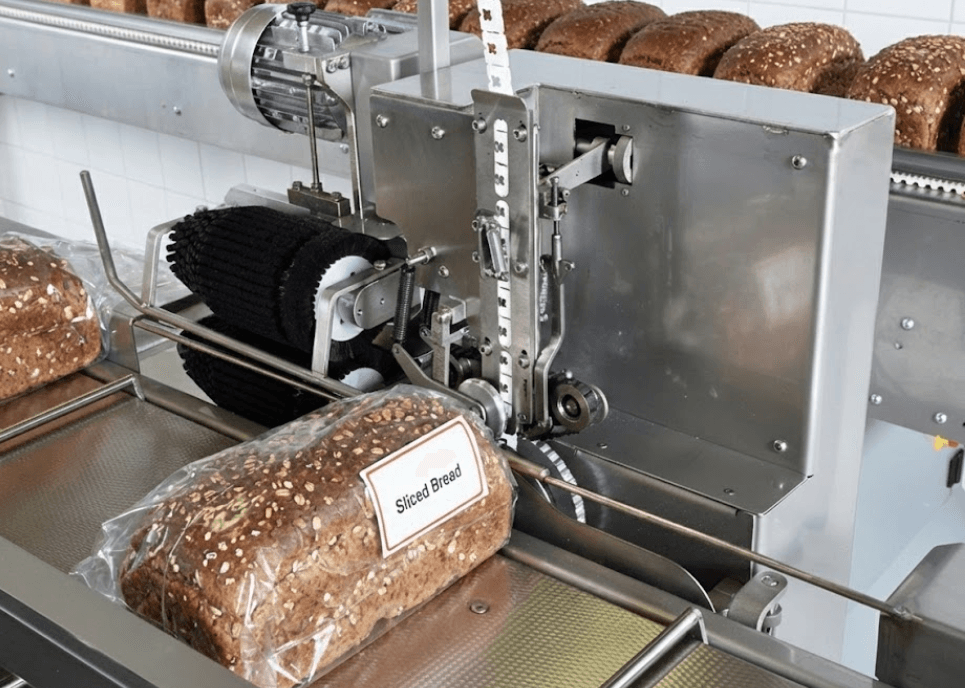
Modern flow wrappers and robotic loaders might be unforgiving.
They usually rely on predictable dimensions to function at high rates. When product geometry deviates, efficiency could plummet by up to thirty percent.
The Keyhole Effect.
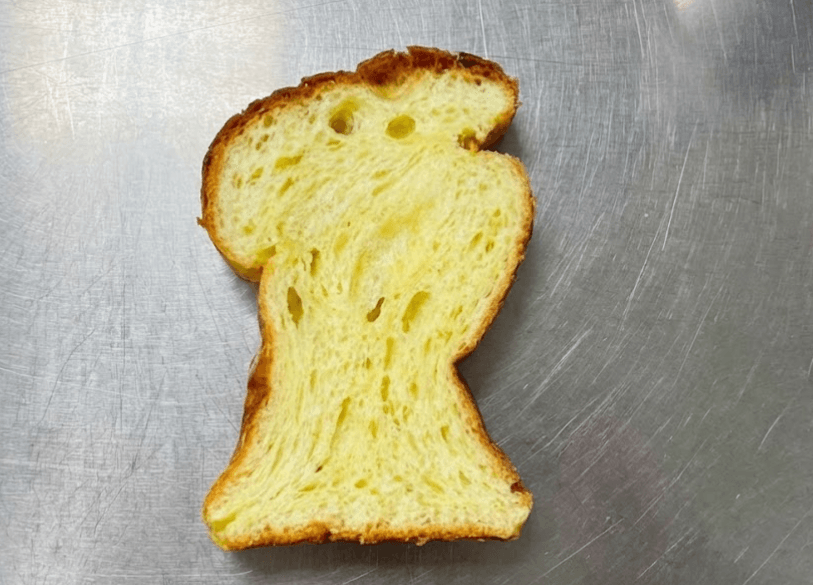
Excessive gas retention or weak sidewalls could cause a loaf to cave in, creating a keyhole cross section.
These concave sides might confuse the optical sensors on bagging lines, potentially leading to misfeeds, crushed loaves, and jam ups that require manual intervention.
Asymmetrical Loaf Expansion:
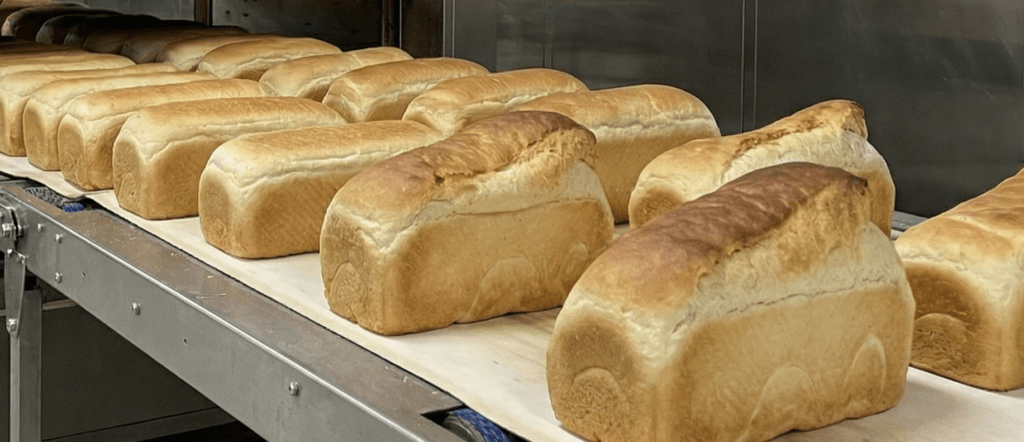
In continuous pan bread lines, uneven dough distribution during moulding or directional airflow in the convection oven could cause the loaf to rise unevenly.
A lopsided loaf might not feed squarely into the slicing guides. This misalignment could force the bread against the metallic side frames, potentially crushing the product before it even reaches the automated bagging paddle.
Crust Overhang or Mushrooming:
When a dough piece expands beyond the upper lip of the baking pan due to slight over proofing or excessive scaling weight, it might form a protruding crust along the edges.
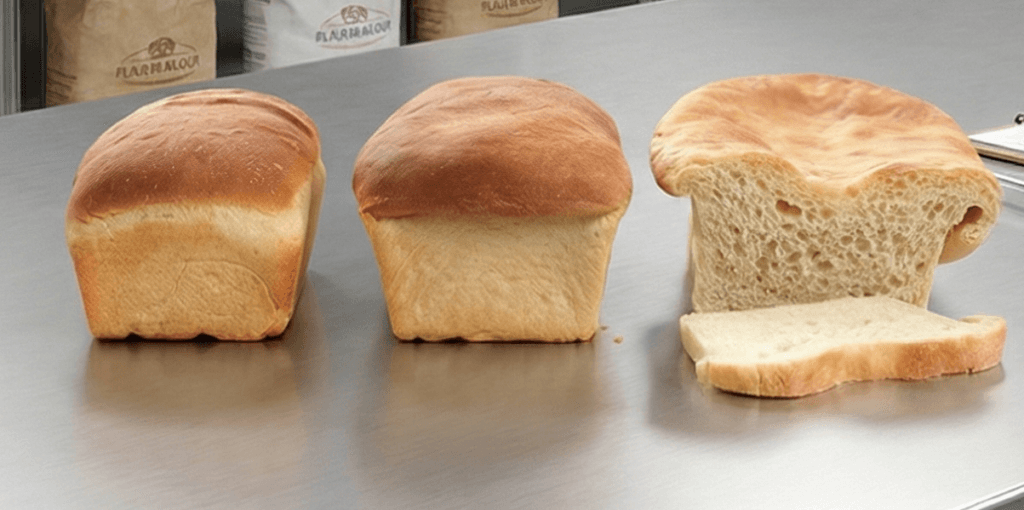
While this rustic appearance might be visually appealing in artisanal settings, this geometric protrusion could snag on the bagging scoops of a high-speed line.
The mechanical pushing arms might crush the delicate overhang, which could lead to severe crumb tearing and forced machinery stoppages.
Engineering Consistency; Techniques for Geometric Control
To combat these variables, industrial bakeries might employ sophisticated process controls to guide geometry into compliance.
Four-Piecing or Cross-Panning:
This technique involves cutting the dough cylinder into four pieces and rotating them ninety degrees before panning.
This could reorient the gas cells. Instead of elongating upward, the cells might expand uniformly in all directions.
The Result: A finer crumb structure that could reflect more light and might possess the structural resilience to withstand rapid slicing without shadowing or holes.
Industrial machinery can replace this manual technique in a way that can be observed in this video:
Moulder Pressure Board Adjustments:
Consistent loaf geometry starts at the makeup stage.
Modern bread moulders utilize precisely calibrated sheeting rollers and pressure boards.
By fine-tuning the compression during the final curling stage, operators ensure a perfectly cylindrical dough piece, preventing the uneven shape and trapped air bubbles that lead to asymmetrical expansion.
3D Vision Systems:
Beyond simple laser scanners, advanced lines might now use 3D profiling to measure height, volume, and slope in real time.
If a bloomer loaf begins to curve into an irregular shape due to uneven tension in the moulder, the system could flag the error before the product hits the packaging line, allowing for immediate upstream adjustments to the moulder pressure boards.
BONUS:
The Slicing Threshold; It Is Not Just About Sharp Blades
In rapid bread production, the slicer might be the ultimate stress test for loaf integrity.
A blade moving at industrial speeds may require a crumb structure that offers resistance without collapsing.
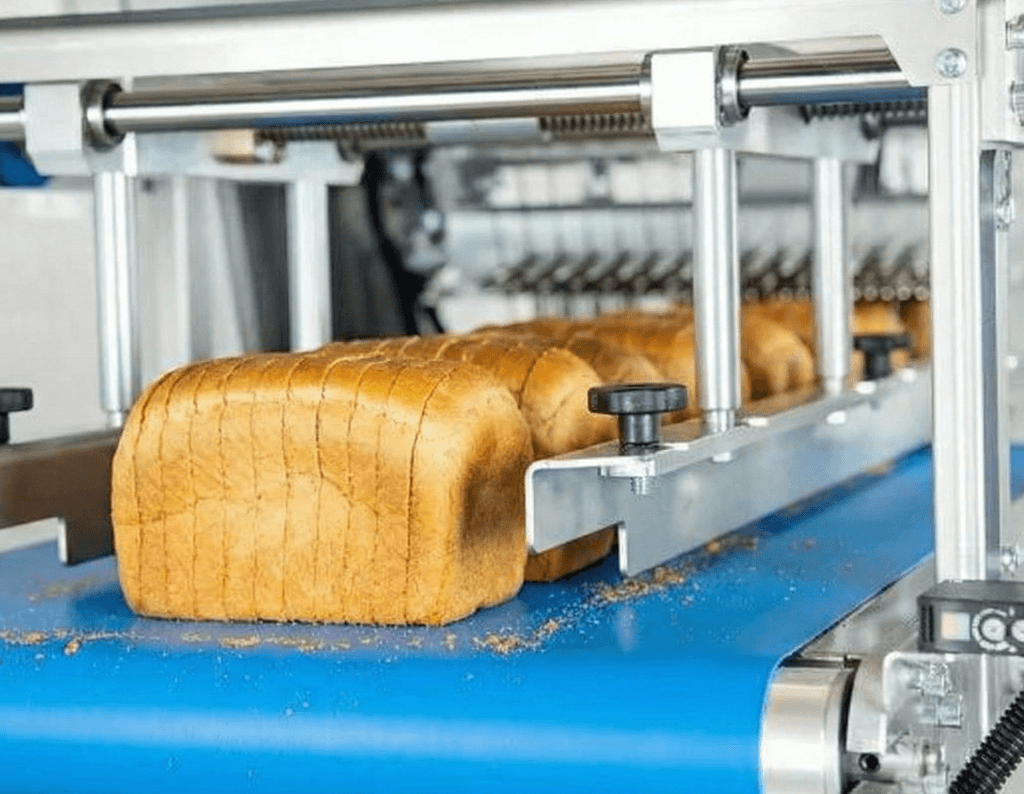
The Temperature Sweet Spot.
Mechanical slicing could rely on the initial firmness provided by amylose retrogradation.
The core temperature should drop to approximately 32°C – 35°C (90°F – 95°F) before slicing.
Slicing any hotter might result in tearing or gumming the blades, since the starch structure has not sufficiently set.
Enzyme Overload
While maltogenic amylases could be essential for long term softness by acting on amylopectin, an overdose might delay that critical early amylose setting.
This could leave the crumb too tender to support the crust, potentially causing the sides to collapse inward under the slicer pressure.
Crust Detachment
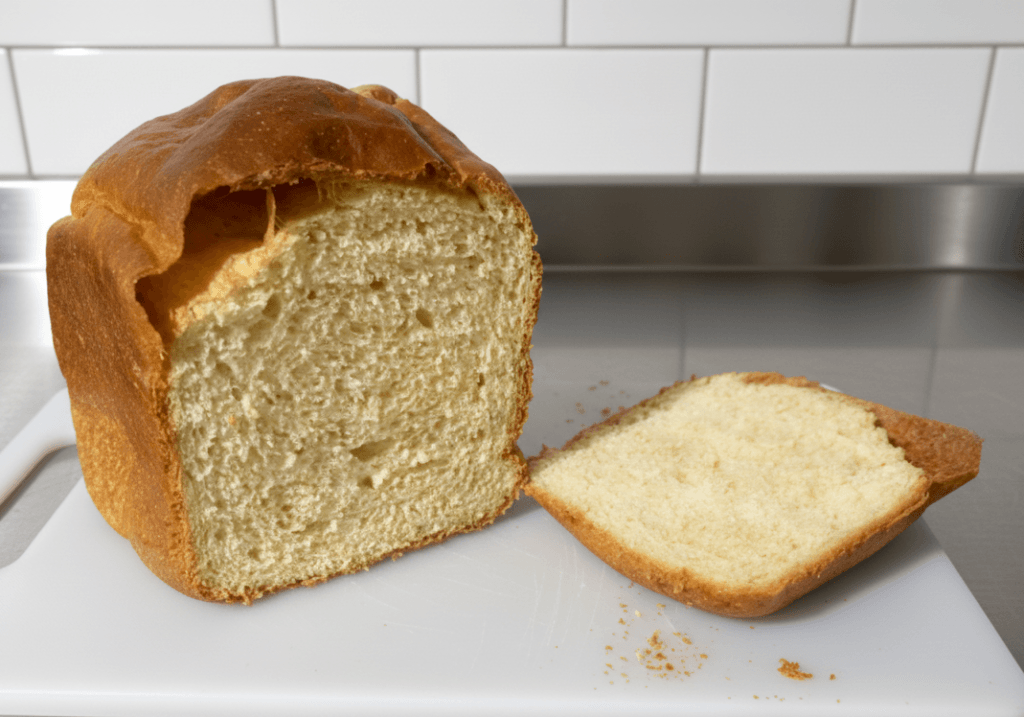
In open top pan breads, the break and shred area could be a weak point.
If the dough seam is poorly positioned during panning, the mechanical stress of slicing might rip the top crust entirely off the crumb.
😊 Thanks for reading!
Sources:
- Geometric Design of Bread in Iran: A Mathematical Approach to Waste Reduction and Supply
- Chain Efficiency, ResearchGate, https://www.researchgate.net/
- Quick Changeover Techniques for Multi-Product Bakery Operations,
- BW Flexible Systems, https://www.bwflexiblesystems.com/
- From products to packaging: how automation is reshaping the bakery floor, British Baker, https://bakeryinfo.co.uk/
- Why Some Bread Crumbs Are Too Soft for Slicing, Bakery Insider, https://www.bakeryinsider.com/
- How to Troubleshoot Common Issues with Your Rotary Biscuit Moulder, Golden Bake, https://www.golden-bake.com/
- Baking Problems Solved, Woodhead Publishing, https://www.elsevier.com/
- Troubleshooting Bread Defects, Lallemand Baking, https://www.lallemandbaking.com/
- Best Practices for Automated Bread Packaging, Bakery Equipment Manufacturers and Allieds, https://www.bema.org/