Sugar, yeast, and laminated pastries: mastering the art of perfect balance.
Inconsistent volume and flavor often plague pastry formulations when sugar levels shift. This guide breaks down how sucrose hydrolysis and osmotic stress govern fermentation dynamics; offering the technical keys to balancing sweetness; rheology; and product height for perfect layered results
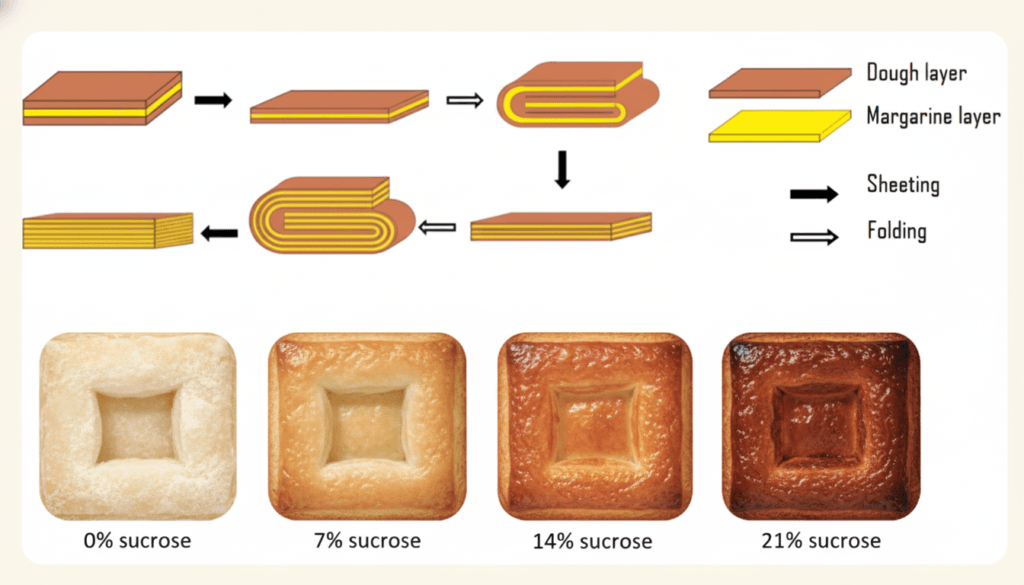
While yeast is globally recognized as a leavening agent for bread and Danish pastry; its role in multi-layered dough-fat systems is unique because it must interact with alternating layers of dough and bakery fat.
During alcoholic fermentation; Saccharomyces cerevisiae converts available sugars into carbon dioxide and ethanol; while also producing secondary metabolites such as glycerol; organic acids; and various aroma compounds.
These metabolites are not merely byproducts; they play a critical role in determining the final dough properties and product quality characteristics.
The Secret Life of Sugar in the Mixer
A common misconception in the bakery industry is that added sucrose remains intact throughout the dough stage.
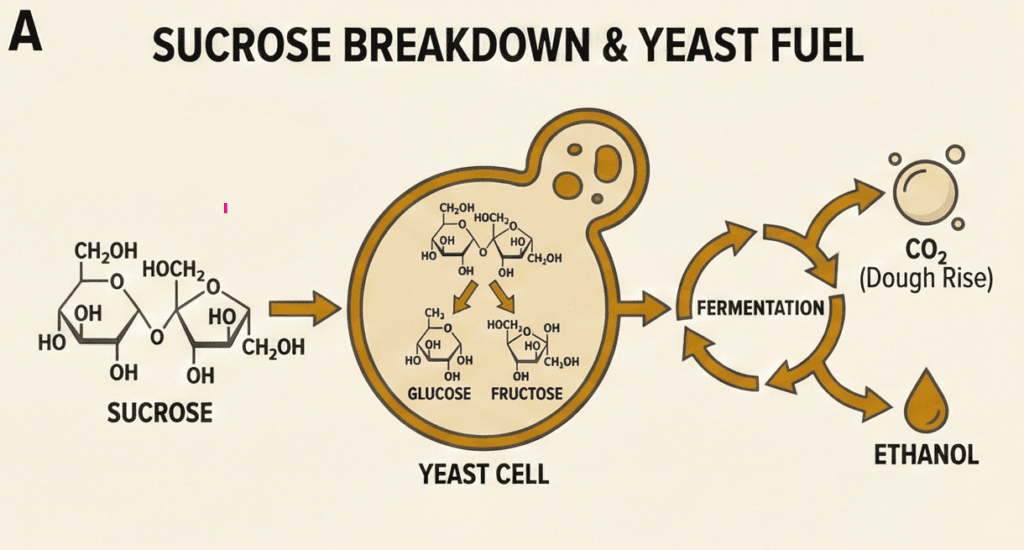
However; analysis shows that in yeasted pastry samples; sucrose is almost entirely degraded by the enzyme invertase during the mixing phase. This rapid hydrolysis breaks sucrose down into its constituent monosaccharides: glucose and fructose.
The dynamics of sugar release in the bowl are fascinating:
- Sucrose levels drop from approximately 14% to 0% almost immediately after mixing due to yeast activity.
- Fructans present in the wheat flour are also extensively degraded; though this process occurs more slowly than sucrose hydrolysis.
- While yeast prefers glucose; a significant portion of released glucose and fructose remains in the dough to contribute to the final product’s sweetness and crust color.
- Maltose concentrations increase during the process due to amylase activity on flour starch; though its consumption by yeast is limited when glucose is present.
Managing the Osmotic Pressure Wall
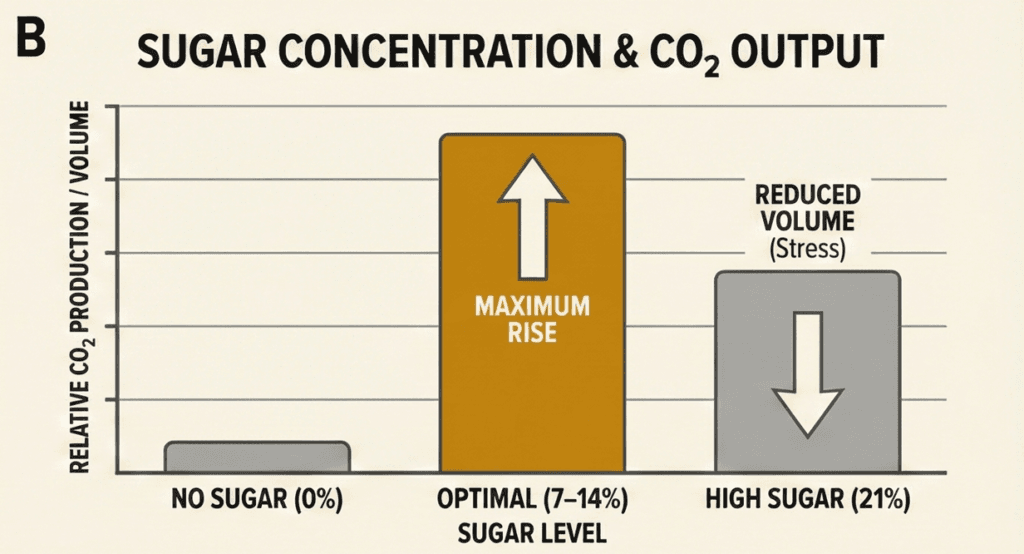
Increasing sugar content is a double-edged sword for the professional baker.
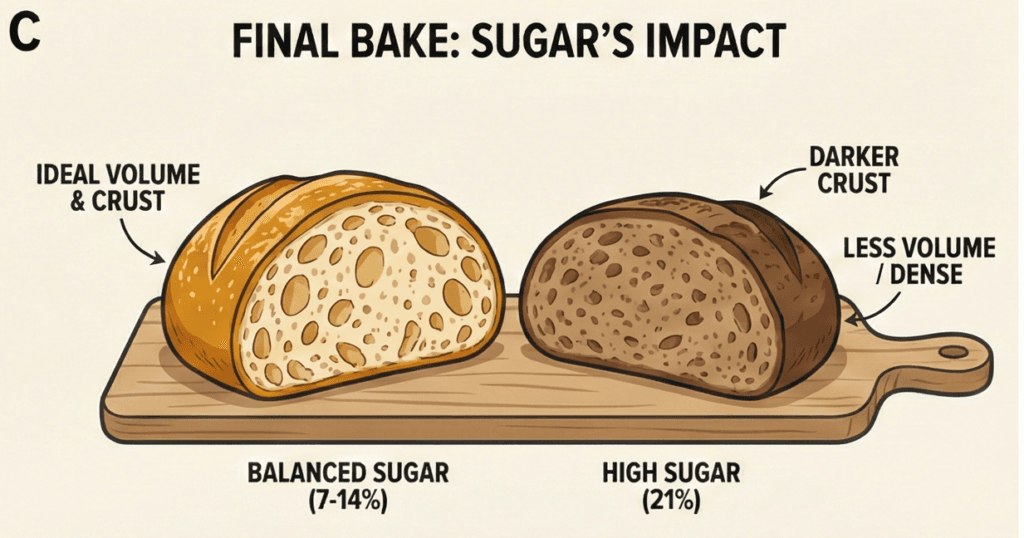
While higher sugar levels (around 21% on a dry matter flour base) are often desired for flavor; they significantly increase osmotic stress on yeast cells. This hyperosmotic stress leads to several technical challenges:
- Reduced Fermentation Rate: High sugar concentrations inhibit yeast activity; resulting in lower CO2 and ethanol production.
- Altered Metabolite Flow: To protect themselves against osmotic pressure; yeast cells produce and accumulate higher levels of glycerol.
- Volume Loss: Because CO2 production is hindered; the final product height is significantly lower in very high-sugar recipes compared to standard formulations.
Conversely; eliminating sucrose entirely (0% added) forces yeast to switch to maltose consumption once endogenous glucose and fructose are depleted. This switch typically occurs around the 90-minute mark; leading to a sharp drop in the CO2 production rate and a shortened productive fermentation window.
Gluten Structure and the Metabolite Effect
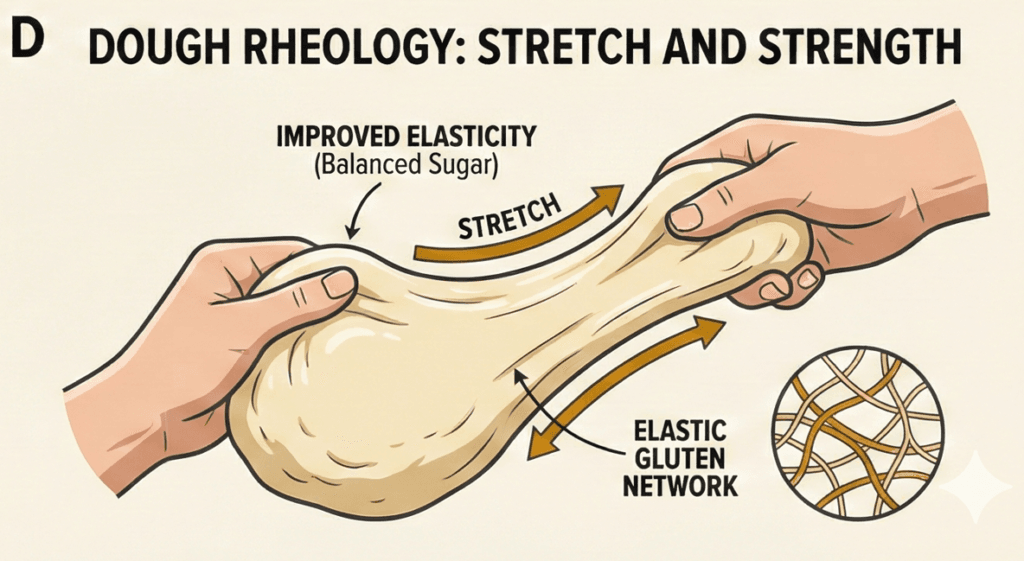
The characteristic flaky texture of fermented pastry is achieved through the layered structure of dough and fat. Yeast activity has a profound impact on the rheology of this structure.
Research indicates that yeast metabolites; specifically organic acids and glycerol; weaken the gluten network. This leads to a reduction in dough strength and extensibility over time.
Organic acids; such as succinic and acetic acid; lower the dough pH from approximately 5.75 to 5.23.
This acidification can accelerate the breakdown of large protein aggregates by activating flour proteinases; which in turn reduces the dough’s structural integrity.
While this “mellowing” of the dough can be beneficial for lamination; excessive fermentation time can lead to a dough that is too soft to maintain its height during baking.
Key takeaways for optimizing your production include:
- Prioritize Fermentation for Volume: CO2 production during the proofing stage contributes more to the final height of the product than steam evaporation does during baking.
- Color Control: Residual reducing sugars (glucose and fructose) are essential for Maillard and caramelization reactions; meaning yeasted doughs will naturally achieve a darker; more appealing crust color than non-yeasted versions.
- Strategic Sugar Reduction: Understanding that yeast-mediated hydrolysis preserves sweetness offers a path toward designing low-sugar recipes that don’t sacrifice consumer satisfaction.
Thanks for reading!