How De-Proteinized Wheat is Fixing the Gluten Free Crumble
Mixing rice flour and gums, praying for an airy crust, only to pull a dense, white disc from the oven. The industry’s latest fix isn’t a new gum: it’s the very grain we exiled, stripped of its danger but kept for its structure.
The Holy Grail has always been a Guten Free dough with extensibility (the stretch) and alveolar structure (the bubbles).
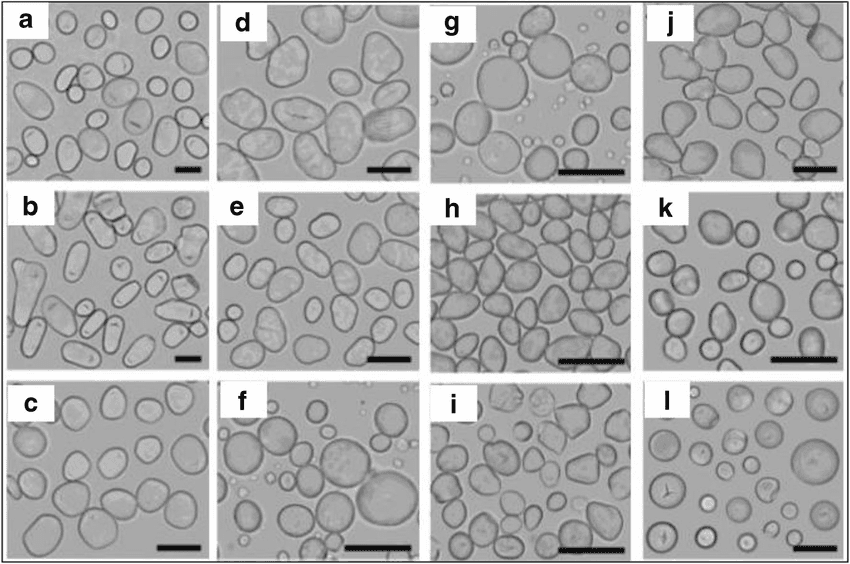
Standard corn and rice starches just don’t gelatinize the same way wheat does. They lack the bimodal granule size that creates that perfect, cohesive gel.
Recent intellectual property, specifically US Patent Publication 20240156110, hints that the industry is finally moving past simple substitution and toward structural reconstruction.
Here is why “Gluten-Free Wheat Starch” (GFWS) combined with specific fermentation protocols is the technical leap we’ve been waiting for.
1. The “Clean” Wheat Paradox
It sounds counter-intuitive to put wheat back into a celiac-safe product. But technically, gluten is a protein, not a starch.
- The Innovation: By washing wheat starch to remove the protein content (down to <20ppm), we retain the wheat starch granule.
- Why it matters: Wheat starch granules have a unique hydration capacity and gelatinization temperature (approx. 58-64°C) that perfectly mimics… well, wheat bread.
- The Result: A crust that browns correctly (Maillard reaction) and has a “bite” rather than a “crumble.”
2. The 15-Minute Rule (and Beyond)
The patent highlights a critical factor often ignored in GF baking: Fermentation Time.
- Old School: Most GF mixes rely on chemical leavening (baking powder) or rapid yeast action because the batter lacks the strength to hold gas for long.
- New School (The Patent Approach): By using GFWS and specific hydrocolloids (likely HPMC or Psyllium), the dough can sustain a fermentation period of >15 minutes (and often much longer, up to 24-72 hours in practice with products like Caputo Fioreglut).
- The Science: This window allows the starch to fully hydrate and the yeast to develop complex flavor compounds, creating a “micro-foam” structure that sets before it collapses in the oven.
3. Operational Advantages for the Baker
If you run a bakery or pizzeria, this shift changes your workflow:
- Shapeability: Doughs based on this technology can often be balled and stretched by hand, not just pressed or piped.
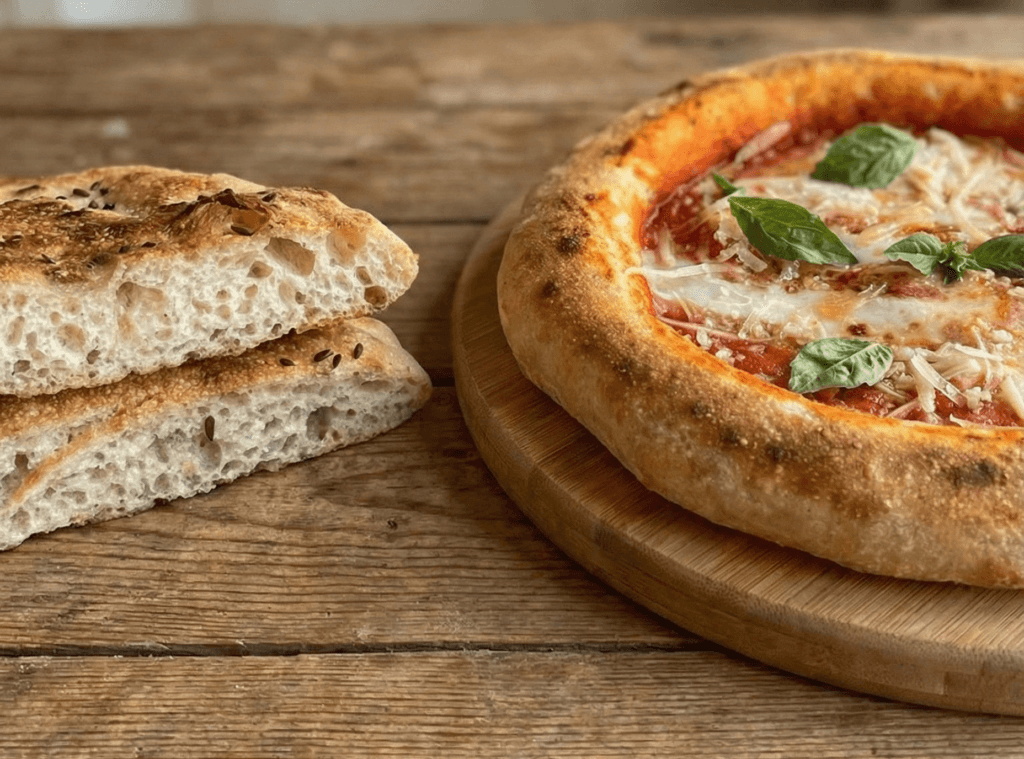
- Oven Spring: You get legitimate expansion in the oven, creating that coveted “cornicione” (rim) that chars rather than burns.
- Safety Note: While safe for Celiacs (Codex Alimentarius standard), this is NOT safe for those with a Wheat Allergy. Distinguishing these two customers is vital for your front-of-house staff.
We are moving away from “mimicking” bread with foreign ingredients (rice, corn) and moving toward “restoring” bread using the original building blocks; minus the toxic mortar.
If you haven’t tested a hydration protocol with de-proteinized wheat starch yet, your crust is likely falling behind.
Sources
- US Patent Publication 20240156110: Productos Sin Gluten Estructurados (Innovations in GF wheat starch and fermentation protocols).
- Codex Alimentarius: Standard for Foods for Special Dietary Use for Persons Intolerant to Gluten (CXS 118-1979)
- Market Context: Antimo Caputo S.r.l. “Fioreglut” Technology (Example of commercial application of GF Wheat Starch). Caputo Flour Technical Data