The Transformation of Dough: What Happens Inside the Oven?
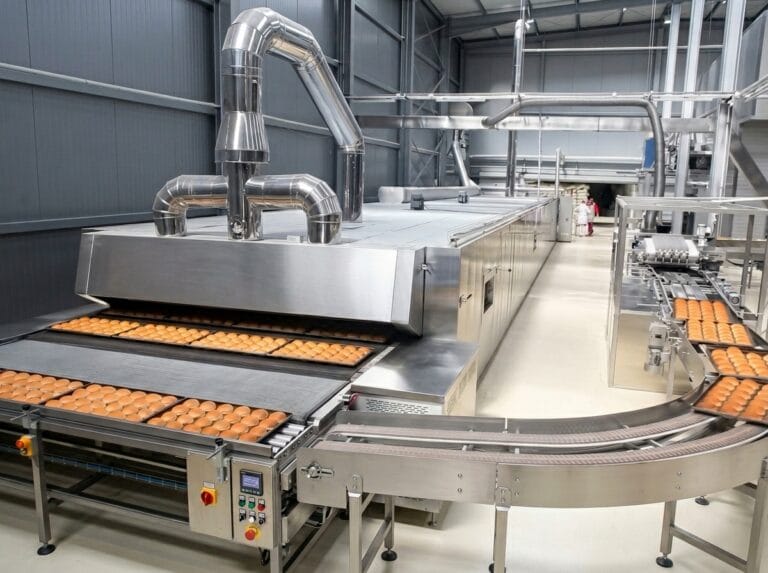
While the process may seem straightforward—expansion, moisture loss, crust formation, and setting – each stage is governed by fundamental principles of food science and thermodynamics.
Early Stages: Gas Expansion and Oven Spring
- Yeast activity continues as dough temperature rises.
- Gas production slows after 43°C and stops near 55°C.
- Low thermal conductivity keeps the center cooler, allowing continued CO₂ production.
- Gas expansion drives “oven spring,” causing rapid rise.
- Additional expansion comes from:
- Steam pressure
- Thermal expansion of air
- Dough strength is critical; weak dough may collapse
Moisture Loss and Crust Formation
- Surface moisture evaporates progressively.
- Dehydration forms a crisp crust.
- Maillard reaction creates golden color and flavor.
- Starch gelatinization starts at ~60°C as granules absorb water.
- Enzymes convert starch to dextrins and maltose, affecting texture and sweetness.
Foam-to-Sponge Transition and Final Setting
- Dough begins as a foam: gas bubbles separated by gluten films.
- Heat causes water loss and protein denaturation, making films rigid.
- Gas pressures rupture films, forming a sponge-like crumb.
- At 92–96°C, key changes complete:
- Moisture loss
- Starch gelatinization
- Protein denaturation
- Gas exchange
- Continued baking enhances the crust and reduces residual moisture.