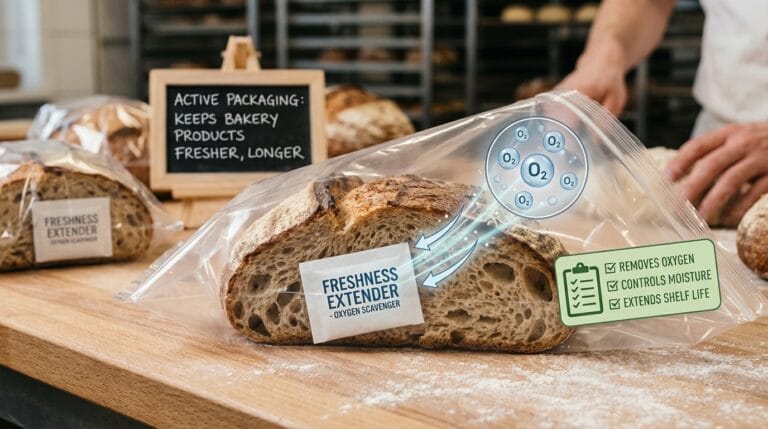
HOT TREND: The “Dubai Jjonddeuk” Sphere.
The viral “Dubai Chocolate” has mutated in South Korea into a high-density, multi-layered spherical cookie known as the “Jjonddeuk.” This evolution replaces the chocolate shell with a chewy dough-and-marshmallow matrix, creating a complex engineering challenge for moisture migration and textural preservation.
If 2024 and most of 2025 were dominated by the flat Dubai chocolate bar (pistachio/kataifi filled), the final weeks of the year have birthed a more sophisticated operational challenge: the Dubai Jjonddeuk Cookie (or “Dujjonku”).
Originating in South Korea and spreading via TikTok, this is not a traditional cookie.
It is a dense, filled sphere designed to maximize “chew resistance” (Jjonddeuk means “chewy/sticky” in Korean).
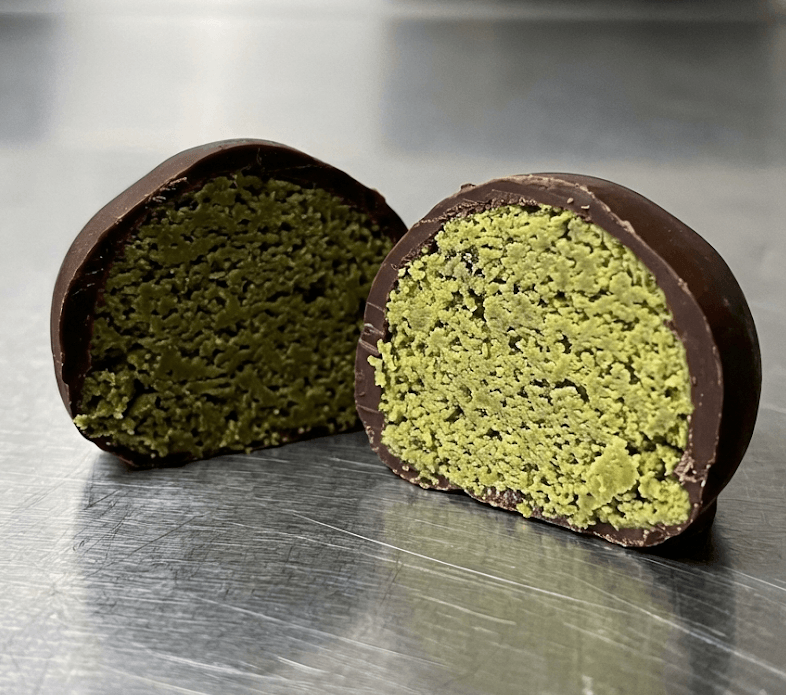
Technical Anatomy of the Product
The product is an assembly of three distinct rheological distinct layers, each requiring specific water activity (Aw) controls to prevent degradation:
- The Core (Hydrophobic Crunch): The center remains the classic mixture of pistachio cream and toasted kataifi pastry.
- Technical Constraint: The kataifi must be toasted to a deep golden brown (Maillard reaction) before inclusion. If the moisture content of the pistachio cream exceeds 3%, the pastry loses crispness within 12 hours.
- The Interlayer (The “Jjonddeuk” Factor): A layer of melted marshmallow encases the core.
- Function: Beyond flavor, this acts as a moisture barrier between the wet dough and the crispy core. It also provides the “pull” visualized in social media content.
- Recent Adjustment: Bakeries like Mond Cookie are reducing marshmallow thickness in favor of higher pistachio loads to counter “sugar fatigue.”
- The Shell (Structural Mastication): The outer vessel is a heavy, low-aeration cookie dough.
- Formulation: High ratios of brown sugar and often melted butter are used to inhibit gluten development, keeping the texture dense rather than cakey.
Operational & Engineering Impact
For industrial bakers, this trend represents a shift from “coating” lines (chocolate) to “encrusting” lines.
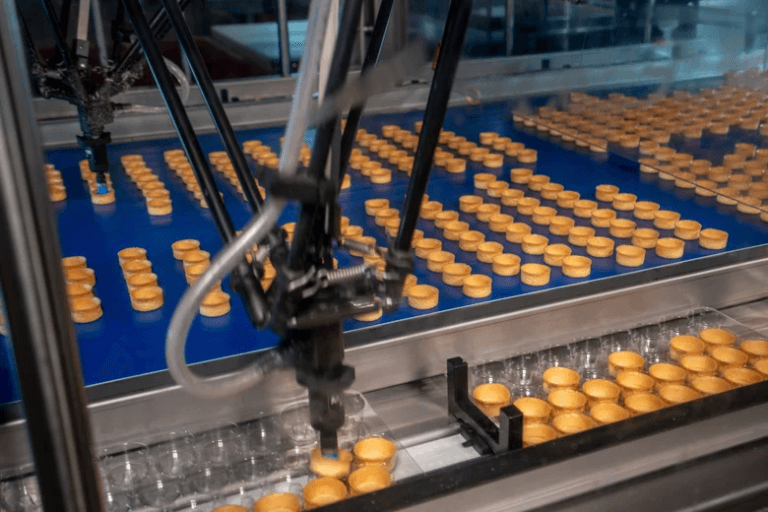
- Production Complexity: Unlike flat cookies, these spheres require double-encrusting (filling inside marshmallow, marshmallow inside dough). Most current production is hand-assembled, creating a natural bottleneck.
- Thermodynamics: Baking is critical. The dough must set at high heat (approx. 180°C+) quickly to retain shape, but the core temperature must remain low enough to prevent the marshmallow from liquefying completely and blowing out the side of the cookie.
- Inventory Velocity: Shelf life is limited by texture migration. The “crunch” of the kataifi degrades faster in a soft cookie environment than in a chocolate shell. This necessitates a “bake-to-sell” model with a maximum shelf life of 24–48 hours for premium quality.
The Sociology of the “Open Run”
The technical difficulty of production creates scarcity, which fuels the “Open Run” phenomenon (queuing before opening).
One of the Korean leading companies in this trend is Mont Cookie with a wide variety of products.
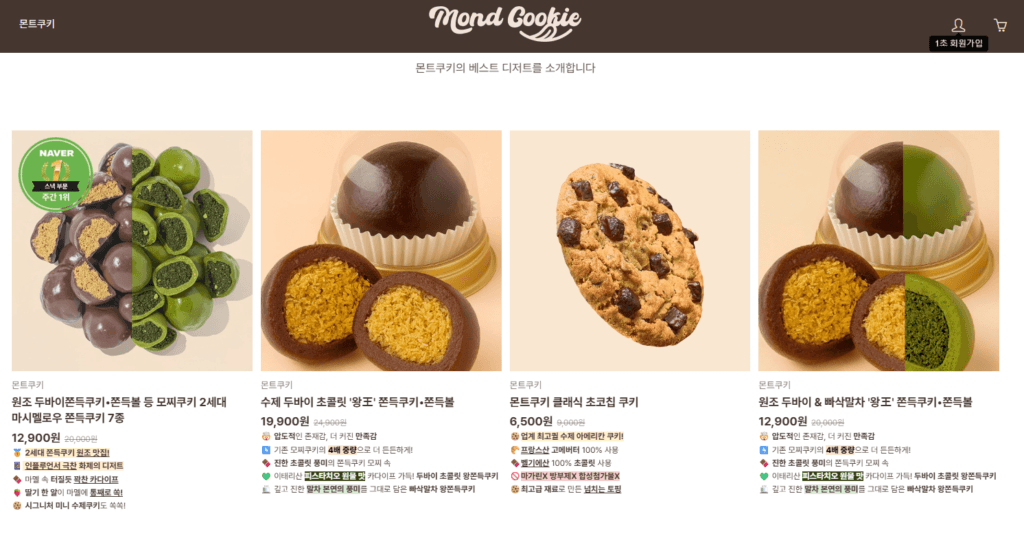
- Scarcity Economics: In Songpa district, inventories of 400 units deplete in 30 minutes.
- Digital Status: The difficulty of acquisition (waiting in freezing temperatures) adds value. The “acquisition story” is now a product attribute as important as the flavor profile.
👉 Thanks for reading!
Sources