Freezing and Thawing on Unbaked Bread Doughs
When dough is frozen, water within the matrix forms ice crystals through a process called nucleation. These crystals can grow larger if the freezing is slow, leading to structural damage.
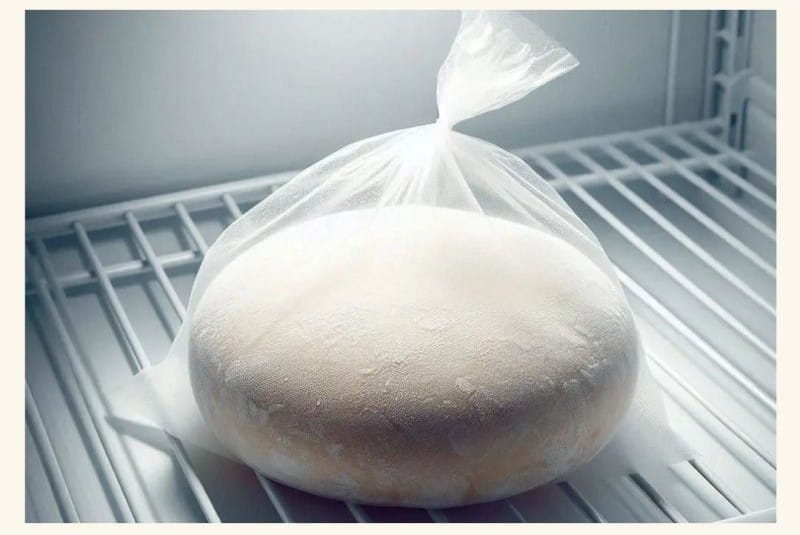
This imposes significant challenges on dough structure and yeast viability, ultimately affecting the final product’s volume, texture, and eating quality.
Large ice crystals disrupt gluten networks and can rupture yeast cells, releasing intracellular enzymes like proteases and glutathione, which degrade dough structure and reduce gas retention capacity.
Another critical concern is dehydration. As air passes over dough during freezing, surface water is lost, causing inelasticity and cracks. This is exacerbated by poor thermal conductivity: while the surface may freeze quickly, the dough center continues fermenting, which can lead to ruptures due to gas expansion.
Thawing is equally delicate. The latent heat barrier must be overcome for ice to revert to water, and uneven thawing can prevent full recovery of the dough structure. If water formed as ice fails to reintegrate into the gluten matrix, irreversible damage occurs, reducing elasticity and compromising oven spring.
To mitigate these issues, several strategies should be applied:
– Rapid freezing encourages the formation of small ice crystals.
– Controlled fermentation before freezing to avoid excessive gas buildup.
– Low-temperature storage below the dough’s glass transition temperature ( <−10°C), minimizes molecular mobility and moisture migration.
– Packaging to prevent surface dehydration.
– Use of dough improvers, such as cryoprotectants (e.g., glycerol or trehalose), to stabilize yeast and gluten during freezing.
Source: lnkd.in/dTbC4qkK
To deepen your understanding of these market trends, you may also find our articles on French Bread: More Than a Commodity, the Heart of Your Bakery, The Inflection Point Dilemma: Is It Better to Use Premixes or In-House Formulation?, and How Modular Forming Platforms Reduce Changeover Time in Multi-Product Bakeries highly valuable.