Mastering High-Volume Tortilla Manufacturing
Scaling tortilla production without sacrificing consistency is a challenge. Manual pressing is slow; inconsistent baking leads to waste. The solution could be a fully automated line that integrates every step (from dividing to cooling) ensuring uniform thickness and perfect browning at industrial speeds.
For industrial bakeries, the transition from semi-automatic to fully automated systems is often the key to unlocking new capacity.
The FQTT Fully Automatic Tortilla Production Line illustrates how modern engineering handles the delicate balance of dough rheology and thermal processing.
Capable of producing between 5,000 and 18,000 pieces per hour, this system is designed to maintain artisan quality at a mass scale.
The Production Process: Step-by-Step
The machinery showcased operates on a continuous flow principle, minimizing manual handling and maximizing hygiene.
- Dough Dividing and Rounding: Once the dough is mixed, it enters a high-precision divider. The system typically utilizes a multi-lane configuration (often six lanes) to portion the dough into balls weighing between 30g and 110g. This stage is critical for weight control, ensuring every tortilla meets the same specification.
- Intermediate Proofing: The rounded dough balls are not pressed immediately. They travel through an intermediate proofer for approximately 10 to 15 minutes. This resting period relaxes the gluten network, which facilitates easier pressing and prevents the dough from shrinking back (snap-back effect) during baking.
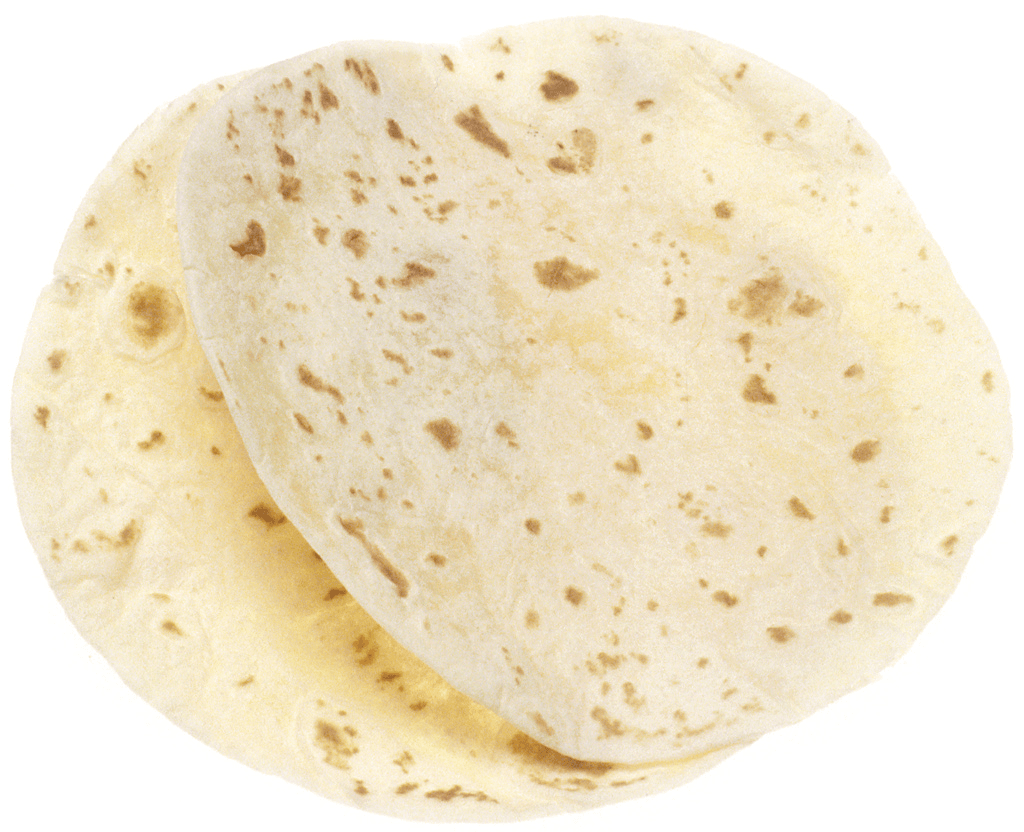
- Hot Pressing: The relaxed dough balls enter the hot press unit. Using hydraulic or servo-driven plates equipped with Teflon belts to prevent sticking, the machine flattens the balls into discs. The heat and pressure skin the dough, sealing the surface to trap moisture and create the characteristic puff during baking. Sizes can be adjusted from 15cm to 33cm.
- Tunnel Baking: The raw discs transfer seamlessly into a three-level tunnel oven. Baking time is rapid—often around 60 seconds—using direct flame (LPG or Natural Gas) to sear the tortilla surface, creating the desired toast marks and fully cooking the starch.
- Cooling and Stacking: Post-baking, the tortillas move onto a multi-tier cooling conveyor. This allows the internal temperature to drop and stabilizes the structure before packaging. Finally, the automated stacker counts and groups the product (e.g., stacks of 6 or 10) for the packaging line.
Key Technical Features
- Sanitary Design: The equipment is constructed largely from 304 stainless steel, meeting strict food safety standards and allowing for easy washdowns.
- Intelligent Control: An integrated PLC system with a touch-screen interface allows operators to adjust parameters such as press time, temperature, and conveyor speed instantly.
- Versatility: Beyond standard flour tortillas, the line may be adapted for other flatbreads like pizza bases or lavash by adjusting the forming and baking settings.
😊 Thanks for reading!
Sources
- https://www.fqttmachinery.com/news/tortilla-production-line-automatic-tortilla-production-line-tortilla-make-up-line-tortilla-processing-equipment/
- http://www.fqttmachinery.com/tortilla-production-line/6000pcs-hr-tortilla-production-line-8000pcs-hr-tortilla-production-line-tortilla-production-line/
- https://www.youtube.com/watch?v=sPrxJcMtzbM