What Happens When Sourdough Is Added to Milk Bread
Adding sourdough to milk bread changes fermentation speed, gluten behavior, flavor and staling at the same time. In a dough loaded with sugar, butter and milk, those changes can produce a softer, longer-lasting crumb or an overly sour, weak loaf, depending largely on how fermentation time is controlled.
The Milk Bread Baseline
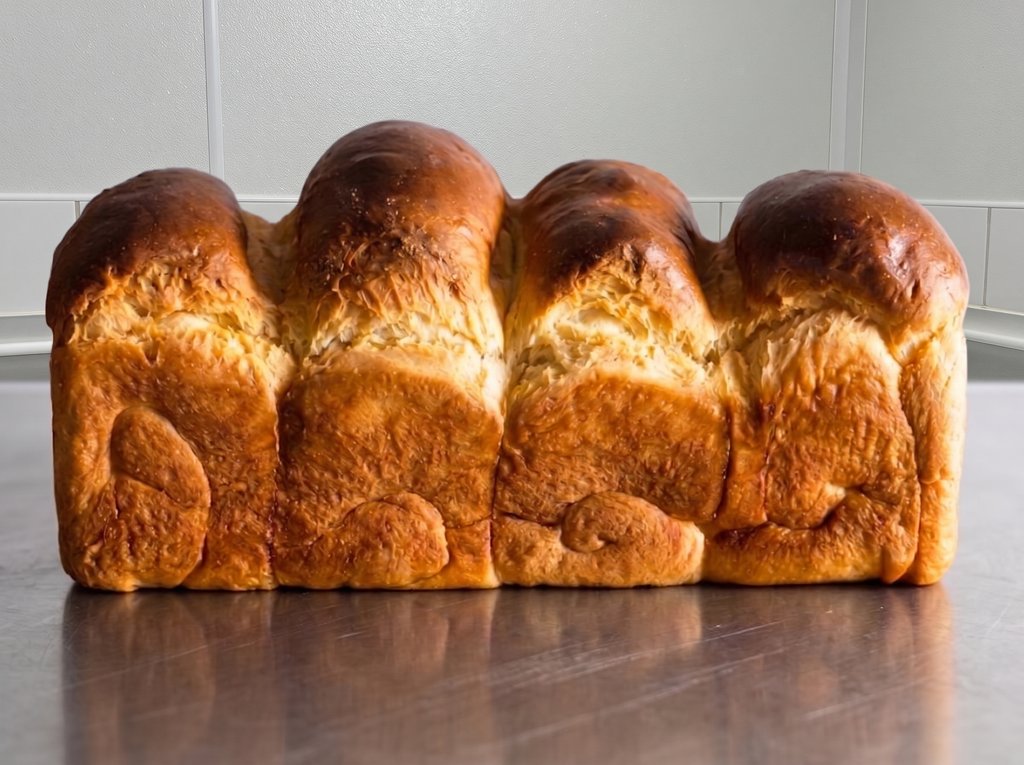
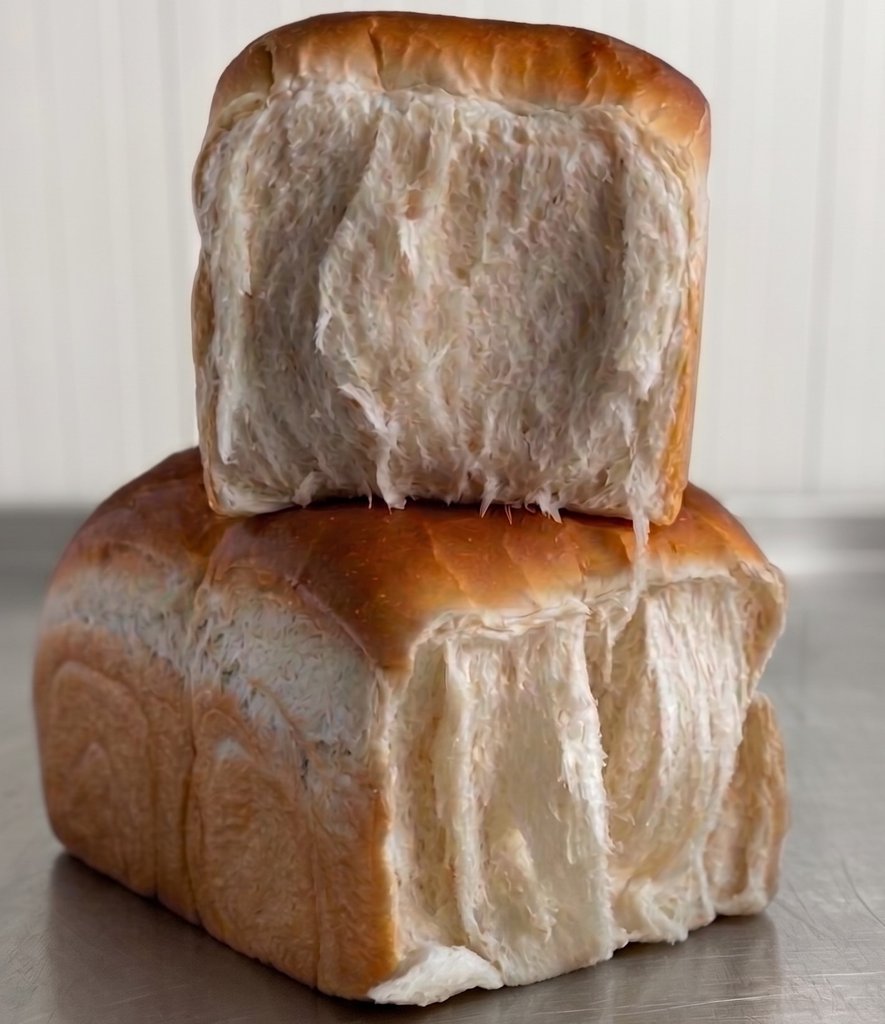
Milk bread, or shokupan, relies on a tender, feathery crumb that pulls apart in strands, a mild dairy sweetness and slow staling. The usual tool for that texture is tangzhong or yudane, where 5% to 10% of the flour is cooked with liquid so the starch swells and holds extra water.
Sourdough brings acids, enzyme activity and microbial byproducts into that system. Each of them interacts with the sugar, fat and milk solids in a different way.
Fermentation Speed and Acidity
Enriched doughs tend to slow wild fermentation. Several factors overlap:
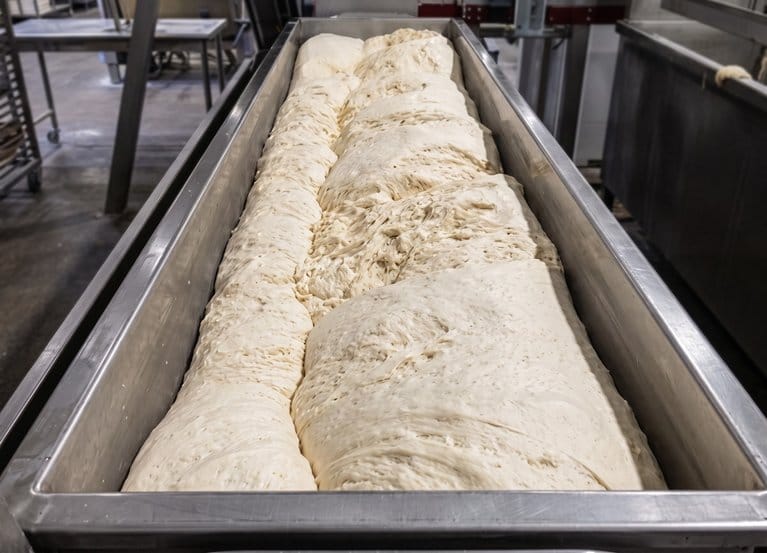
When sourdough is the only leavening, the rise may stretch to a full day. During that time, lactic acid bacteria keep consuming sugars, so the pH keeps falling and acetic acid builds up. Typical consequences include a sharp, vinegary sourness that clashes with the milky profile and excessive breakdown of the gluten network.
A small dose of instant yeast shifts the balance. The commercial yeast drives gas production, and the sourdough acts mainly as a flavor and dough conditioner. Total processing can drop to roughly 3.5 to 5 hours, which ends fermentation before acidity takes over.
Water Binding from Exopolysaccharides
Certain lactic acid bacteria in sourdough, including Weissella, Leuconostoc and Fructilactobacillus sanfranciscensis strains, use sucrose to build long sugar chains called exopolysaccharides, such as dextran and levan. The added sugar in milk bread supplies that sucrose.
Research by Zarour et al. (2026) has characterized a sourdough-derived dextran from Weissella confusa SR37 with a very high molecular weight, a porous network, strong water retention and emulsifying activity. In the dough, these polymers may:
Gluten Extensibility
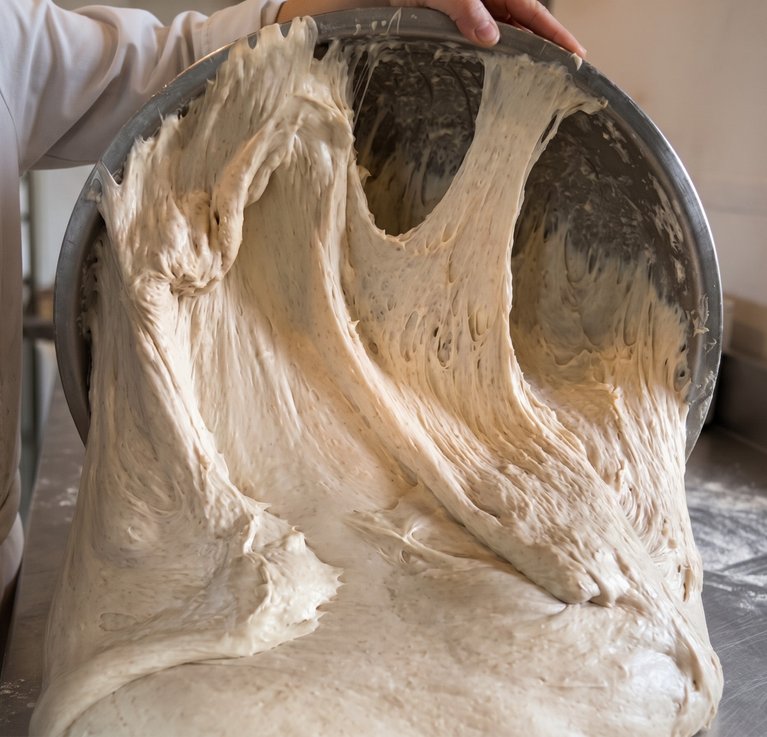
Sourdough acidity moves the dough pH closer to the range where the flour’s own proteases are most active. Some sourdough bacteria also keep glutathione in a reduced state, which tends to break the links between glutenin chains.
In formulas where the starter carries close to 30% of the total flour, that prefermented portion enters the mixer already relaxed, while the rest of the flour keeps its full strength. The relaxed fraction may:
The same mechanism becomes a risk when fermentation runs long, since continued protein breakdown can weaken the structure a tall loaf needs.
Milk Buffering and Flavor
Milk proteins, phosphates and citrates resist sudden pH drops.
This buffering tends to keep the bacteria in conditions that favor lactic acid, with a soft, creamy, yogurt-like note, over the sharper acetic acid.
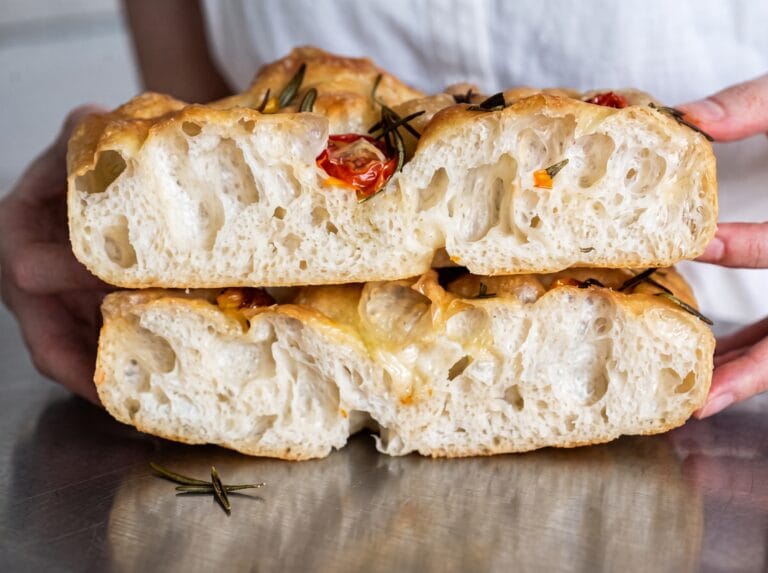
Lactose also plays a part. Baker’s yeast cannot ferment it, so it remains in the dough and adds mild sweetness to the crumb. In the crust, lactose reacts with free amino acids released during fermentation, which supports deep browning at moderate oven temperatures.
Staling Rate
Bread firms mainly as starch chains, especially amylopectin, realign into crystals during storage. Sourdough can slow that process in several ways:
Research by Babaoğlu, Demirci, Akın and Tontul (2026) on sourdoughs enriched with dairy-derived, exopolysaccharide-producing lactobacilli (Loigolactobacillus coryniformis, Lactiplantibacillus plantarum and Levilactobacillus brevis) reports lower crumb firmness and reduced starch retrogradation during storage.
Production Considerations
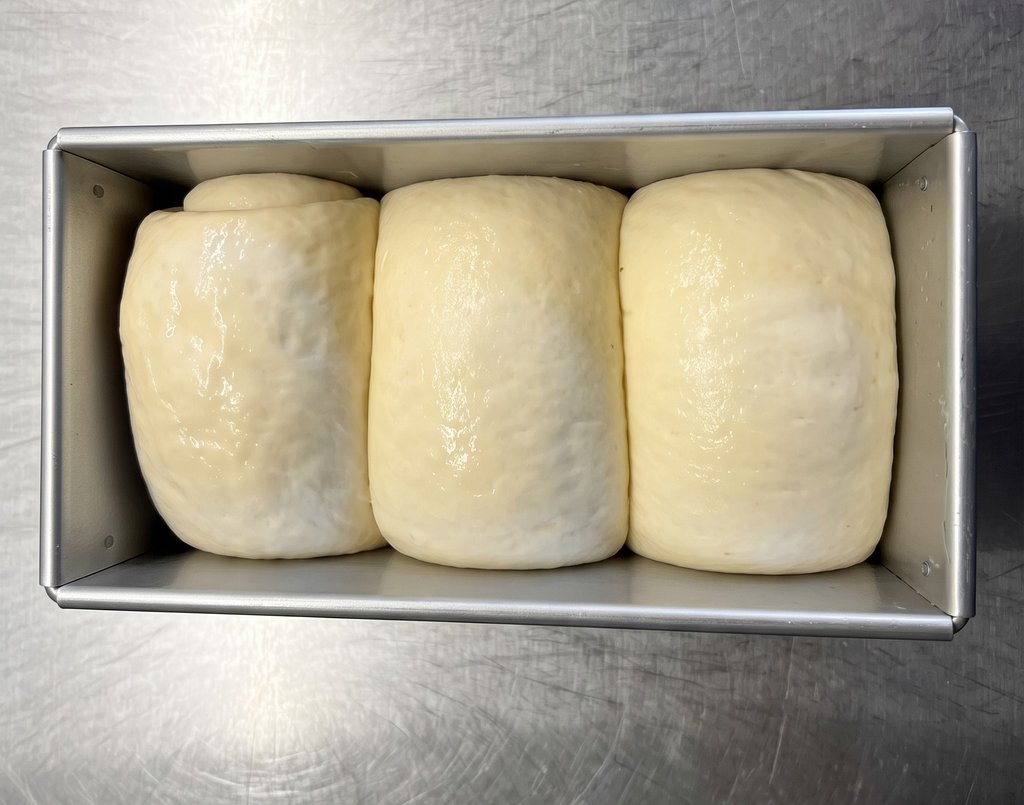
For soft pan bread lines, a high sourdough dose combined with commercial yeast may replace the tangzhong step, removing the cooking and cooling stage and the equipment it requires. Cycle times under 5 hours and a single mixing stage fit typical industrial schedules.
The trade-off shifts to fermentation control. Starter maturity, dough temperature and flour batch characteristics all influence how far acidity and protein breakdown progress. When these variables stay stable, the result can be a softer, longer-lasting crumb from a simpler process, while drift in fermentation time tends to show up quickly as excess sourness or weaker loaf structure.
😊 Thanks for reading!
Sources:
- Zarour et al. (2026): A multifunctional high-molecular-weight dextran from the sourdough-derived Weissella confusa SR37: Structure and functional properties, International Journal of Biological Macromolecules
- Babaoğlu, Demirci, Akın and Tontul (2026): Application of Cheese-Derived Exopolysaccharide-Producing Lactobacilli in Type II Sourdough to Delay Bread Staling, Fermentation
- Wang et al. (2024): Impact of Exopolysaccharides from Fructilactobacillus sanfranciscensis Ls5 on the Quality of Mantou: A Comparative Study of Fermentation Conditions, Foods
- Jurášková, Ribeiro and Silva (2022): Exopolysaccharides Produced by Lactic Acid Bacteria: From Biosynthesis to Health-Promoting Properties, Foods
- James Morton (2019): Super Sourdough: The Foolproof Guide to Making World-Class Bread at Home, Quadrille Publishing
- Japanese Milk Bread Recipe | King Arthur Baking