What Drives the Difference in Texture and Mouthfeel Between Irish and Scottish Scones?
Unintended shifts in scone density and crumb texture often trace back to mismatched ingredient states and thermal transfer methods. Evaluating flour protein, lipid dispersion, leavening kinetics, and baking dynamics provides industrial lines with practical levers to control crumb openness, chewiness, and volume without compounding formulation costs.
Composition and Raw Materials
Ingredient selection establishes the baseline mechanical behavior of scone dough:
Leavening Kinetics and Thermal Contact
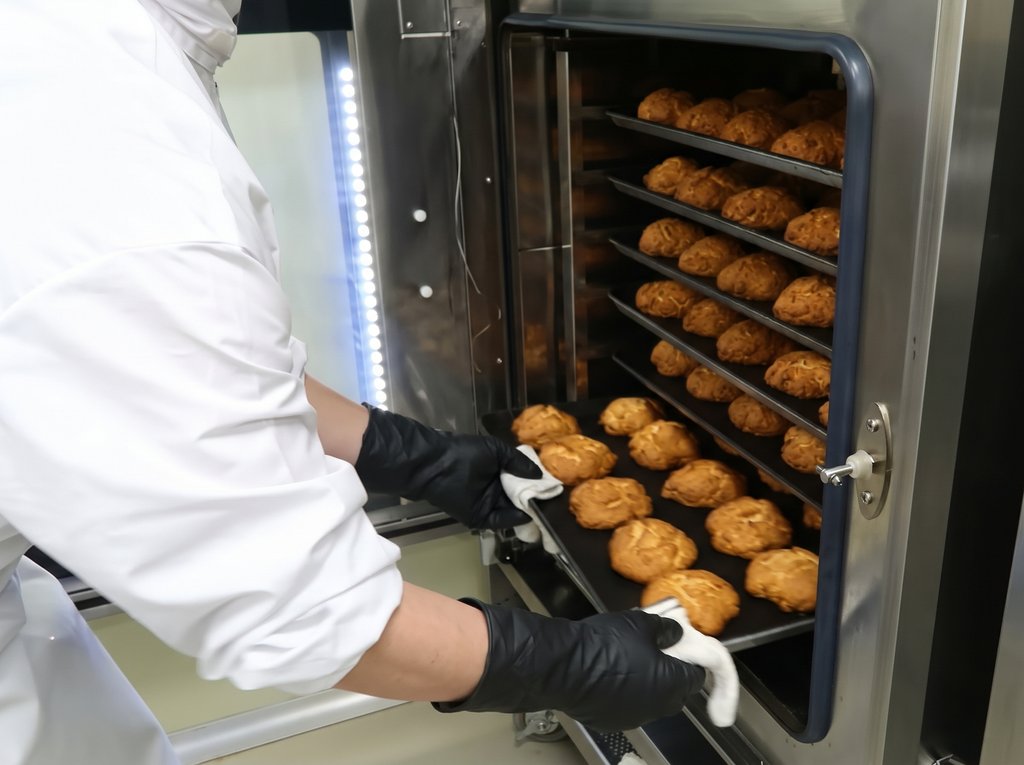
Gas release timing combined with heat application dictates the direction of dough growth:
Dough Rheology and Gas Expansion
Dough viscoelasticity governs whether expanding gases inflate open cells or remain restricted:
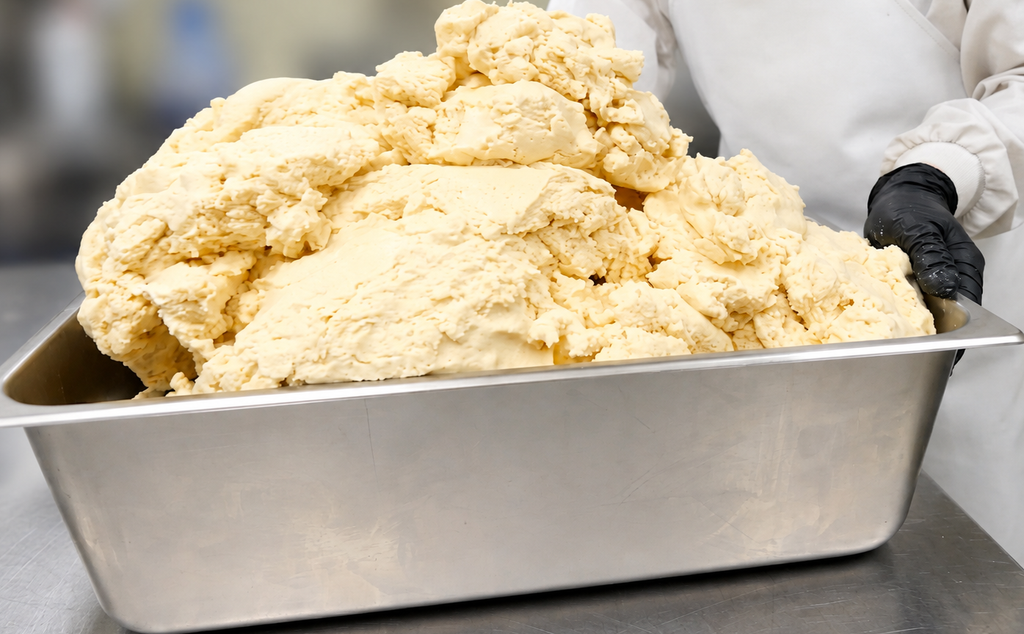
Elastic Resistance: Weak gluten formation in soft Irish flour reduces dough resistance to extensional flow. Microbubbles of carbon dioxide expand smoothly under low internal pressure without rupturing delicate cell walls.
Nucleation Sites: Rubbing chilled fat into flour traps microscopic air pockets. These voids serve as primary nucleation centers where dissolved gas gathers and expands during baking.
Matrix Homogeneity: Melted fat in Scottish formulas disperses evenly throughout the dough, eliminating discrete air pockets. Combined with higher mechanical shear, the dough develops higher flow viscosity, resisting gas expansion and keeping the matrix tight.
Crumb Morphology and Moisture Retention
These mechanisms define finished product characteristics and line performance:
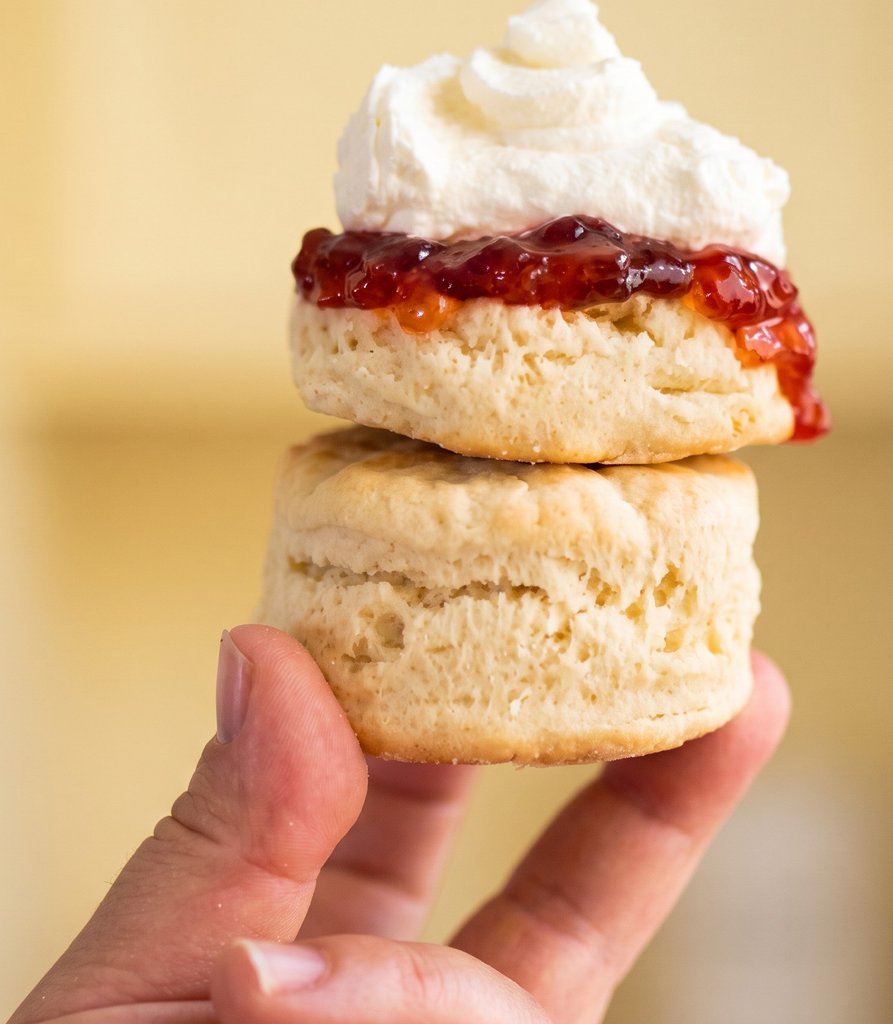
Which profile tastes better? The answer depends on individual preference and local eating traditions. A consumer seeking a delicate, melt-in-the-mouth crumb gravitates toward the light Irish scone, while someone raised on rustic fare often favors the substantial, satisfying chew of a Scottish farl.Each bakery adapts its recipe according to its market demand.
🙂 Thanks for reading!
Sources:
- Institute of Food Science and Technology (IFST), Protein: gluten formation, 2017. https://www.ifst.org/lovefoodlovescience/resources/protein-gluten-formation
- Joanna Evoniuk, BAKERpedia, Scones | Baking Processes, 2020. https://bakerpedia.com/processes/scones/
- Institute of Food Science and Technology (IFST), Raising agents: chemical, 2017. https://www.ifst.org/lovefoodlovescience/resources/raising-agents-chemical
- Vojislav Jovicic, Ana Zbogar-Rasic, Benedikt Burjakow, Antonio Delgado, Role of Individual Heat Transfer Mechanisms Within a Model Baking Oven Heated by Porous Volumetric Ceramic Burners, Frontiers in Chemistry, 2020. https://doi.org/10.3389/fchem.2020.511012
- Gamze Yazar, Wheat Flour Quality Assessment by Fundamental Non-Linear Rheological Methods: A Critical Review, MDPI Foods, 2023. https://doi.org/10.3390/foods12183353