Why Durum Wheat Resists Breadmaking and How Sourdough Fermentation Could Fix It
Durum wheat flour brings exceptional protein content but a rigid, low-extensibility gluten network that would typically resist standard breadmaking. Controlled sourdough fermentation and adapted milling could shift its rheological profile into a workable range.
Why Durum Gluten Behaves Differently
Durum wheat (Triticum durum) is an entirely distinct cereal species from common bread wheat (Triticum aestivum), traditionally cultivated for pasta semolina rather than pan bread. Its gluten network naturally lacks the specific high-molecular-weight glutenin proteins that, in conventional bread flour, build long and highly branched elastic polymer chains, giving dough its stretch recovery and gas retention capacity. Instead, durum relies predominantly on shorter, low-molecular-weight glutenins that bind tightly together, forming a network that tends to be rigid and compact, behaving more like a stiff sheet than a flexible membrane.
In practice, this translates to a dough that could exhibit:
Varieties commonly used in southern Italian bread production, such as Senatore Cappelli, Appulo, or Simeto, would typically show this rigid gluten character. It is what makes them excellent for pasta extrusion, where resistance to deformation is desirable, but it would create serious challenges in conventional bread production without specific process adjustments.
Starch Damage and Water Absorption Dynamics
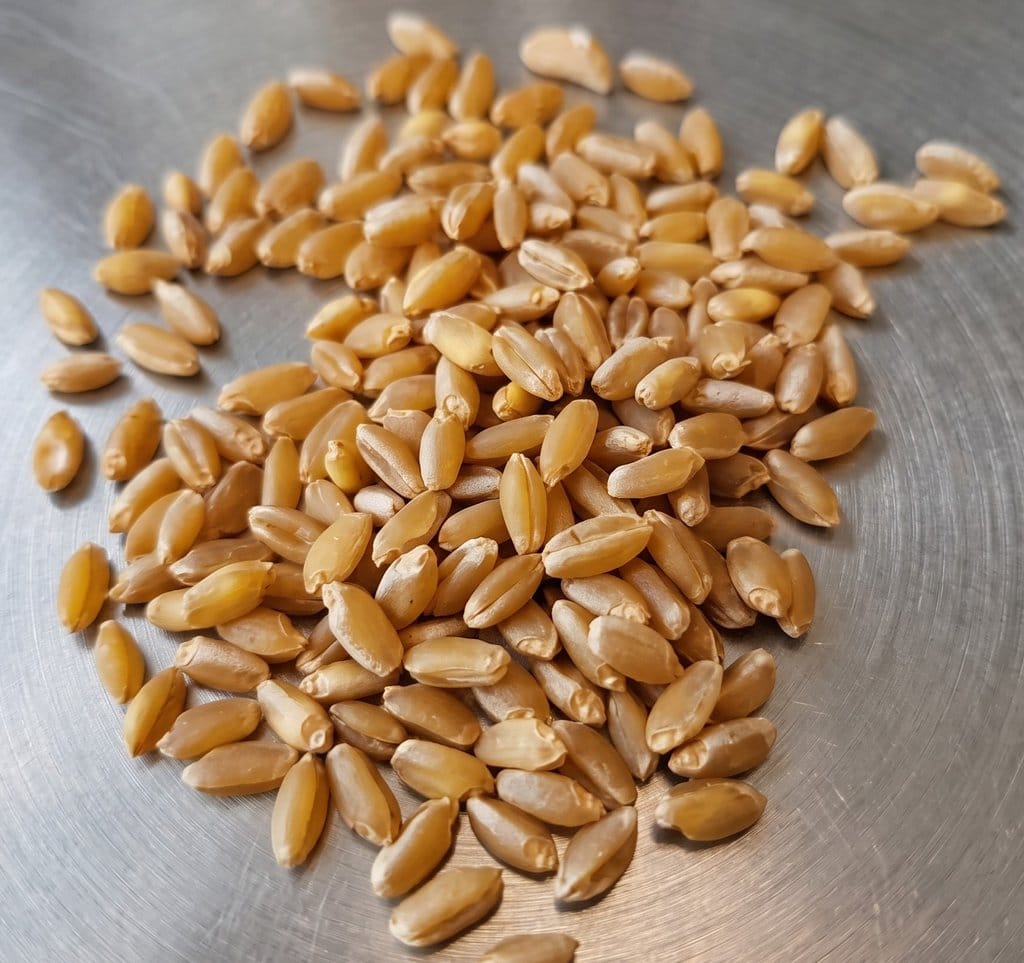
Durum wheat’s endosperm is highly vitreous, with hardness values commonly above 85% to 90%. Milling this endosperm into semola rimacinata (durum semolina re-milled to a fine, flour-like texture suitable for breadmaking), requires considerably more mechanical energy than processing common wheat.
This aggressive milling tends to fracture starch granules at rates roughly double those seen in soft wheat flour. Damaged starch levels in semola rimacinata might typically reach 8% to 11.5%, compared to 4.5% to 6.5% in standard bread flour. The practical consequences include:
Operationally, an autolysis rest of 30 to 45 minutes after initial hydration would typically help. The damaged starch absorbs water rapidly on the surface, initially making the dough feel dry and tight. During autolysis, that water gradually migrates into the gluten-forming proteins, producing a noticeably softer, more extensible mass.
How Sourdough Fermentation Modifies Durum Gluten
The traditional approach to making durum wheat workable for bread relies on natural sourdough fermentation to reshape the gluten network from the inside.
As the sourdough culture drops the dough pH into the 3.8 to 4.4 range, acid-activated endopeptidases begin selectively cleaving rigid glutenin bonds. This controlled proteolysis could reduce tenacity by roughly 35% to 45% while increasing extensibility by 50% to 75%. The net effect would typically bring the tenacity-to-extensibility ratio from its native range of 1.8 to 3.2 down to approximately 0.75 to 1.05, a window far more compatible with breadmaking.
The Matera protocol specifies initiating the sourdough culture with a maceration of fresh figs or local grapes, which introduces fructose as an electron acceptor for heterofermentative lactic acid bacteria. This would tend to balance the ratio of lactic to acetic acid production near 3.2 to 4.0, contributing both flavor complexity and functional acidity.
Shaping, Scoring, and Baking Considerations
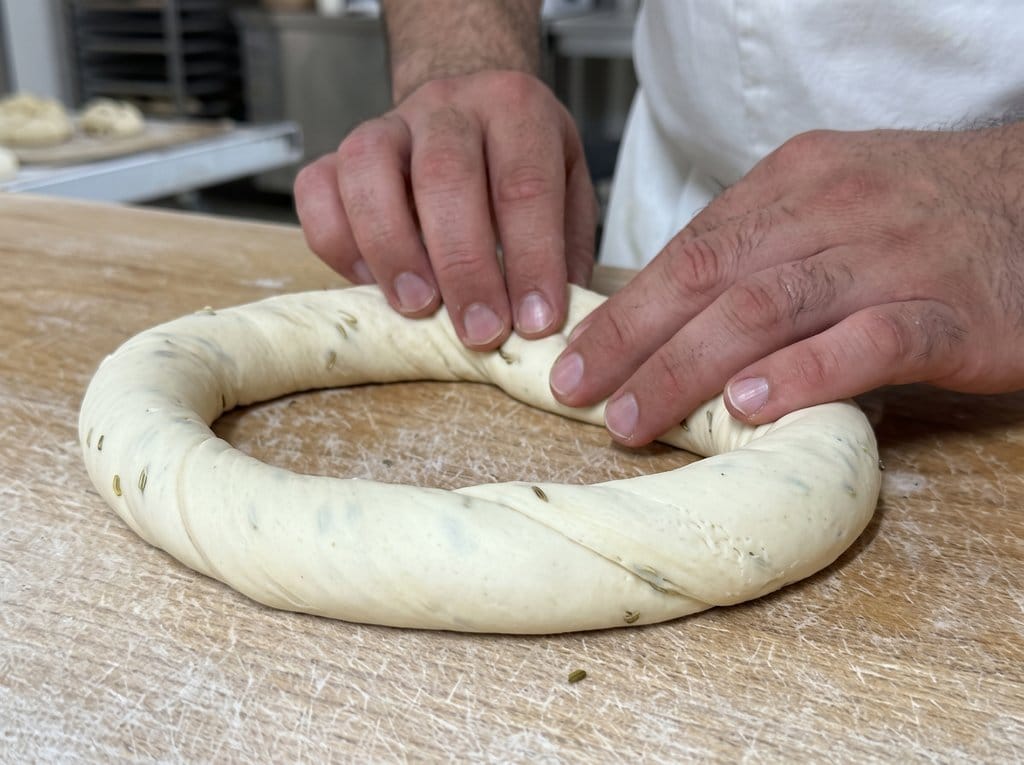
Even after fermentation, durum dough would still lack the elastic recovery typical of bread flour.
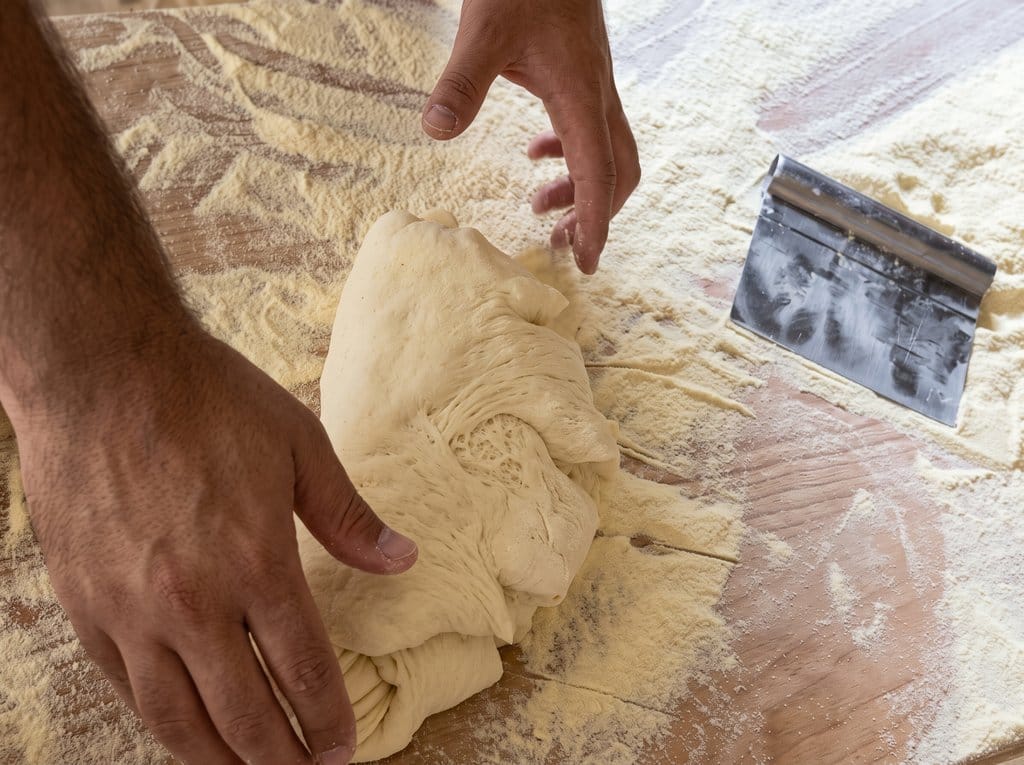
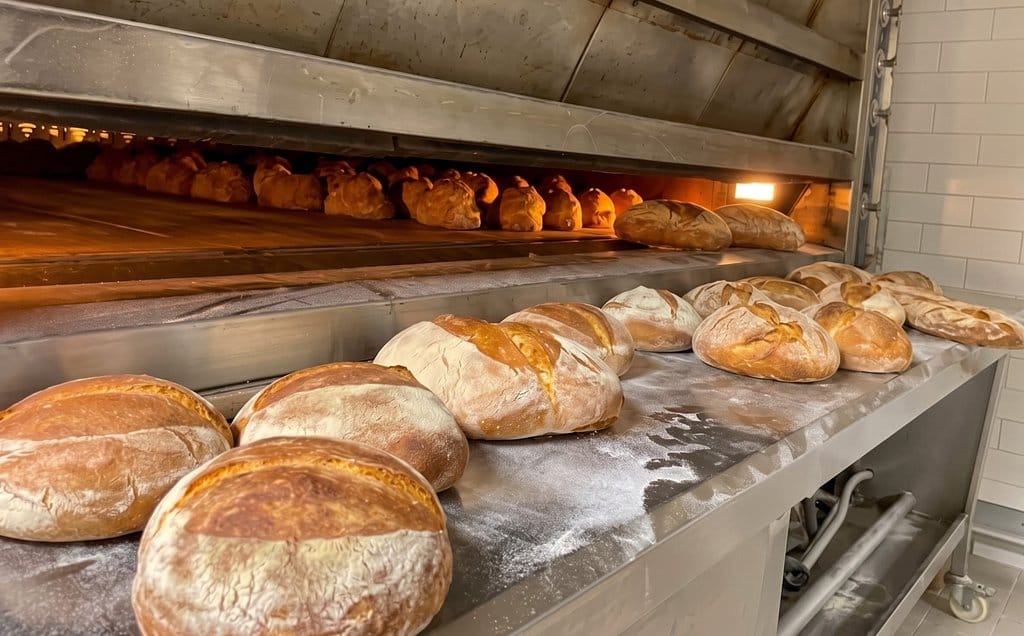
The three deep axial cuts traditionally scored into the top of each loaf play a critical mechanical role. Without them, the rapid vapor pressure buildup during the first 10 to 12 minutes of baking could find no controlled release path. Given the high fracture resistance of durum gluten, unvented pressure would tend to tear the loaf open at the base rather than expanding upward. The cuts create a programmed fracture zone, channeling expansion through the crest.
Baking typically starts at 240°C to 250°C with heavy steam injection, then gradually drops to 200°C to 210°C, finishing with an open-damper phase. Total bake times for a 1 kg piece might run 45 to 60 minutes, producing a crust thickness of 3 mm or more. The thick crust and residual acidity from fermentation would together tend to limit moisture migration and inhibit starch retrogradation, potentially extending shelf life to 10 to 14 days without chemical preservatives.
Industrial Scaling Variables
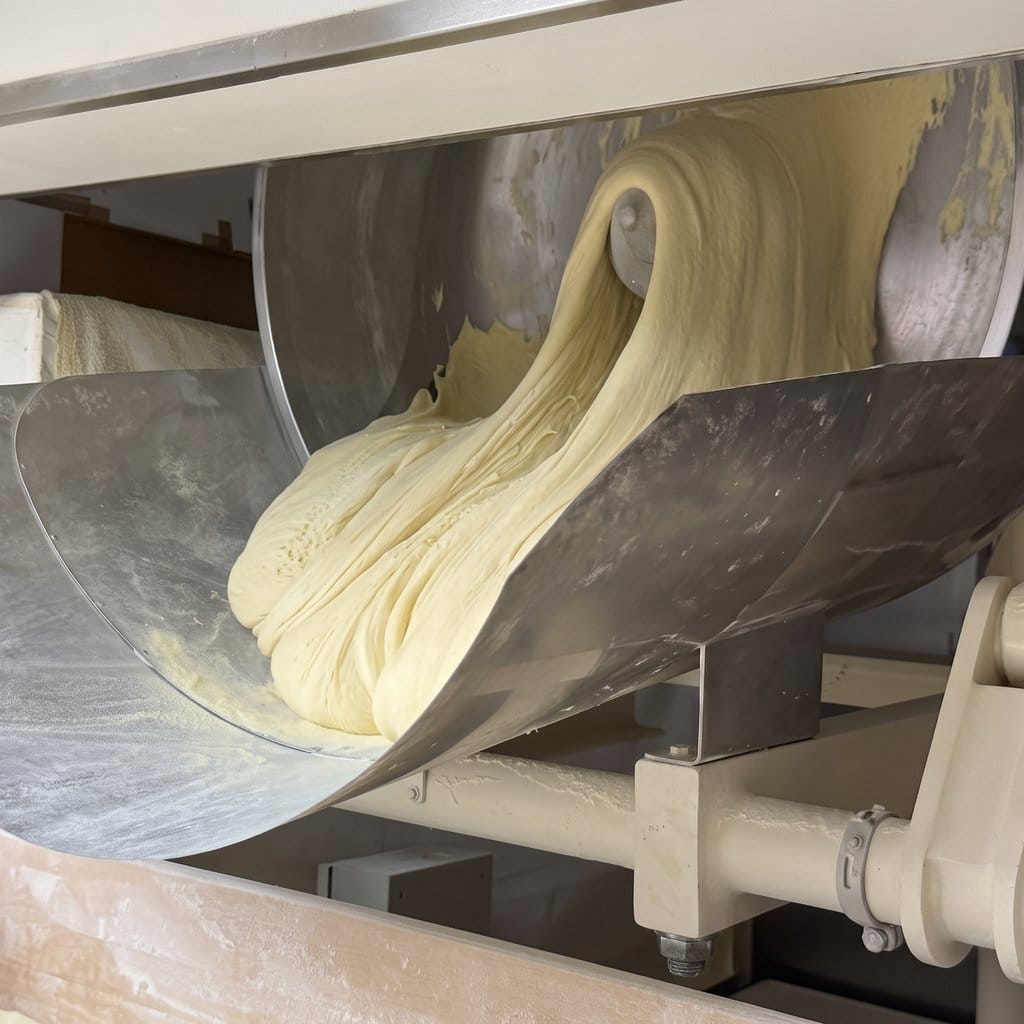
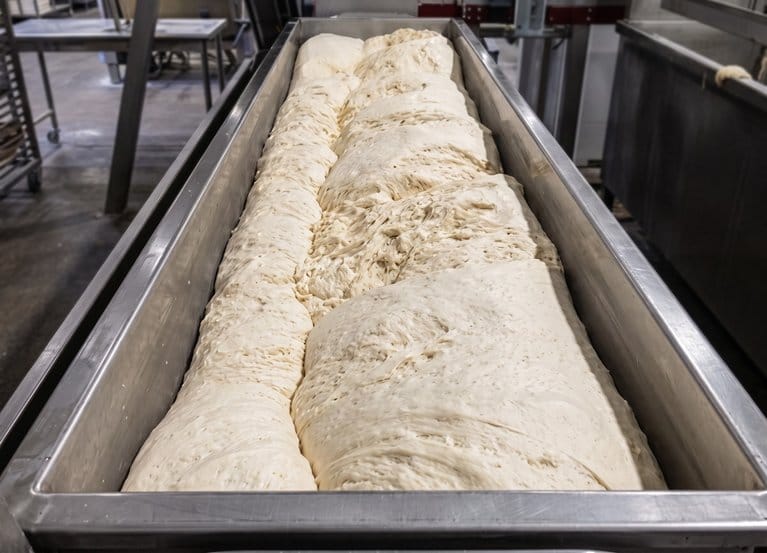
Transferring these principles to automated lines introduces specific equipment constraints. Standard high-speed spiral mixers could rapidly over-develop durum gluten, pushing it past its narrow stability window in under 90 seconds of excess mixing. Twin-arm mixers or frequency-controlled spirals running below 95 RPM would generally offer better results.
Volumetric dividers with piston compression tend to trigger severe elastic rebound in durum dough, often tearing the surface skin and compromising gas retention. Gravimetric, stress-free dividing systems would typically handle these doughs more effectively by avoiding direct mechanical compression of the gas cells.
Final dough temperature at discharge should stay close to 23°C. If the mass exits above 25°C, the combination of accelerated enzymatic activity on damaged starch and colloidal dehydration of the gluten network could quickly erode whatever processing tolerance the fermentation step achieved.
😊 Thanks for reading!
Sources:
- https://www.youtube.com/watch?v=NtedCo6GkPY&t=2s
- Pasqualone A, et al. “Rheological and Breadmaking Performance of Semolina from Ancient and Modern Durum Wheat Genotypes.” Foods (2020), 9(11), 1678. https://doi.org/10.3390/foods9111678
- Rizzello CG, et al. “Impact of Sourdough Fermentation on Durum Wheat Bread Characteristics.” Food Chemistry (2021), 343, 128487. https://doi.org/10.1016/j.foodchem.2020.128487
- Taranto F, et al. “Starch Damage in Durum Wheat Semolina.” LWT (2022), 154, 112658. https://doi.org/10.1016/j.lwt.2021.112658
- Minervini F, et al. “Traditional Sourdough Bread from Southern Italy: Pane di Matera PGI.” Int. J. Food Microbiology (2022), 378, 109825. https://doi.org/10.1016/j.ijfoodmicro.2022.109825
- Sissons M, et al. “Structural Roles of GMP and LMW-GS in Durum Wheat Breadmaking.” J. Cereal Science (2021), 99, 103214. https://doi.org/10.1016/j.jcs.2021.103214
- Ficco DBM, et al. “Carotenoid Stability and Lipoxygenase Activity in Durum Wheat.” Antioxidants (2023), 12(4), 892. https://doi.org/10.3390/antiox12040892
- Pontonio E, et al. “Extending Shelf-Life of Durum Wheat Breads.” Frontiers in Microbiology (2023), 14, 1145620. https://doi.org/10.3389/fmicb.2023.1145620
- Cauvain SP, Young LS. Baking Problems Solved, 3rd Ed. Woodhead Publishing (2023). ISBN: 978-0-12-821832-7
- Gänzle MG, Zheng J. “Maltose Phosphorylase and Hexose Metabolism in F. sanfranciscensis.” Current Opinion in Food Science (2024), 56, 101132. https://doi.org/10.1016/j.cofs.2024.101132
- Curiel JA, et al. “The Rheological Shift: Acid Proteolysis in Semola Rimacinata Doughs.” Food Hydrocolloids (2024), 148, 109489. https://doi.org/10.1016/j.foodhyd.2023.109489
- Saravacos GD, Kostaropoulos AE. Handbook of Food Processing and Baking Engineering. Springer (2025). https://doi.org/10.1007/978-3-031-67890-1_14
- MASAF, “Pane di Matera IGP: Disciplinare di Produzione.” Gazzetta Ufficiale (2024), Serie Generale n. 142. https://www.qualigeo.eu/en/prodotto-qualigeo/pane-di-matera-pgi/
- Myhrvold N, Migoya F. Modernist Bread. The Cooking Lab (2024 Re-edition), Vol. 2 & 4.
- Bread Chronicles, “Panificio Perrone dal 1890.” https://www.youtube.com/watch?v=NtedCo6GkPY