Biotechnical Valorization of Residual Whey: Engineering Substrates for Sustainable Dough Systems
Managing residual whey generates severe environmental challenges; however, a sequential fermentation protocol using Kluyveromyces marxianus and Saccharomyces cerevisiae GP4 depletes lactose and valorizes this byproduct to produce functional sliced bread with extended shelf life.
Disposing of large volumes of acid or sweet whey from cheese manufacturing remains a serious technical headache; its high chemical and biochemical oxygen demand requires expensive pre-treatment operations before environmental discharge. Simultaneously, the industrial baking sector constantly seeks clean-label alternatives to enrich sliced bread without increasing raw material costs or compromising digestibility for lactose-sensitive consumers.
A new study published in the Journal of Food Science has systematized a biotechnical protocol to address both industrial challenges simultaneously; converting this liquid side-stream into a functional ingredient through a controlled, two-stage fermentation scheme.
Raw whey contains highly valuable proteins and minerals, but its direct incorporation into dough typically impairs gluten network development; resulting in poor gas retention and low loaf volume. This new method solves this rheological bottleneck through enzymatic deconstruction and controlled bio-acidification.
The biotechnological mechanism behind the process
To understand the engineering of the substrate, the optimized protocol operates under the following controlled parameters and sequential biotransformations:
The industrial symbiosis of these two specific yeasts resolves the historical issue of poor gas production in dairy-enriched doughs; the Kluyveromyces marxianus MH6 strain prepares the substrate by converting complex lactose into simple, easily fermentable hexoses; which are rapidly metabolized by the Saccharomyces cerevisiae GP4 strain to optimize carbon dioxide release and volatile aroma formation during proofing.
Direct impact on the production line and the finished product
Integrating this bioprocessed whey directly into the production line offers substantial cost-reduction opportunities. By substituting mixing water and eliminating the need for added sucrose or high-fructose corn syrup, industrial bakeries can lower formulation costs; while simultaneously reducing the water footprint of the manufacturing facility.
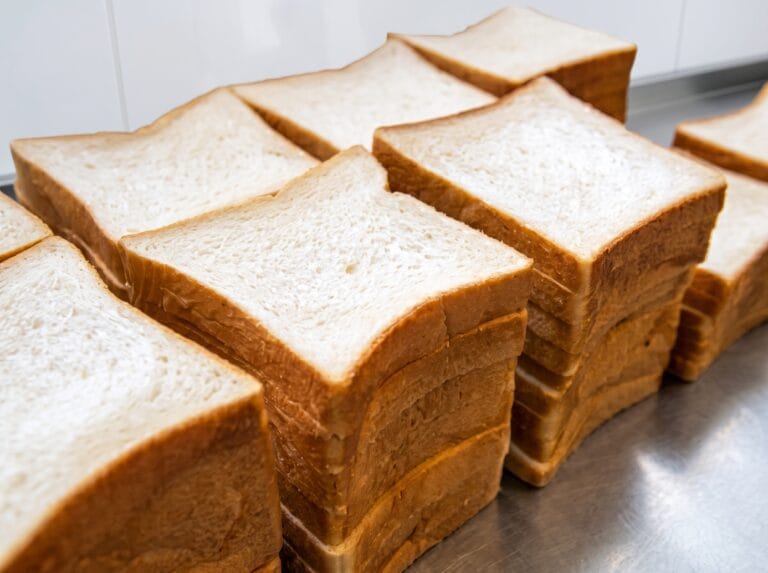
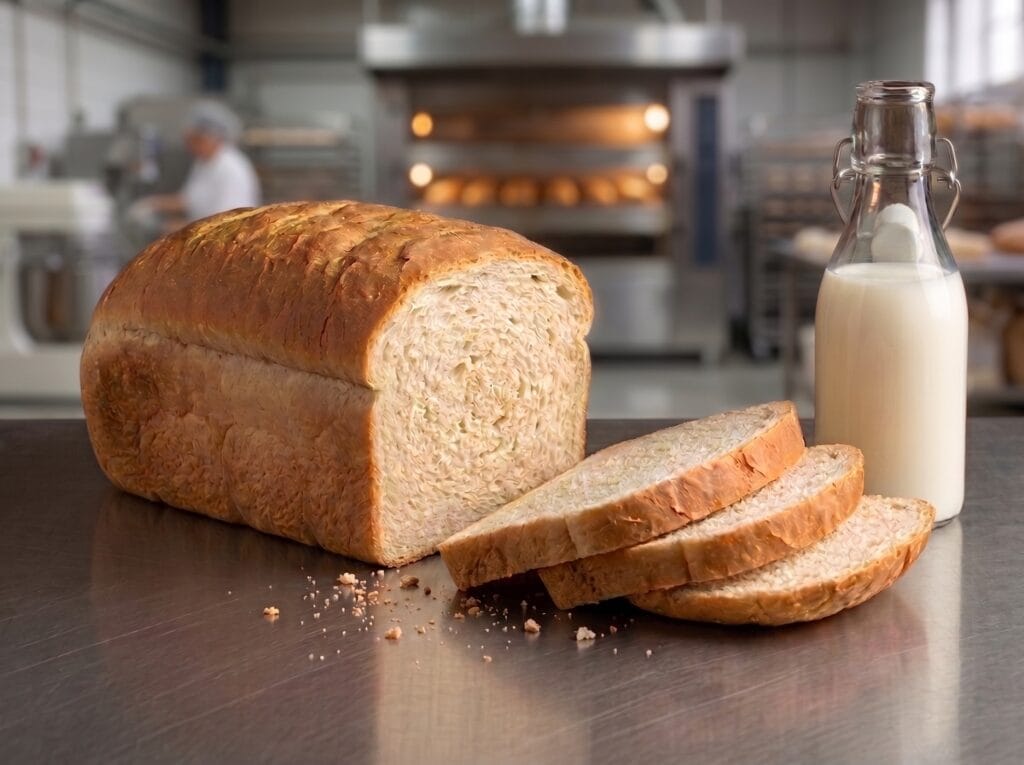
The structural crumb of the finished product exhibits high elasticity and an optimized specific volume, avoiding the dense, crumbly texture typical of conventional whey-addition methods. This structural improvement is driven by the controlled pH of 5.5 and the thermal denaturation of soluble whey proteins; which act as co-emulsifiers and mechanical stabilizers within the starch-gluten matrix.
Moreover, the final sliced bread features a natural protein enrichment, which allows manufacturers to pursue clean-label functional claims in the growing wellness sector.
Regarding supply chain logistics, the bio-preserved bread maintains its softness and sensory profile for up to 4 days under standard ambient conditions. The organic acids generated during double fermentation delay starch retrogradation and inhibit mold spoilage, eliminating the need for synthetic preservatives like calcium propionate.
😊 Thanks for reading!
Sources:
- Journal of Food Science (Yeast-Based Bio-Valorization of Whey for Sustainable and Functional Bread Development: A Step Toward Next-Generation Food Products). Authors: Divya Gujral, Rahul Khanna, Keshani Bhushan, Arashdeep Singh.
- Link: https://ift.onlinelibrary.wiley.com/doi/10.1111/1750-3841.71264