How Castella Cake Achieves Elastic Crumb Without Chemical Leaveners or Shorteners
Castella cake builds a tall, elastic crumb column using only whole egg foam, high-protein flour, and sugar, with no baking powder or added fat. Each ingredient carries a precise structural role, and the margin for variation tends to be tighter than in conventional sponge cake systems.
Whole Egg as the Sole Aerating and Binding Agent
The formulation typically runs at 180% whole egg relative to flour weight, making egg the dominant component by mass, representing 50% of total batter weight. This high egg load simultaneously provides the system’s entire water supply, its aerating capacity, and its thermal setting mechanism.
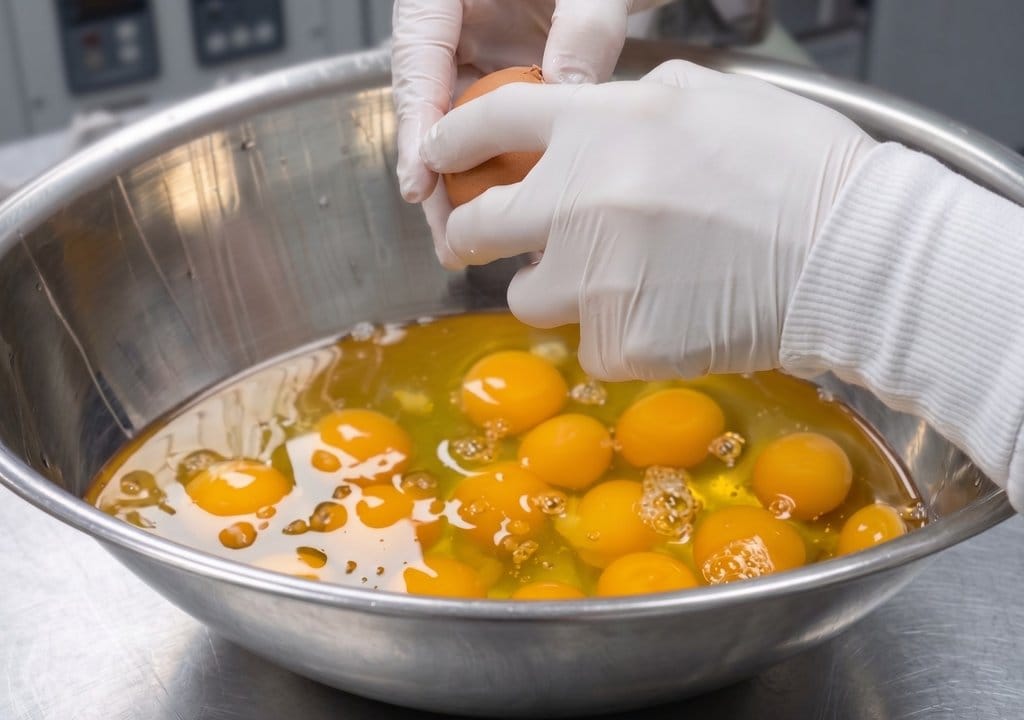
The egg white proteins, primarily ovalbumin, ovomucin, and lysozyme, unfold during mechanical whipping and migrate to the air-water interface. Their hydrophobic regions orient toward the gas phase while hydrophilic segments remain in the aqueous phase, generating a continuous viscoelastic film around each micro-bubble and creating a stable foam matrix without external gas injection.
The yolk fraction contributes lipoprotein complexes (lipovitellin, low-density lipoproteins, lecithin) that, rather than destabilizing the foam the way free triglycerides would, increase the elasticity of the liquid films separating air cells. The result is a cohesive, golden crumb with a moist mouthfeel.
A critical processing detail: The egg-sugar mixture is typically warmed to 40°C before intensive whipping. At this temperature range, the viscosity of the blend drops enough to allow the whisk to fragment air into much finer bubbles at a faster rate. The proteins gain conformational flexibility without reaching irreversible coagulation thresholds (egg white proteins would not begin to set until approximately 57°C, yolk proteins above 65°C), which accelerates their adsorption at bubble surfaces.
Why High-Protein Flour Instead of Cake Flour
This is perhaps the most counterintuitive choice relative to Western sponge cake conventions. Standard cake flour specifications target 7-9% protein, a low-strength flour, specifically to minimize gluten network formation and produce a tender, crumbly crumb. Castella formulations go in the opposite direction, calling for a higher-strength flour at 11-13% protein.
The rationale connects directly to the absence of fat in the formula:
The Structural Consequences of Zero Added Fat
The exclusion of butter, margarine, shortening, and vegetable oils from the Castella formula is functionally strict. Two overlapping mechanisms explain why even small lipid additions could compromise the product:
The result is a system where egg proteins handle foam stabilization and the gluten network handles mechanical load, with no competing lipid phase.
Why No Chemical Leaveners
Conventional baking powder (sodium bicarbonate combined with acid salts) releases carbon dioxide in rapid, pH-dependent bursts. In a Castella context, this could generate irregular gas cells with wide size variation, inconsistent with the fine, uniform alveolar geometry expected in the finished product.
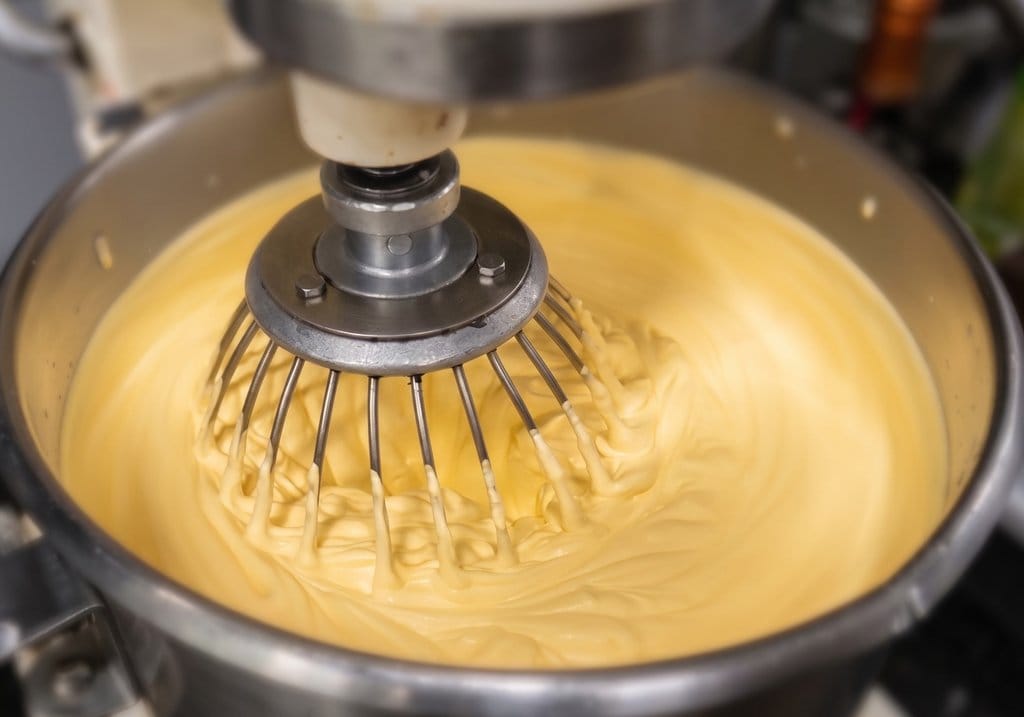
Instead, the system relies entirely on thermal expansion of air physically incorporated during whipping. As batter temperature rises in the oven, pre-existing micro-bubbles expand progressively, while increasing water vapor pressure provides additional leavening force as the batter approaches 100°C. Each bubble functions as a pre-formed nucleus expanding symmetrically, which could yield a more homogeneous crumb structure than chemically generated gas.
How High Sugar Levels Protect and Extend the Foam
Sugar content runs at 140-180% of flour weight. Beyond sweetness, this concentration would serve two functional roles during baking:
Mizuame: Moisture Retention Without Fat
The addition of mizuame (a traditional malt syrup composed primarily of maltose at 65% concentration, plus glucose, dextrins, and medium-chain oligosaccharides) at 30% of flour weight addresses the shelf life and textural challenges that typically require fat in Western formulations.
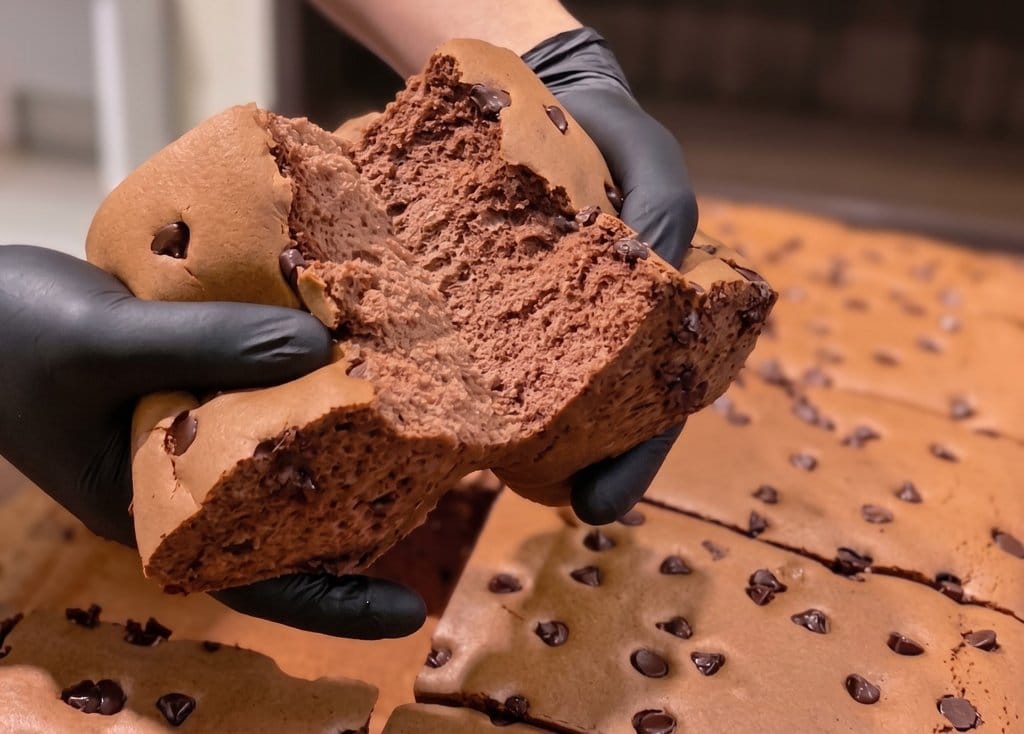
Incorporating Cocoa Powder and Chocolate Chips Without Structural Collapse
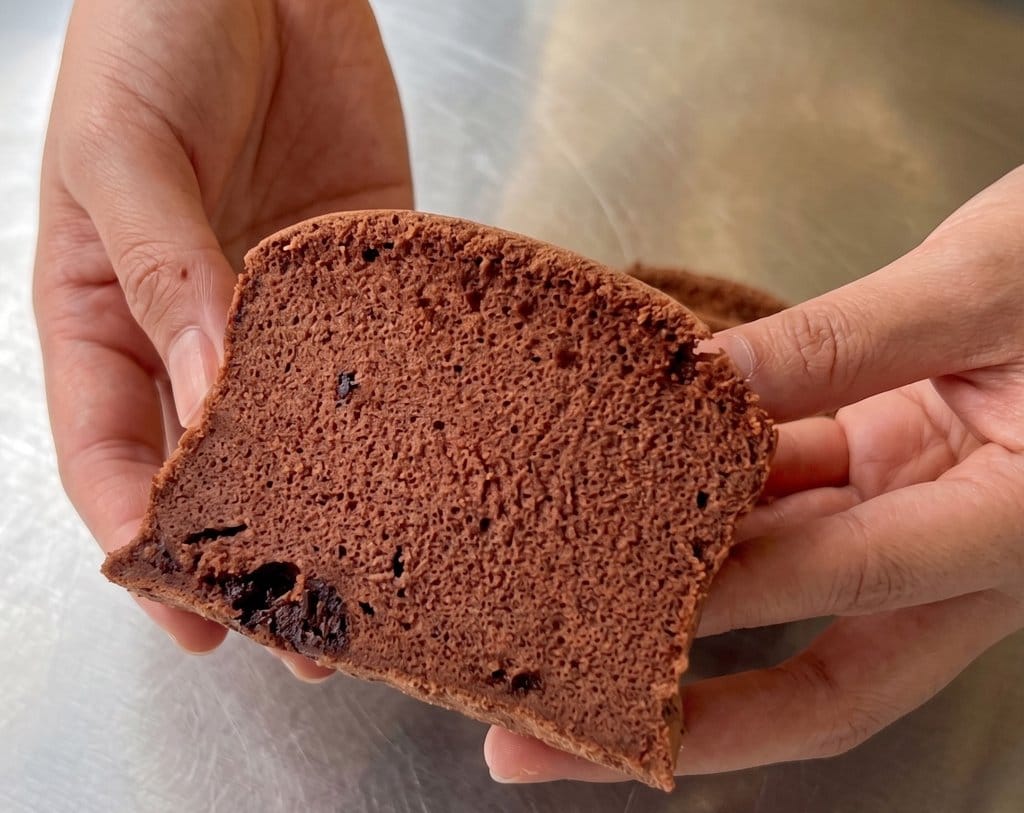
Formulating a chocolate version introduces processing challenges that directly touch the core mechanisms of this foam system:
😊 Thanks for reading!
Sources:
- Fukusaya Co., Ltd. – Fukusaya Tradition and Nagasaki Castella History: https://www.fukusaya.co.jp/global/en/index.html
- Japan National Tourism Organization (JNTO) – Fukusaya’s Famous Castella Cake: https://www.japan.travel/en/sg/story/fukusayas-famous-castella-cake/
- Edible Molecules – Preparing Sponge Cakes with the Warm Method: https://www.ediblemolecules.com/blog/2021/6/19/preparing-sponge-cakes-with-the-warm-method-my-2-cents
- Royal Society of Chemistry (Food & Function) – Sonication of Egg and its Effect on Foaming Properties: https://pubs.rsc.org/fb/article/1/4/511/808831/Sonication-of-egg-and-its-effect-on-foaming
- Bakerpedia – Starch Gelatinization Dynamics: https://dev.bakerpedia.com/processes/starch-gelatinization/
- Gateau TA – Castella Cake Science: https://gateauta.com/castella