Industrial Biscuit Production: Managing Raw Scrap and Slurry Rework
In high-capacity industrial biscuit and cracker plants, managing the material flow of unused dough is a core determinant of dough rheology and facility profitability. Installations operate under highly adjusted ingredient margins, meaning that raw dough scrap cannot simply be discarded without incurring significant financial losses.
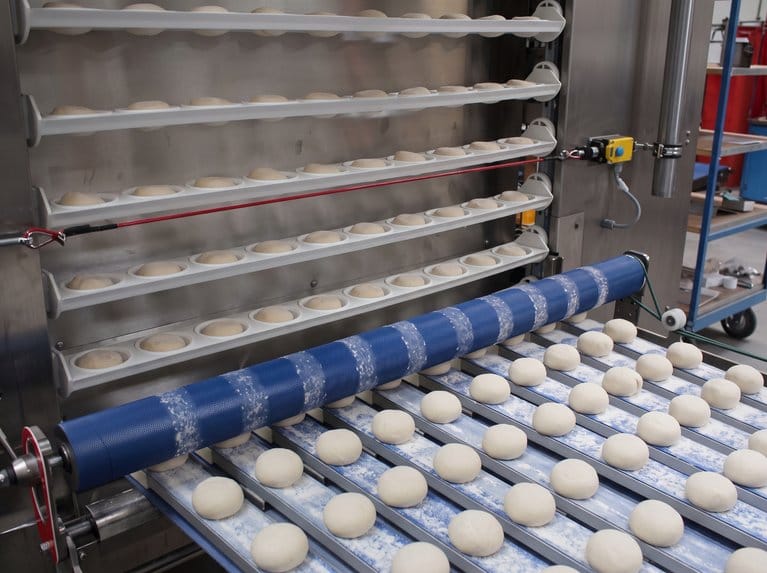
The continuous nature of these production lines requires a balanced mass flow between incoming raw materials and finished packaged products. Any fluctuation in raw scrap generation or reincorporation rates can destabilize the thermal profiles in the downstream processes, leading to inconsistent product dimensions and high rejection rates at the packaging station.
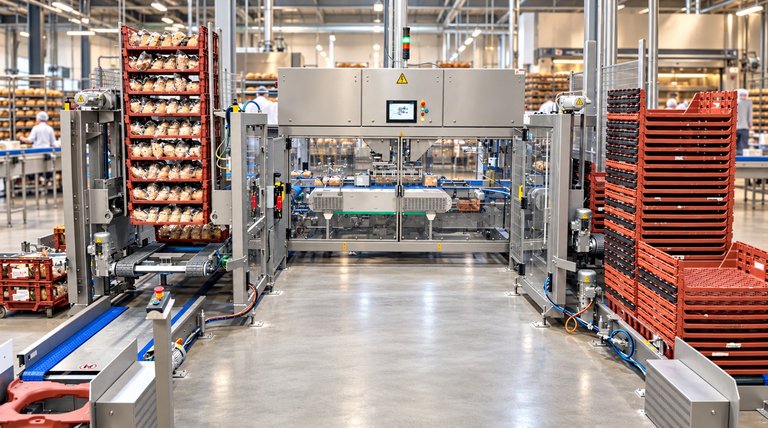
For this reason, plant managers should prioritize the implementation of automated, closed-loop rework systems. These systems seek to reduce direct manual handling, control microbial risks, and preserve the specific physical characteristics of the dough sheet before it enters the baking tunnel oven.
How Sheeting and Mechanical Action Affect Gluten Elasticity
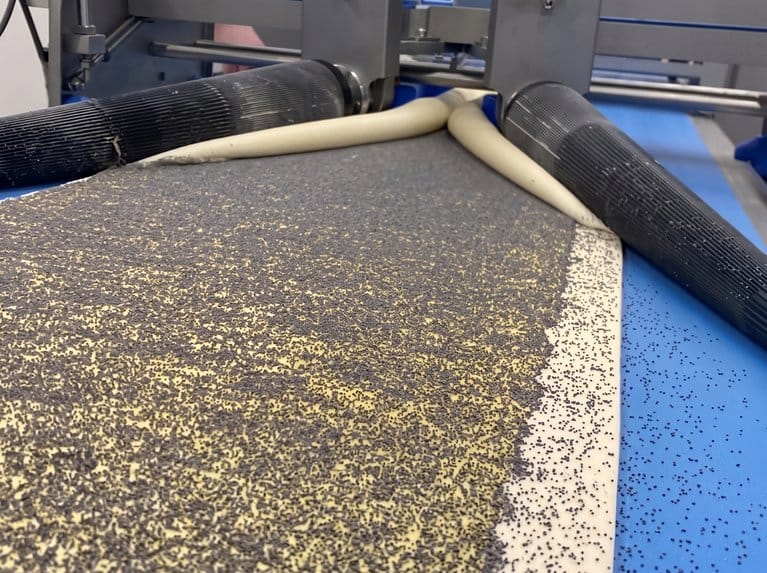
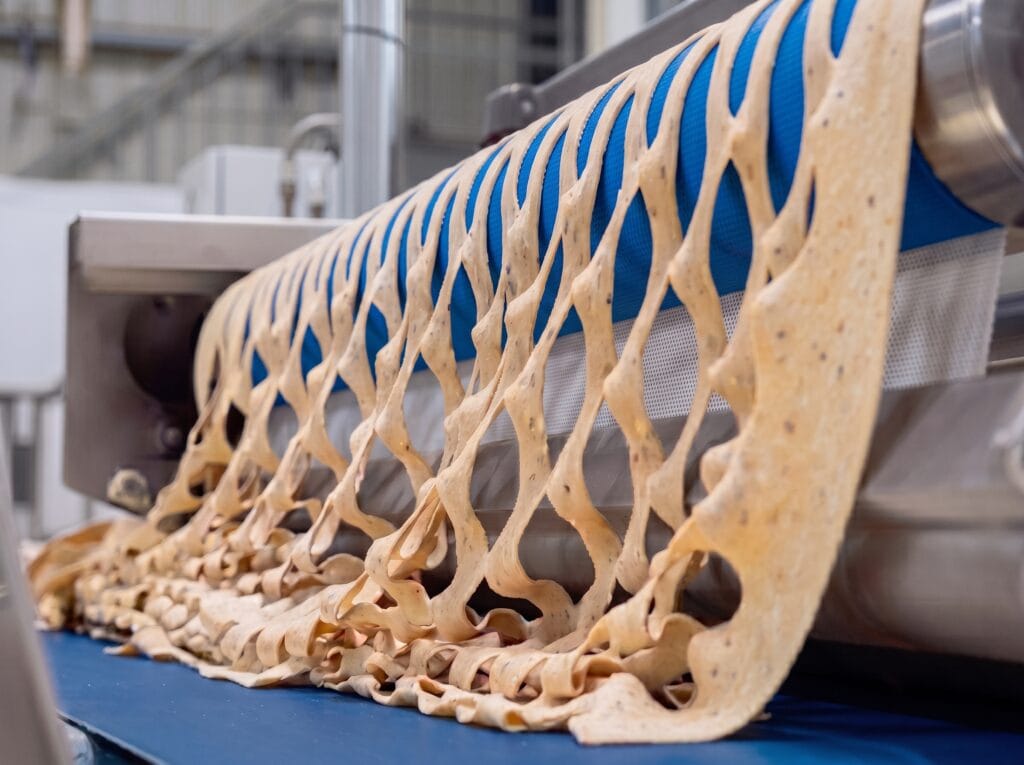
When raw scrap dough is peeled from the conveyor belt, it has already undergone lamination and gauge reduction. This physical shearing action aligns the wheat proteins, specifically gliadin and glutenin, parallel to the direction of sheeting.
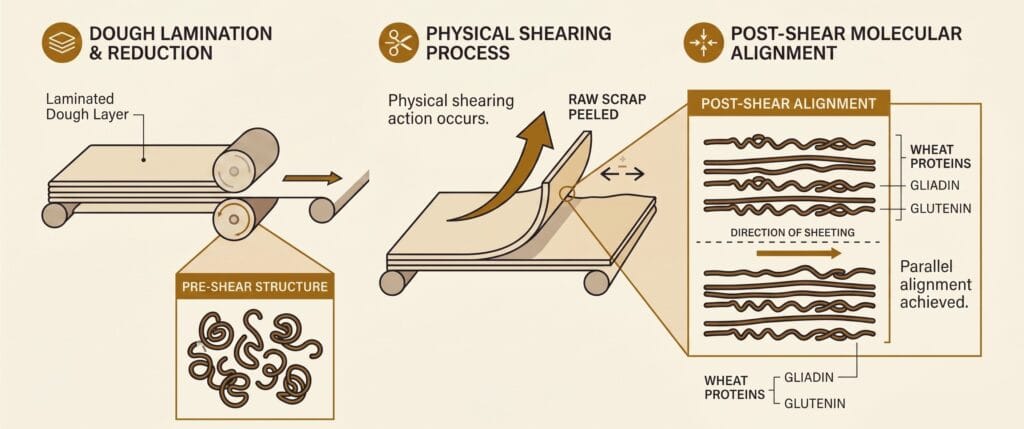
This repeated action forces the polymeric glutenin chains to establish additional intermolecular disulfide cross-links. This structural alignment causes a notable increase in the elastic storage modulus of the return dough, making the recycled material highly resistant to stretching.
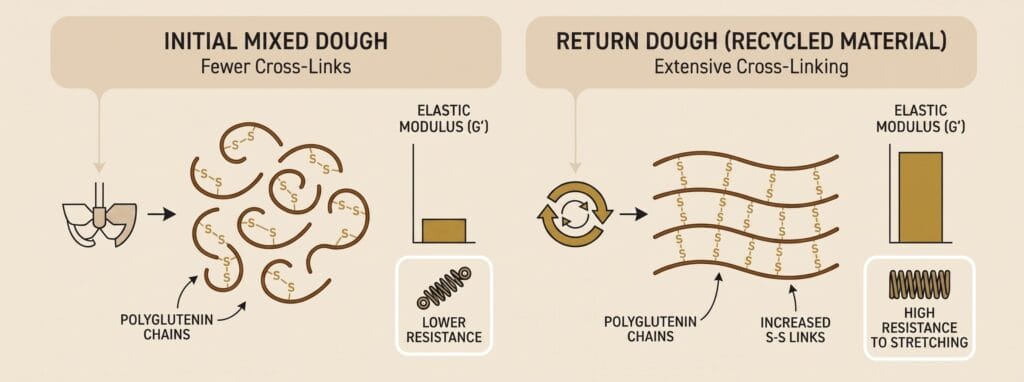
As the proportion of raw return dough in the fresh dough sheet increases, the ratio of viscous flow to elastic behavior decreases. This physical shift is the direct cause of elastic memory and anisotropic material shrinkage across the conveyor belt.
When the rotary cutter stamps the dough shapes, the highly elastic zones contract immediately after the mechanical pressure of the mold is released. This contraction occurs primarily in the machine direction.
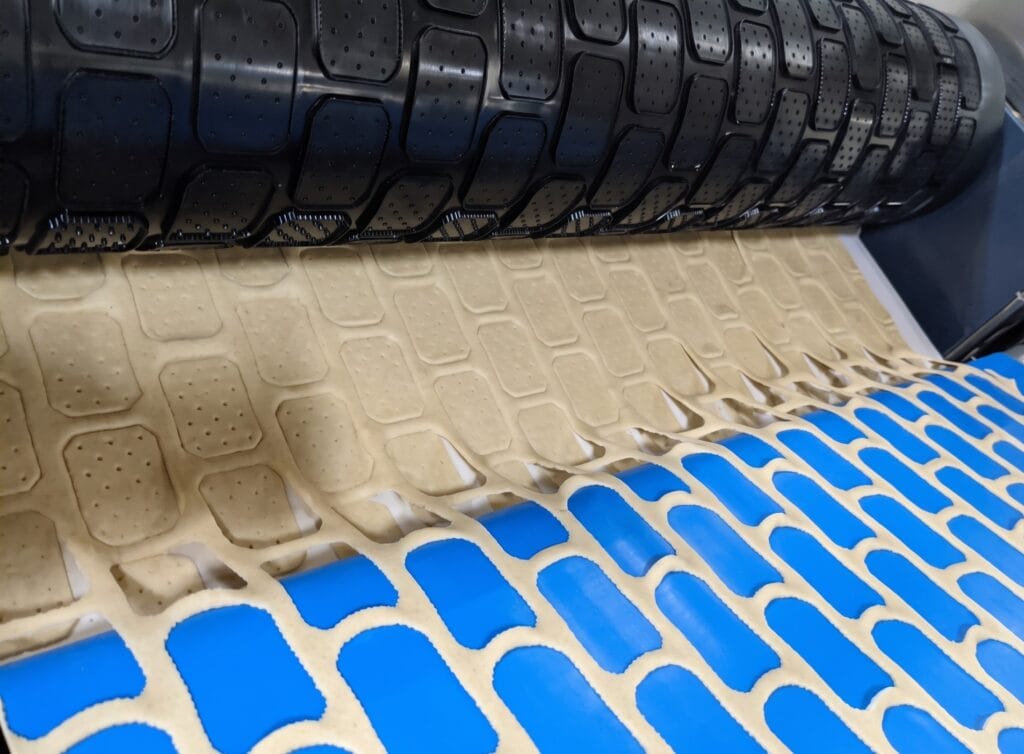
The scrap web loses water via surface evaporation while traveling along return conveyors exposed to plant ambient air. This exposure also increases the temperature of the dough by friction heat in a range of 1 – 3°C, which accelerates the premature hydrolysis and decomposition of ammonium bicarbonate.
During this journey, the ammonium bicarbonate dissolved in the free water of the dough reacts to transform into ammonium and bicarbonate ions, which rapidly decompose into ammonia gas, carbon dioxide, and water vapor. This premature release of leavening gases reduces the subsequent oven spring. The final baked biscuits may suffer from a dense, flat structure that fails to meet thickness and crispness standards.
Biscuit Geometry: Calculating Web Scrap
The volume of scrap generated and the corresponding rheological impact depend heavily on product geometry, cutting patterns, and mechanical design.
Standardizing the physical properties of the edge trim is critical for the balance of the oven. If low-mass, untrimmed margins enter the baking chamber, they act as localized thermal zones with very low heat capacity, causing premature browning and bi-temperature moisture gradients across the oven band.
Recommended Reading:
Reducing Dough Elastic Stress via Enzymatic Hydrolysis
To mitigate the viscoelastic shifts associated with raw scrap, sheeter lines can incorporate enzymatic hydrolysis directly into the return system. Neutral proteases sourced from Bacillus subtilis or Aspergillus oryzae are introduced to cleave the peptide bonds within the gluten matrix.
Unlike harsh chemical reducing agents such as sodium metabisulfite, which can leave residual chemical tastes, proteases gently reduce the molecular weight of the gluten polymers. This targeted cleavage permanently lowers the elastic response of the dough, relieving the internal elastic stress without fully degrading the dough structure.
Additionally, xylanases may be introduced to hydrolyze non-starch polysaccharides. This enzymatic action releases water bound within the pentosan matrix, redistributing it to the gluten proteins and improving overall dough extensibility.
Automated Slurry Rework Systems: The Liquefaction Loop
When raw scrap generation rates exceed the stability limit of the laminator, direct physical reincorporation is no longer viable due to differences in moisture and temperature. To resolve this, rework systems convert solid scrap into a highly homogeneous, pumpable liquid slurry.
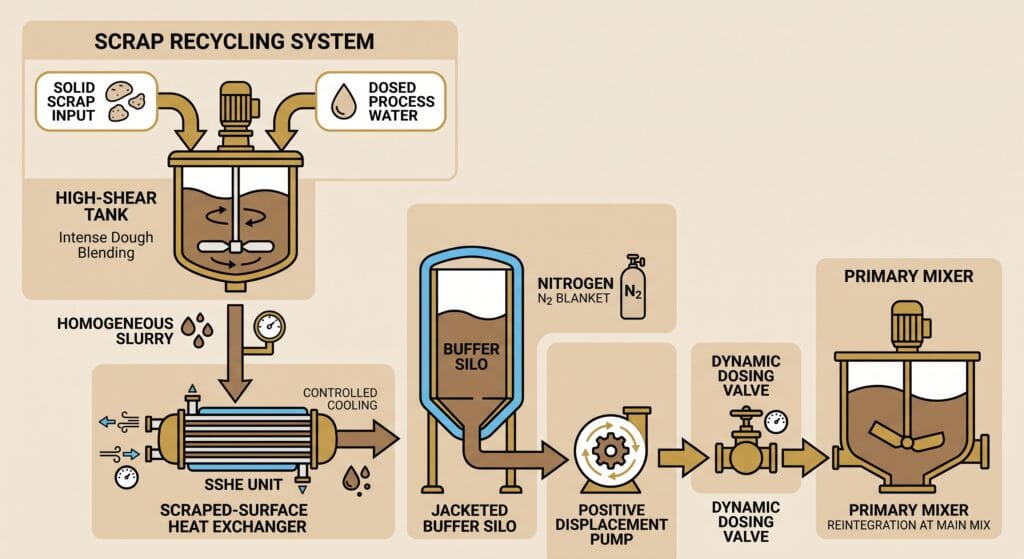
The process begins in a liquefaction tank where high-pressure nozzles atomize process water over the incoming solid scrap. Simultaneously, a high-shear rotating disintegrator disc cuts the gluten fibers, reducing the viscosity of the mixture to transform it into a fluid suspension.
Immediately after, a progressive cavity pump drives the fluid through a high-efficiency scraped-surface heat exchanger to cool it rapidly to a stabilized range of 15 to 18 degrees Celsius. This step halts yeast fermentation and prevents cell lysis, which would otherwise release compounds that excessively soften the gluten matrix.
Once stabilized in the jacketed buffer silos, the tank headspace is blanketed with inert nitrogen gas. This inert gas displacement eliminates contact with atmospheric oxygen, thereby preventing the oxidative degradation of fats suspended in the liquid slurry. The liquid suspension is then dosed into the primary mixer during the preparation of new batches. The suspension is not simply dumped into the recipe, as this would alter ingredient ratios and ruin the dough consistency.
Instead, a programmable logic controller regulates the dosing valve so that the suspension replaces a controlled portion of the fresh batch, representing a maximum of 10 – 15% of the total mixture. The controller measures the density and net weight of the slurry to calculate the exact amount of water, flour, and fat it contributes; the automation system then subtracts these equivalent masses from the raw material feeders, ensuring the final recipe formulation remains completely unchanged.
Companies that lead the design of these automated systems can be, adapting these principles to industrial demands:
For baked scrap that cannot be reintroduced inline, such as packaging rejects or broken cookies, a dry milling system using a hammer mill can reduce the brittle waste into a fine biscuit powder of 80 – 100 mesh, equivalent to a range of 150 – 180 micrometers. This powder can replace up to 20 – 50% of the sucrose and starch in fat-based sandwich cream fillings, lowering ingredient costs.
😊 Thanks for reading!
Sources:
- Industrial Biscuit Manufacturing Technical Manual / Process Engineering Division
- EHEDG Guidelines for Wet and Dry Food Processing Equipment / European Hygienic Engineering & Design Group (https://www.ehedg.org)
- Baker Perkins TruBake HiCirc Thermal Distribution Data Sheet / Baker Perkins Food Machinery (https://www.bakerperkins.com)
- Spiromatic Dough Rework System Technical Data / Siemens Insights Platform (https://www.siemens.com/en-us/company/insights/spiromatic-pid-control/)
- Sandwich Biscuit Rework Systems / CEPI Silos Special Applications (https://www.cepisilos.com)