The Sunn Pest Problem: How to maximize the utilization of affected wheat supplies
One could mitigate the impact of the Sunn pest, a destructive pest in the Near East, North Africa, and Eastern Europe, using natural extracts. When feeding, it injects saliva with enzymes that destroy gluten viscoelasticity. Applying hibiscus and blueberry extracts could inhibit them, restoring the dough.
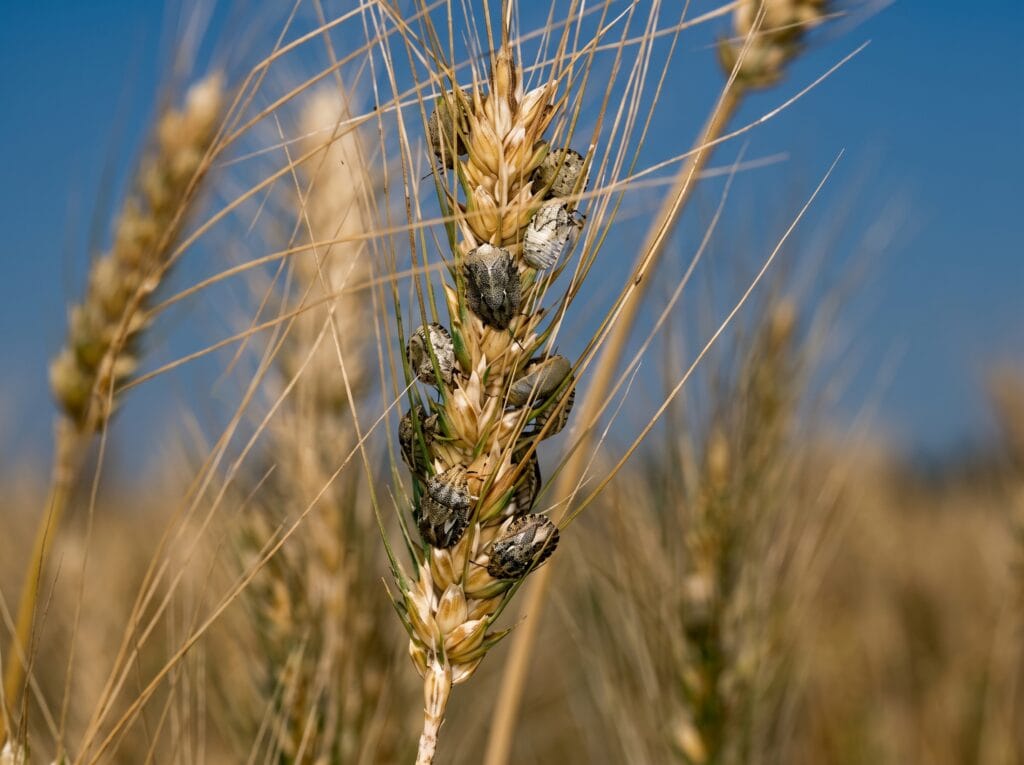
Once activated, the proteases hydrolyze the high molecular weight glutenin subunits that constitute the primary backbone of the viscoelastic network. This polymeric structure linked by disulfide bonds is responsible for elasticity and CO₂ gas retention capacity during fermentation. When glutenin fragments, the dough loses its structural sustainability and final bread volume collapses in the oven.
The technical severity of the attack is disproportionate: an infestation level as low as 2% to 4% of damaged kernels in a wheat lot can reduce the Gluten Index below 40, rendering the flour commercially unsuitable for industrial baking. At contamination levels exceeding 10%, farinograph stability drops sharply and the degree of softening increases exponentially.
Why Conventional Remediation Falls Short
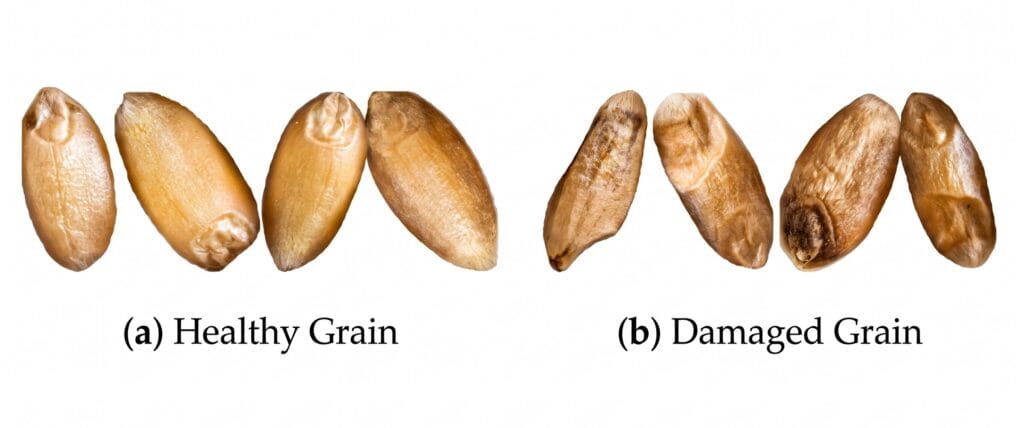
Standard industry practice in flour milling consists of blending damaged flour with sound wheat lots to dilute the concentration of proteolytic enzymes. However, dilution alone is often insufficient to restore dough strength when the damage level exceeds 10%, as small residual amounts of active enzyme continue to destroy glutenin chains during mixing and resting stages.
Chemical additives provide partial solutions. Ascorbic acid promotes oxidative cross linking of thiol groups to reinforce the network, while transglutaminase catalyzes new isopeptide bonds. Nevertheless, both approaches address the symptom, a weakened network, rather than targeting the cause, active proteases, while also moving away from clean label consumer demands.
Phenolic Extracts as Direct Competitive Inhibitors
Research published in late June 2026 introduced a paradigm shift: suppressing the enzyme before it acts on the dough. Bioactive extracts from various plant sources were evaluated, including green tea, green coffee, sage, hibiscus (Hibiscus sabdariffa), and blueberry (Vaccinium corymbosum), to analyze their capacity to inhibit Sunn pest protease activity in dough blends containing up to 30% affected flour.
Hibiscus and blueberry extracts exhibited the highest inhibitory effectiveness.
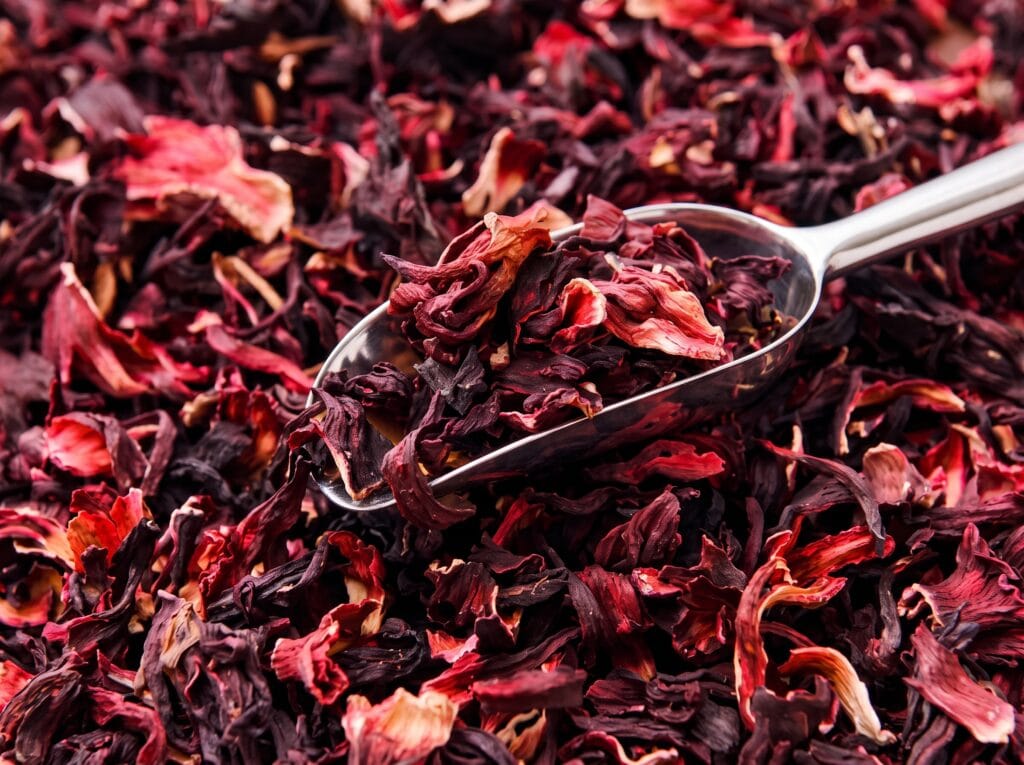
Phenolic compounds present in these matrices, primarily anthocyanins, delphinidin derivatives, chlorogenic acid, and quercetin, interact directly with the active site of the prolyl endoprotease.
This competitive inhibition reduces the hydrolysis rate of high molecular weight glutenins, keeping cellular viscoelasticity intact in the dough.
The mechanism operates through hydrogen bonds and hydrophobic interactions between the hydroxyl groups of polyphenols and amino acid residues in the catalytic cleft of the enzyme, blocking substrate access. As a competitive inhibition, increasing the extract concentration shifts the equilibrium toward inactivation of the enzyme complex without altering the inherent properties of wheat proteins.
Rheological Evidence: Farinograph and Extensograph Data
Structural preservation was verified through standardized rheological analyses in an industrial laboratory environment:
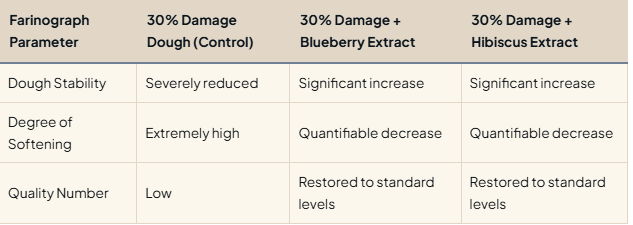
Incorporating blueberry extract at a 10% dosage generated the highest recovery in farinograph stability and quality number. Both extracts significantly decreased the degree of dough softening, providing direct evidence that the gluten network resists continuous mechanical stress in industrial mixers.
On the extensograph, resistance to extension and total deformation energy showed consistent recovery compared to untreated controls. A dough that retains resistance to extension maintains gas retention capacity during proofing and oven spring, preventing product flattening on high speed production conveyors.
Operational Implications for Industrial Bakeries
For flour mills and industrial baking plants processing wheat from regions with Sunn pest pressure, these scientific findings offer clear operational guidelines:
1. Intake quality control: Maintain Gluten Index testing and proteolytic activity assays on every incoming grain lot. Infestation levels below 2% can be managed through grain blending.
2. Mixer dosing: In lots with 10% to 30% damaged kernels, polyphenolic extract addition must occur during initial hydration, allowing polyphenols to block the active site of the enzyme before gluten degradation begins.
3. Clean label strategy: Both hibiscus and blueberry are recognized food ingredients. Their application avoids chemical additive declarations or microbially derived enzymes on consumer packaging.
4. Sensory adjustments: At higher concentration levels, anthocyanins can introduce subtle color shifts or acidic flavor notes. Formulation trials are recommended to calibrate the organoleptic profile of finished baked goods.
😊 Thanks for reading!
Sources:
– NIH / PubMed, Research on hibiscus and blueberry extracts as Sunn pest protease inhibitors in wheat flour (2026): https://pubmed.ncbi.nlm.nih.gov/
– FAO, Sunn Pest Management and Cereal Degradation: https://www.fao.org/
– QASCF, Farinograph and Rheological Assessment of Insect Damaged Wheat: https://qascf.com/
– IsraelAgri, Sunn pest impacts on cereal processing: https://israelagri.com/
– CABI Digital Library, Eurygaster integriceps datasheet: https://www.cabidigitallibrary.org/
– Bakery Industry Insider, Enzymes Driving Clean Label Transformation: https://bakeryinsider.com/