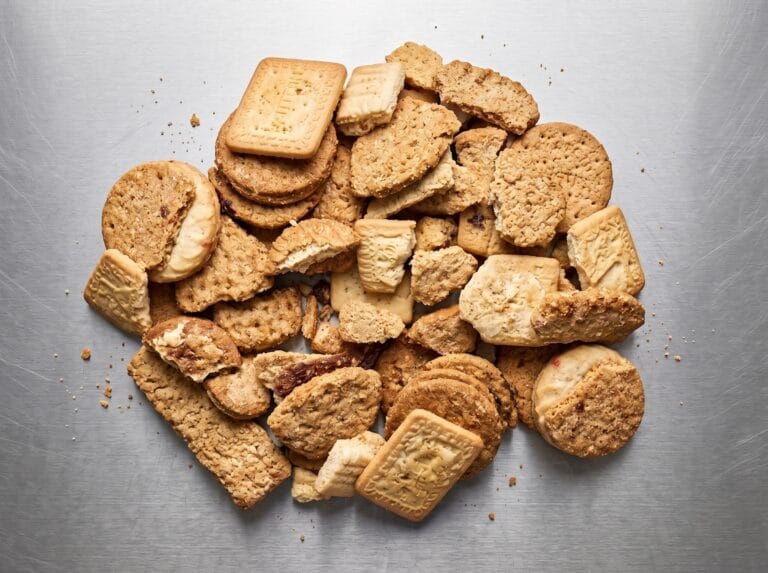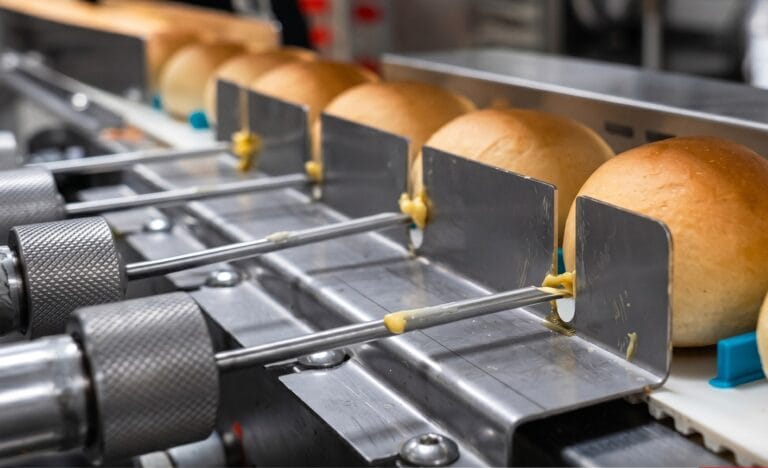
Off-Flavors and Lipid Degradation in Long Shelf-Life Cookies: Diagnosis and Prevention
Lipid degradation in long shelf-life cookies causes waste and product rejection due to rancidity. Combining primary antioxidants and chelating agents inactivates free radicals and sequesters pro-oxidant metals, stabilizing the fat matrix and extending commercial shelf life.
Lipid vulnerability in low-moisture matrices
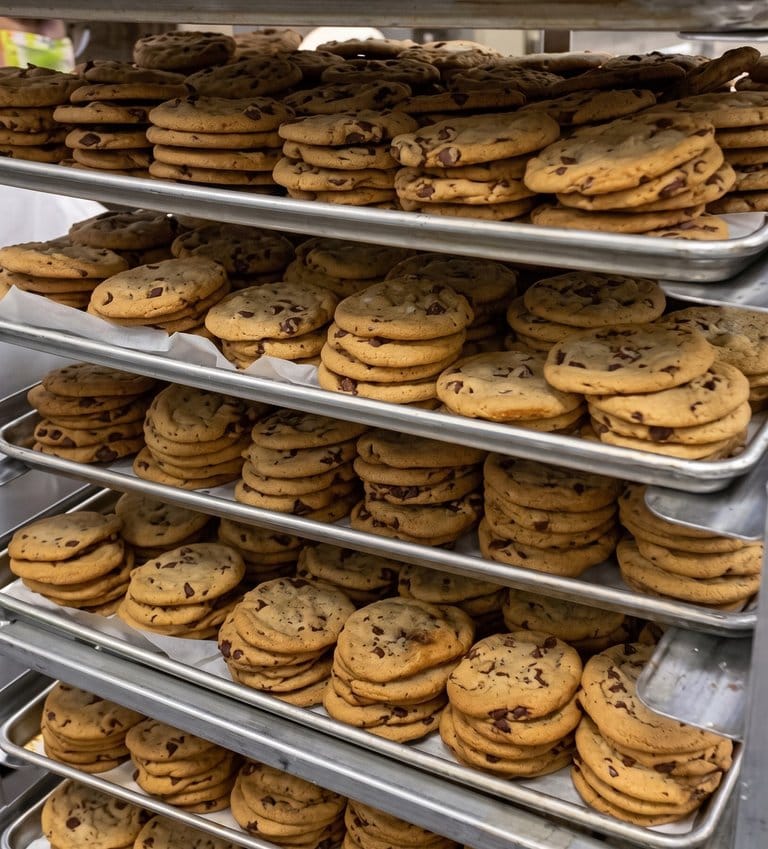
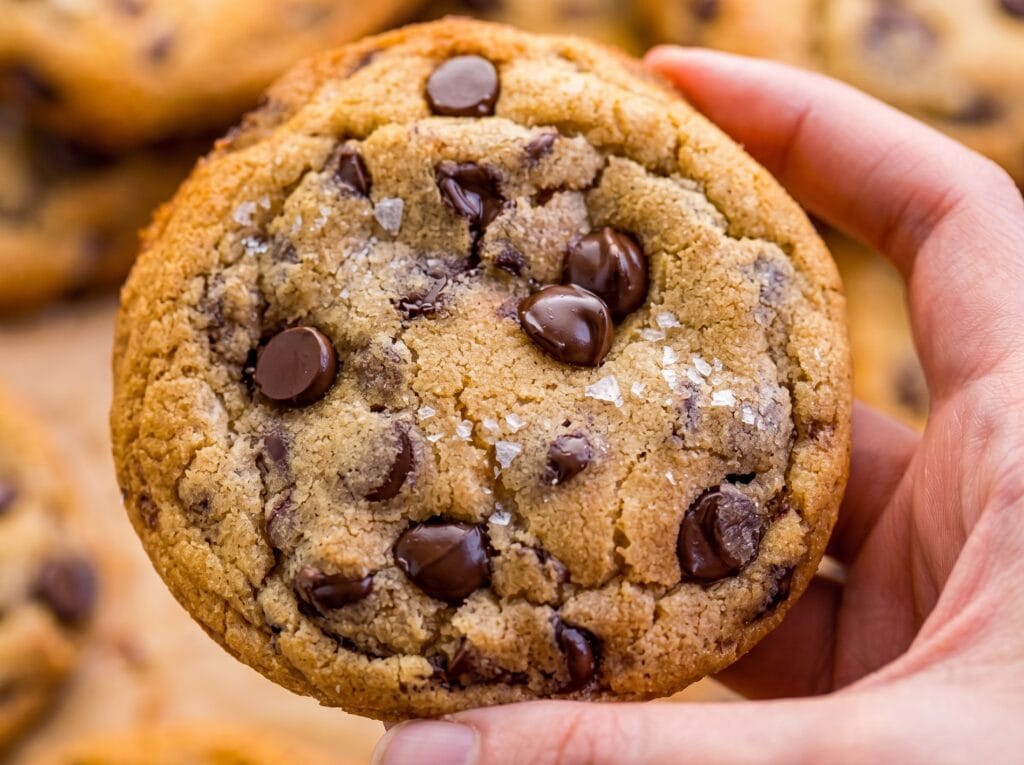
Long shelf-life cookies represent highly heterogeneous and dynamic low-moisture food systems, with a fat content that commonly ranges between 15% and 25% by weight and a typically low water activity, situated between 0.1 and 0.3. Although these conditions completely limit microbial growth and enzymatic activity, the stability of the product is severely compromised by the oxidative degradation of the fat fraction.
In this low-moisture microenvironment, the rate of lipid oxidation follows a U-shaped curve in relation to water activity.
When water activity drops below 0.2, the monomolecular layer of water that covers and protects the binding sites of lipids is lost. This dehydration directly exposes unsaturated fatty acids to the atmospheric oxygen trapped within the pores of the cookie structure.
At the same time, the low concentration of free water causes pro-oxidant transition metals, present as impurities in raw materials such as flour, cocoa, or mixing water, to concentrate locally. Because they are not diluted or surrounded by a protective water shell, these metals come into direct contact with the thin films of fat coating the starch granules and proteins, accelerating degradation reactions.
Initiation and propagation mechanisms of chemical deterioration
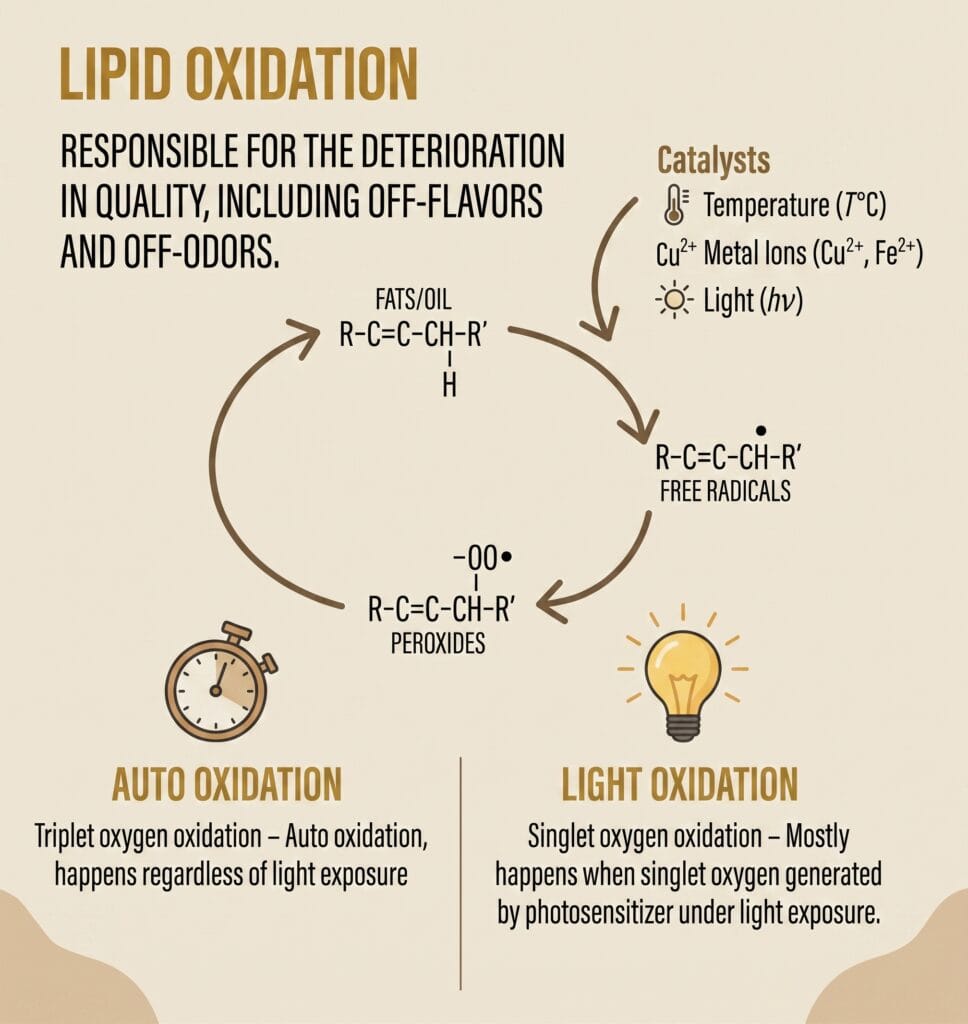
Oxidation of lipids occurs through a free radical chain reaction, typically divided into three distinct stages: initiation, propagation, and termination.
Inhibiting free radicals with commercial antioxidants
To interrupt the kinetics of propagation, the industry employs synthetically pure primary antioxidants, most notably butylated hydroxyanisole, butylated hydroxytoluene, and tertiary butylhydroquinone.
These additives are phenolic compounds that act as donors of active hydrogen atoms. When they interact with peroxyl or alkoxyl free radicals, they transfer a hydrogen atom to them and stabilize them, transforming them into non-radical compounds of low energy. Their stability is due to the distribution of the unpaired electron along their aromatic ring by resonance, which prevents them from having the energy required to subtract hydrogens from adjacent lipid chains.
The dosage limits of these compounds are strictly regulated. International regulations limit the use of these antioxidants to a maximum concentration of 200 ppm, calculated exclusively on the total fat content of the formulation.
Metal chelating: Neutralizing soluble catalysts
Despite the effectiveness of primary antioxidants, the presence of trace transition metals dissolved in the mixing water accelerates the decomposition of lipid hydroperoxides through electron transfer reactions, even at room temperature. Ferrous iron and cuprous copper cations catalyze the breakdown of the hydroperoxide bond.
To neutralize this catalytic pathway, the incorporation of chelating agents or chemical synergists is required, with citric acid and phosphoric acid being the most widely used.
These compounds do not possess the ability to donate hydrogen atoms to free radicals, meaning they do not act as primary antioxidants. Their function is to operate as structures that bind to free metal cations through coordination bonds. By completely surrounding the metal ion, they block its active sites and prevent it from participating in the cycles that decompose hydroperoxides.
Combining citric acid with phenolic antioxidants such as TBHQ produces a strong synergistic effect. The chelator drastically reduces the rate at which new free radicals are generated by the presence of iron or copper, which decreases the consumption of the primary antioxidant in the first line of defense. Consequently, the stability period of the fat is significantly prolonged, requiring a lower concentration of phenolic additives to achieve the same shelf life.
Clean label alternatives for industrial stabilization
Market pressure toward products free of synthetic chemical additives has forced industrial plants to reformulate their recipes using clean label ingredients that mimic the properties of traditional synergists.
Because natural extracts typically have a lower concentration of purified active ingredients compared to synthetic molecules, their industrial application dosages must be higher, usually ranging from 500 ppm to 2000 ppm with respect to the fat content to ensure equivalent protection.
😊 Thanks for reading!
Sources:
- Internal technical document: Rancidez Oxidativa en Galletas.docx (Microstructural dynamics of lipid oxidation in low-moisture foods).
- Lakshmi Jagarlamudi, Bakery and Confectionery Products: Processing, Quality Assessment, Packaging and Storage Techniques, CRC Press, New India Publishing Agency, Guntur, India, 2023.
- Iain Davidson, Biscuit Baking Technology: Processing and Engineering Manual, Second Edition, Academic Press, Elsevier, 2014.
- Weibiao Zhou (Editor), Bakery Products Science and Technology, Second Edition, Wiley-Blackwell, 2014.
- Eric A. Decker et al., Lipid Oxidation in Low-moisture Food: A Review, Texas A&M College of Agriculture and Life Sciences, Texas, USA, 2013.
- Vinatee Patil, Evaluation of Antioxidant Strategies in Low-Moisture Foods, University of Massachusetts Amherst, USA, 2024.