Pumpernickel Production, The Impact of Low-Temperature Steam on the Crumb
Industrial production of German pumpernickel could present severe processing bottlenecks due to sticky, gluten-free dough and a 24-hour thermal cycle. Transitioning to low-stress extrusion dividers and closed, high-humidity steam baking chambers stabilizes the dense crumb, preventing downstream tearing and ensuring efficient high-speed slicing.
The Rheological Bottlenecks of Coarse Rye Meal
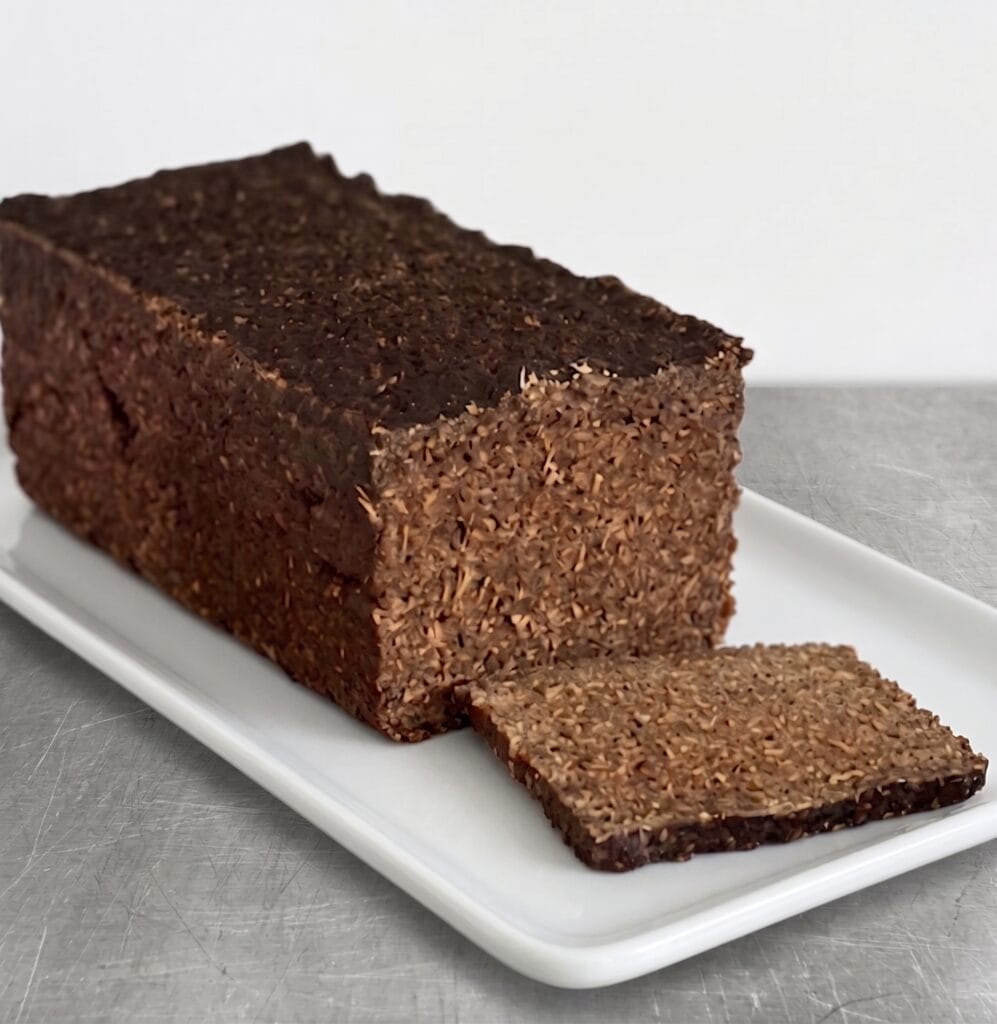
Traditional German pumpernickel relies on coarse rye meal and whole-rye kernels, which creates a dough with zero gluten elasticity. The structural integrity of this dense matrix depends entirely on viscous pentosans and water-binding starch structures.
When attempting to run this formula through high-speed industrial lines, the dough behaves as a highly cohesive, sticky paste. Conventional volumetric dough dividers that rely on high-pressure pistons and vacuum chambers may shear the delicate pentosan structures. This shear stress often generates excessive sticking on metallic contact surfaces, leading to frequent line stoppages and weight deviations.
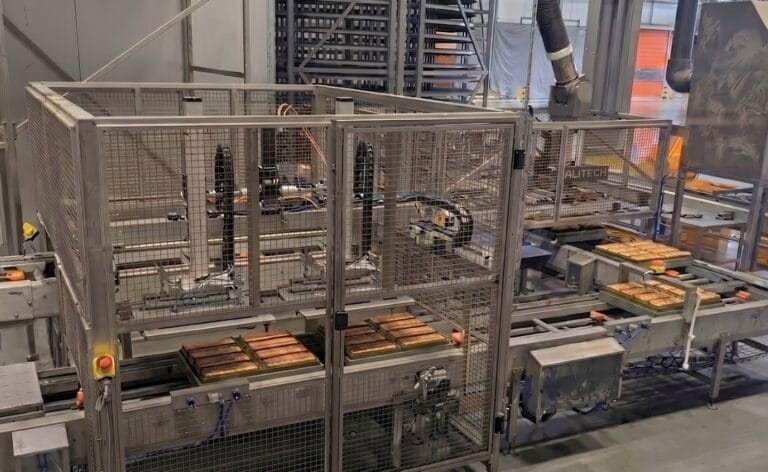
To overcome these challenges, industrial lines require low-stress rotary extrusion dividing systems. These systems gently portion the dense mass without squeezing, preserving the internal water-binding matrix and allowing consistent portioning onto specialized baking pans.
Implementing the 24-Hour Thermal Cycle at Scale
Traditional pumpernickel requires a prolonged baking cycle, often lasting between 16 and 24 hours at temperatures near 100 degrees Celsius. In a high-volume facility, this slow thermal cycle cannot be achieved using standard convection or direct-gas-fired tunnel ovens.
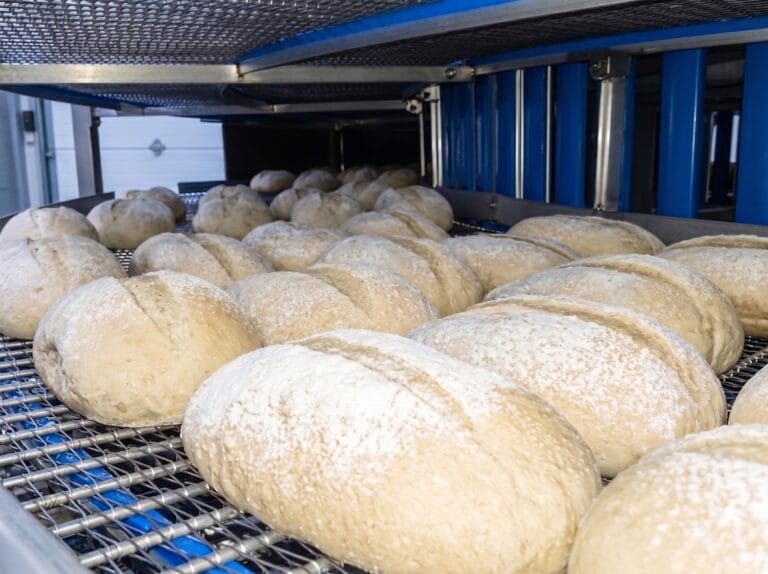
Industrial production requires specialized high-capacity steam-enclosed baking chambers or highly insulated, multi-deck tunnel systems. Maintaining a constant, saturated steam atmosphere inside the baking chamber prevents the dough surface from drying out and forming a hard crust.
This continuous humidity allows heat to migrate evenly to the core of the dense loaf. During this prolonged heating phase, specific physical changes occur:
Recommended Reading:
Downstream Automation, Slicing, and Line Efficiency
The high sugar content and dense moisture profile of finished pumpernickel present severe challenges for automated downstream processing. Standard high-speed slicing blades can experience immediate product buildup, causing crumb tearing, blade friction, and costly line delays.
To maintain continuous slicing speeds without blade damage, industrial packaging lines could employ ultrasonic cutting heads or continuous band blades coated with Teflon. These systems, combined with micro-misting systems that apply food-grade release oils, prevent crumb adhesion and minimize friction.
Integrating automated cooling towers with controlled humidity also stabilizes the internal crumb structure before the loaves reach the slicing station. Controlling the cooling profile prevents condensation inside the packaging, extending the shelf life of the product and preventing mold growth.
😊 Thanks for reading!
Source:
- DW Food: Why German Pumpernickel is a bread like no other (https://www.youtube.com/watch?v=rScGUzHB_7k)
- https://bakerpedia.com/processes/pumpernickel-bread/
- https://asbe.org/article/pumpernickel-bread/