Top 10 Structural Failures in Croissant Lines
Industrial croissant production demands absolute control over thermal and mechanical variables. A millimeter deviation in the rollers or an irregular thermal drop triggers severe structural failures. Understanding the exact causes allows for equipment recalibration, operation optimization, and the stabilization of large-scale manufacturing.
Failures in the Lamination Line
The lamination process generates alternating layers by reducing the thickness of a primary dough sheet enveloping a fat core. The difference in plasticity between both materials under mechanical stress causes irreversible damage.
1. Layer Fusion and Tearing
Aggressively reducing thickness in the calibrating rollers compromises the architecture of the layers. When the distance between rollers decreases abruptly, the shear stress exceeds the elastic tolerance of the dough. This force tears the continuous layer of fat, allowing adjacent gluten networks to collapse and fuse.
Additionally, if the ambient temperature of the conveyor belts exceeds the thermal melting curve of the fat, the lipid liquefies and penetrates the starch matrix. As a visible result, the baked croissant exhibits a dense crumb with a brioche-like texture and completely loses vertical lift.
2. Fat Fragmentation and Shattering
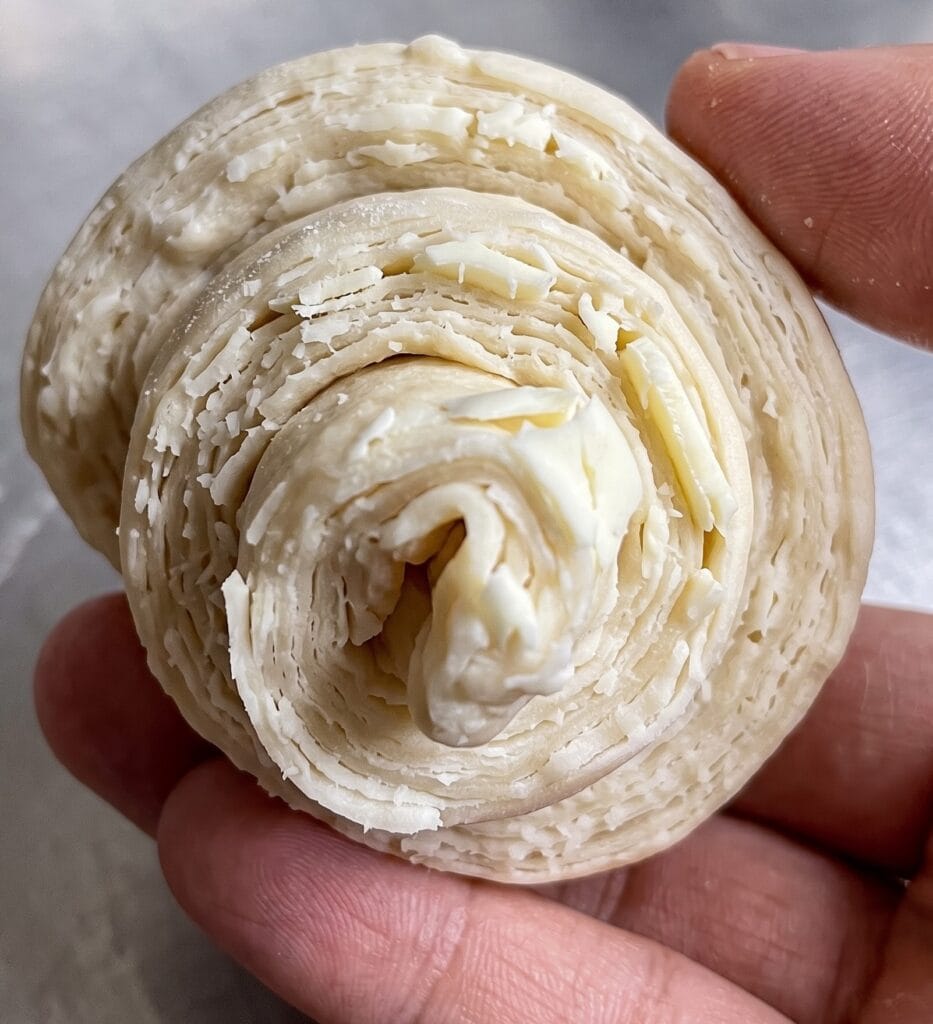
Thermal conditioning of pre-laminated dough blocks is a mandatory requirement before introducing them to the line. Drastically decreasing the core temperature causes massive crystallization of triglycerides.
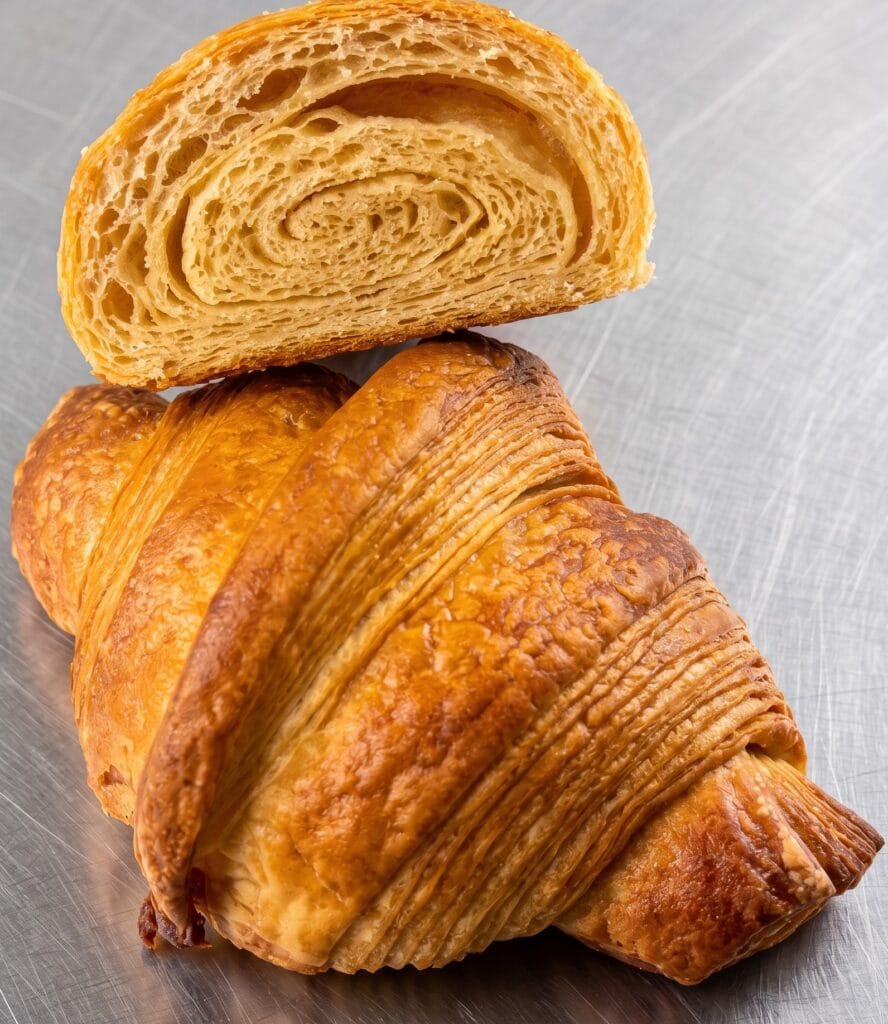
When encountering the rotating compression cylinders, the hardened lipid matrix shatters into irregular fragments instead of extending plastically. The cross-section of these units reveals disproportionate and chaotic caverns segregated by areas of heavily compacted dough.
3. Fine Crumb from Micro-Lamination
Automated lines execute folding sequences to multiply the number of layers geometrically. Forcing the thickness below 8 millimeters prematurely dilutes the lipid films to sub-micrometric dimensions.
These microscopic films lack the cohesive strength to withstand the pressure of endogenous vapor and burst instantly. Consequently, the dough reabsorbs the lipid residues and forms a monotonous crumb, identical to an ordinary bun or milk bread.
Cellular Damage in Continuous Freezing Technologies
Subjecting live viscoelastic networks to cryogenic regimes induces vectors of cellular destruction if the cooling rate is inadequate.
4. Structural Collapse from Ice Macro-Crystals
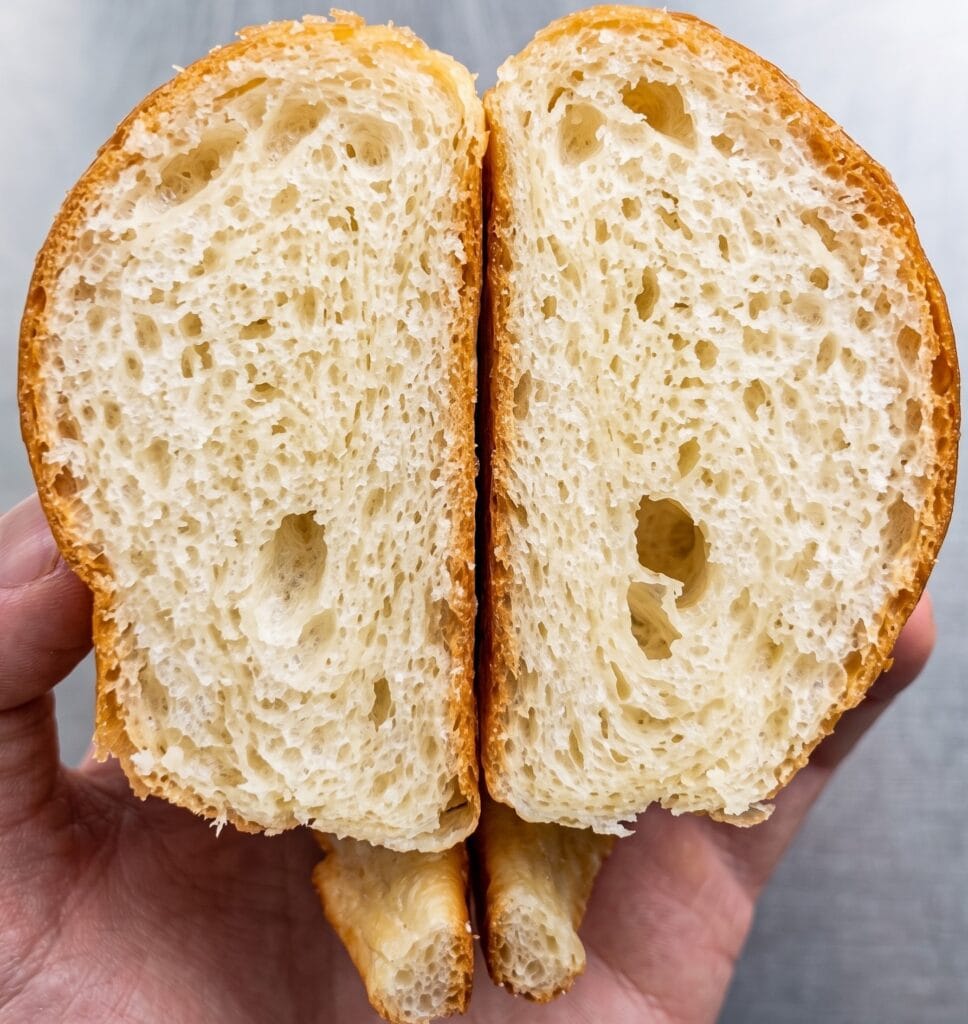
The freezing rate defines the morphology of aqueous crystallization inside biopolymeric matrices. Tunnels with low heat extraction promote the nucleation of massive, jagged ice macro-crystals. These crystals pierce yeast membranes and sever the gluten network.
The fractured yeast releases glutathione, an agent that destroys the disulfide bonds of the protein network. After baking, the units show a flattened, morphologically depressed appearance with an inability to retain expansive gases.
Climatic Imbalances in Proofing Systems
Continuous chambers modulate microbiological activity by rigorously controlling dry temperature and hygrometric saturation.
5. Massive Lipid Exudation (Leakage)
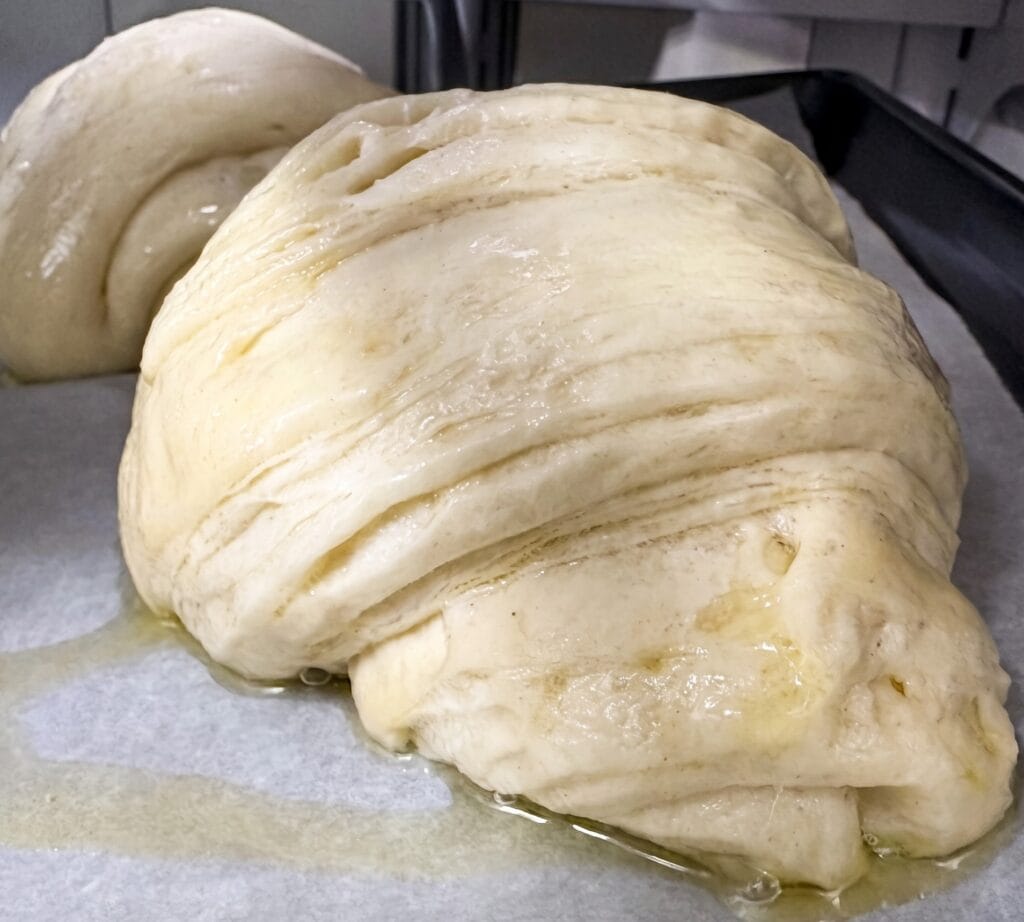
Operating proofers outside the thermodynamic window of the lipid eliminates the separation of the piece. If the ambient temperature exceeds the melting threshold of the margarine, the lipid barrier melts prematurely.
The lipid escapes its compartments before the yeast inflates the cellular chambers. Trays emerge soaked in liquid triglycerides and the bread collapses forming a damp, heavy structure with a fried crust.
6. Base Widening and Skin Blistering
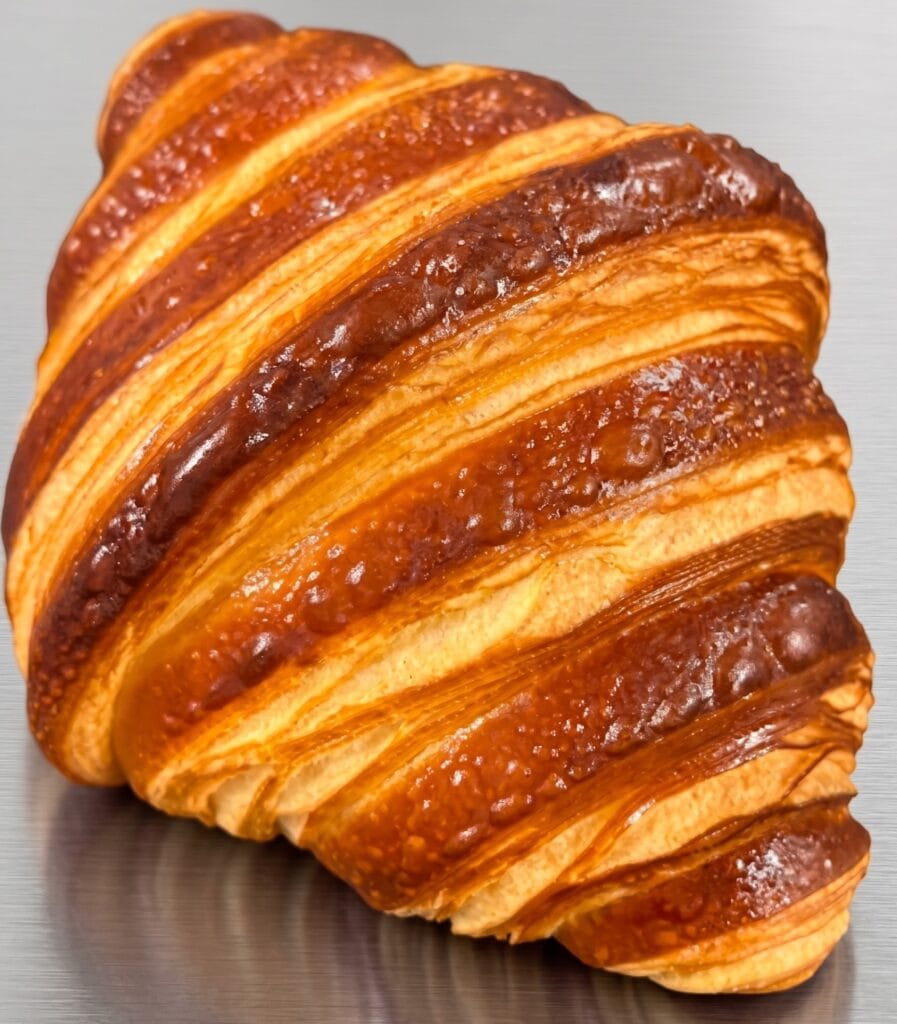
Retaining pieces in saturated environments for extended periods weakens the containment resistance of the matrix. Excess moisture and heat accelerate the production of organic acids and over-stimulate enzymes that digest the taut gluten network. The hyper-lax structure fails to gain vertical traction during the thermal shock and spreads horizontally.
Concurrently, the surface condensation film vaporizes violently in the oven and lifts small portions of crystallized protein, forming unesthetic blisters on the outer surface.
Mechanical Inconsistencies in Forming Machines
Mechanical modules curl dough triangles by applying compression through belts and rotary calibrators.
7. Internal Compaction from Torsion (Wound Too Tightly)
Variations in the speed of the forming belts restrict the elongation margin of the layers. When the belts apply large differential pressure, the product suffers a suffocating mechanical curling.
If the suction systems fail to remove the dusting flour, it enters the core and acts as an inert barrier. Baking gases are confined without expansive space, generating a raw, massive center with visible white flour lines.
8. Asymmetry from Loose or Weak Curling
A mechanical configuration lacking perimeter tension nullifies the framework necessary for vertical elevation. If the interception pins and side belts fail to stabilize the central block, the piece is dislocated from its center of gravity.
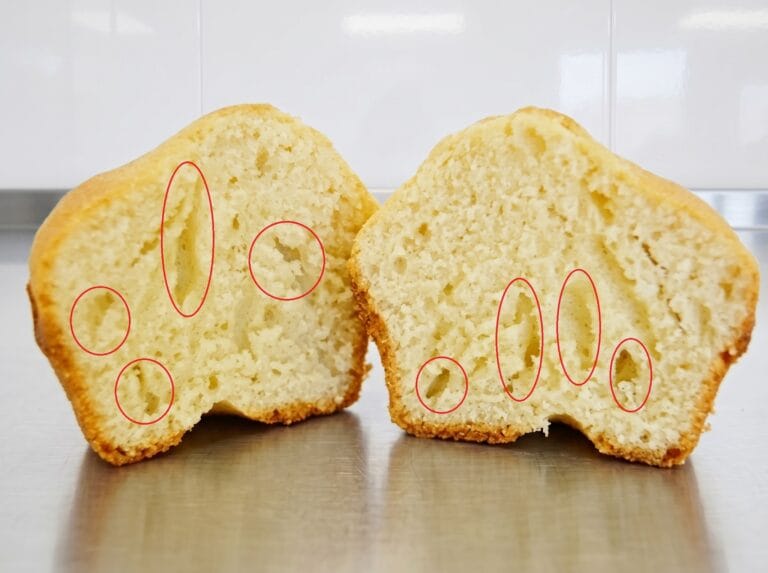
Endogenous gases fail to find uniform containment and escape prematurely through the path of least resistance. The final piece presents collapsed waists, deformed horns, and an inner honeycomb with directionally erratic tunnels.
Thermokinetic Failures in Tunnel Baking
Multi-zone tunnels transfer energy via convection and radiation along sequential thermal profiles.
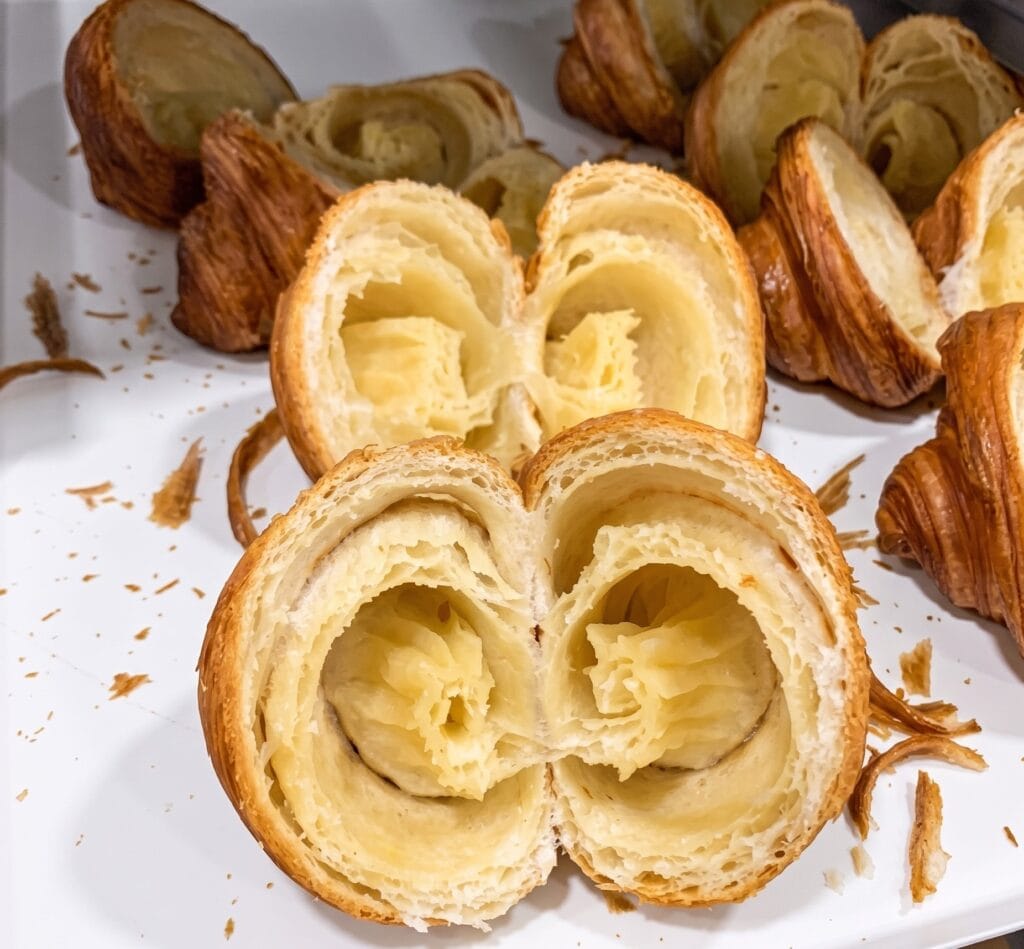
9. Central Depression and Raw Cores
Exposing cold bioporous doughs to scorching radiant gradients interrupts the conductive flow of energy. Initial zones operated above 230°C instantly dehydrate and seal the outer cellular cuticle. This hardened shell acts as a thermal insulator and prevents heat from invading the cold inner zone of the dough.
The core of the piece fails to reach 70°C, the protein does not coagulate, and the raw core implodes concavely during the cooling phase.
10. Pale and Ashy Discoloration
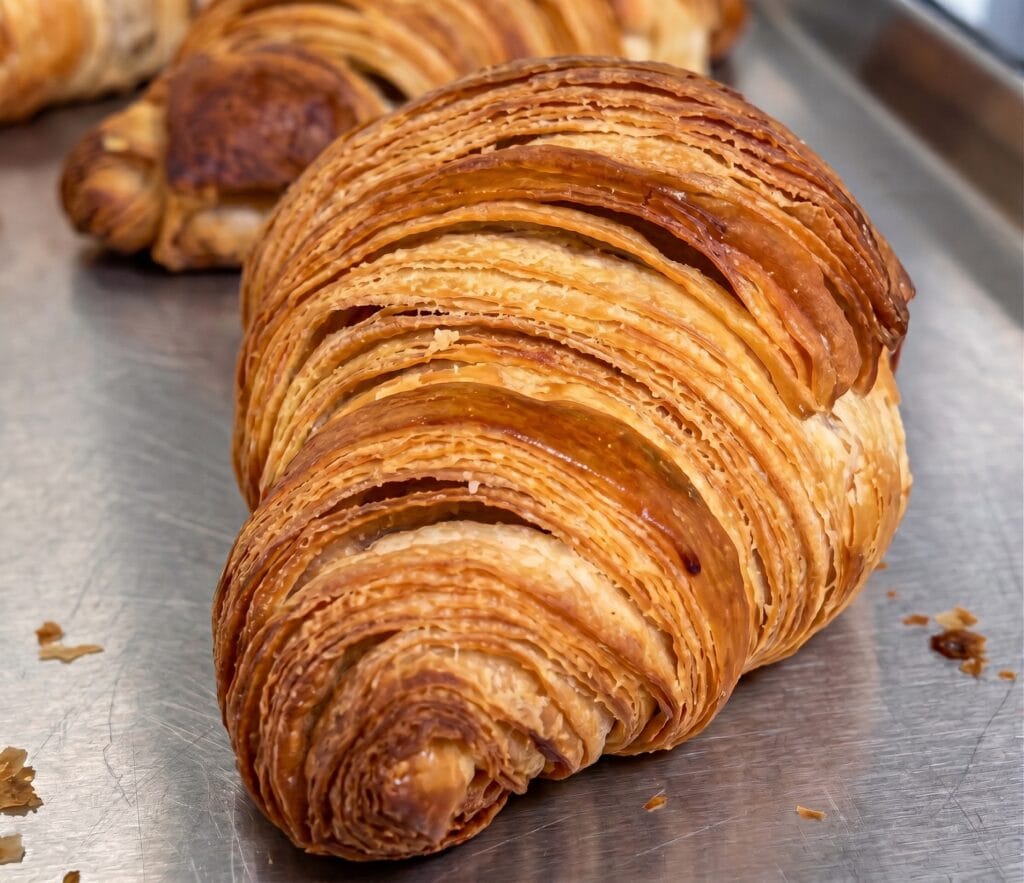
Generating a brilliant golden color requires browning kinetics free of prolonged aqueous excesses. If the pneumatic oven extractors fail, the injected steam becomes trapped and floods the late baking zones.
This stagnant moisture limits the surface temperature of the piece to 100°C, preventing the Maillard kinetic reaction from executing correctly. The croissants leave the tunnel looking opaque, ashy, or anemic blonde, losing all chromatic appeal.
😊 Thanks for reading!
Sources:
Frozen Croissant Production at Industrial Scale – Puratos
Puff Pastry | American Society of Baking
Make Flaky Croissants with a Commercial Croissant Sheeter – Yuemen China Bakery Equipment Factory
Core Temperature Control in Fermented Laminated Pastry
Baking Problems Solved | Request PDF – ResearchGate
Producción Industrial de Croissants | PDF | Panes | Cereales – Scribd
If you found this article helpful, explore our related coverage on Dense Cookies and Fluctuations in Expansion: Diagnosing and Controlling Sugar Particle Size, Argentine Criollito at Industrial Scale: Diagnosing Layer Collapse and Optimizing Lamination Equipment, and Why Your Scone Dough Gets Sticky: Mixing Temperature and Lipid Plasticity on the Production Line.