Industrial Keto Baking: Hydrocolloids & Ancestral Fats
Gluten-free keto doughs formulated with ancestral fats lack elasticity, causing collapse during industrial mixing and sheeting. Integrating high-absorption hydrocolloids with egg albumin restores cohesion and gas retention. Combined with vacuum cooling, this system stabilizes crumb structure, optimizes dough viscosity, and secures manufacturing profitability at high-volume scale.
Rheology and Thermal Behavior of Ancestral Fats
Replacing hydrogenated industrial margarines with fats of ancestral origin introduces decisive physicochemical differences during mixing. Beef tallow exhibits a high solid fat content at room temperature, reaching between 35% and 45% crystals at 20 °C.
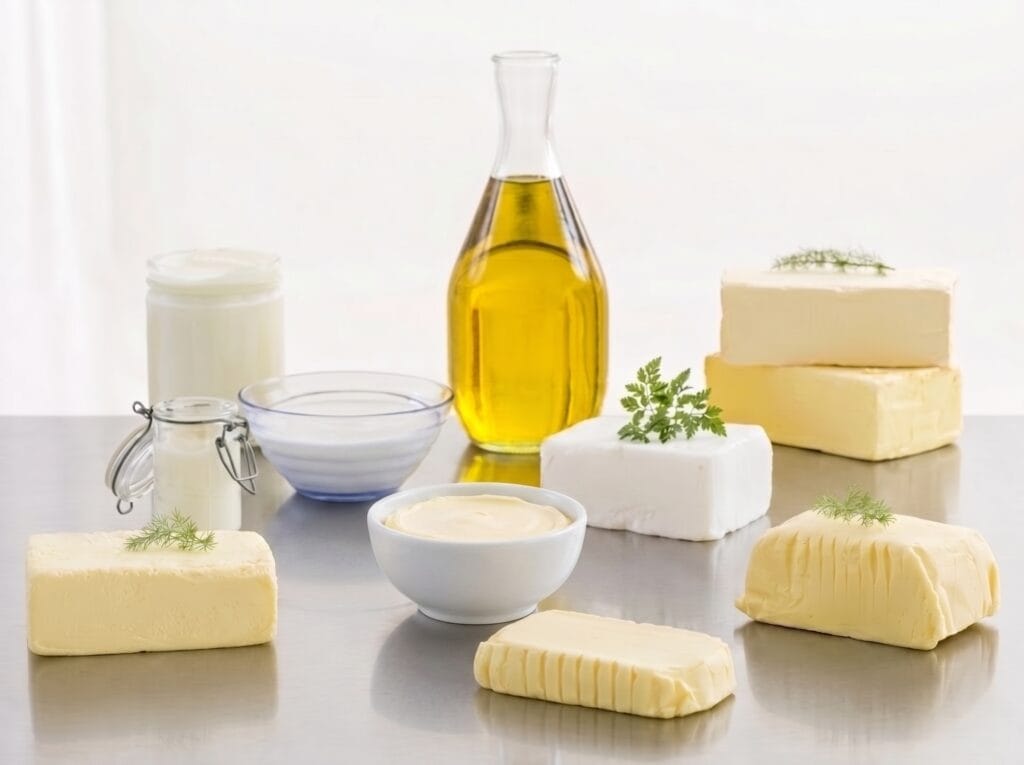
Its slip melting point, located between 38 °C and 45 °C, provides structural firmness that prevents premature oil exudation during initial shear. Meanwhile, lard offers a broader plasticity range, with solid fat content between 15% and 25% at 20 °C, which favors sheeting and laminating operations.
Thermal control during mixing ensures the prevalence of crystals in the beta-prime configuration. These fine, independent microcrystals allow gas bubbles to be occluded within the fluid matrix while lubricating the insoluble fibers of coconut or almond flour. If the process temperature exceeds 22 °C, the system promotes transformation toward the beta form, whose coarse, agglomerated crystals disrupt lipid packing, causing sandy crumbs or phase separation.
From oscillatory shear rheometry, these mixtures exhibit a storage elastic modulus significantly higher than their loss modulus. The relationship between both moduli yields a loss tangent below 0.2, confirming markedly viscoplastic behavior. Because these doughs do not flow spontaneously under gravity, they require high yield stress in rollers and dividers to initiate deformation.
Water Absorption and Formulating the Substitute Matrix
Almond and coconut flours alter traditional hydration dynamics due to their lack of gelatinizable starch. Coconut flour contains between 35% and 45% insoluble fiber and hemicellulose, reaching water absorption capacities of 300% to 500% over its dry weight.
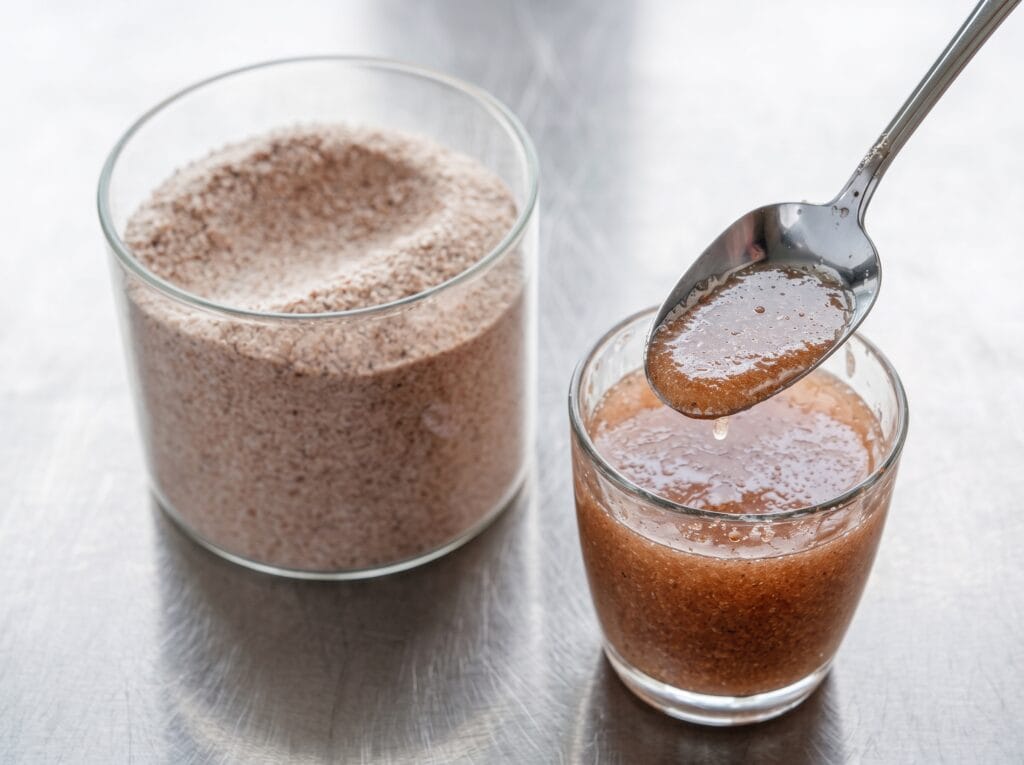
To stabilize this water volume, fine-mesh Psyllium husk powder absorbs between 1000% and 1500% of its weight when hydrated, forming viscous mucilages that support the aqueous phase.
The process requires incorporating a resting or blooming phase of 10 to 15 minutes without mechanical shear. This rest period ensures that hydrocolloids fully bind the water molecules. If the mixture enters the oven directly without this prior hydration, free water vaporizes abruptly, creating irregular cavities in the upper region and causing the crumb center to collapse.
To replace the mechanical functionality of gluten, the dough requires a combined system in which Psyllium interacts with xanthan gum at a ratio near 2 to 1.
Psyllium provides necessary extensibility by emulating glutenin, while xanthan gum raises zero-shear viscosity to retain gas bubbles produced by chemical leaveners. This hydrocolloid matrix is complemented by powdered egg albumin, which thermally coagulates between 62 °C and 70 °C, permanently setting the crumb cell architecture.
Equipment and Process Adaptation on Industrial Lines
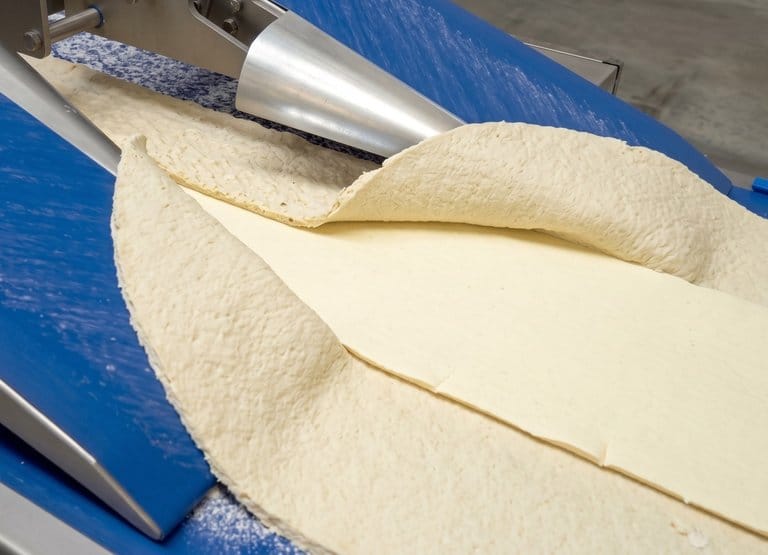
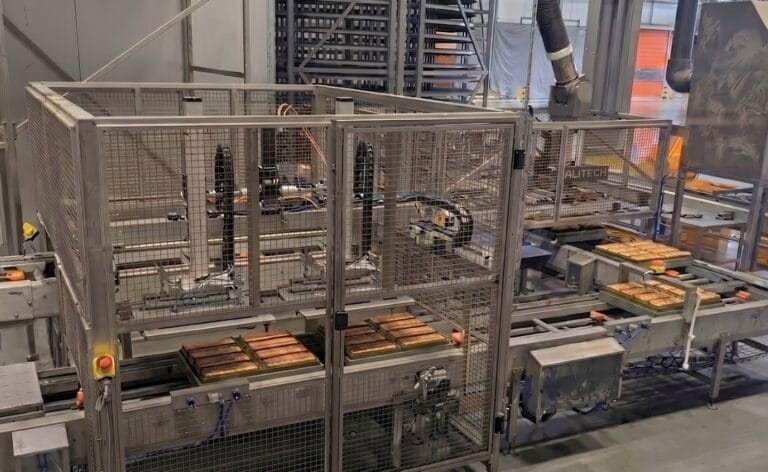
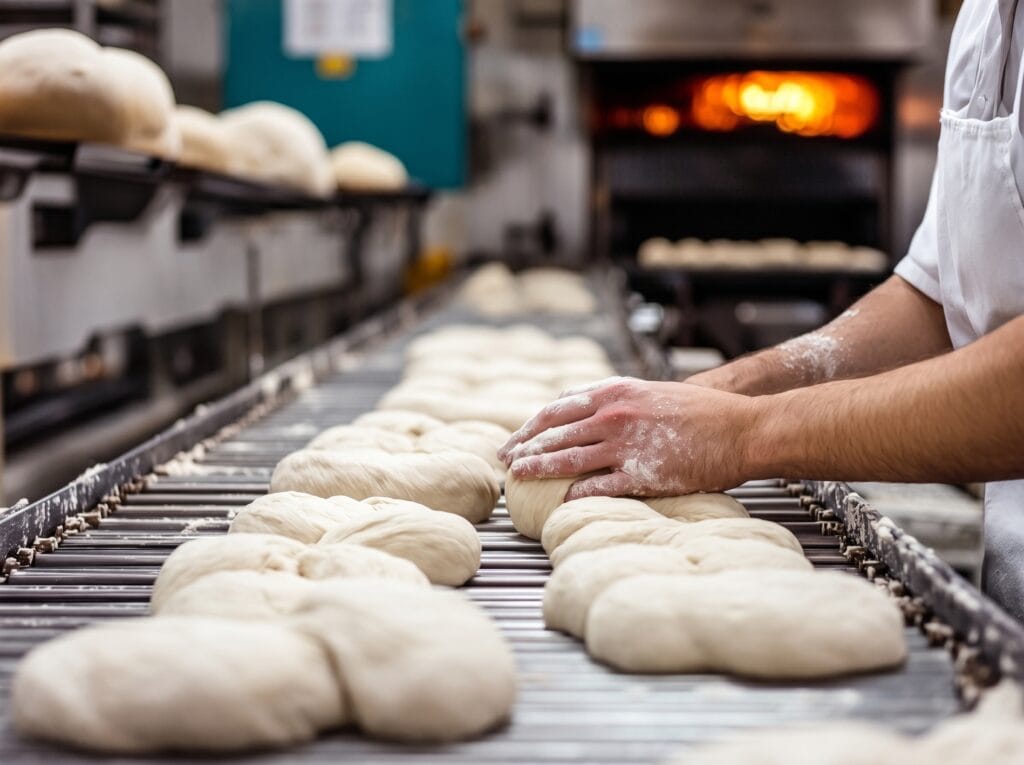
Migrating Keto baking to industrial scale demands operational modifications in each processing module to prevent mechanical damage to the dough:
Final Stabilization via Vacuum Cooling
Upon completing the baking stage, the crumb of Keto bread remains highly vulnerable to volumetric collapse due to the absence of retrograded, gelatinized starch.
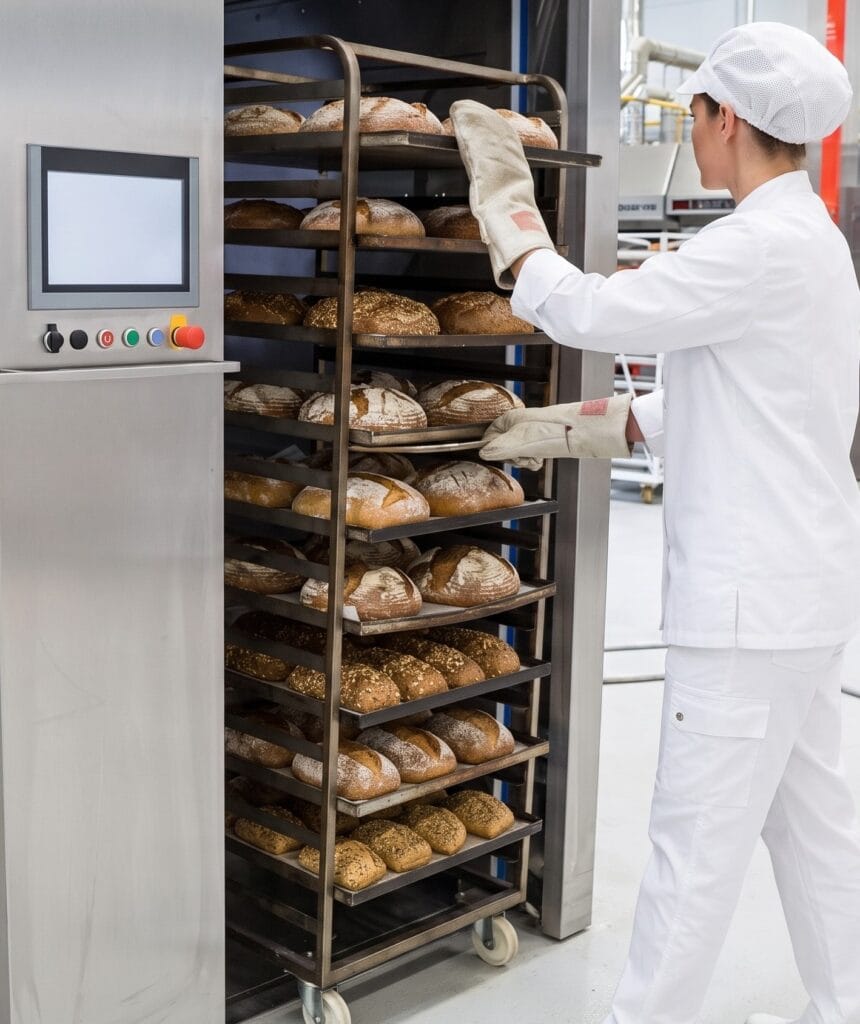
Applying vacuum cooling chambers reduces ambient pressure immediately after depanning, lowering the boiling point of water inside the bread.
Instantaneous low-pressure evaporation extracts latent heat from the product core within 3 to 5 minutes, compared to the 2 hours required by conventional air cooling tunnels.
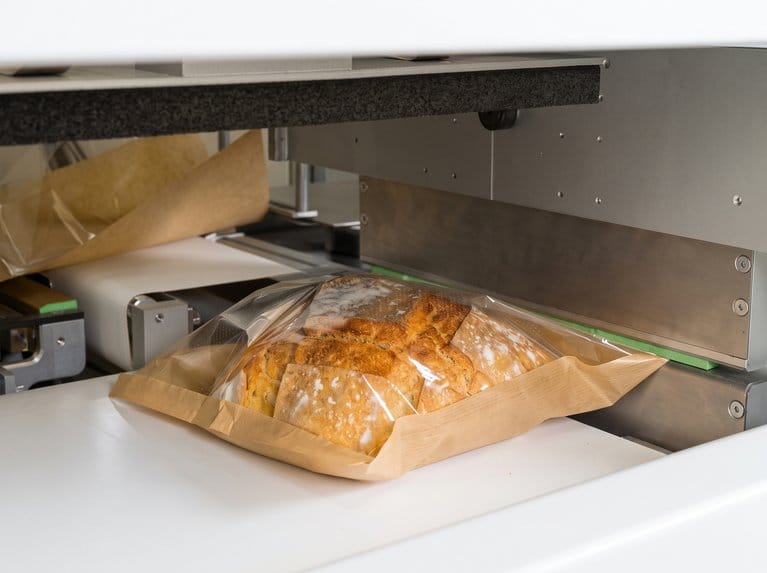
This rapid cooling causes immediate setting of the lipid matrix and coagulated albumin, locking the crumb cell walls in place. As a result, the technology increases specific bread volume by 10% to 20%, eliminating side shrinkage and ensuring the structural stability required for high-speed slicing and packaging.
😊 Thanks for reading!