Dough Skinning in the Proofer: How Ultrasonic Humidification Prevents Surface Crust
Surface dehydration during proofing creates severe product asymmetries and reduces loaf volume, negatively impacting total plant profitability. Controlling internal fluid dynamics and water droplet size through ultrasonic humidification, rather than traditional steam, mitigates these defects and directly improves overall structural quality and consistency.
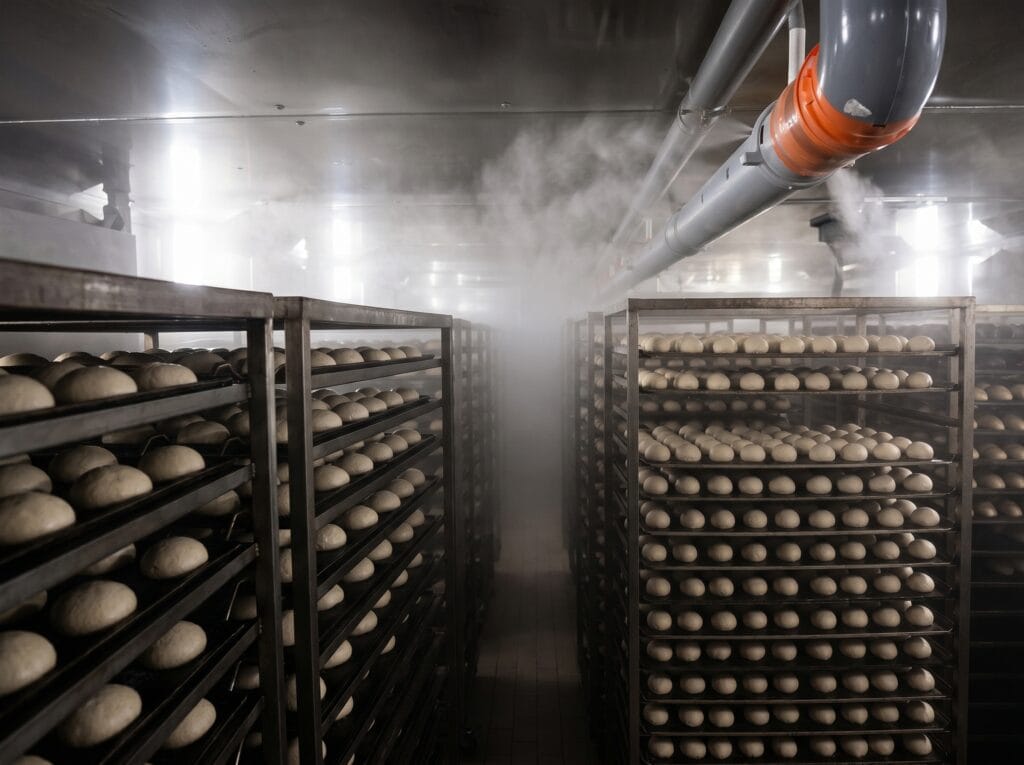
Why Dough Loses Moisture in the Proofing Chamber
Fermented dough maintains an internal relative humidity close to 95 percent. When the air inside the proofing chamber presents a lower humidity level, water migrates from the product surface into the environment. This evaporation creates a dry layer commonly known as skin.
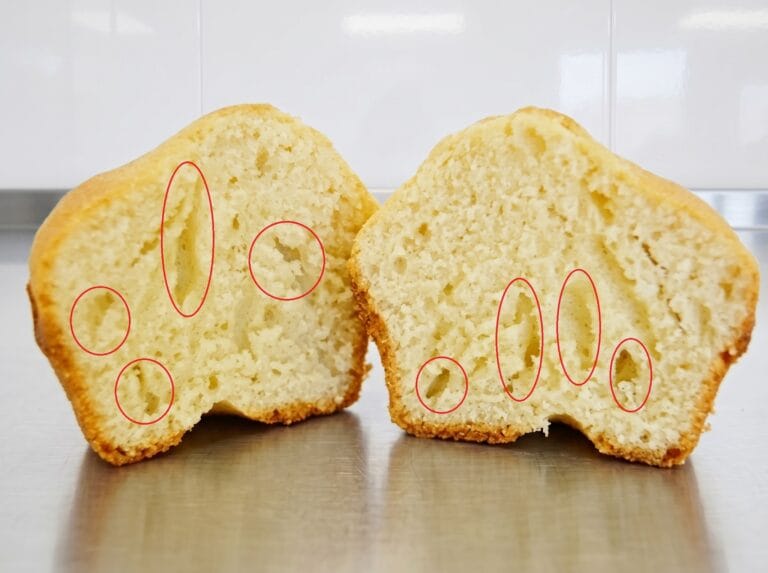
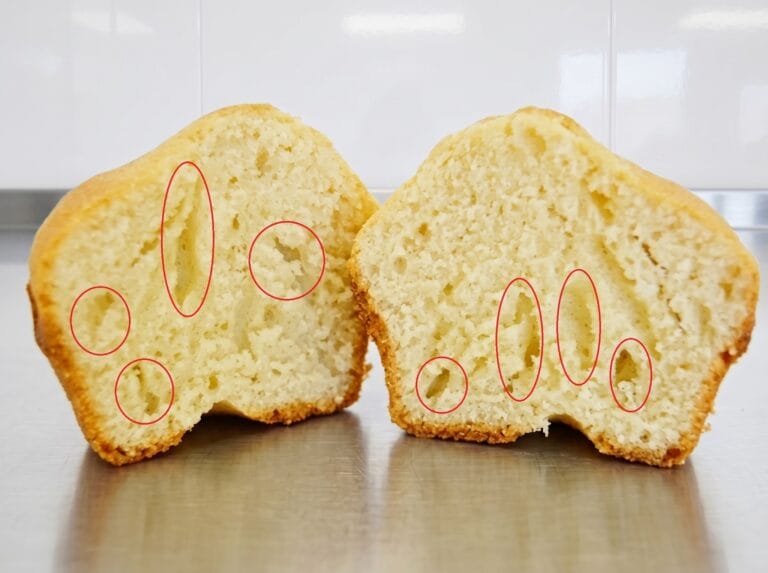
The formation of this crust restricts the natural expansion of the piece during baking. A rigid surface impedes proper internal gas development. This restriction could generate asymmetrical products or reduce the overall volume.
Limitations of Traditional Steam Injection
Classic proofing systems increase humidity by injecting water vapor at high temperatures. This vapor condenses on the cooler surface of the dough and transfers latent heat.
The use of traditional steam presents several key operational limitations:
Ultrasonic Humidification and Droplet Size
High-frequency oscillators vibrate water at ultrasonic speed, breaking it into a cold mist without any heat source. The droplets this process generates measure between 1 and 5 microns in diameter, roughly ten times smaller than the 10 to 50 micron droplets produced by traditional steam or spray systems.
The reduced droplet size transforms moisture behavior inside the chamber:
The integration of constant humidity and moderate airflow stabilizes the dough. The surface maintains its stretching capacity and can easily accommodate the volume increase driven by yeast activity.
😊 Thanks for reading!
Sources:
- NANOBAK2 Project: Innovative and energy efficient proofing cooling technology based on ultrasonic humidification. CORDIS European Commission. https://cordis.europa.eu/article/id/169997-better-bread-with-ultrasonic-mist
- Cauvain, S. P., & Young, L. S. (2007). Technology of Breadmaking. Springer.
- Cauvain, S. P., & Young, L. S. (2008). Bakery Food Manufacture and Quality: Water Control and Effects. Blackwell Publishing.
For further reading on key industry advancements, see our featured guides: High-Speed Ultrasonic Cutting for High-Volume Bakery Production, Fermentation and Preferments: The Science Behind Better Bread, and Butter vs. Hybrid Fats: How a Butter Crisis Reshaped Industrial Baking.