Before the Vacuum Lifts: Why Upstream Baking Quality Defines Depanning Success
Vacuum depanners keep getting the blame for damaged loaves, ripped crusts, and stuck product. In most cases, the oven and the proofer are the real culprits. Strict upstream process control is not optional prep work; it is the prerequisite for automated depanning to perform as specified.
The Pressure to Scale Without Compromise
High-volume bread and bun production in North America has undergone significant structural change over the past decade. Consumer demand for consistent crumb texture, uniform crust color, and extended shelf life has pushed industrial bakeries to tighten every step of the process, from mixing to packaging. At the same time, labor scarcity on the production floor has accelerated investment in downstream automation.
Vacuum depanning systems have become a cornerstone of that automation push, replacing the physical stress of manual tray handling and product transfer with controlled, repeatable extraction.
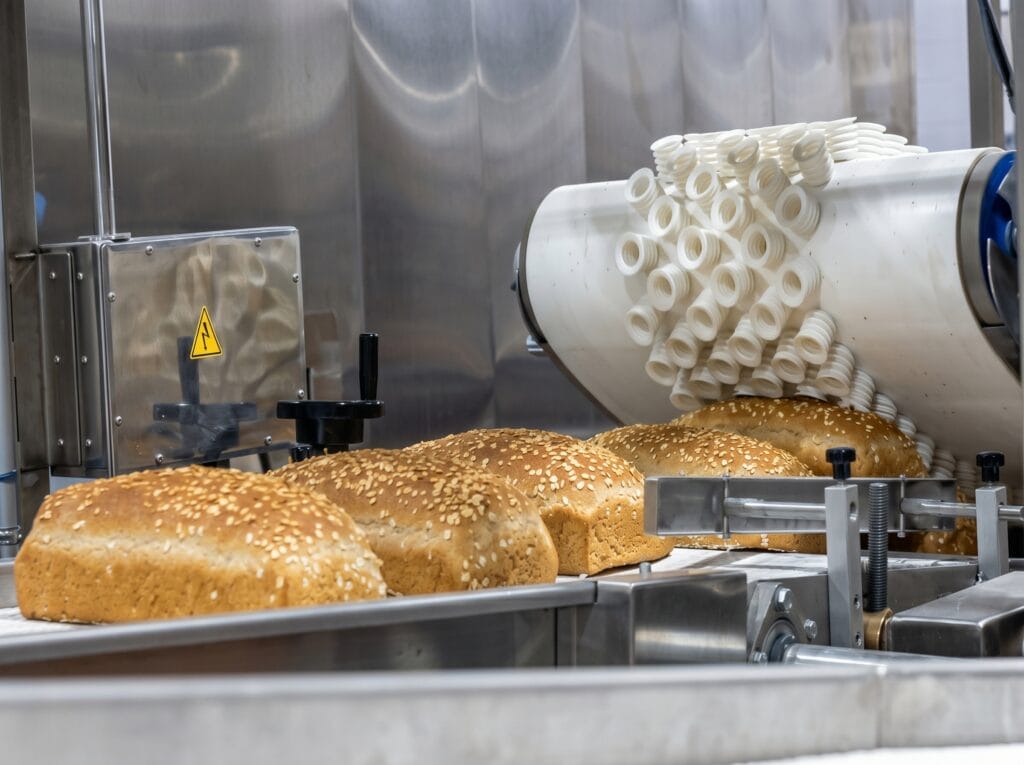
The operational case is strong: reduced labor dependency, lower product damage rates, and faster throughput to cooling. But there is a foundational condition that is frequently underestimated during equipment investment decisions:
The vacuum depanner does not bake the bread, and it cannot compensate for what the oven failed to do.
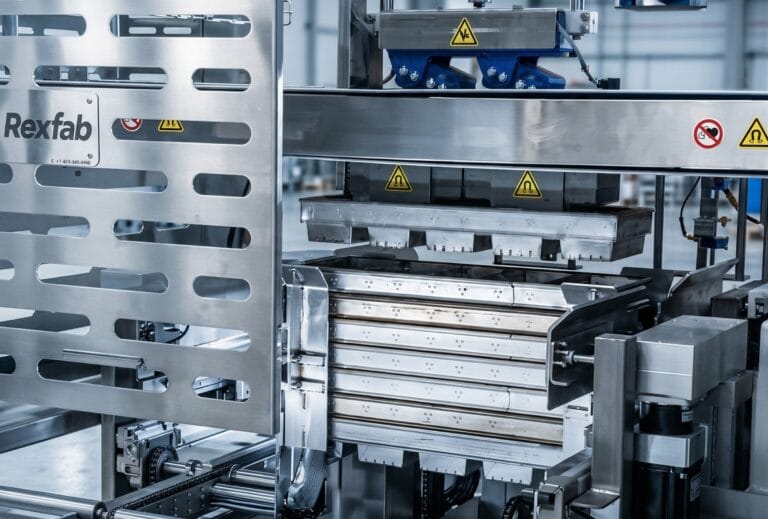
Before exploring how to ensure depanning success, it’s worth noting how modern pan-handling is being redefined. Our partners at Rexfab Inc. are demonstrating how replacing pneumatics with electromagnets significantly boosts line reliability.
What Happens When the Dough Is Not Right
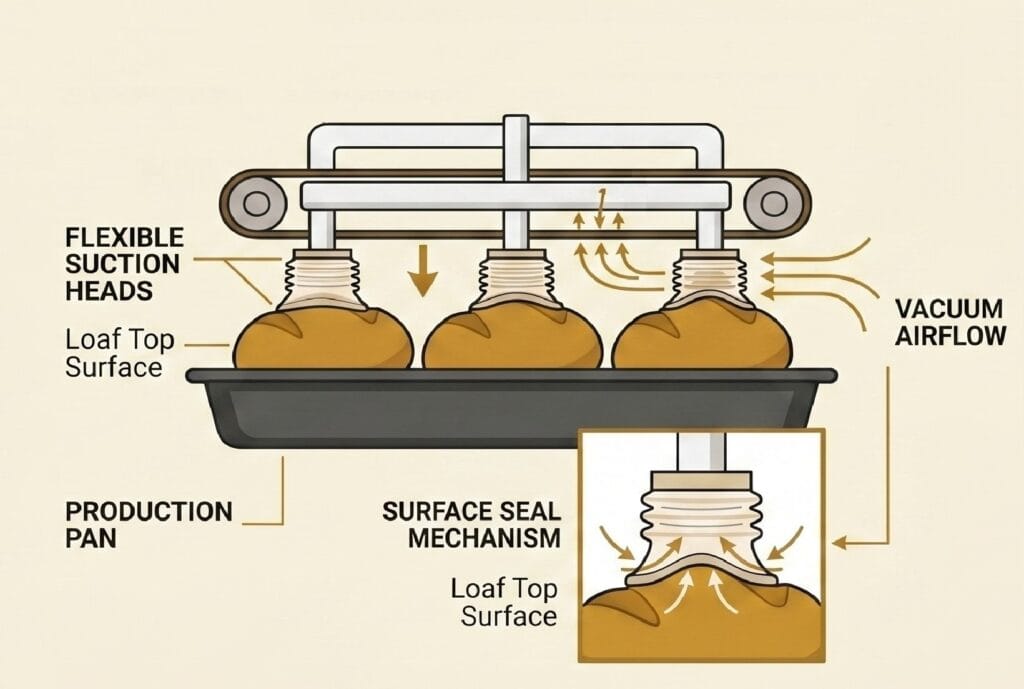
A vacuum depanner operates on a straightforward principle: suction cups grip the top surface of a baked product and lift it cleanly from the pan. What this description obscures is the physical precision required Product condition at the moment of extraction. The product needs structural integrity, a fully formed crust, appropriate dimensions, and clean separation from the tin surface.
When any of those conditions are absent, because of a flaw earlier in the process, the consequences are immediate and measurable:
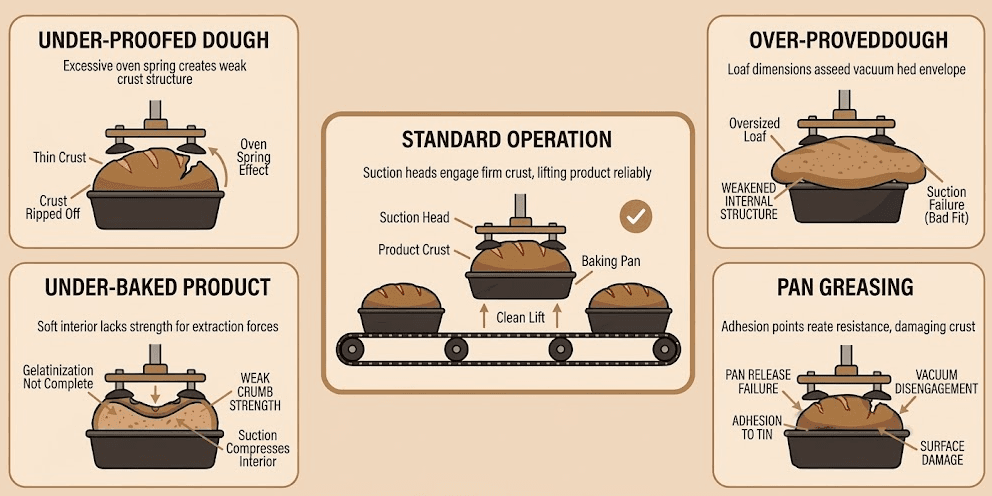
The vacuum suction head applies controlled negative pressure to the top crust of each loaf. The system can only perform reliably when crust integrity and product dimensions fall within the parameters defined for each product run.
Technical literature on industrial baking is consistent on this point:
A delay of just three minutes between oven exits and entry into the cooler could cause a standard loaf to lose up to 12 grams of moisture, a direct yield cost for bakeries selling by weight. Automated depanning eliminates that delay, but only when the product is in a condition suitable for automated handling.
Process Discipline Before Automation Investment
Before any bakery evaluates depanning automation, a structured review of baking process control should be part of the preparation.
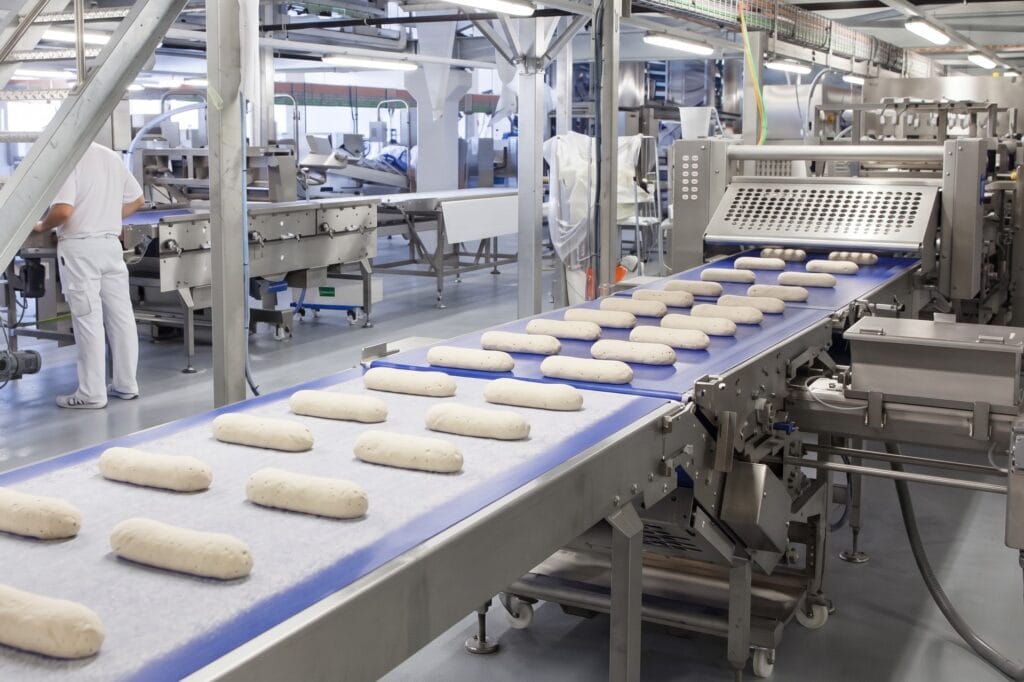
The variables most likely to cause depanning failures map directly to cotrollable upstream parameters:
How Vacuum Depanners Address the Variables
Once upstream conditions are stabilized, inline vacuum depanning systems are designed to maintain consistent extraction performance across high-volume production.
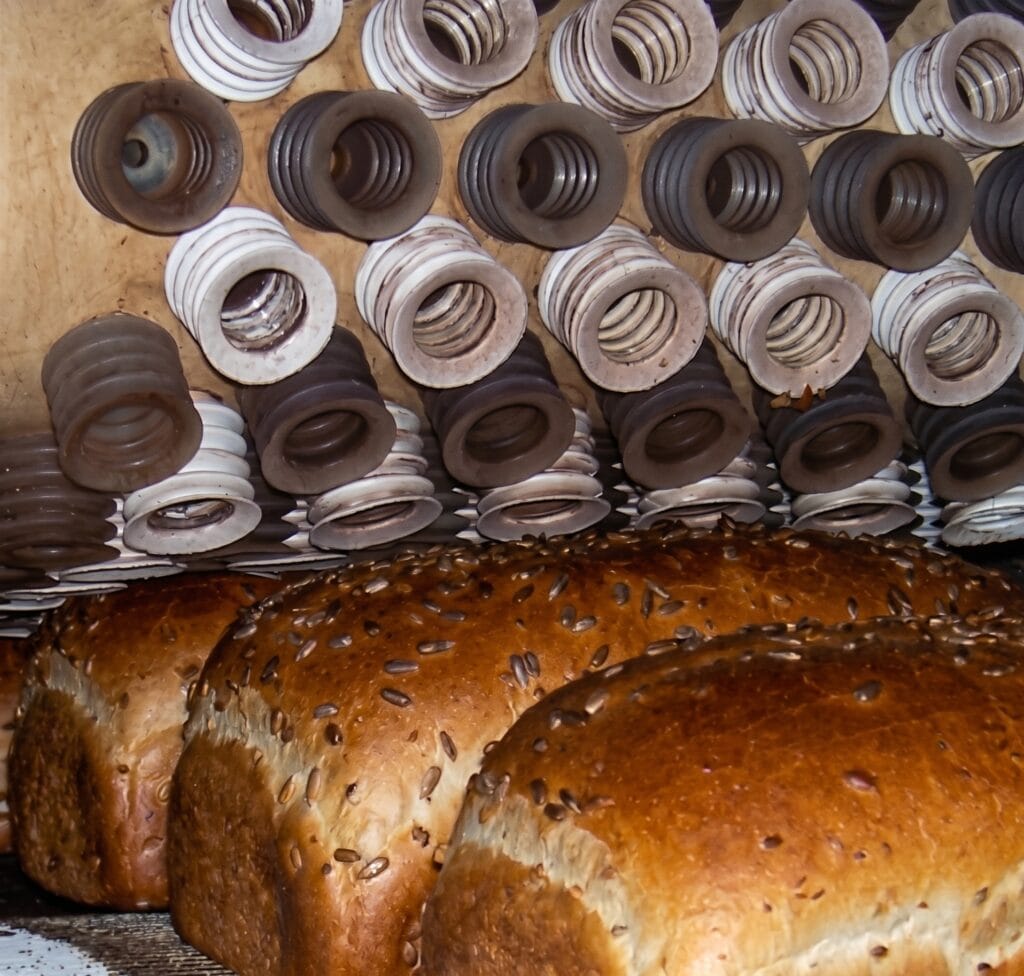
Current-generation equipment addresses the operational variables that most commonly affect depanning reliability:
Automation as a Multiplier, Not a Correction
The operational case for automated depanning is well established: labor reduction, consistent product handling, reduced breakage, and faster transfer to cooling. But the realization of that case depends on a foundational principle that should inform any automation investment decision, automation multiplies what the process already delivers.
Recommended Reading:
A vacuum depanner installed into a production line with inconsistent proofing, erratic oven profiles, or irregular pan conditioning will not perform reliably, regardless of its engineering quality. Bakeries that invest in upstream process discipline first, and automate second, consistently achieve better outcomes: lower defect rates, higher equipment utilization, and a stronger return on the capital deployed.
The depanner, in this sense, is a diagnostic instrument as much as it is a production tool. When it struggles, the answer is rarely in the machine itself. It is almost always in what happened before the pan arrived.
😊 Thanks for reading!
Sources
https://bakerpedia.com/processes/depanning
https://www.bakingbusiness.com/articles/automated-depanning-solutions
https://www.danmatic.dk/equipment/depanner
Cauvain, S.P. & Young, L.S. (2007). Technology of Breadmaking (2nd ed.). Springer.
Cauvain, S.P. (Ed.) (2012). Breadmaking: Improving Quality (2nd ed.). Woodhead Publishing.