Spelt Dough Processing: Adjustments to Prevent Tearing and Line Failures
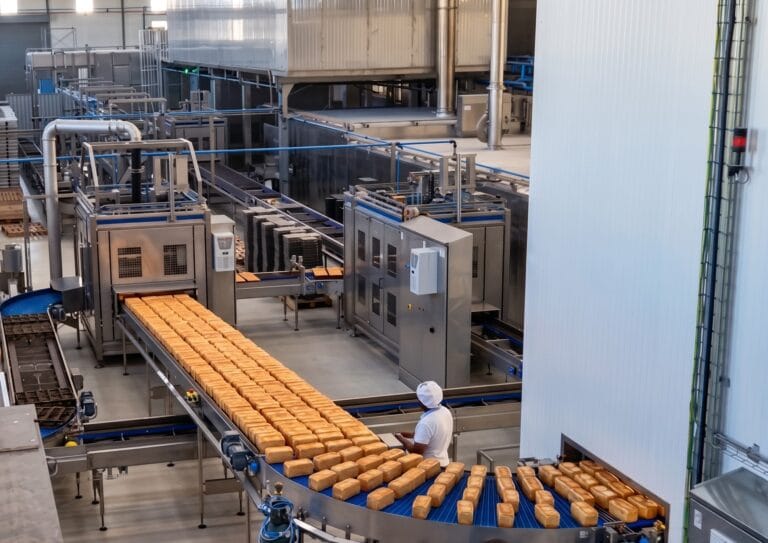
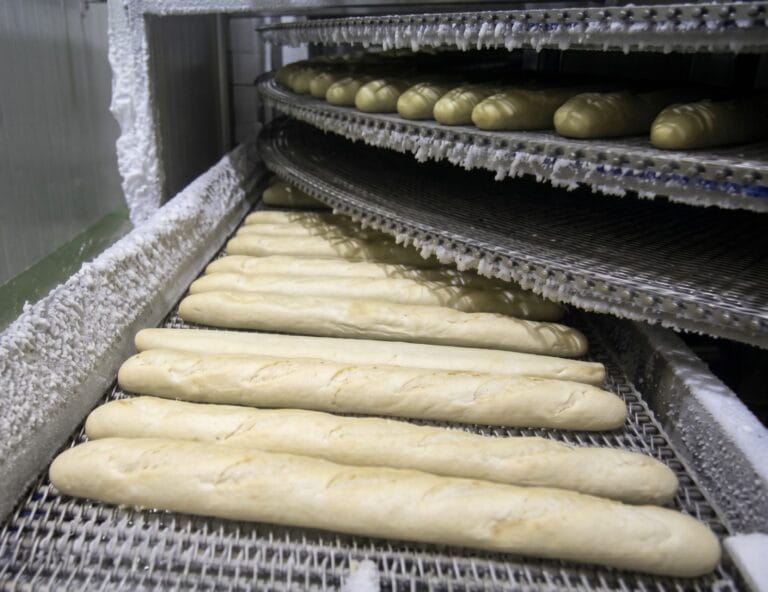
The rheological instability of spelt could generate highly sticky doughs that adhere to conveyor belts and collapse, causing high rejection rates, excessive material waste, and continuous line stoppages. This impact could be avoided by integrating stress-free sheeting systems with precisely controlled thermal baking profiles.
Market Context and Nutrition
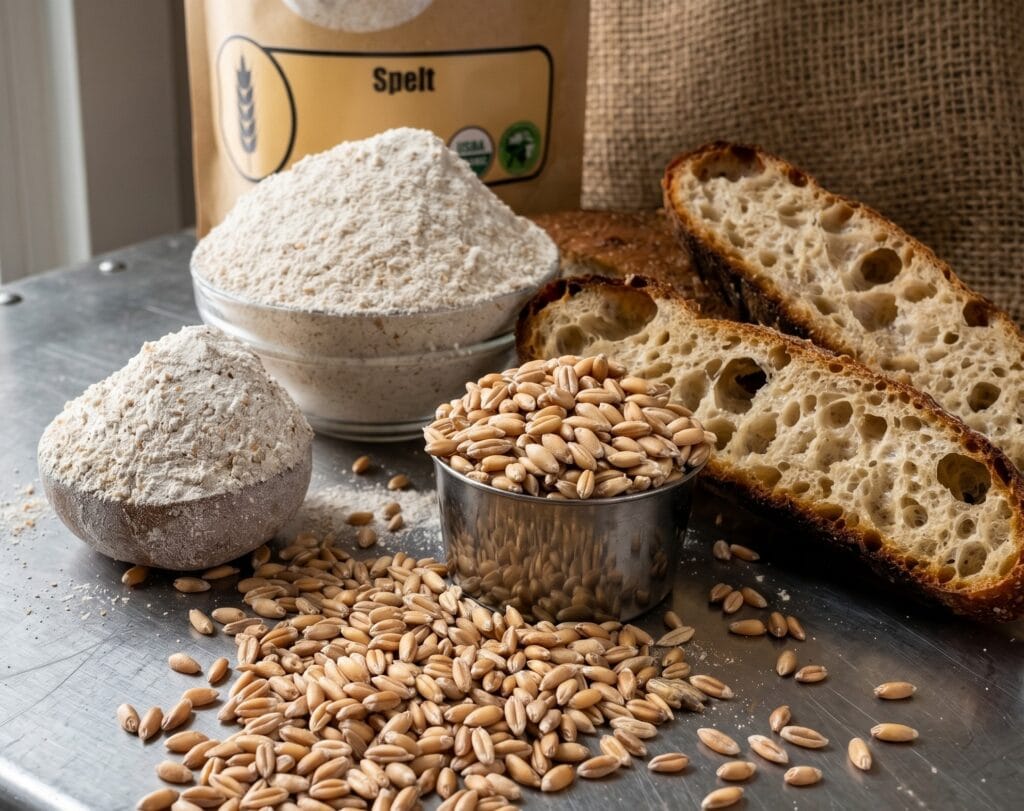
The reintroduction and increasing demand for ancient grains position spelt as a key ingredient in premium bakery sectors. Historically, this grain was displaced by commercial bread wheat, Triticum aestivum, which offered higher yields and superior tolerance in machinery. Today, its resurgence responds directly to the search for clean label products and differentiated nutritional profiles.
Spelt presents substantial differences compared to conventional wheat. It stands out for a molecular architecture that includes a high concentration of soluble polymeric proteins and monomeric gliadins. This facilitates its digestion in the human tract, but it is exactly what complicates its passage through the machines.
Spelt vs. Wheat Dough: Differences and Processing Challenges
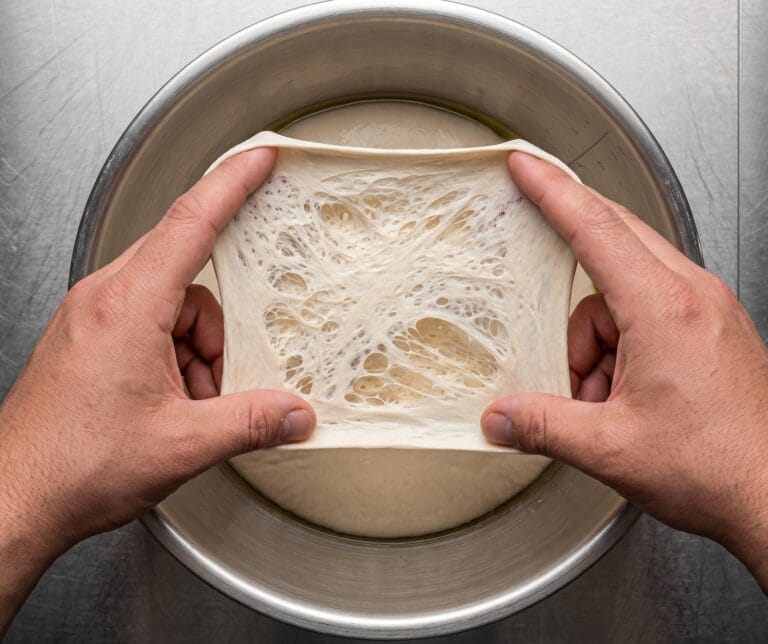
Dough made with spelt flour possesses a rheological behavior that differs radically from standard formulations, requiring completely different operational parameters.
Dough made with spelt flour possesses a rheological behavior that differs radically from standard formulations, requiring completely different operational parameters.
The ratio between gliadin and glutenin defines the structural support. In Triticum aestivum (commercial wheat), a balanced Gli/Glu ratio, consistently below 3.8, allows glutenins to form a dense, elastic backbone stabilized by strong bonds, while gliadins act as plasticizers for controlled stretching. Spelt presents a radically unbalanced proportion, reaching ratio values up to 12.1, often containing over three times more gliadins than commercial wheat.
This overwhelming presence of monomeric gliadins dilutes the structural network, which generates a highly extensible dough. Lacking elastic tenacity, the fine protein network cannot withstand line tensions, and the dough collapses under the same mechanical stress that a bread wheat would easily tolerate.
The high proportion of soluble proteins and fiber causes an accelerated hydration kinetics.
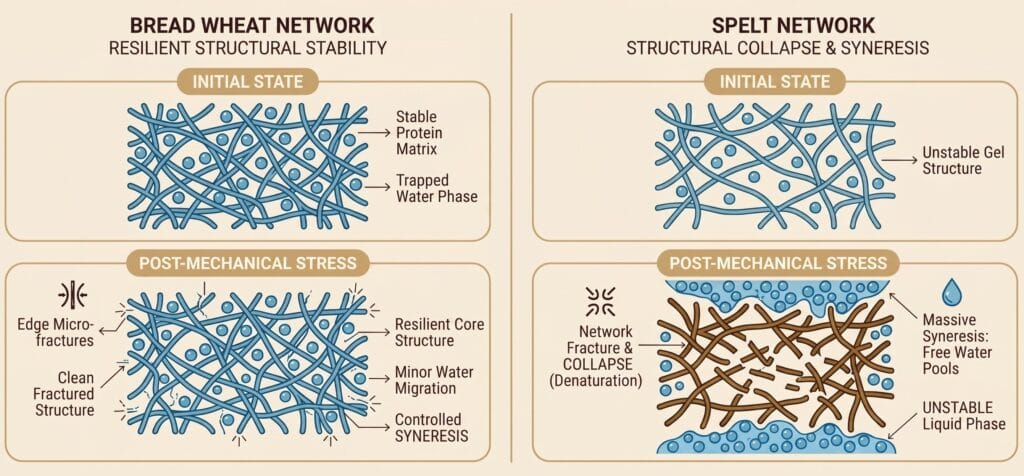
To process these inherently more hydrated and fragile doughs, machinery design must adapt to the material’s flow behavior.
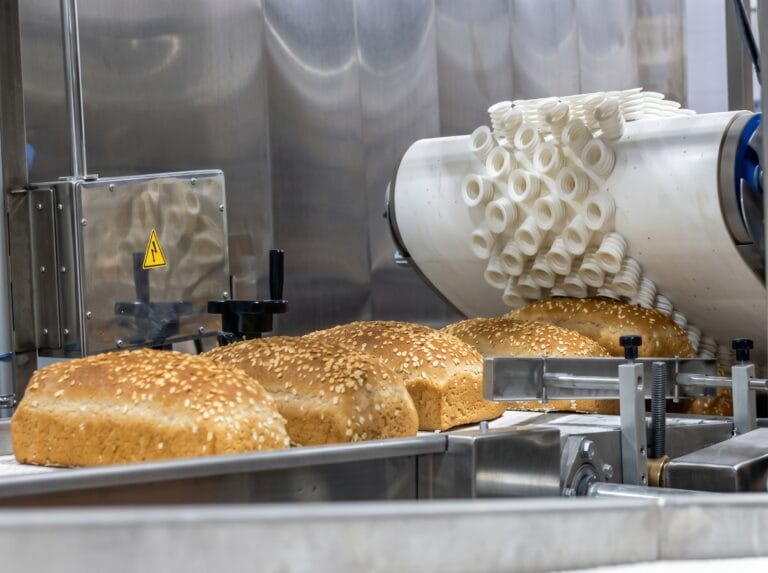
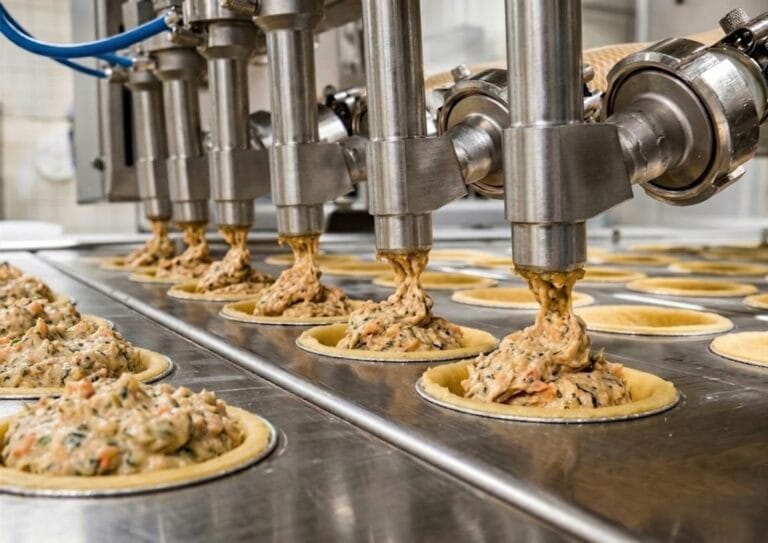
Traditional volumetric piston dividers and extruders act as critical saturation zones. These machines force the dough through narrow dies at high pressure. The abrupt shear gradients tear the fragile cell walls internally. As the containment architecture is destroyed, the dough becomes unstable and its continuous dosing could become erratic.
Baking Considerations
Monomeric spelt proteins demand a modified baking profile to ensure gas retention inside the continuous tunnel.
During the initial baking minutes, the piece volume must experience an accelerated expansion. The thermal increase pushes carbon dioxide into the gaseous phase and gasifies internal free water, exerting an enormous isotropic force. However, spelt gluten films lack elastic tenacity to contain and govern this pressure increase. Tiny alveolar bubbles reach their yield point and may tear, releasing valuable steam into the atmosphere and causing the piece’s gravitational collapse.
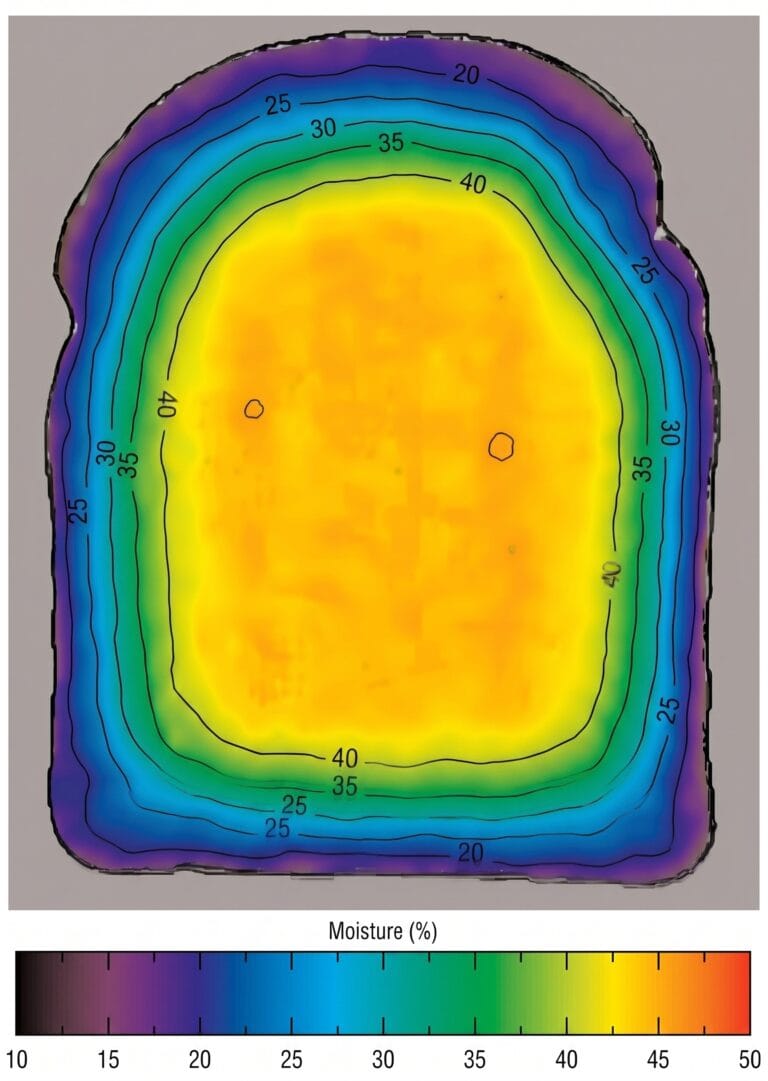
The baking equipment applies a heat curve focused on the modification of the outer surface.
Controlling these thermal parameters and adapting sheeting reduction rates decreases critical stress on the fragile spelt cellular matrix.
😊 Thanks for reading!
Sources:
- “Comparative Study on Gluten Protein Composition of Ancient (Einkorn, Emmer and Spelt) and Modern Wheat Species”, PMC, https://pmc.ncbi.nlm.nih.gov/articles/PMC6769531/
- “Chemical characterization and breadmaking potential of spelt versus wheat flour”, ResearchGate, https://www.researchgate.net/publication/319617279
- “Gluten proteins from spelt (Triticum aestivum ssp. spelta) cultivars: A rheological and size-exclusion high-performance liquid chromatography study”, ResearchGate, https://www.researchgate.net/publication/222703569
- “Computational modeling of dough sheeting and physical interpretation of the non-linear rheological behavior of wheat flour dough”, ResearchGate, https://www.researchgate.net/publication/222919848
- “Modeling Heat and Mass Transfer in Bread during Baking”, COMSOL, https://www.comsol.fr/paper/download/63507/nicolas_paper.pdf