The Rise of Sourdough in Sweet Goods: How Industrial Bakers Are Rethinking Clean Label
Sweet pastries face scrutiny regarding synthetic additives and poor nutritional profiles. Integrating specialized sourdough starters bypasses these barriers; it naturally replaces emulsifiers and improves bioavailability. Applying these changes might completely redefine clean label production and gut health integration in sweet goods.
The Growing Demand for Clean Label Sweet Goods
Current sweet baked goods rely heavily on dough conditioners and artificial preservatives. Consumers aggressively demand transparent ingredient lists with recognizable components.
Data indicates a massive shift toward natural and gut friendly indulgent products. 58% of consumers perceive sourdough as a healthier option; simultaneously, 70% agree it significantly enhances flavor. This fermented matrix could perfectly bridge the gap between health and sensory indulgence.
Why Enriched Doughs Are Hard to Formulate
Specialized sourdough applications might resolve the exact conflict in clean label pastry production. Using controlled natural fermentation could provide an alternative to synthetic additives, and it might also enhance the structural performance of existing natural emulsifiers. It functions as a highly structural and nutritional tool for the complex dough matrix.
When dealing with high concentrations of fat and sugar, formulating a clean label product is notoriously difficult. The difficulty might lie in two severe barriers.
First, sugar generates extreme osmotic stress. This ingredient is highly hygroscopic; it aggressively competes for available water and drastically reduces water activity. This osmotic pressure dehydrates yeast cells. Under this stress, fermentation slows down and might impede proper volumetric development.
Second, fat causes structural inhibition of gluten. Lipids physically coat the flour proteins. This film prevents proper hydration. The result could be an extremely weak structural matrix, which would be incapable of retaining fermentation gases.
The Limits of Current Clean Label Alternatives
To solve these failures, the industry historically resorted to synthetic additives to force the binding of water and lipids. Currently, producers use clean label alternatives like lecithin or specific enzymes. However, these natural options might face limitations in highly enriched doughs.
These natural emulsifiers sometimes might not possess the same strength or long term stability as industrial chemicals. If a sweet bread should maintain its freshness for 30 days on the commercial shelf, natural lecithin might prove insufficient; the product would dry out prematurely.
This is where the innovation of sourdough would enter. Although traditional methods like the Italian lievito madre have fermented enriched doughs for centuries, their large scale application as a natural solution represents a recent industrial revolution.
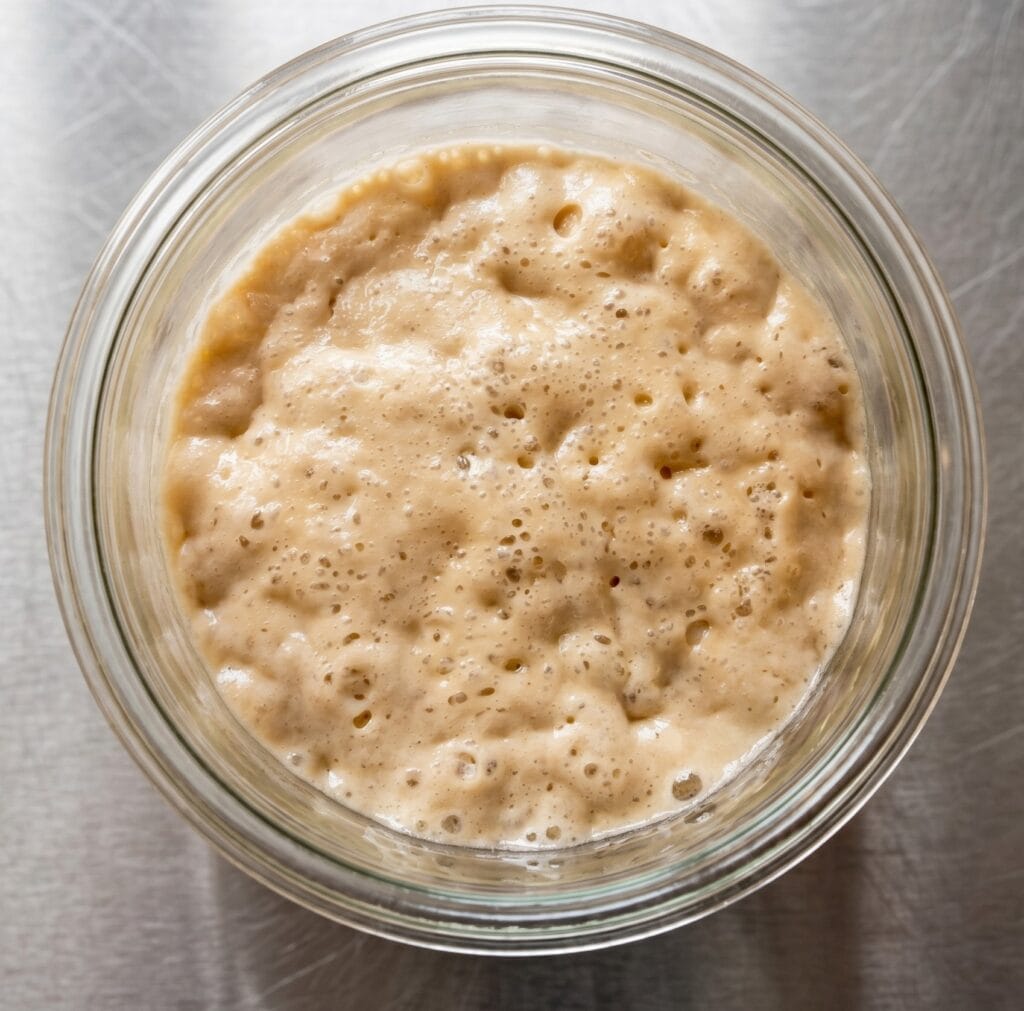
By using specific bacteria within the dough itself, a highly strong and elastic natural network would be created. This biological matrix would perfectly imitate the efficiency of industrial chemicals, allowing for a tender, long lasting, and 100% clean label product.
The Mechanisms Behind the Magic
Sourdough works through five key biological processes:
Bakers might completely eliminate artificial dough conditioners from their recipes. Consequently, the final packaging could present a drastically reduced ingredient list. Brands might achieve a highly desired natural label, effectively satisfying consumer demand.
Sources
https://www.puratos.us/en/blog/taste-tomorrow/hottest-bakery-trends
https://encyclopedia.pub/entry/53190
https://www.mdpi.com/2304-8158/13/11/1732
https://www.mdpi.com/2311-5637/8/2/42
For further reading on key industry advancements, see our featured guides: Enzyme Synergy: Replacing Hydrocolloids in Extended Shelf Life Bread, The Mechanics of Bread Crusts, and High Volume Bakery Tray Cleaning.