Dense Cookies and Fluctuations in Expansion: Diagnosing and Controlling Sugar Particle Size
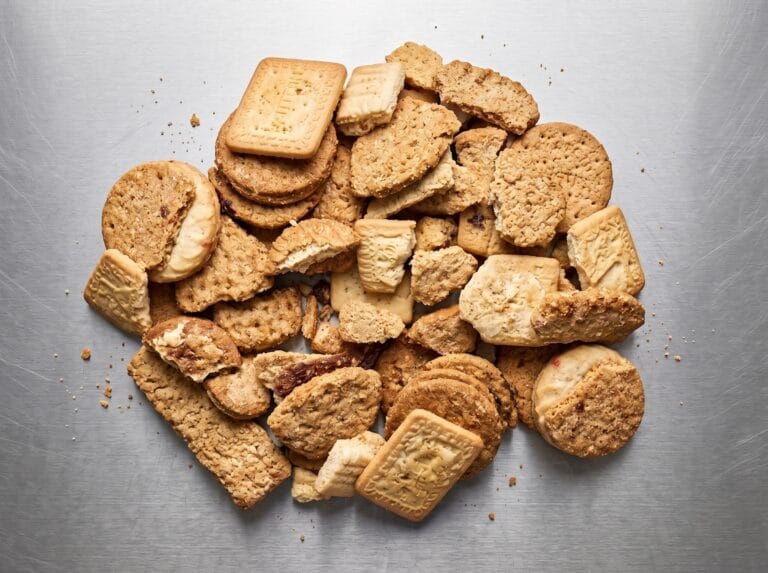
An inconsistent expansion index generates dense cookies, conveyor jams, and automated packaging issues. The cause frequently lies in the sugar particle size. Adjusting the particle size allows for the control of the dissolution rate and aeration, stabilizing the dimensions of the final product without altering the formulation.
Sugar Dissolution Rate and Its Effect on the W/T Index
The expansion index, expressed as the geometric ratio W/T (Width/Thickness), determines the physical profile of the cookie after baking. The sugar particle size dictates this value through its dissolution rate in the dough.
Coarse granular sugar: Requires more time and temperature to dissolve completely. During baking, the crystals melt late and increase the volume of the liquid phase. This reduces the viscosity of the dough when the temperature is high, allowing the cookie to flow for a longer time before the structure sets. The result is an increase in width and a reduction in thickness, raising the W/T value.
Fine granulation sugar: Dissolves rapidly during mixing. This early solubilization competes for available water, which raises the initial viscosity of the dough and restricts flow in the oven. The cookie stabilizes quickly, reducing its final diameter and lowering the W/T index.
The Creaming Phase and Air Capture
Sugar acts as a physical agent during the creaming stage with fats, determining the alveolar structure of the product.
Structural Setting and Moisture Retention
The particle size alters the exact moment when the dough loses its plasticity in the oven. Dissolved sugar delays starch gelatinization and protein coagulation by limiting the availability of free water.
Dimensional Stability in the Production Line
Strictly controlling the sugar particle size specification ensures the geometric consistency of each batch. Maintaining a constant particle size stabilizes dough flow under heat, reduces waste from out-of-spec products, and protects the continuous profitability of the industrial operation.
😊 Thanks for reading!
Sources:
- Davidson, I. (2014). Biscuit Baking Technology: Processing and Engineering Manual. Academic Press.
- Cauvain, S. P., & Young, L. S. (2006). Baked Products: Science, Technology and Practice. Blackwell Publishing.
- Zhou, W., et al. (2014). Bakery Products Science and Technology. Wiley-Blackwell.
If you found this article helpful, explore our related coverage on Overcoming Technical Challenges in Frozen Doughs Packaging, Filling Leaks and Crumb Collapse: Diagnosing and Solving in Butter Rolls, and Before the Vacuum Lifts: Why Upstream Baking Quality Defines Depanning Success.