Microencapsulated Essential Oils Extend Shelf Life Without Yeast Inhibition
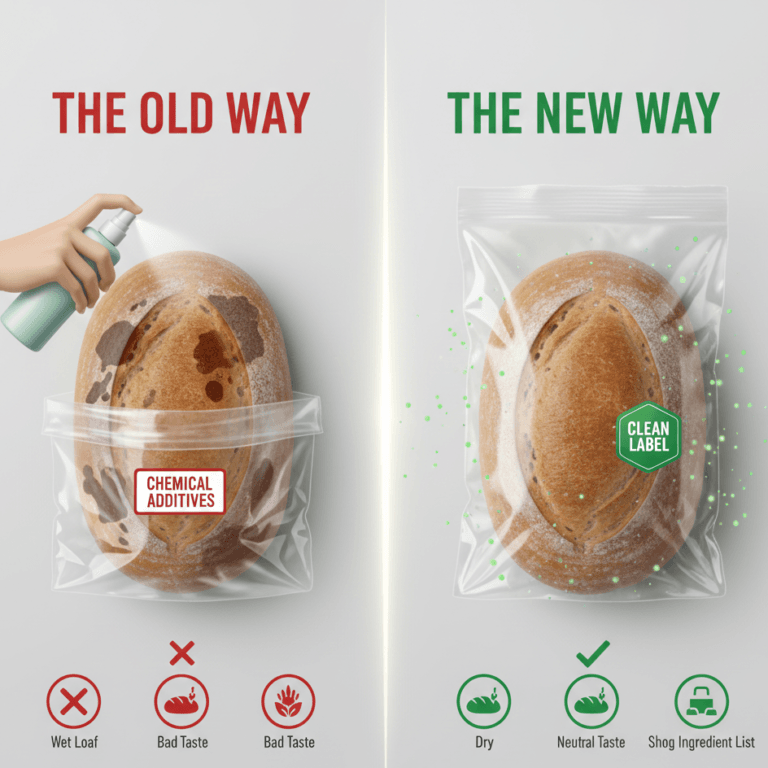
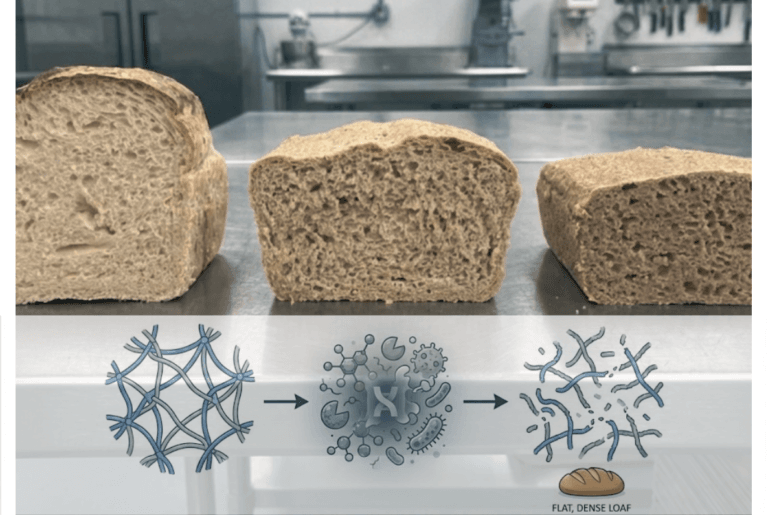
The integration of essential oils (EOs) like cinnamon, clove, and oregano into industrial baking has historically failed due to two factors: high volatility (loss of efficacy before packaging) and aggressive yeast inhibition during proving.
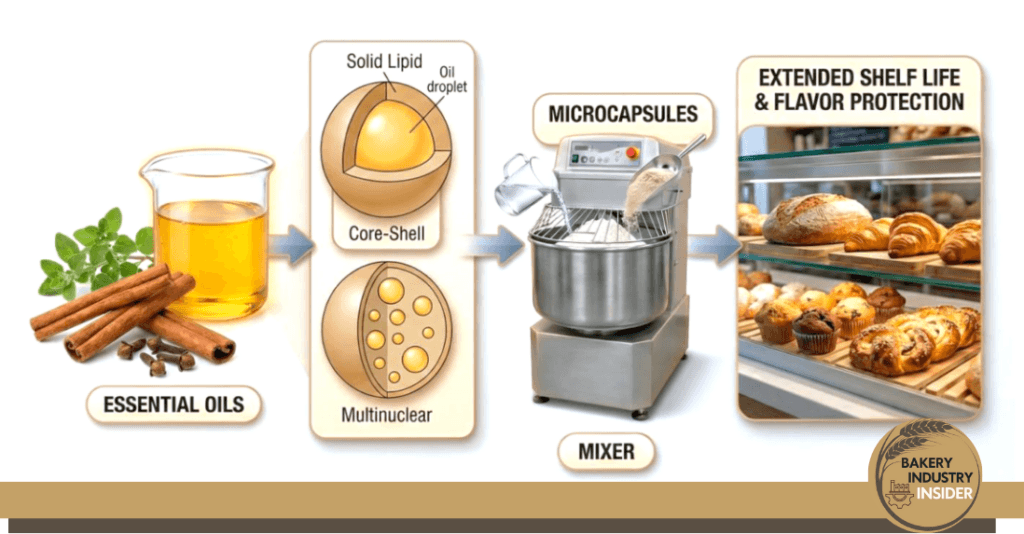
New microencapsulation technologies, specifically those utilizing lipid-based barriers or spray-drying matrices (such as those pioneered by TasteTech and detailed in recent academic reviews), effectively solve these operational bottlenecks.
Technical Mechanics
- Core-Shell Isolation:
Active terpenes (cinnamaldehyde, eugenol, carvacrol) are suspended in a lipid or polymer matrix (e.g., modified starch, gum arabic). - Targeted Release:
The encapsulation barrier is engineered to withstand mixing and proving temperatures ($<40°C$) but degrade or melt at baking temperatures ($>60°C$) or upon mechanical shear (consumption). - Mode of Action:
Once released, the hydrophobic EO components penetrate the fungal cell membrane, disrupting permeability and causing cell death in spoilage organisms like Penicillium and Aspergillus.
Operational Impact
- Yeast Protection:
Unlike raw oils, encapsulated forms do not interact with yeast during fermentation, ensuring consistent loaf volume and proofing times. - Sensory Neutrality:
The barrier masks the pungent, savory notes of oregano or clove, allowing their use in sweet bakery applications without affecting the flavor profile. - Extended Shelf Life:
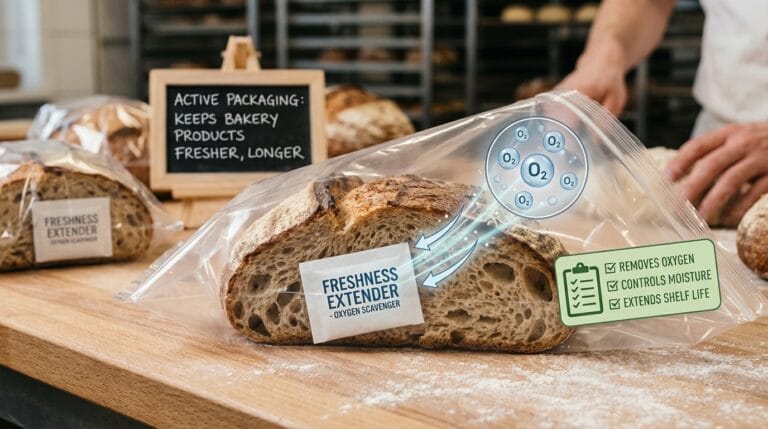
Trials indicate these systems can match the mold-free shelf life of synthetic preservatives (e.g., calcium propionate), extending viability by 5–10 days in standard polyethylene packaging.
👉 Thanks for reading!
- Microencapsulation of Essential Oils and Oleoresins: Applications in Food Products, accessed January 5, 2026, https://www.researchgate.net/publication/386409711_Microencapsulation_of_Essential_Oils_and_Oleoresins_Applications_in_Food_Products
- TasteTech Preservatives Technology, accessed January 15, 2026, https://www.tastetech.com/what-we-do/encapsulated-preservatives/
- Utilizing Essential Oil Components as Natural Antifungal Preservatives in the Active Packaging of Bread, accessed January 15, 2026, https://www.mdpi.com/2073-4360/17/5/697