Crumb Collapse, Blind Holes and Surface Blisters: Solving the Three Critical Defects in Industrial Bagel Production
Crumb collapse, surface blistering and excessive density cost thousands of units per shift on high-speed bagel lines. The root cause lies in precise control of hydration, retard thermal profiles and the P/L (tenacity/extensibility) balance of the gluten.
The Firm Dough as a Starting Point
Continuous bagel production at outputs of 10,000 to 40,000 units/hour operates with low-hydration doughs, between 50% and 58% on a flour basis. This narrow range pursues two simultaneous objectives:
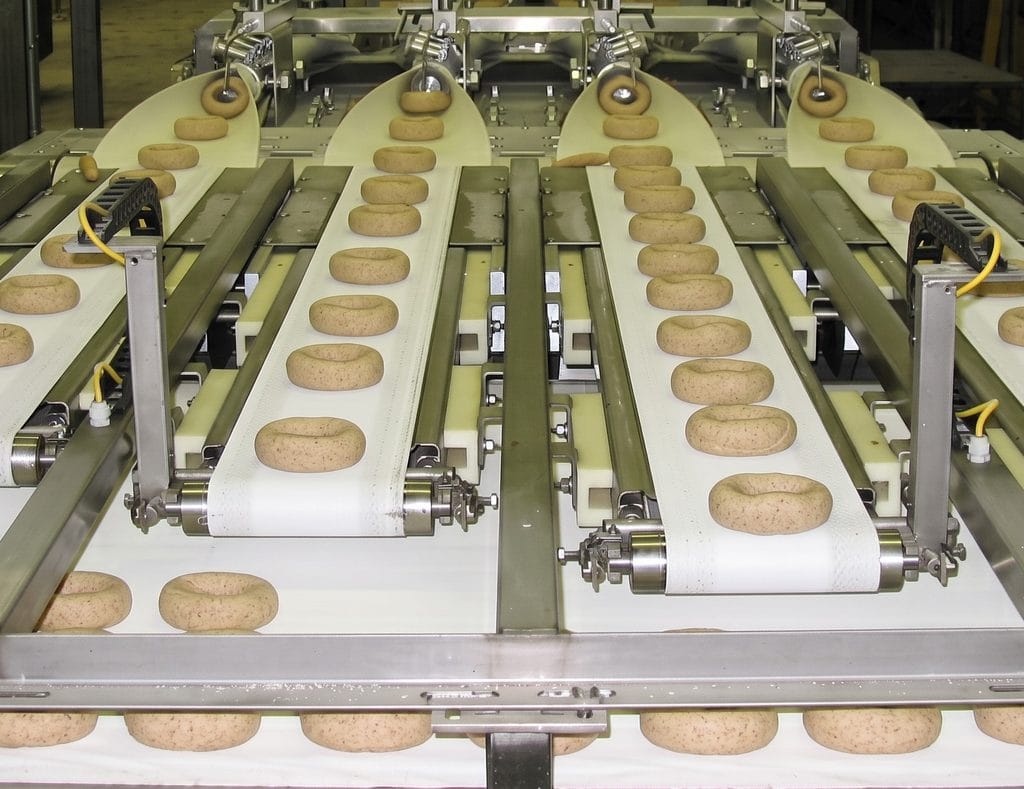
The challenge is that this water deficit, combined with flours of 13.5% to 15.0% protein, subjects mixing, extrusion and forming equipment to severe mechanical stress. Any deviation in hydration drastically changes dough behavior on the line.
Below 50%, the dough becomes hyper-tenacious, fractures during sheeting and generates a hyperdense crumb with excessive strain on extruder motors. Above 58%, the dough turns soft and sticky, the central hole closes and the final texture resembles a conventional roll, losing the product’s identity.
The P/L Balance: Tenacity vs. Extensibility
The alveographic configuration ratio P/L defines gluten processability and its capacity to withstand the complete process without failure. For industrial bagels, the optimal operating range sits between 0.90 and 1.30, with a tenacity P of 110 to 140 mm H₂O and an extensibility L of 80 to 110 mm.
When the P/L ratio exceeds 1.40, the dough resists deformation excessively. The result on the line is a dense, gummy bagel with the central hole closed by blind-inward collapse toward the core. When it falls below 0.80, the dough extends too easily, loses structure during scalding and collapses coming out of the oven.
The baking strength W must be maintained between 350 and 430 x 10⁻⁴ J, and the final dough temperature at the mixer outlet between 24°C and 26°C. Exceeding 28°C triggers premature fermentation before the divider-former, causing weight calibration errors and irregular gas pockets.
Thermal Profiles in Retarded Fermentation
In high-capacity operations, to achieve the authentic New York-style bagel without uncontrolled steam condensation or blistering, the retarder chamber controls aromatic development, mechanical stress relaxation from rolling, and piece stability.
This process is structured in three sequential, continuous stages within the same hygrothermal cycle:
Stage 1: Cold retard (0°C to 4°C for 12 to 24 hours, RH 85% to 90%): Yeast metabolic rate is reduced by 85% to 95%, allowing the dough to rest, relaxing the tensions generated by mechanical rolling through endogenous peptidases and developing flavor and aroma precursors.
Stage 2: Conditioning and thermal reactivation (18°C to 24°C for 30 to 60 minutes, RH 80%): An indispensable gradual transition to temper the core of the dough to 15°C to 18°C without subjecting it to a direct thermal shock from 4°C, which prevents external moisture condensation and blister formation.
Stage 3: Final fermentation or proofing (28°C to 34°C for 20 to 45 minutes, RH 82% to 88%): The yeast reactivates to generate the precise amount of CO₂. The target expansion volume is limited to 60% to 75% of a conventional bread, allowing the piece to reach an apparent density between 0.92 and 0.96 g/cm³ so it passes the float test and floats immediately upon entering the scalding bath (kettling).
The Three Critical Structural Defects
Crumb Collapse
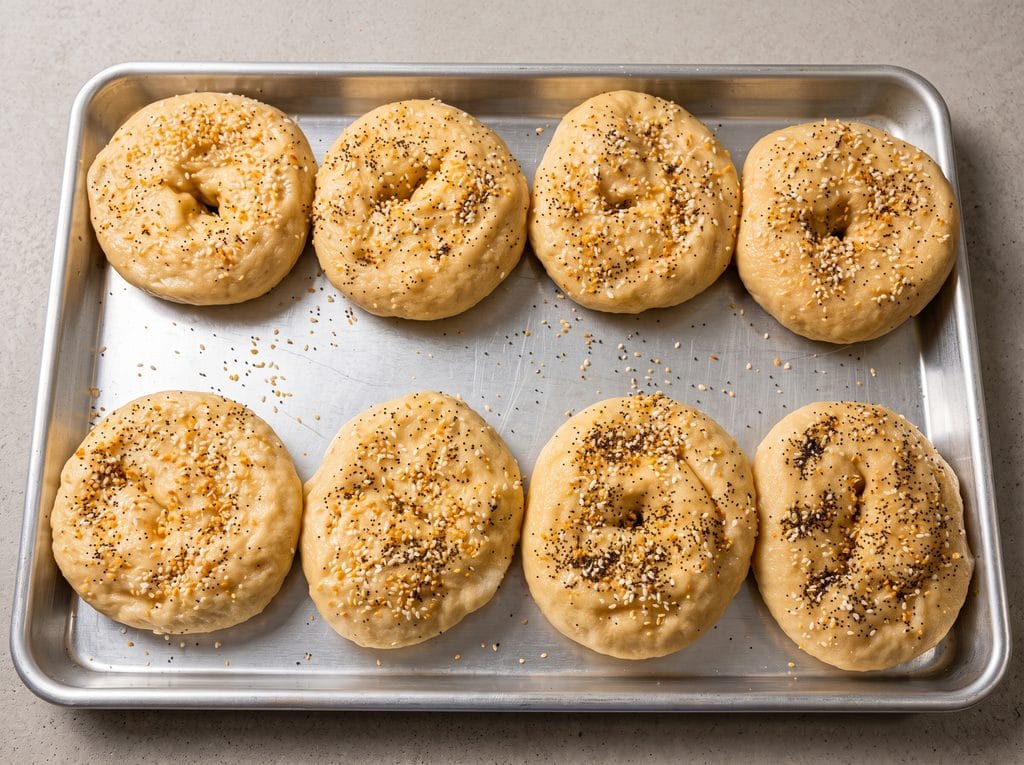
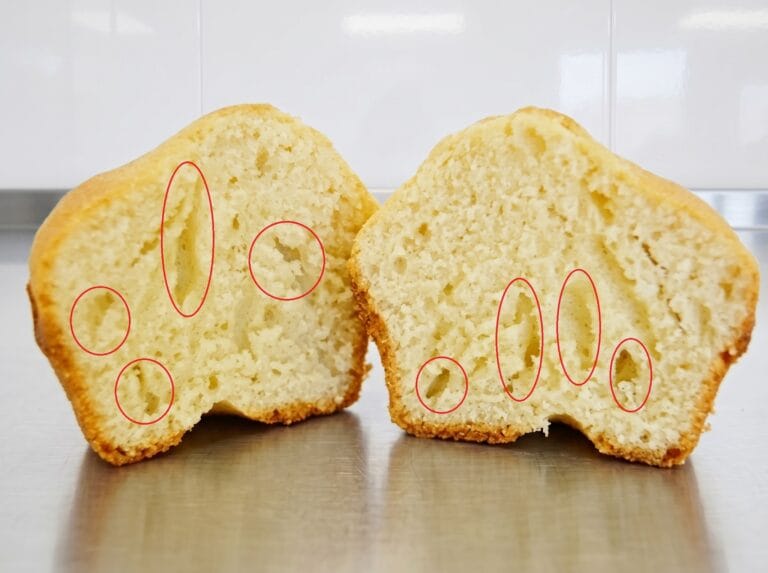
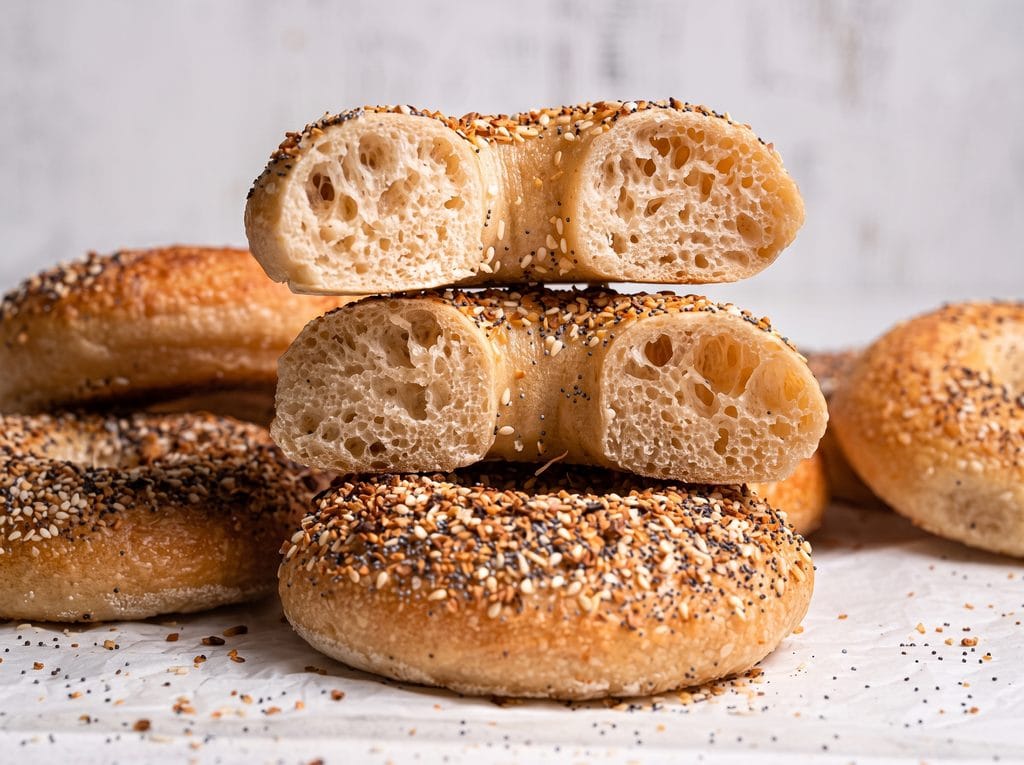
During over-fermentation, inter-alveolar cell walls thin critically. Upon entering the scalding bath at 92°C, internal gas pressure rises abruptly. If the protein network has been weakened by prolonged proteolysis during the retard, the walls collapse through massive coalescence, creating a partial vacuum that pulls the bagel dome inward upon cooling. The piece sinks, forms concave wrinkles and loses volume.
Mitigation requires reducing time in the active fermentation chamber, incorporating glucose oxidase at doses of 20 to 40 ppm to reinforce gluten disulfide bridges, and adjusting boiling time to a maximum of 30 seconds per side.
Surface Blistering
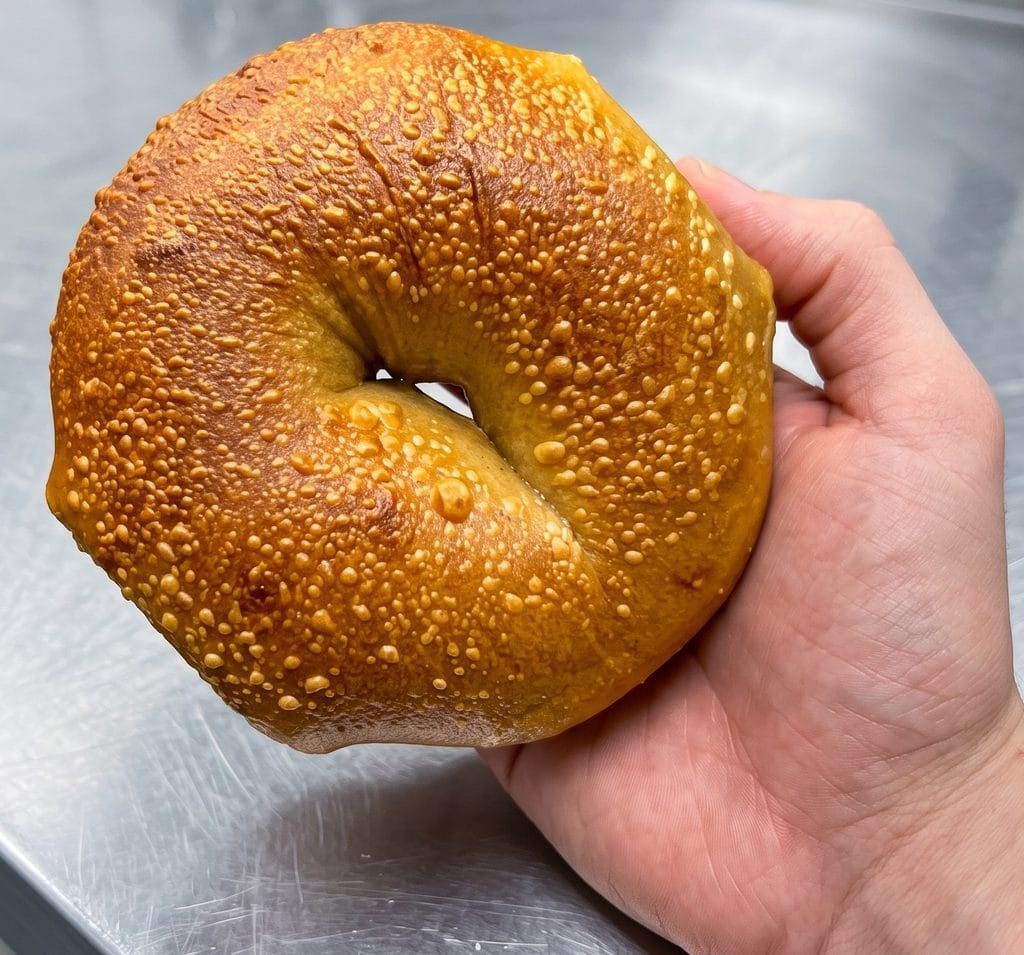
The irregular macro-blisters that peel off as dry flakes when leaving the oven result from excessive condensation during the cold retard, combined with over-activity of surface amylases and sub-epidermal gas accumulation.
Control requires regulating relative humidity in the retarder to prevent dripping onto piece surfaces, reducing fungal amylases in base flours, and applying a 60-second surface drying step before the piece enters the scalding water.
Excessive Density and Blind Hole
When the piece turns out small, heavy, with a gummy core and a closed central hole, the cause is severe under-fermentation or a dough with excessive P/L ratio above 1.40 without sufficient relaxation time.
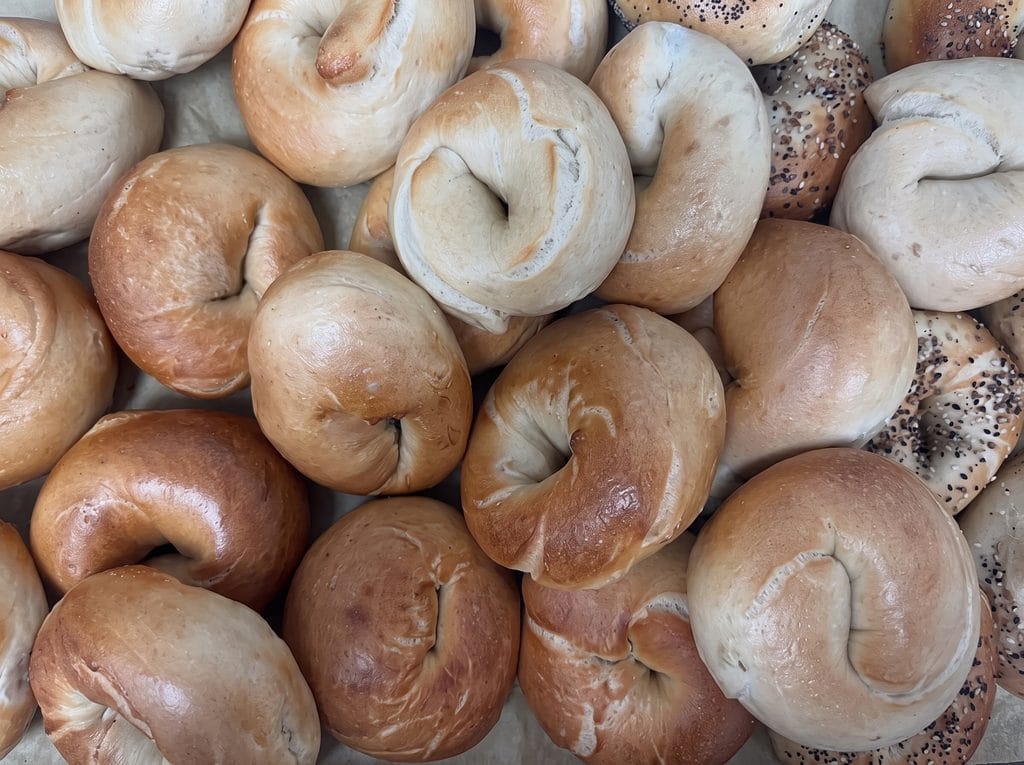
The correction involves increasing the time and temperature of thermal reactivation, and adjusting the P/L ratio in the flour to the 0.90 to 1.10 range through the incorporation of endo-xylanase, which hydrolyzes insoluble arabinoxylans releasing bound water toward the gluten and improving extensibility without generating surface stickiness.
Bioconditioning with Precision Enzymes
In clean-label formulations, the replacement of traditional oxidants and conditioners is achieved through specific enzyme panels designed for firm, low-hydration doughs:
The correct dosage and combination of this enzyme panel stabilizes dough mechanical tolerance across continuous shifts, drastically reducing waste percentages and optimizing production yield and overall plant profitability.
😊 Thanks for reading!
Sources:
- BAKERpedia: Bagel Production Process & Formulation (https://bakerpedia.com)
- Mecatherm: High-Capacity Industrial Bagel Processing Lines & Retarding Solutions (https://mecatherm.com)
- KPM Analytics: EyePro & Q-Bake 2D/3D Vision Inspection for Bagels and Baked Goods (https://kpmanalytics.com)
- Heat and Control: Continuous Industrial Bagel Boilers and Hydro-thermal Kettles (https://heatandcontrol.com)
- ABI LTD: Automated Continuous Bagel Production Lines and Divider-Formers