Perfect crust, hidden danger: the problem of loose metal weights
Loose metal weights may set a filling-cake base fast and flat, but they turn a simple weighting step into a foreign body, chemical migration and sanitation risk. A viral Fukuoka cheesecake video shows why a method that works in the oven might still fail every food safety test.
A short video from a cheesecake shop in Fukuoka has been circulating widely. The crusts look perfect. The method behind them is what caught our attention.
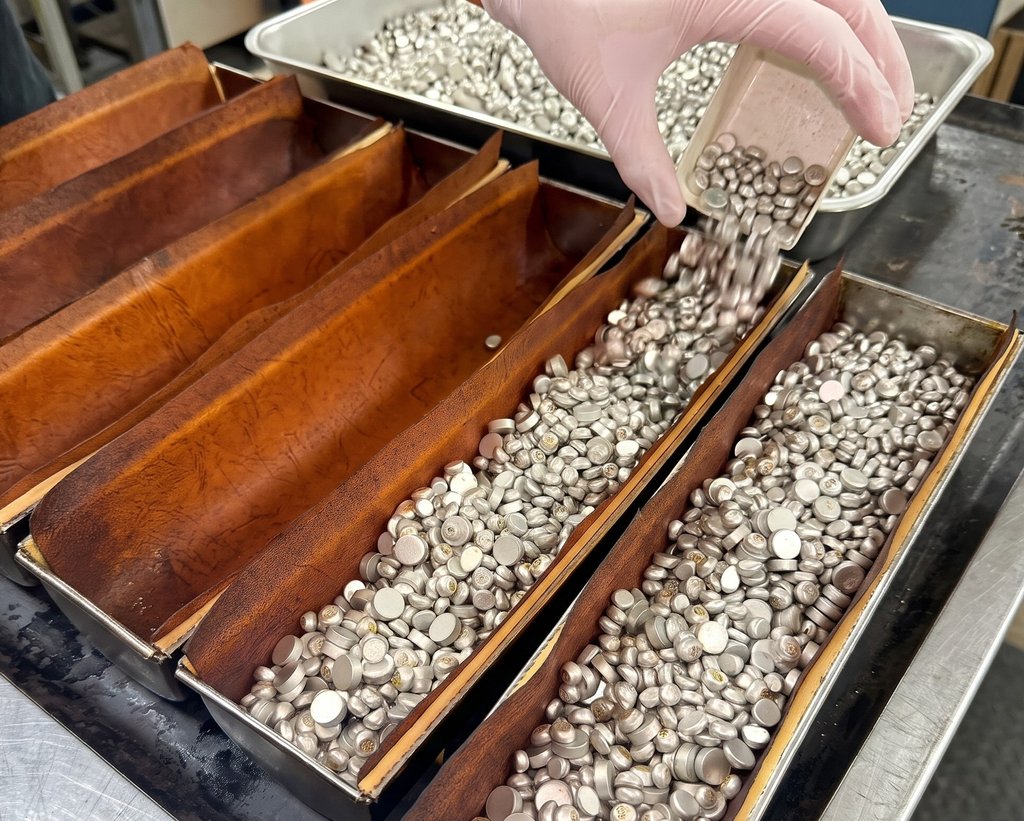
The operator pours scoops of small loose metal pellets into parchment lined molds before blind baking.
Let’s be fair first. The method does what it promises.
Why it works
Blind baking needs weight and heat. Without them, steam from the butter may lift the base, and the walls could slump before the dough sets.
Metal pellets deliver both. They are dense, so they press evenly into corners. They are highly conductive, so they could quickly transfer heat directly into the base of the crust while holding it flat.
So yes, the bases come out flat and crisp. But if we scaled this up to industrial production, would it even be possible? And at what cost?
Risk 1: a hard foreign body by design
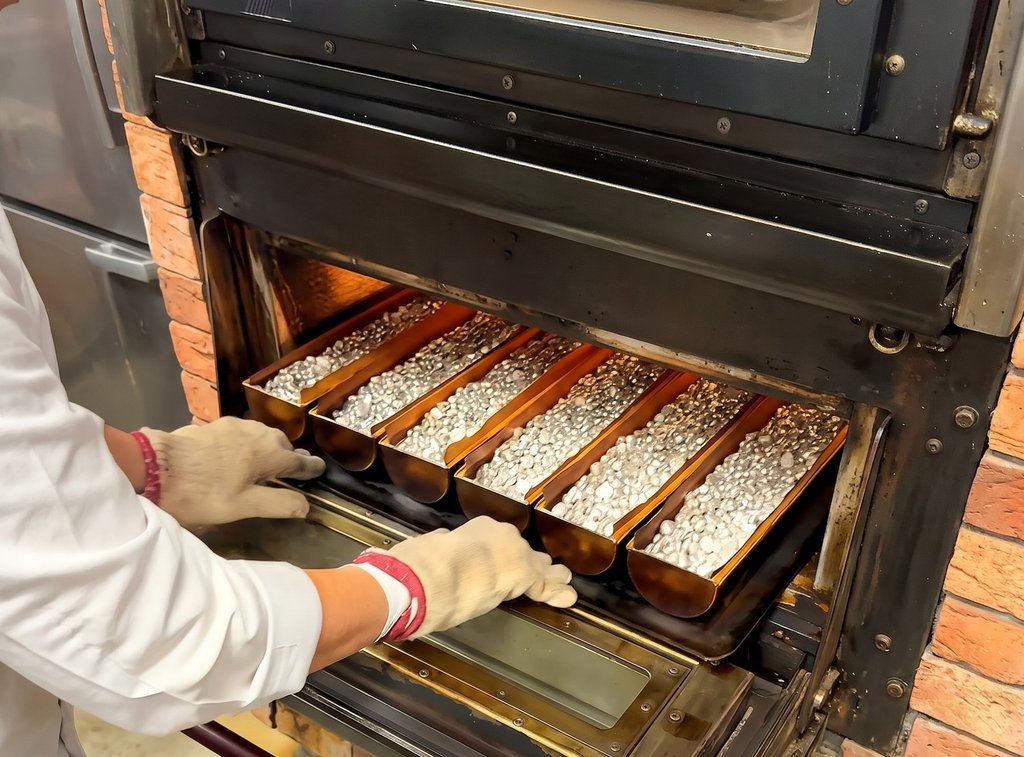
From a food safety standpoint, loose metal pellets are a severe physical hazard deliberately introduced into the clean zone.
Hard foreign objects in ready to eat foods are generally treated as a serious injury hazard. The pellets shown appear to be roughly fingertip sized, which might place them right inside that window.
A single missed pellet could cause choking, dental fractures or gastrointestinal injury. Children and older adults would be the most exposed.
Detection is not easy either. Once a pellet sticks in the baked crust and the filling is poured over it, it could become practically invisible. Operator fatigue, parchment folds and greasy reflections might hide one piece among thousands in a tray of molds.
Even if X-ray inspection could catch a stray pellet, relying on detection for a hazard you added on purpose goes against basic prevention logic: the safest foreign body is the one that never enters the line.
Risk 2: chemical migration and material choice
What the pellets are made of matters a lot.
Generic industrial metal parts are usually made of steel designed for machinery, not food. They may ship coated with cutting fluids, mineral oils or corrosion inhibitors that are not food grade. In the oven, those residues could volatilize or migrate into the dough.
Plated parts add another issue. Zinc or nickel coatings might flake off under friction and repeated thermal shock.
Even food grade stainless steel is not a free pass. According to a study indexed by the National Library of Medicine, stainless steel pots released more nickel and chromium with longer cooking times, more acidic foods and brand new cookware. In normal cooking, those amounts stayed below allergy thresholds; loose pellets of unknown origin, however, may not offer the same guarantees.
A box of hardware store metal parts, in short, would not qualify at all.
Risk 3: sanitation and residue build up
Thousands of small metal pieces are, hygienically speaking, a nightmare.
Washed in bulk, the pellets touch each other at countless points where water and detergent barely circulate. Meanwhile, butter seeping through the parchment may coat them and settle right in those spots.
Batch after batch, that retained fat is reheated at 180 to 200 °C. It could polymerize and break down into compounds such as acrolein, polycyclic aromatic hydrocarbons and aldehydes, which might pass bitter, burnt or rancid notes on to the next trays.
So, functional, but at what price?
So, could it scale? Probably not: loose parts that must be counted, washed and removed by hand might be incompatible with a continuous line.
The technique is efficient at one thing: moving heat and weight into a mold. Everything else, physical safety, chemical safety, sanitation and auditability, moves in the opposite direction.
😊 Thanks for reading!
Sources
- U.S. Food and Drug Administration (FDA): Compliance Policy Guide Sec. 555.425, Foods, Adulteration Involving Hard or Sharp Foreign Objects. https://www.fda.gov/media/71953/download
- https://www.youtube.com/shorts/9J9lmyO-h34