How to Prevent Fat Bloom in Chocolate-Coated Bakery Products: Radiant vs. Convective Cooling
Fat bloom could silently destroy the shelf appeal of cookies, donuts, cakes, tarts, and pound cakes before consumers even see them. A whitish coating surface may trigger returns and erode margin. Controlling heat extraction in the cooling tunnel could be the fix.
What Causes the White Layer on Chocolate Coatings?
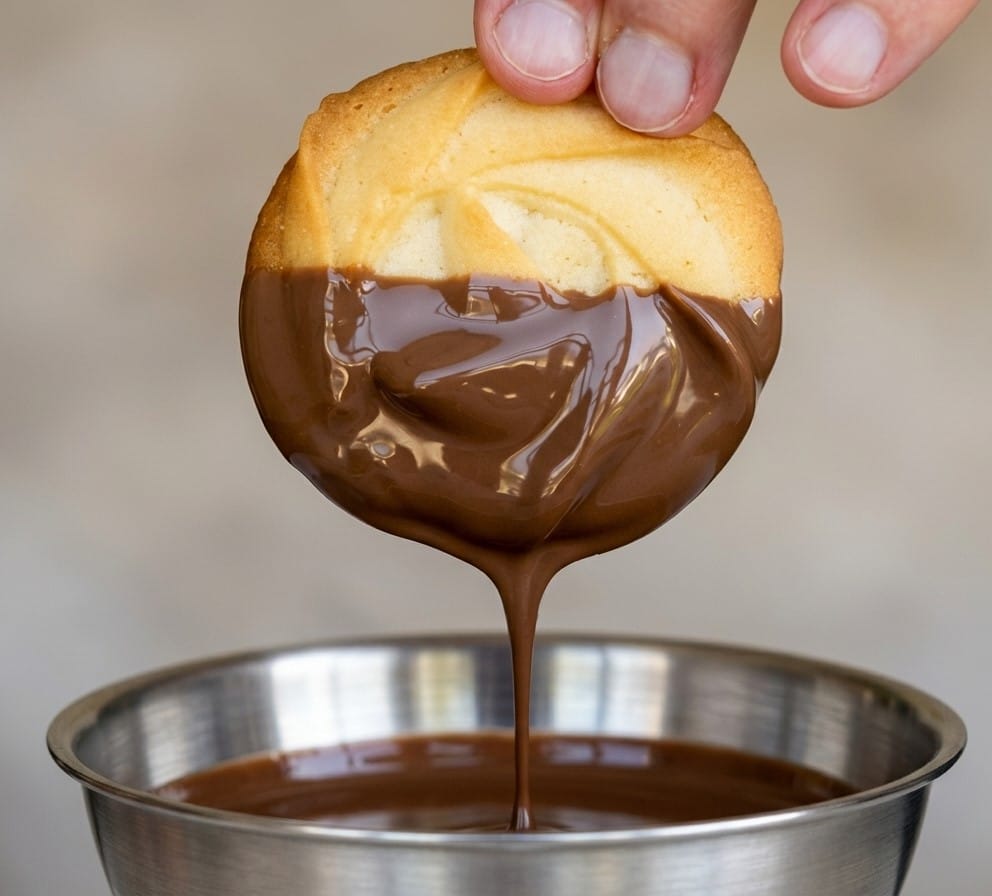
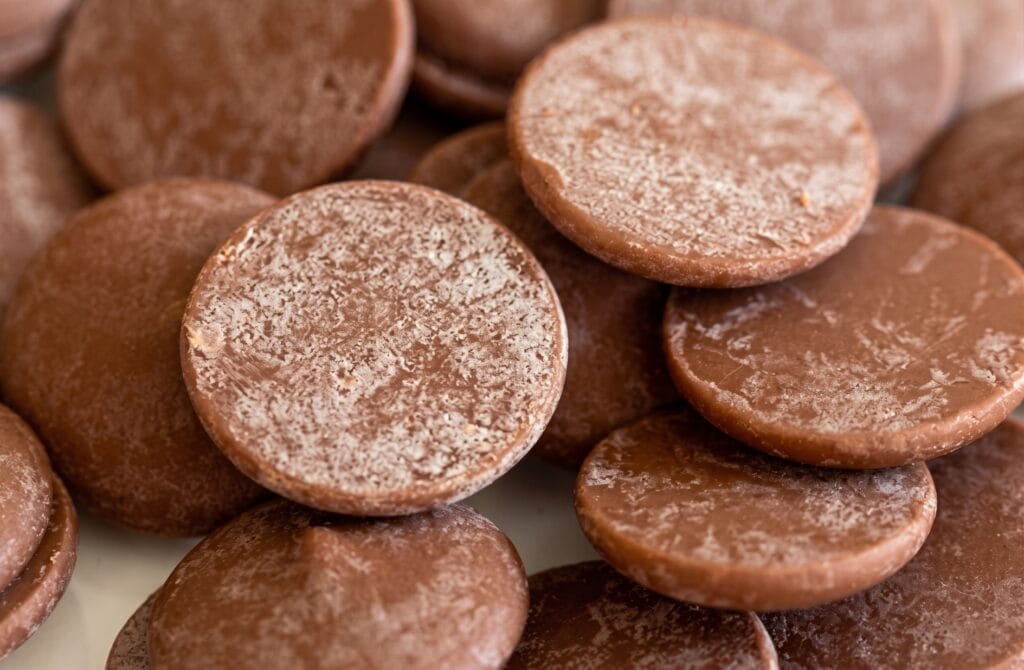
Fat bloom appears as a whitish or grayish layer on the surface of chocolate-coated or filled bakery products such as cookies, donuts, cakes, tarts, and pound cakes. It completely alters the mirror gloss of the coating and degrades the texture expected by the end consumer.
The defect occurs when fat crystals formed during a rushed industrial cooling process fail to reach their most stable polymorphic state. When the thermal gradients applied on the line are excessively aggressive, the latent heat of crystallization becomes trapped in the soft core of the product. This thermal energy later induces an internal migration toward the surface. Weeks after the product has been packaged and stored, this heat microscopically melts the surface crystal network.
Ignoring heat exchange rates at the final processing stage may lead to severe consequences:
How Fats Crystallize During Industrial Cooling
Fats used in coatings and doughs are not pure compounds but heterogeneous mixtures of triacylglycerols. The melting curve and tendency to solidify depend directly on carbon chain length and the presence of double bonds. Molecules with unsaturated fatty acids have curvatures that hinder dense packing, which drastically reduces their melting points.
Cocoa butter is highly uniform and dominated by symmetric configurations composed of saturated, unsaturated, and saturated fatty acids. This symmetry gives it a sharp melting profile, remaining solid at 25° C and melting abruptly at 37° C.
During line cooling, lipid molecules undergo nucleation and crystal growth in different structural forms depending on temperature and cooling rate. These polymorphic phases determine the commercial viability of the coating:
Convective vs. Radiant Cooling: What Each Process Chooses and Why
Cooling tunnels operate as high-speed heat exchangers. Selecting the right thermal extraction mechanism is vital for guiding lipids toward their stable form without trapping latent heat in the core.
Convective Cooling
This method uses high-speed mechanical cold air currents circulating directly over the chocolate-coated products.
Radiant Cooling
This system extracts heat by emitting energy toward refrigerated panels located around the conveyor belt, eliminating the need for aggressive air currents.
A combined-design operational approach may be the safest configuration for processing complex lipid matrices. The first zones of the tunnel could use radiant cooling panels to initiate nucleation gently, followed by moderate convection zones to fix the final structure only once the core’s latent heat has been fully dissipated.
😊 Thanks for reading!
Sources:
- The Physics of Cooling Tunnels in Chocolate, Rudvik Engineers, 2026.
- The Physics of Cooling Tunnels in Chocolate, Part 2: The Profit Leak You Can’t See, Rudvik Engineers, 2026.
- Thermodynamic and Kinetic Aspects of Fat Crystallization, PubMed, 2026.
- Characterisation of Fat Crystal Polymorphism in Cocoa Butter by Time Domain NMR and DSC Deconvolution, PMC, 2026.
- Crystallization and Polymorphism of Fats, ResearchGate, 2026.
If you found this article helpful, explore our related coverage on Optimizing Hydration in Gluten-Free Bread, Tiger Bread Coating: Eliminating Downtime with Dry Microgranules, and Excessive Acidity in Whole Wheat Sourdoughs? Understanding the Buffering Effect.