How Lactose Hydrolysis Can Help Reduce Sugar in Dairy-Based Bakery Products
Reducing sugar in dairy-based products often means trading one problem for another. Artificial sweeteners can disrupt texture, alter water activity, and leave metallic off notes that are difficult to mask. Lactase enzymes may offer a cleaner path: boosting natural sweetness from within the dairy matrix itself, without adding anything to the ingredient list.
Sugar reduction in bakery and pastry is one of the most persistent formulation challenges in the industry. Reformulating fillings, creams, and dairy-heavy desserts often requires replacing sucrose with high-intensity sweeteners that may compromise texture, flavor, and shelf life. Lactase enzymes could offer a different approach, one that works with the natural chemistry of milk rather than against it.
In April 2026, Kerry Group expanded its Carrigaline biotechnology facility in Cork, Ireland, with a focus on scaling the production of advanced lactases. The move reflects growing market demand for lactose-free and low-sugar dairy products, and it highlights how enzyme technology is becoming a more central tool in industrial food formulation.
The Mechanism: How Lactose Hydrolysis Works
Lactase act on lactose, the primary sugar in milk, breaking it down into its two constituent monosaccharides: glucose and galactose. This conversion may produce a meaningful change in the perceived sweetness of the dairy base, without adding any external sugars or sweeteners.
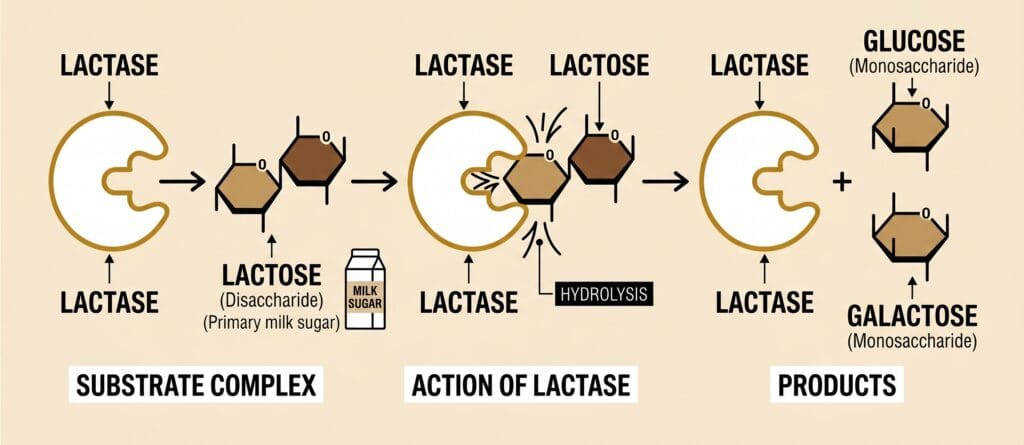
The key mechanisms at play are the following:
Bakery and Pastry Applications: Where Lactase Enzymes Add the Most Value
While lactase technology is rooted in dairy processing, its practical implications extend directly into the commercial baking sector. However, its applicability varies significantly depending on the product category. Understanding where it fits, and where it does not, is essential for formulation planning.
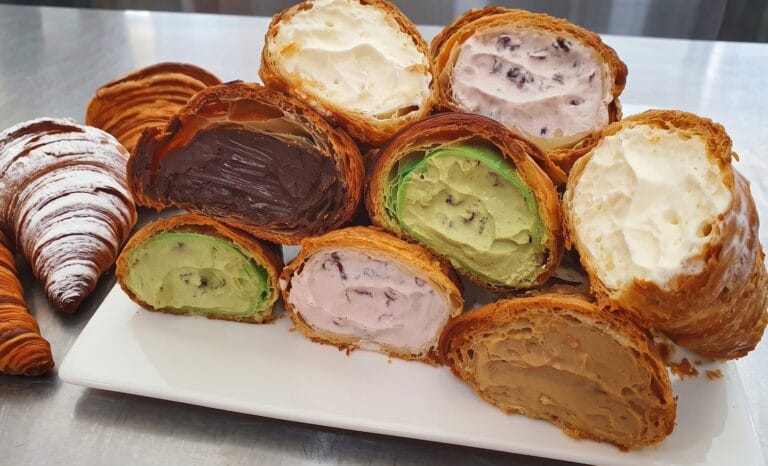
Pastry Creams, Ganaches, and Frostings: The Strongest Use Case
This is arguably where lactase enzymes offer the most immediate value in bakery. Pastry creams, milk chocolate ganaches, and chantilly creams all carry significant lactose loads, making them strong candidates for enzymatic conversion.
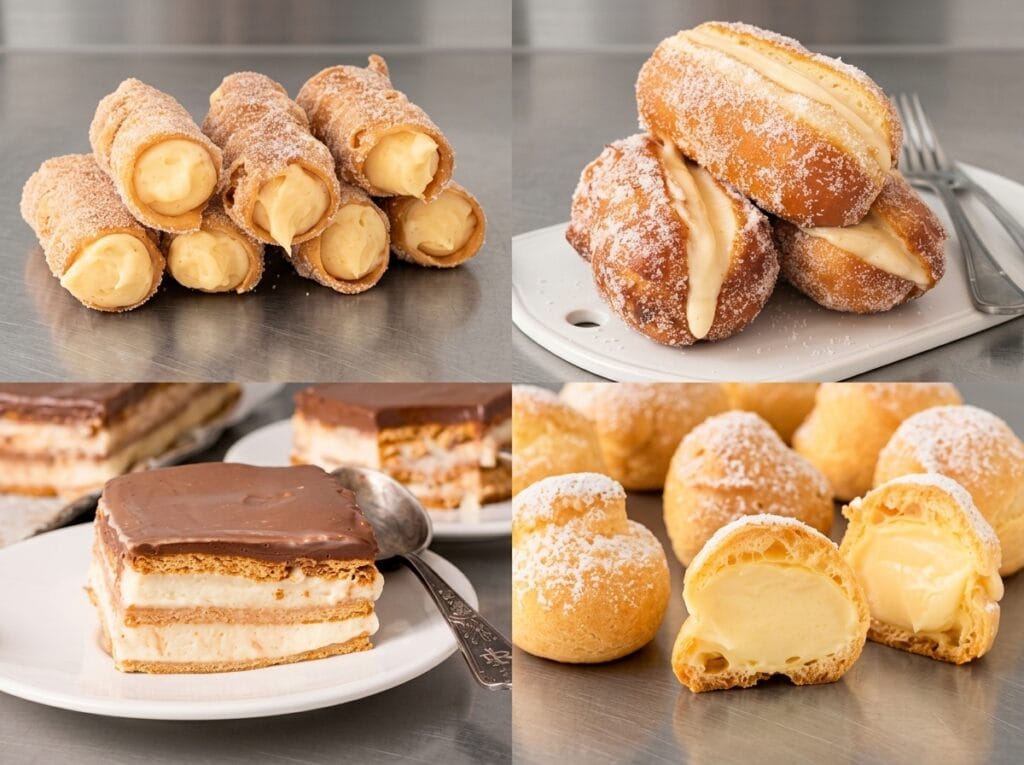
Hydrolyzing the lactose in these components may:
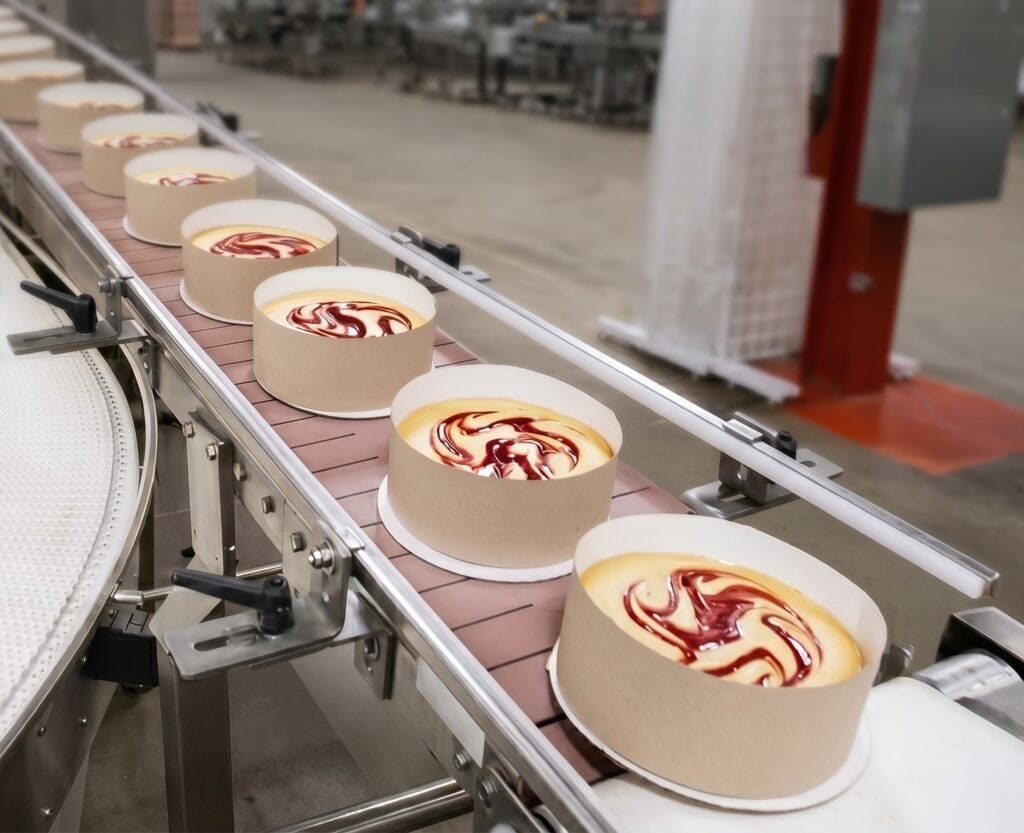
Cheesecakes, Tres Leches, and Condensed Milk Bases: High-Dairy Desserts
Products that rely heavily on concentrated dairy bases, such as condensed milk, evaporated milk, or cream cheese, present a high concentration of lactose and therefore a strong enzymatic conversion potential.
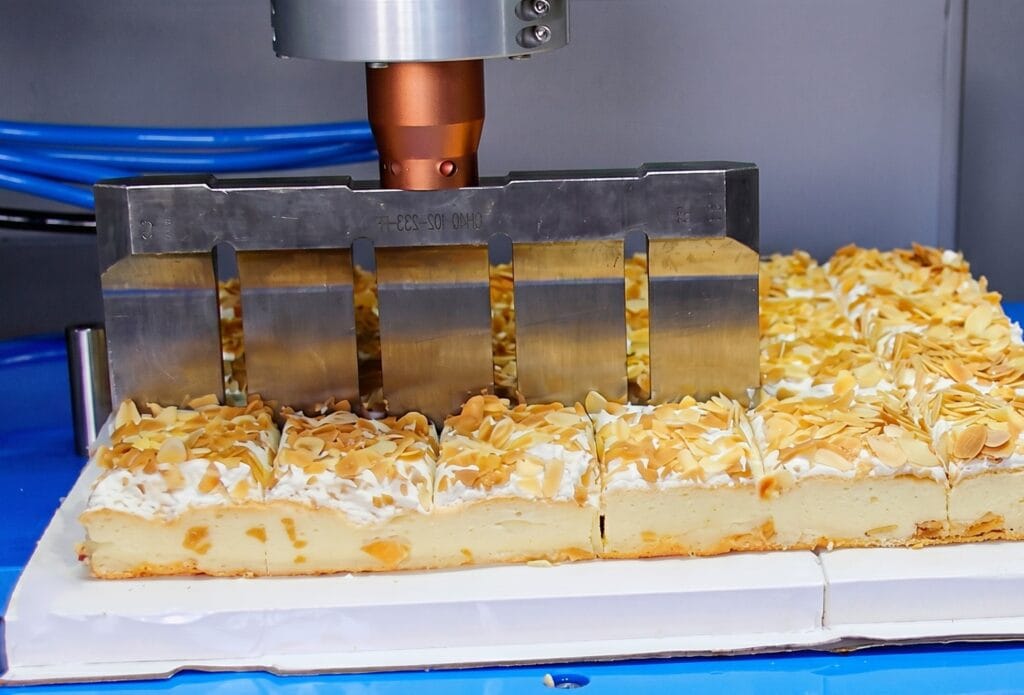
In categories like cheesecakes, Tres Leches cakes, or flans, applying lactase to the dairy base prior to formulation could meaningfully reduce the required amount of added sugars, while preserving the rich mouthfeel and texture associated with high-fat dairy matrices.
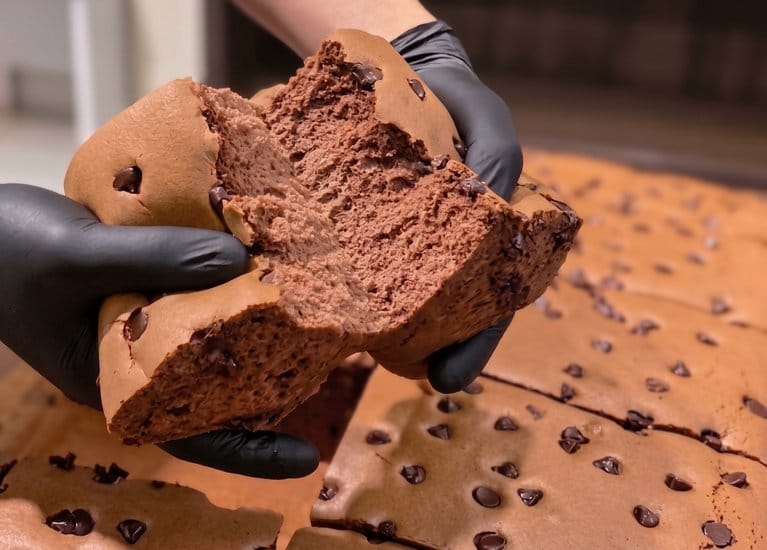
Cake Sponges: Why Lactase Enzymes Have Limited Impact Here
It is important to note that lactase enzymes act exclusively on lactose. In a standard cake sponge, the sugar responsible for structure, volume, moisture retention, and browning is sucrose, not lactose. Although cake batters typically contain some milk, the lactose concentration in that fraction is insufficient to replace the multifunctional role of bulk sucrose.
Lactase hydrolysis does not provide a path to reducing sucrose in sponge formulations. Formulators should approach this technology as a targeted tool for dairy-rich components, not as a broad sugar reduction strategy for baked goods as a whole.
Production Line Implications for Industrial Bakeries
Beyond the formulation bench, integrating lactase enzymes into a dairy-heavy bakery line may offer operational advantages worth evaluating:
Lactase technology does not offer a universal solution for sugar reduction in baked goods. However, for the dairy-rich components where it does apply, it may provide a strong, clean-label alternative to artificial sweeteners, one that works with the natural chemistry of milk rather than around it.
😊 Thanks for reading!
Sources:
https://www.siliconrepublic.com/business/kerry-expands-cork-facility-as-lactose-free-demand-grows
https://www.efsa.europa.eu/sites/default/files/2026-02/ON-9854.PDF
To deepen your understanding of these market trends, you may also find our articles on Digital Twins: Smarter Baking Operations, The End of Greenwashing: Proven Upcycled Bakery Ingredients, and Gluten Relaxation in the Oven: The Power of Thermophilic Proteases highly valuable.