When to Automate Bakery Palletizing: Investment & ROI Guide
Manual stacking at the end of the packaging line remains one of the most physically demanding and operationally fragile stages in bread and pastry production. Adopting the right palletizing architecture, whether collaborative, articulated, or layer-based, may substantially reduce musculoskeletal injury rates, stabilize throughput across shifts, and compress capital recovery timelines to under two years.
Industrial bakeries across Europe, North America, and Latin America are operating under a tightening set of constraints. Labor turnover in manual end-of-line positions often exceeds 25% to 40% annually, driven by physically punishing conditions and increasingly competitive labor markets. At the same time, retailers continue to demand higher order accuracy, more SKU (Stock Keeping Unit) variety per delivery, meaning the plant handles many different products that may each require distinct stacking patterns on the pallet, and shorter fulfillment windows.
The convergence of these pressures has elevated end-of-line automation from a discretionary capital project to a structural necessity. According to manufacturer and integrator reports compiled in 2025 and 2026, bakery plants running two or three shifts now represent the fastest-growing segment of palletizing cell installations globally. Facilities producing pan bread, frozen bake-off items, or packaged pastries at continuous output rates are discovering that the palletizing station is frequently the single point where human fatigue directly limits line uptime.
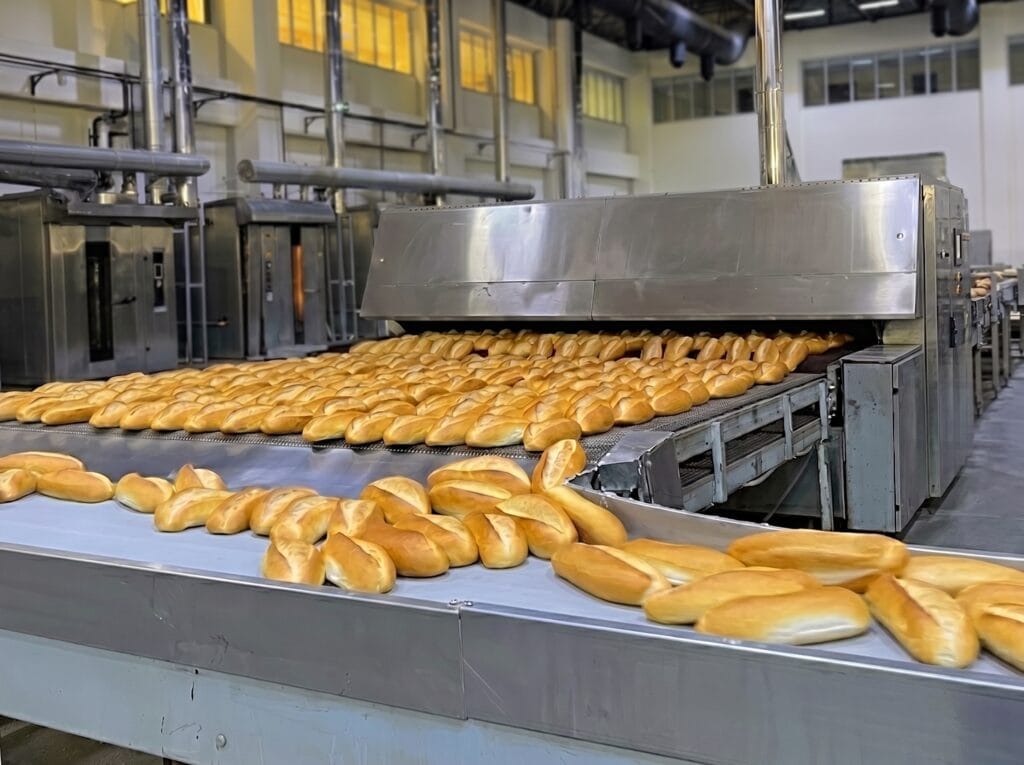
This is not a matter of incremental improvement. A tunnel oven operates on a fixed, continuous thermal cycle. If the downstream stacking station falters, even for minutes, the result may cascade backward: primary packaging machines stall, freshly baked product accumulates in warm zones, moisture condenses inside secondary packaging, and crust integrity degrades. The economic damage extends well beyond the lost minutes of labor.
Recommended Reading:
The High Cost of Manual Stacking: Injuries, Turnover, and Downtime
The physical load on a manual palletizing operator in a bread plant is severe and cumulative. Over an eight-hour shift, a single operator may handle between 5,000 kg and 12,000 kg of accumulated product weight. This involves repetitive trunk flexion beyond 45 degrees, sustained overhead reaching to complete upper pallet tiers above 1.80 m, and lateral torso rotation when transferring cases from conveyor to pallet.
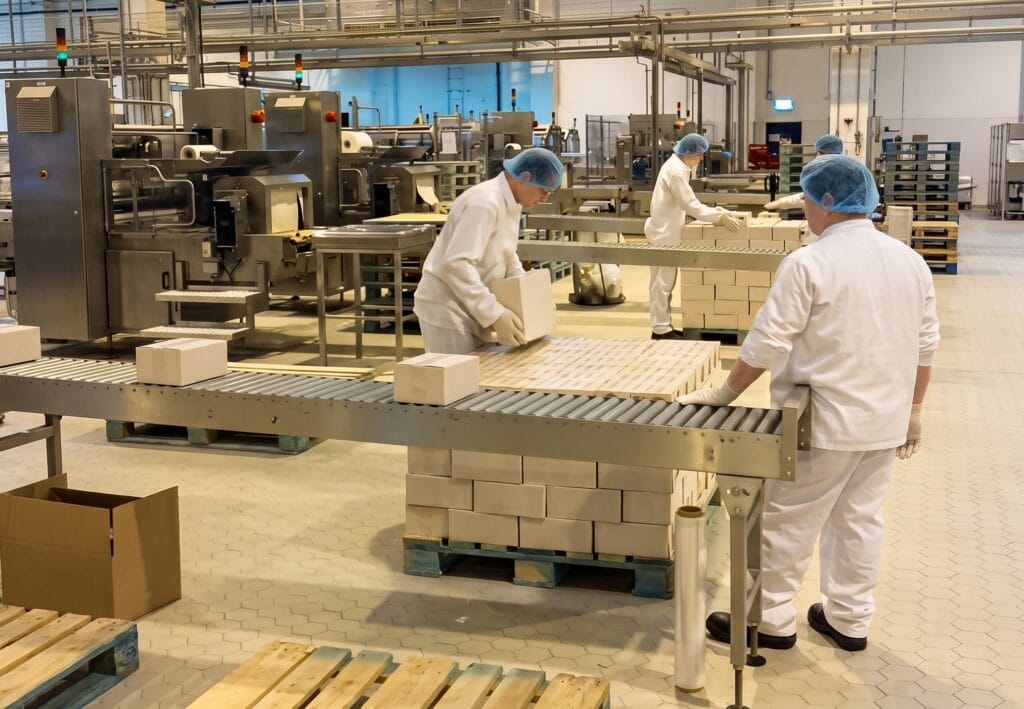
The clinical consequences are well-documented. Lower back disorders, shoulder tendinitis, and carpal tunnel syndrome account for approximately 60% to 70% of lost-time injury cases in manual bakery packaging operations, according to occupational health assessments aligned with OSHA and NIOSH ergonomic guidelines.
Beyond the direct health costs, these injuries generate a second-order operational penalty: absenteeism spikes, replacement workers require retraining, and overtime pay increases during peak demand periods. The full cost of a single lost-time musculoskeletal case, including medical expenses, temporary labor coverage, insurance premium adjustments, and productivity loss during the recovery period, may far exceed the visible line items on a plant’s injury log.
Recommended Reading:
Palletizing Technology Comparison: Cobots, Robotic Arms, and Layer Systems
Three distinct palletizing architectures serve the bakery sector, each calibrated to a different production profile. Selecting the wrong tier of technology for a given plant’s cadence and product mix is one of the most common and costly integration errors.
Collaborative Robots (Cobots)
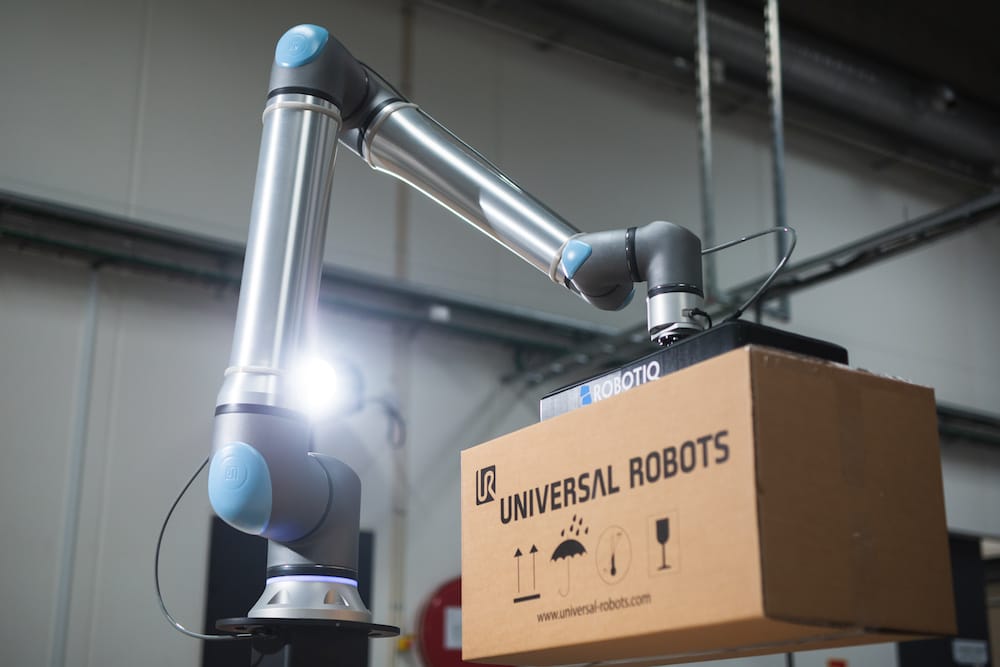
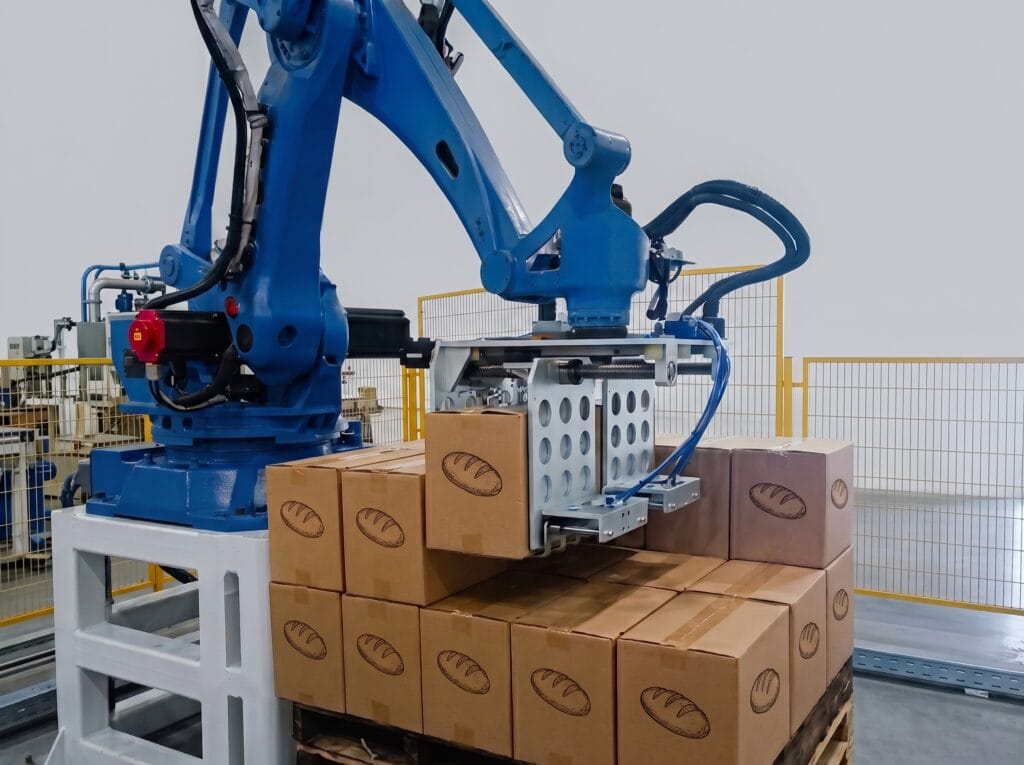
Such as the Universal Robots UR20 or FANUC CRX-25iA, handle payloads between 10 kg and 30 kg at speeds of 6 to 13 cases per minute (up to 15 with dual-pick configurations). They require minimal floor space, typically 4.5 to 8.0 square meters, and operate without perimeter fencing thanks to integrated force-limiting sensors.
Their primary advantage is extreme pattern flexibility: stacking mosaics can be reconfigured instantly from the HMI (Human-Machine Interface, the touchscreen or control panel that allows the operator to interact with the robot), making them ideal for plants managing high SKU variety. Energy consumption is modest, generally between 1.5 and 2.5 kW.
Industrial Articulated Arms
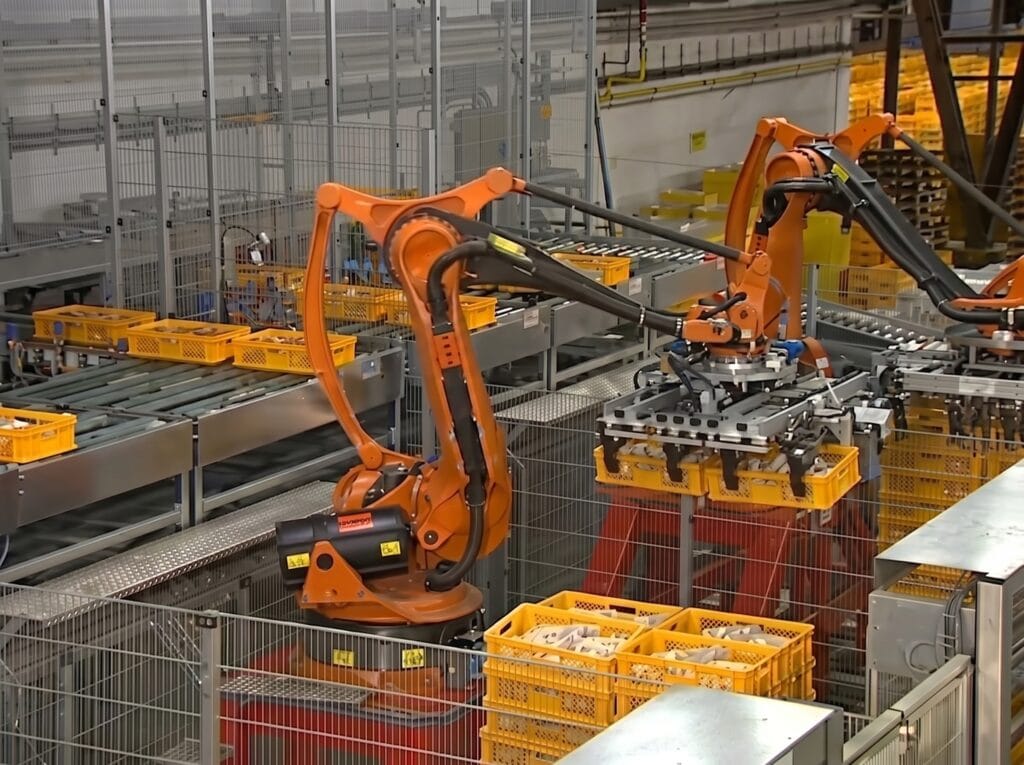
Including the KUKA KR Quantec PA and FANUC M-410iC series, handle payloads from 40 kg to over 700 kg at 15 to 30+ cases per minute. Multi-pick gripper configurations may push effective throughput to 40 or 50 cases per minute.
These systems require enclosed safety cells with light curtains and optomuting barriers, occupying 15 to 25 square meters for single-cell layouts or 30 to 45 square meters for dual-pallet configurations. S-curve acceleration profiles allow gentle handling of fragile bakery packaging, though product treatment is somewhat less delicate than with cobots. Energy draw ranges from 4.5 to 8.0 kW.
Layer Palletizers (High-Level)
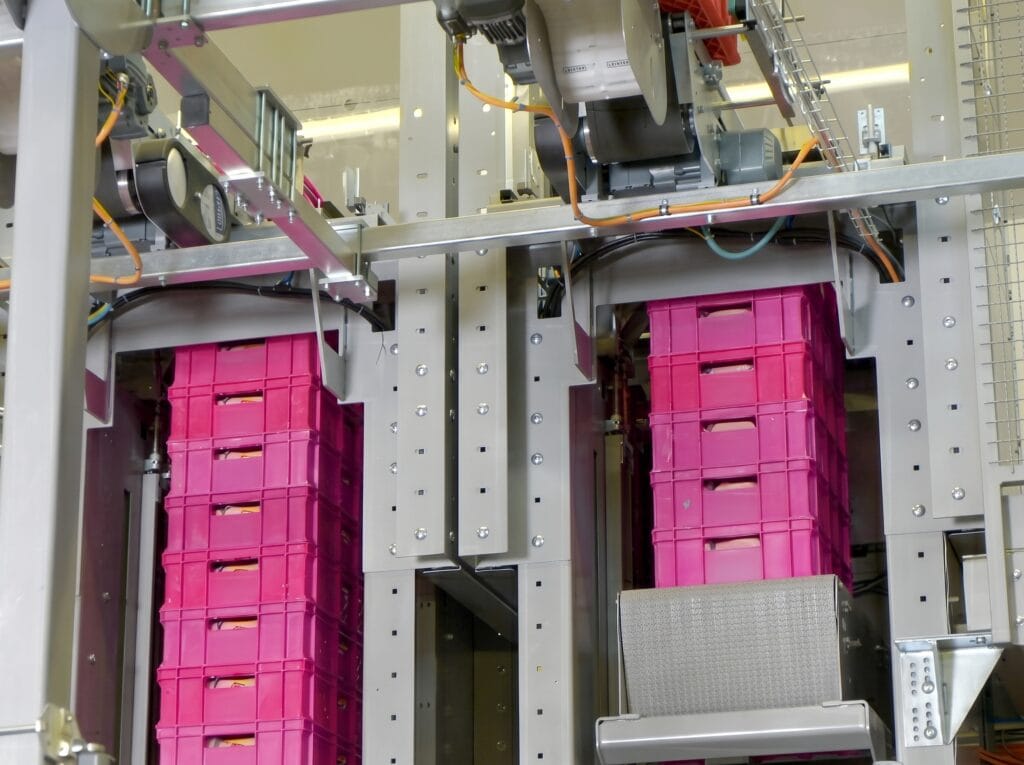
Offered by Körber Supply Chain, Premier Tech (APH series), and Columbia Machine (HL series), form complete layers on a staging table before depositing them onto the pallet via a sliding platform.
Throughput reaches 30 to 70+ cases per minute. These systems excel with uniform, rigid case formats and are purpose-built for high-volume, single-product lines such as industrial pan bread or frozen dough.
Floor requirements are substantial, typically 40 to 85 square meters, with ceiling heights of 4.5 to 6.0 meters to accommodate the vertical elevator. Power consumption ranges from 12 to 22 kW.
Recommended Reading:
The following thresholds may serve as a preliminary technology-matching framework:
Bakery Palletizing ROI and Implementation Strategy by Shift Scale
The financial case for automated palletizing hinges on shift utilization. A standard robotic cell with total installed cost around USD 160,000 (including integration, transport, commissioning, and end-of-arm tooling) replacing manual stacking produces markedly different returns depending on daily operating hours.
Under a single-shift model (eight hours per day, five days per week), the cell displaces one operator and generates a net annual cash flow of approximately USD 34,000 after accounting for energy and maintenance costs. Payback in this scenario extends to roughly 4.7 years, which may make the investment marginally viable.
The economics shift decisively with a second shift. Two-shift operation displaces two operators, producing a net annual cash flow near USD 62,000 and compressing payback to approximately 2.6 years with an estimated internal rate of return above 28%.
In continuous three-shift operation (24 hours per day, seven days per week), the same cell displaces 3.5 operators on a rotating schedule. Net annual cash flow rises to approximately USD 106,000, delivering payback in roughly 18 months with an internal rate of return exceeding 60%. At this utilization level, palletizing cells represent one of the highest-return automation investments available in the food processing sector.
These figures account for direct labor replacement, but the total operational benefit may be considerably larger. Reductions in product damage during manual stacking, lower workers’ compensation premiums, elimination of overtime during demand peaks, and improved pallet pattern consistency (which reduces transit damage claims) all contribute incremental value that standard payback calculations tend to understate.
😊 Thanks for reading!
Sources:
- Cauvain, S.P. & Young, L.S. (2007). Technology of Breadmaking, 2nd Edition. Springer.
- Zhou, W. et al. (2014). Bakery Products Science and Technology, 2nd Edition. Wiley-Blackwell.
- FANUC Corporation. Robot Series M-410iC and CRX Cobot Technical Specifications. (https://www.fanuc.eu/uk/en/robots)
- KUKA Robotics. KR QUANTEC PA Palletizing Robot Series and Hygienic Oil Variants. (https://www.kuka.com/en-de/products/robot-systems/industrial-robots/kr-quantec-pa)
- Universal Robots A/S. UR10e and UR20 Cobot Application Guides for End-of-Line Palletizing. (https://www.universal-robots.com/products/)
- Körber Supply Chain. Bakery Sector Palletizing Solutions and MixPal Platform. (https://koerber-supplychain.com/industries/bakery/)
- Premier Tech Chronos. APH Series High-Level Palletizers. (https://www.ptchronos.com/en/products/palletizing)
- Columbia Machine Inc. HL Series High-Level Palletizers and Product Manager Controls. (https://www.palletizing.com)
- ISO 13849-1:2023. Safety of Machinery, Safety-Related Parts of Control Systems.
- OSHA / NIOSH. Ergonomic Guidelines for Manual Material Handling in Food Processing.
- Directive 2014/34/EU (ATEX) and NFPA 61. Prevention of Fires and Dust Explosions in Food Processing Facilities.