Why Donut Extrusion Can Deform One Ring and Spare the Rest
On yeast-raised pressure extrusion lines, entire runs sometimes come out distorted, and more often a row of symmetric rings includes one or two pieces with thin walls, tails, or open C shapes. Tracing them to the hopper, nozzle, and dough helps limit losses that tend to multiply downstream.
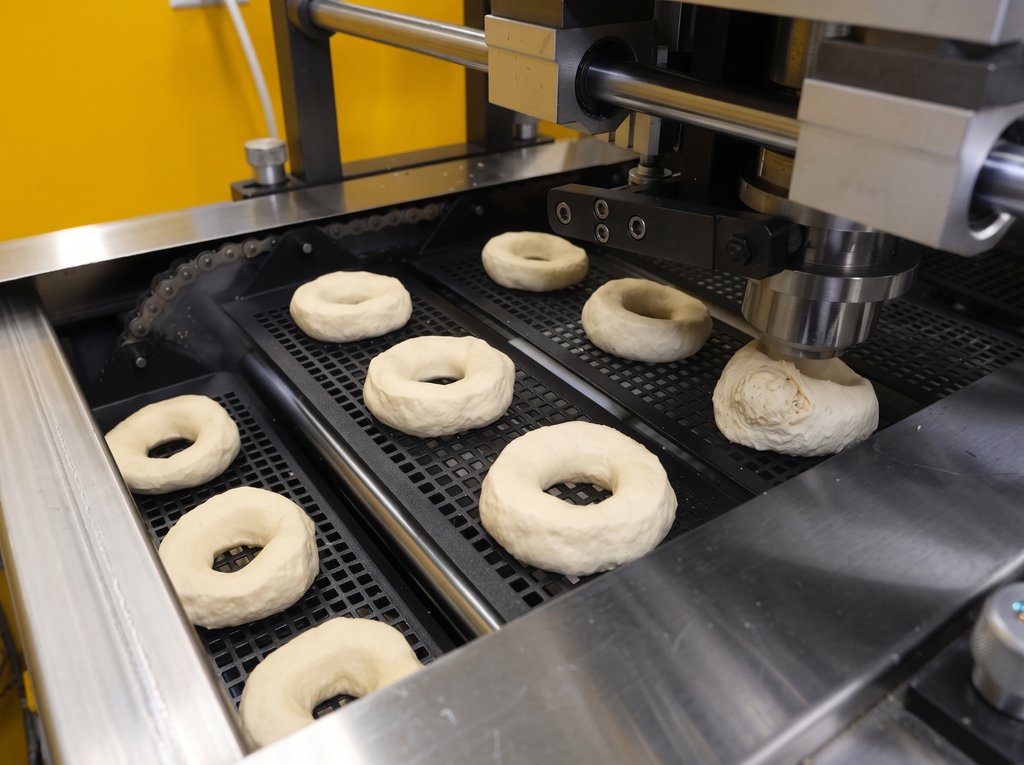
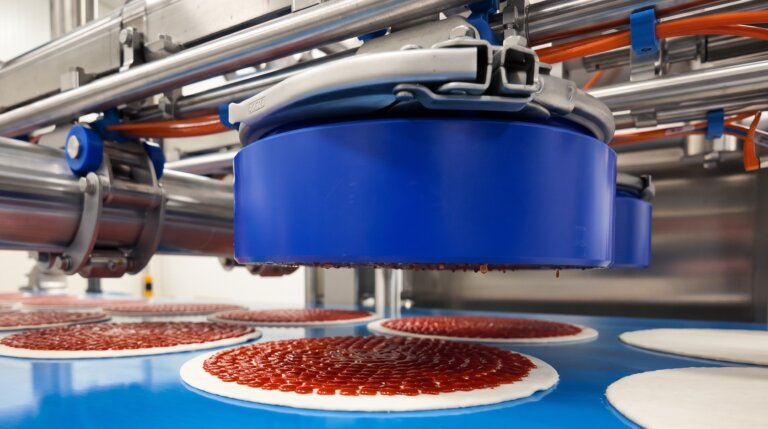
In a yeast-raised pressure extruder, dough sits in a hopper above a head with a fixed inner disc that shapes the center hole and an outer stainless steel sleeve that moves up and down. When the sleeve opens, pressurized dough flows through the annular gap for a fraction of a second. When it closes against the disc, it cuts the ring, which drops onto the proofing screen.
This method eliminates the trim scrap of sheeting and cutting, but a living dough full of gas cells passes through a narrow gap under pressure and shear. The head is volumetric and applies fixed pressure, so it cannot adjust to batch-to-batch changes in dough behavior.
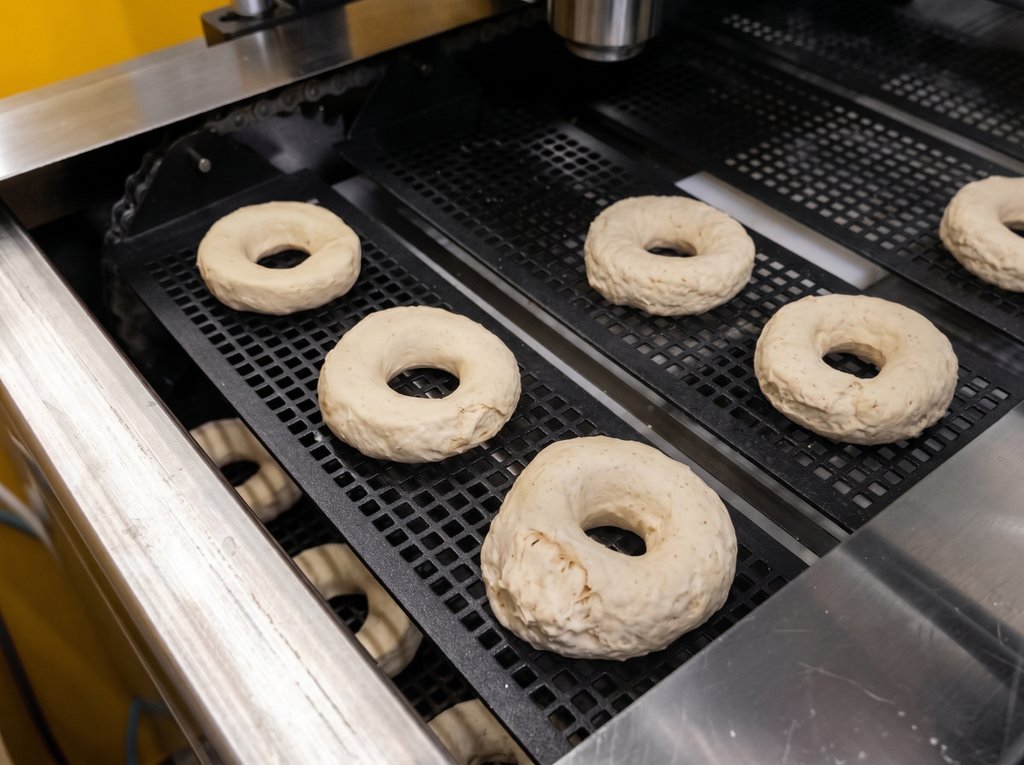
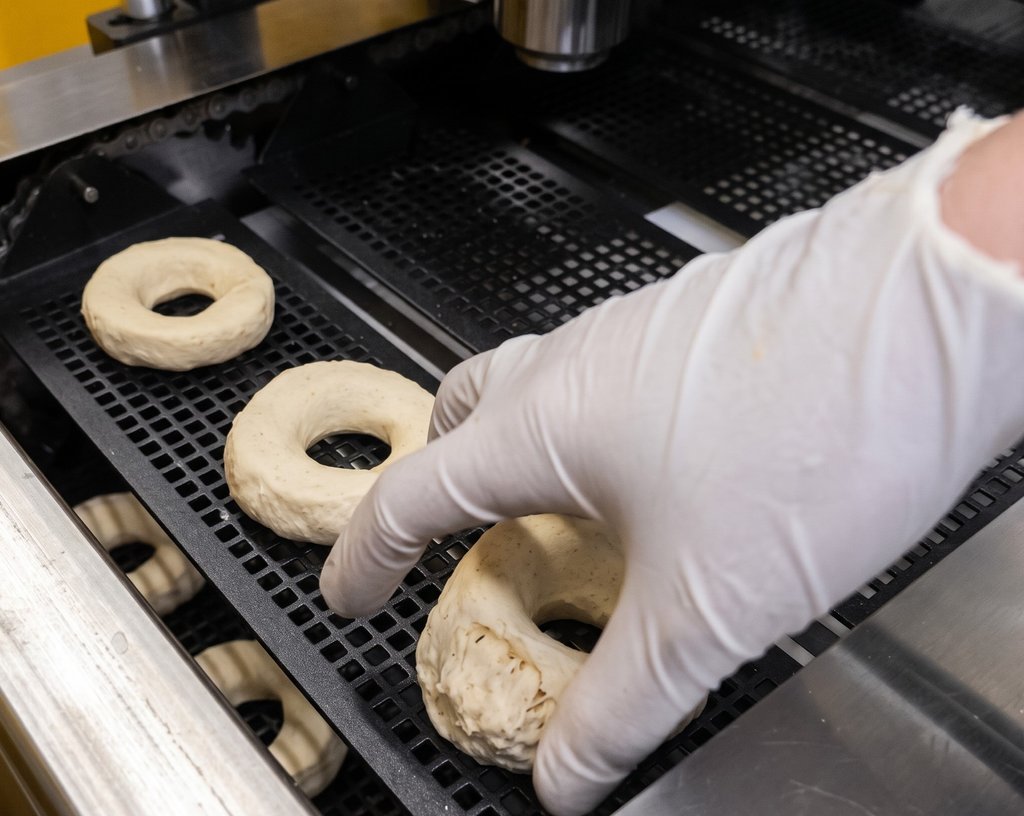
Yeast-raised donut pressure extruder nozzle depositing a deformed dough ring next to symmetric rings on a proofing screen. Source: https://www.youtube.com/watch?v=BGwPRWqU7LQ
Why Rings Might Come Out Deformed
When most or all rings in a run are distorted, the cause often lies in dough condition. When one or two pieces deform while their neighbors look normal, attention usually shifts to local events at a specific nozzle or cycle.
When the Whole Run Is Affected
Dough too strong or elastic: A tight, poorly relaxed gluten network resists flowing through the gap and tends to spring back unevenly once it exits. Under high compression, the network may tear and lose the films that hold gas.
Dough too wet or weak: Excess free water loosens protein-to-protein bonds, so the chains can slide past each other under tension. Rings may flow easily but slump on the screen, lose height, or stick to the sleeve.
Dough too dry: Below roughly 56% hydration, friction against the steel tends to increase, which can produce ragged edges and incomplete fills.
Dough too warm: When dough temperature reaches about 29°C – 32°C, yeast activity speeds up while dough waits in the hopper. Density drops with residence time, so the end of a batch may deposit lighter, irregular, blistered rings compared with the start.
When Only One or Two Rings Are Affected
Bridging in the hopper: Sticky, cohesive dough may not feed every outlet evenly by gravity alone. If a cavity forms above one nozzle, part of the ring receives full flow while the opposite side is starved, leaving a thin side that opens or folds as it drops.
Loss of the slurry seal: Plunger extruders use a thin dough slurry to hold vacuum and lubricate the walls. If that film runs out on one side, dough can drag against dry metal and curve the ring toward the braked side.
Gas or air pockets at the cutting lip: A large gas cell from overfermented dough, or a channel of compressed air, may reach the gap as it opens. The bubble bursts on exit, leaving a notch, a narrow neck, or a break in the ring.
Sleeve drag during the cut: A strand of poorly relaxed gluten can make the sleeve stretch one lip before releasing it. That sector snaps back and tends to leave a tail next to a thinned section.
Rework nodules: Leftover dough added in large pieces or in excessive proportions can remain as firmer, degassed islands that briefly block part of the flow.
Uneven release onto a moving screen: If one edge detaches late, the edge already on the screen is dragged while the other still hangs from the nozzle, stretching the ring into an oval.
What Happens If the Deformed Ring Continues
In the proofer, the defect tends to grow. Cell walls in the thin or torn section are already overstretched, so as gas expands they may rupture or blister, leaving that side flat. The thicker side gains more volume, which can open a weak ring into a C or close the center hole that lets heat reach the inside during frying. A ring spreading sideways may also fuse with its neighbors.
In the fryer, a well-proofed donut floats evenly and shows a uniform white band. A deformed ring loses that balance:
Hydrostatic tilt: The dense, degassed side sinks deeper while the inflated side rides higher, so the piece tilts and loses its white ring.
Turning station misfeeds: At the automatic turning station, the off-center mass may flip back toward its heavier side, frying the same face twice, or jam between the indexing bars.
Localized scorching: The thin side dries out and darkens quickly, often shedding burnt particles that degrade the frying oil.
Incomplete foam-to-sponge conversion: Inside a properly fried donut, heat breaks the walls between closed gas cells and turns the closed foam into an open sponge. If the thick side leaves the fryer before that change is complete, the trapped gas contracts as it cools, and that half may shrink, wrinkle, and draw surface oil into the crumb.
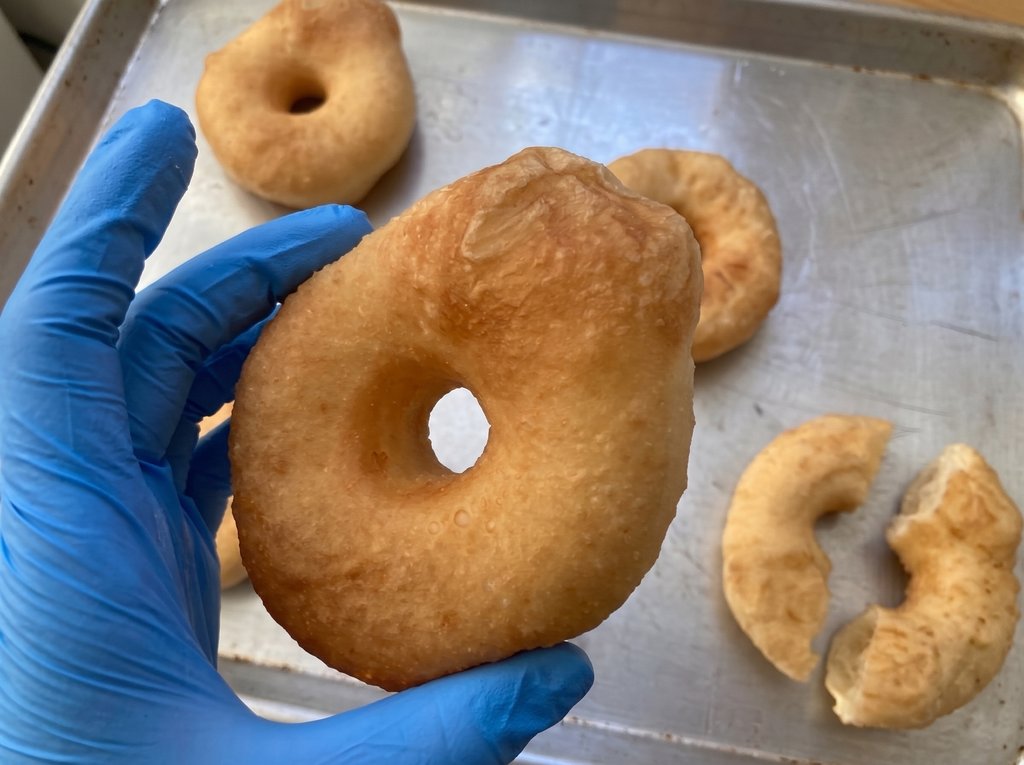
Fried deformed yeast-raised donut showing uneven expansion and a thick bulbous section
The result can be a piece that is oily, underfried, and burnt in different areas, causing problems in glazing, filling, or packing.
Conditions That Narrow the Margin for Error
No single setting prevents every deformed ring, and flour lots, plant humidity, and head design all shift the target. Common practices include:
Hydration above sheeting levels: Extrusion doughs typically run wetter than sheeted doughs, often around 58% – 62%, to flow without tearing while still standing on the screen.
Flour with balanced strength: Strong hard wheat flour, sometimes blended with a smaller share of soft wheat, provides the gluten strength needed to retain gas despite the high sugar and fat load, while keeping a tender bite.
Dough conditioning: L-cysteine softens the gluten and increases extensibility, so dough can flow through the extruder without tearing or resisting shape, while the amylases and proteases active during bulk fermentation add softness. Protein-rich ingredients such as defatted soy flour, eggs, or nonfat dry milk can reinforce structure and reduce fat absorption during frying.
Dough temperature matched to batch size: Final dough temperatures of 26°C – 28°C are common, with large batches mixed cooler to offset hopper residence time. Above 29°C, gas-out and premature aging become more likely.
Adequate rest: An under-rested or unrelaxed dough tends to shrink and lose shape after forming, while an over-aged one can lose volume in the proofer, collapse, and shrink during frying.
Hopper and head routines: Pushing dough down in the hopper at regular intervals, maintaining the plunger slurry seal, and limiting how much leftover dough goes back into a batch address most of the local causes listed above.
Proofer humidity profile: High humidity, around 80% – 85% RH, prevents premature crusting, while a drier final few minutes sets a light outer skin that limits fat uptake during frying.