Autonomous Pan Washing for Industrial Bakeries
Manual pan handling and inefficient drying cycles bottleneck industrial bakeries. A fully washing ecosystem utilizes SLAM (Simultaneous Localization and Mapping) guided automated vehicles and six axis robotics to eliminate human intervention. Integrated centrifugal drying mechanically breaks water surface tension, which could drastically optimize energy use and food safety in sanitation.
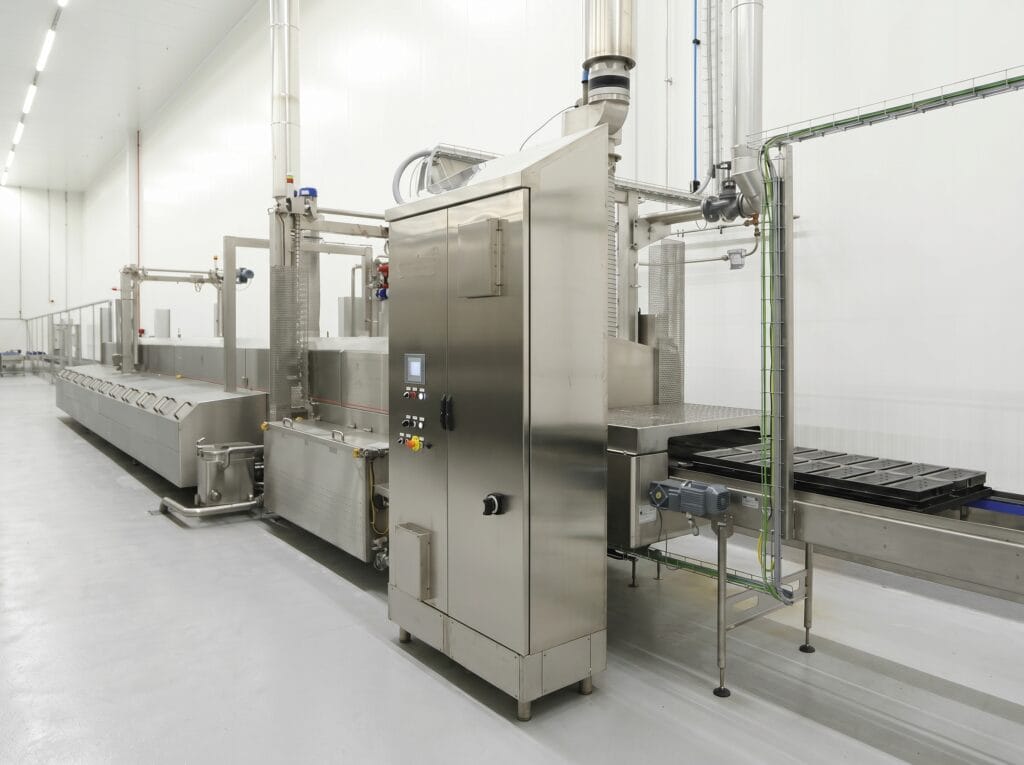
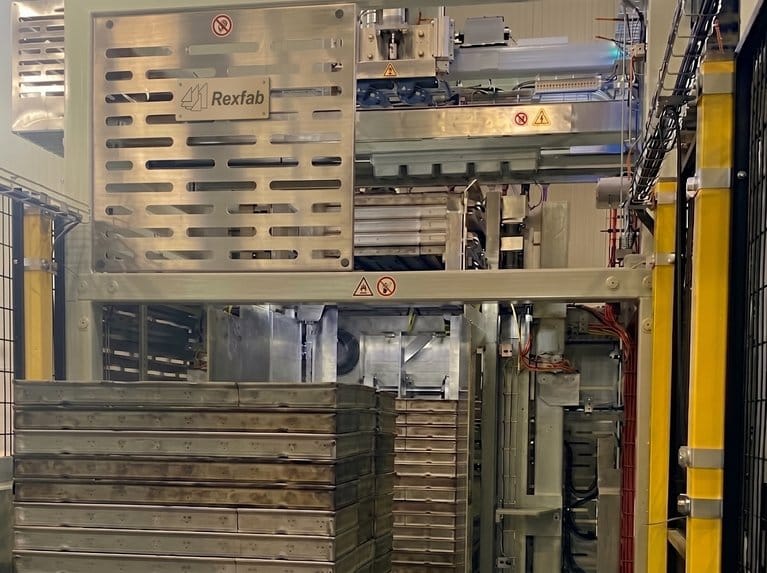
During Interpack 2026, Colussi Ermes showcased a highly integrated washing ecosystem designed to completely eradicate manual intervention. This system shifts away from fixed infrastructure; it relies instead on flexible kinematics to move heavy stacks of molds through the sanitation cycle. The architecture addresses the labor shortages and operational inefficiencies common in large scale industrial baking plants.
This setup combines several advanced automation protocols to handle the heavy lifting and precise positioning required for industrial sanitation:
This approach to moisture removal should present a massive leap in energy efficiency. By spinning off the water rather than boiling it away, plants might see a drastic reduction in their thermal energy expenditure. Traditional heated blowers require significant electrical or gas inputs, whereas kinetic drying relies on efficient electric motors.
😊 Thanks for reading!
Source:
Colussi Ermes at Interpack 2026 – ✨ Where automation meets perfection✨
Enhance your technical knowledge with our detailed resources on Equipment for Handling Live Doughs, The Rise of Sourdough in Sweet Goods: How Industrial Bakers Are Rethinking Clean Label, and Jams and Mold Claims in Industrial Bakeries: What Vision Systems and Hyperspectral Scanning Solve.