10 Common Problems in Industrial Pizza Production: Diagnostic and Plant Solutions
Fluctuations in raw materials and mechanical processing stresses destabilize large-scale automated pizza lines. Controlling dough rheology, thermal fermentation kinetics, and the baking profile prevents unscheduled line stops and ensures the geometric homogeneity of the final product.
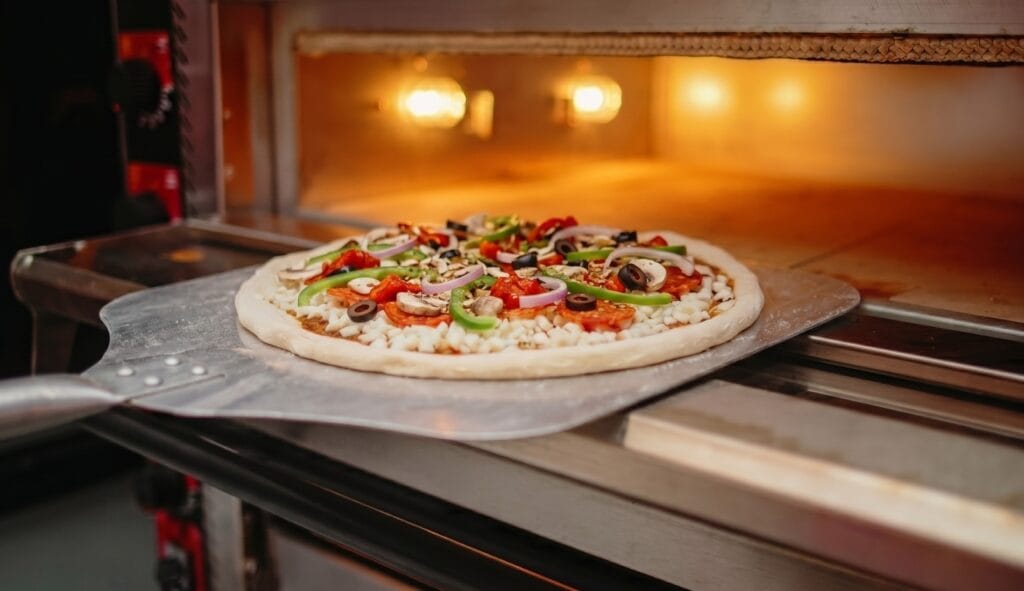
The transition from artisanal baking to large-scale production demands replacing touch-based decisions with rigorous analytical control. On automated lines, variations in biological ingredients and continuous mechanical stress introduce variables that, if left unstable, disrupt process flow. Predictive design and precise instrumental calibration allow operators to neutralize these deviations from mixing to freezing.
Flour Instability and Sticky Dough during Mixing
Wheat flour properties, influenced by milling batches and mechanical starch damage, determine the water absorption capacity of the formula. Although the optimal hydration level for high-quality pizza dough is between 55% and 62%, the actual amount of water retained by gluten depends on functional proteins and pentosans.
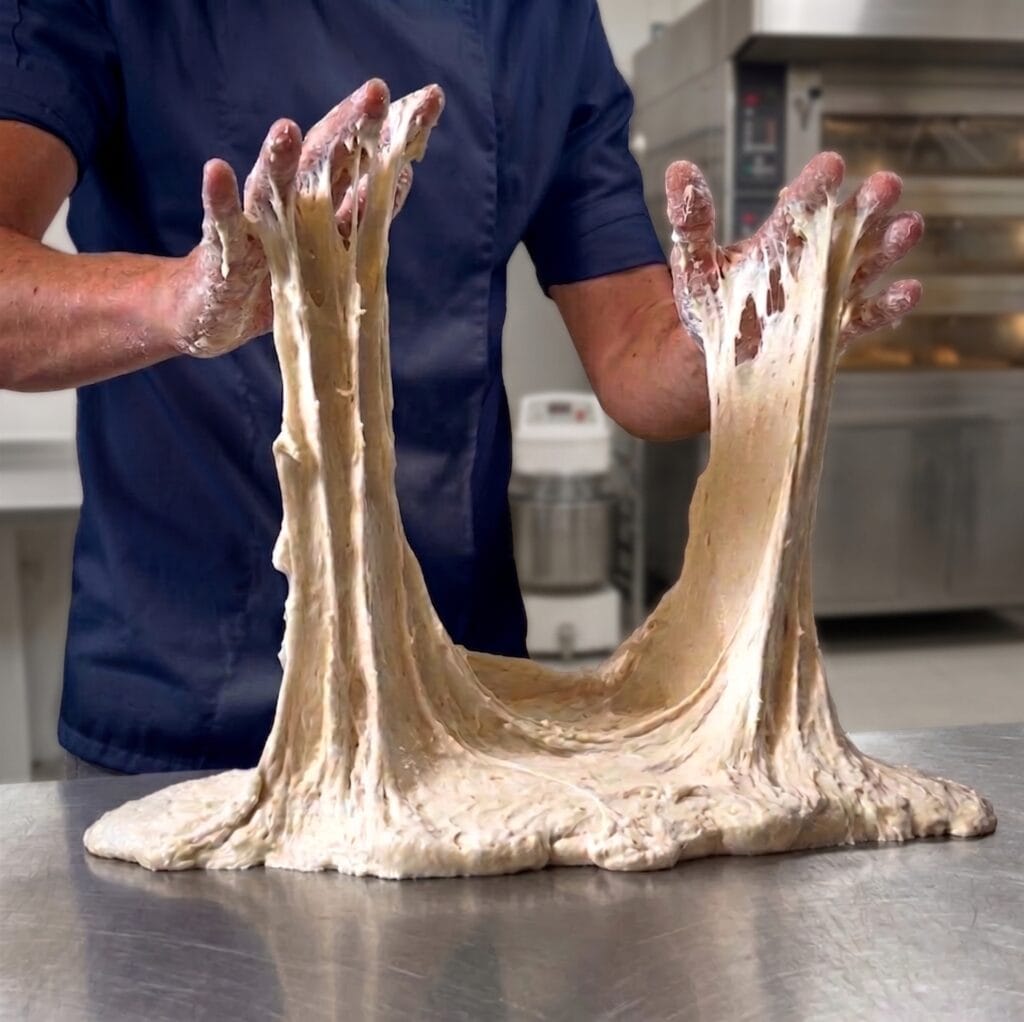
Accumulated damaged starch or elevated pentosan concentrations, combined with low functional protein levels, cause critical surface stickiness in the dough. This sticky consistency generates severe jams in automated equipment, causing direct line failures:
Conversely, when flour absorption capacity is lower than calculated and excess free water is added, the dough loses structural integrity and collapses during proofing. Preventing these machining failures requires pre-characterizing each batch using rapid analytical instruments:
Thermal Imbalance and Residence Time Fluctuations
Dough fermentation depends on yeast metabolic activity, which is highly sensitive to temperature. In 24-hour slow fermentation systems, the dough temperature at the mixer exit must remain strictly between 18 °C and 22 °C. An increase of just 5 °C in the dough doubles the fermentation rate, disrupting the plant schedule.
In batch mixers, the dough experiences variations in residence times inside the feed hoppers. The portion at the bottom of the container undergoes different hydrostatic pressures and thermal gains compared to the surface portion. This causes asymmetric maturation, deforming the cell structure and making over-fermented dough collapse during dividing.
Seasonal variations in flour silos, which register oscillations of up to 15 °C between winter and summer, also destabilize fermentation. Active dry yeast requires hydration with water equivalent to five times its weight at 38 °C to 40 °C before incorporation. Adding fats or oils before the flour is fully hydrated coats the proteins and limits gluten development, meaning oil addition should be delayed by one minute after mixing dry ingredients.
To resolve these imbalances, high-capacity plants utilize continuous mixing systems that eliminate variable residence times. As a primary active control, automated glycol chillers adjust water temperature to compensate for flour and ambient plant fluctuations.
Crust Shrinkage after Sheeting
Dough shrinkage after forming, known as the snap-back effect, reduces disk diameter and increases thickness unevenly. This deformation prevents the dough from fitting into automated packaging pockets, increasing reject rates for out-of-specification geometry.
This elastic deformation is driven by accumulated tension in high-molecular-weight glutenin chains, which form intermolecular disulfide bonds. When dough undergoes excessive mechanical mixing or lacks adequate resting time, the gluten remains highly rigid. Factors favoring this defect include:
To eliminate this elastic behavior in high-speed continuous lines, natural reducing agents are added during mixing. Deactivated yeast, rich in glutathione peptides, reduces elastic tension through a thiol-disulfide exchange reaction, increasing dough extensibility. Plant operators can also use L-cysteine, increase fat dosage to 3% of flour weight to lubricate gluten, or ensure a dough tempering phase at 20 °C to 24 °C for 30 to 45 minutes before forming.
Gluten Network Degradation by Mechanical Shear
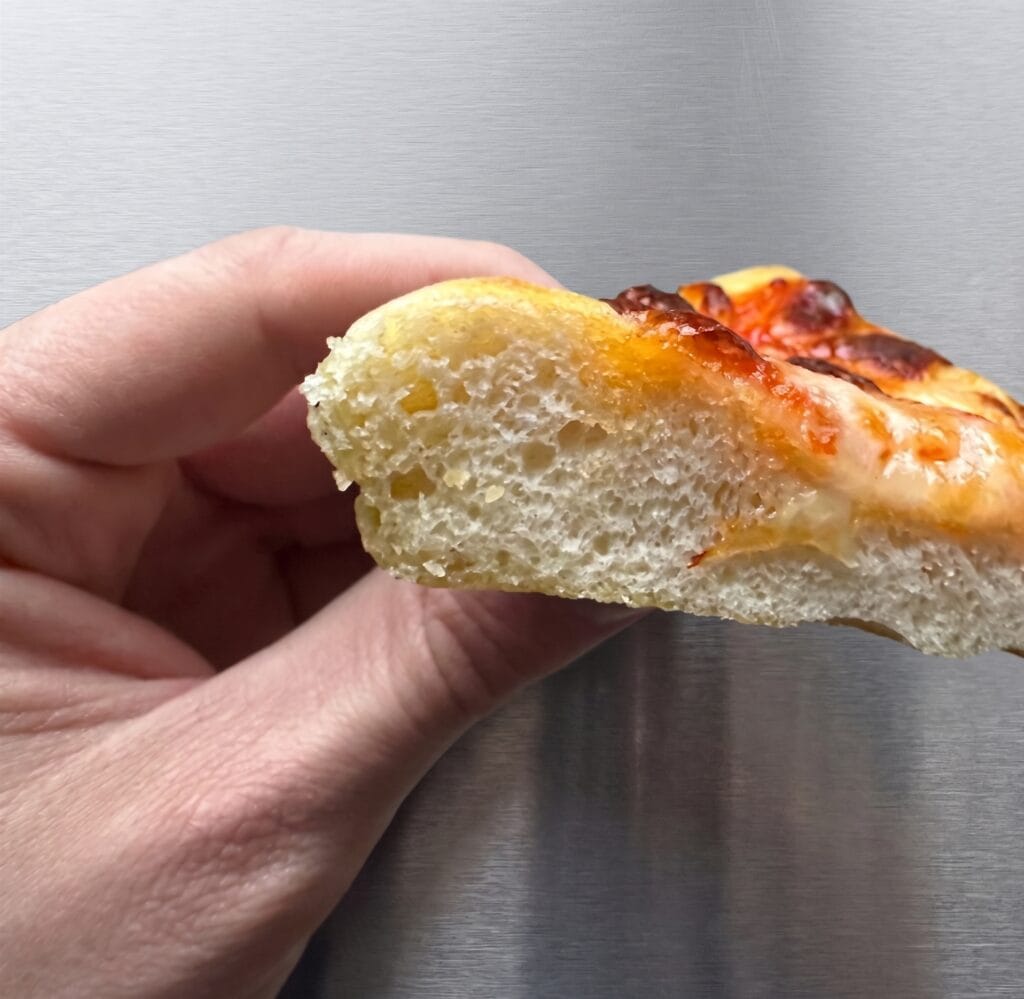
Severe shear forces applied by hot presses or single-pass reduction rollers can physically rupture gluten sheets. This mechanical degradation destroys the carbon dioxide cells developed during fermentation, eliminating gas retention capacity.
The collapse of the protein structure causes a flat, dense crust and a leathery texture after baking.
Attempting to correct this weakness with synthetic chemical conditioners conflicts with clean-label market demands.
The process replaces direct pressing or extrusion with continuous dough sheeting technology. Multiple satellite rollers, gradual calibrators, and cross rollers reduce dough sheet thickness progressively and three-dimensionally, preserving the gluten network and porosity without requiring additional process oils or flour.
Tearing and Thickness Variations in Hot Presses
In forming lines using hot presses, dough sticking to metal surfaces is a major cause of mechanical waste. Wet starch and dough residues quickly accumulate on hot surfaces, dehydrating and carbonizing into abrasive, rough crusts.
As the press plate retracts, these encrustations tear the surface of subsequent dough bases, producing holes and tears in approximately 15% of the pieces without active cleaning. Industrial vibrations and thermal wear also misalign press plates, distributing pressure unevenly and producing pizza disks with inconsistent thickness.
Stabilizing the pressing stage requires a strict maintenance and autonomous cleaning protocol:
Unbaked Dough versus the Gum Line in the Oven
In industrial plants, operators often confuse the unbaked dough layer with the gum line, leading to incorrect oven temperature profiles, as their physical causes and treatments are entirely opposite.
The unbaked dough layer consists of dough that has not reached the starch gelatinization temperature due to poor internal heat transfer. It appears as a soft, opaque, moist strip. In contrast, the gum line is a thin, translucent, gelatinous layer located directly beneath the tomato sauce. This structure has undergone protein coagulation but lacks air cells because vapor pressure expelled the gas during baking, collapsing the cellular structure into a dense matrix.
An excess of alpha-amylase enzyme activity, which degrades flour starches, or the immediate migration of free water from the tomato sauce or wet vegetable toppings before baking causes the gum line.
Differences and corrective actions based on the failure:
Gum Line: Driven by starch degradation and free moisture absorption. Extending bake time does not eliminate this defect once the cell structure has collapsed. It is resolved by using flours with low diastatic activity, thickening tomato sauce with water-binding hydrocolloids, and avoiding placing wet, thawed vegetables directly on the dough.
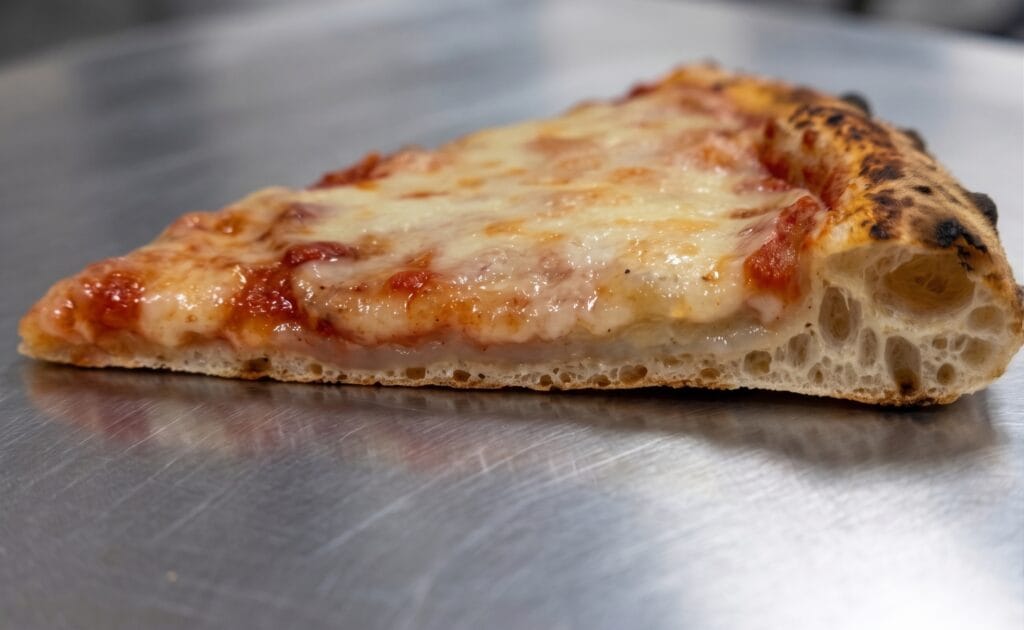
Unbaked Layer: Driven by excessively high oven temperatures that quickly seal the outer crust but prevent heat from penetrating to the center, or by feeding cold dough into the oven. It is resolved by reducing oven temperature, extending residence time, and tempering the dough before baking.
Conveyor Belt Contamination and Topping Waste
Topping automation in high-speed lines directly influences waste control and tunnel oven hygiene. In conventional volumetric depositors, the absence of a suck-back system in the tomato sauce nozzles causes constant dripping onto the conveyor belt.
These sauce and shredded cheese residues enter the tunnel oven, where high temperatures cause immediate pyrolysis and carbonization. This phenomenon generates dense smoke that alters the sensory profile of the finished product and obstructs the metal conveyor mesh, forcing unscheduled line stops for cleaning. Additionally, shredded cheese with excess surface moisture clumps in distribution hoppers, generating irregular pizza coverage.
To prevent these depositor failures, modern lines integrate pneumatic distribution heads managed by servomotors that execute a rapid suck-back of the sauce after each cycle. Rotary depositors precisely control shredded cheese flow and minimize waste by keeping toppings strictly within the pizza diameter. Additionally, 3D computer vision systems identify and reject deformed disks before topping application, preventing expensive ingredients from falling onto conveyor belts.
Syneresis and Premature Burning of High-Moisture Cheese
The use of special high-moisture fresh cheeses, such as soft goat cheese, introduces thermal complications during industrial baking that do not occur with traditional mozzarella. Goat cheese possesses a moisture content between 60% and 70%, which is higher than semi-hard cheeses.
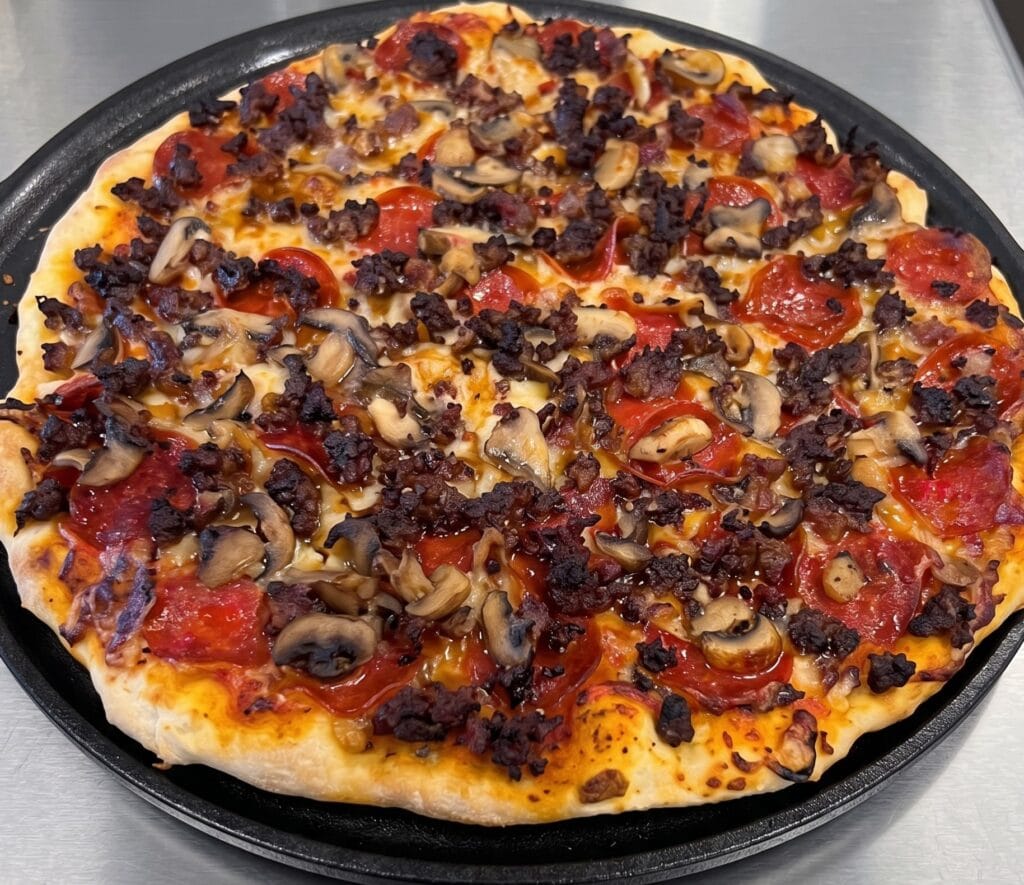
During baking, this excess water is released quickly, soaking the crust surface and promoting gum line formation. Furthermore, due to a weaker protein structure, its melting point lies between 26 °C and 28 °C, unlike the 55 °C of standard mozzarella. This causes the cheese to melt, brown, and caramelize rapidly, burning and becoming bitter before the dough completes its internal baking.
Stabilizing the baking process of pizzas with high-moisture cheeses requires specific adjustments in the tunnel oven thermal profile:
Surface Blistering from Thermal Shock
The appearance of giant, burnt, brittle blisters on the pizza edge negatively affects the product visual appeal and hinders automatic packaging. This defect occurs primarily when cold dough, below 10 °C, enters a high-temperature oven.
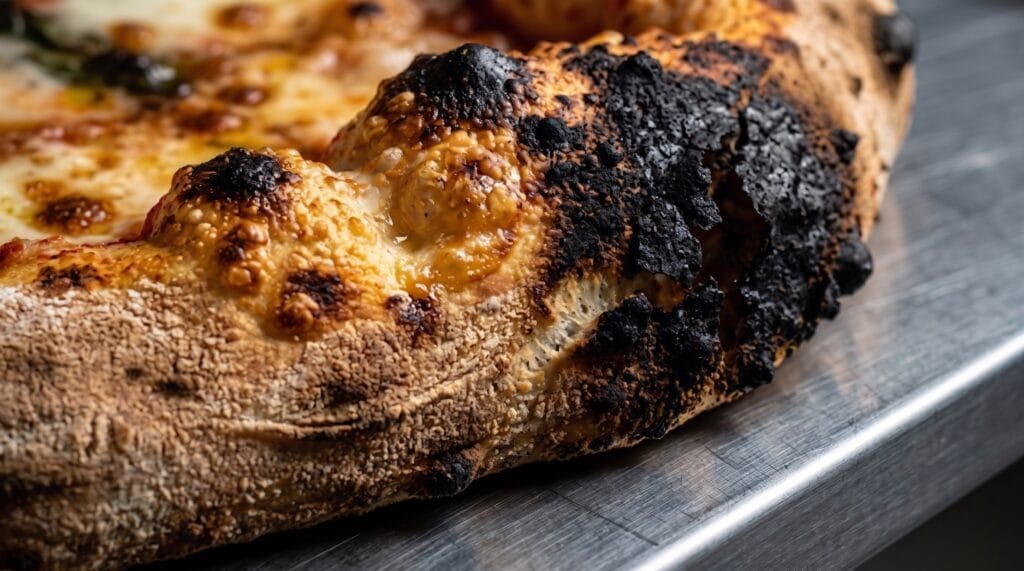
When cold dough experiences the heat shock of the tunnel oven, internal gases, including water vapor and dissolved carbon dioxide, expand rapidly according to gas laws. Since cold gluten retains high rigidity and low molecular extensibility, it resists uniform cell expansion. The gas migrates to the areas of least resistance on the crust surface, inflating thin-walled bubbles that burn quickly under oven radiation.
Preventing these gaseous deformations is achieved by integrating automated docking rollers in the forming line, which make uniform micro-perforations across the base to channel vapor release control. Additionally, dough pieces must pass through a tempering stage before the oven to stabilize their internal temperature above 15 °C, lowering gluten elasticity and facilitating fine, homogeneous cell expansion.
Structural Damage from Ice Crystals and Storage Recrystallization
In frozen pizza production, a loss of oven spring, leathery textures, and structural cracks after final baking are the result of slow freezing rates and temperature fluctuations during storage.
When dough freezes slowly, free water spends an extended period in the maximum crystallization zone, between -1 °C and -5 °C. This allows water molecules to group and form large, sharp, macroscopic ice crystals that physically shear the gluten network and destroy residual yeast viability. During distribution, thermal fluctuations cause recrystallization, where small ice crystals melt and fuse into larger structures, increasing structural damage to the crumb proteins.
Furthermore, during industrial or domestic thawing phases for par-baked pizzas, surface water condensation weakens the dough strength, making it prone to tearing on conveyors. In par-baked products kept under refrigeration, crumb moisture increases from 38% on day 0 to 44% on day 16, raising water activity to a critical range of 0.94 to 0.96. This catalyzes visible mold growth starting on day 12 under conventional packaging.
To mitigate ice damage, recrystallization, and microbiological spoilage, plants apply several technologies:
😊 Thanks for reading!
Sources:
- Cauvain, S. P. (2017). “Baking Problems Solved” (2nd Edition), Woodhead Publishing / Elsevier
- ResearchGate: “Application of fuzzy logic system for the pizza production processing optimisation”
- KPM Analytics: “Analysis Options for Pizza”
- Rondo Online: “Industrial pizza and pinsa production in artisanal quality”