
Boil-Out in Fruit Turnovers Rarely Starts Where It Shows
Fruit-filled turnovers tend to fail at the seam. Filling boils out in the oven, crusts soften within days, and layers collapse after months in the freezer. Most defects can be traced to free water, and controlling it at five points helps keep pieces sealed, flaky and crisp.
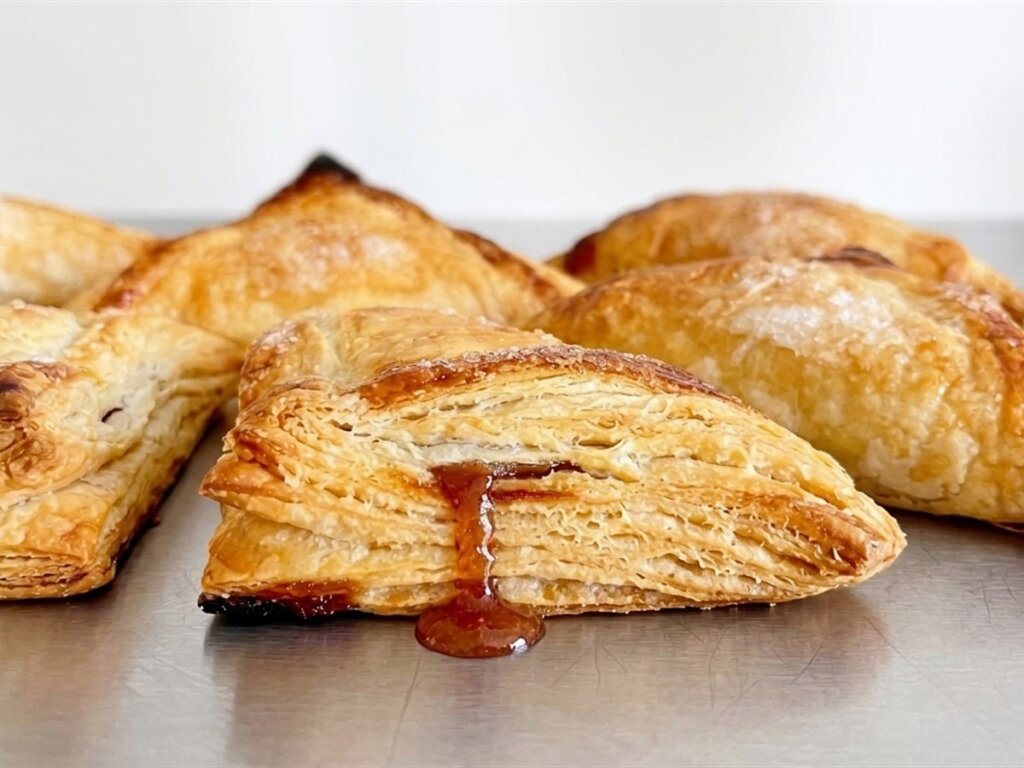
Why the Seam Carries the Weight of the Whole Line
Laminated pastries filled with fruit, from apple turnovers to cherry or berry pockets, rank among the most labor-intensive items in commercial baking when formed by hand. Automated folding lines now run between 15,000 and 50,000 pieces per hour, often for days without stopping, so a single weak point can repeat itself thousands of times per shift.
Two market forces raise the stakes. Foodservice and in-store bake-off channels increasingly buy raw frozen pieces that go straight from freezer to oven, and they typically carry frozen shelf-life specs of 6 to 12 months at -18 °C.
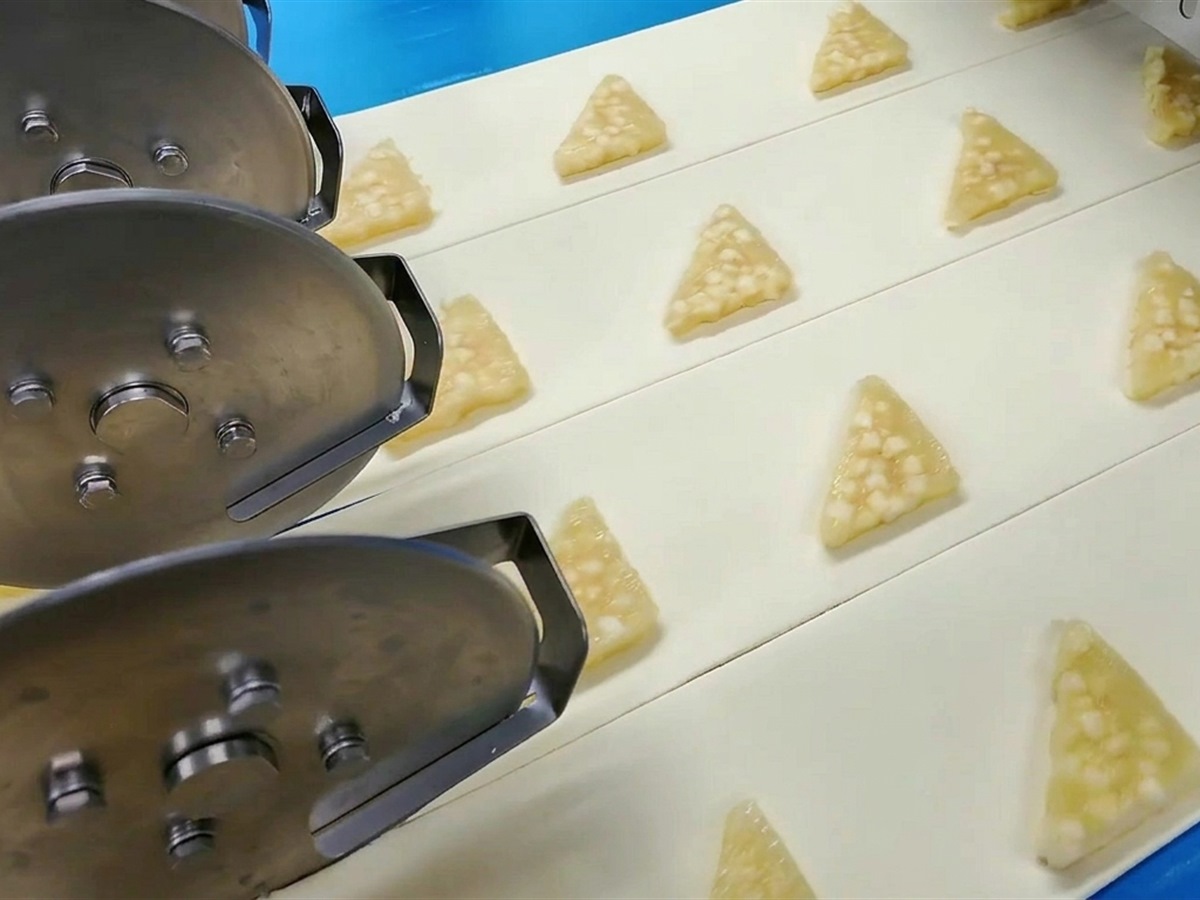
At the same time, reduced-sugar and clean-label targets push fruit fillings toward less sugar and more real fruit pieces. Sugar is one of the main tools that holds water in place, so each reduction tends to leave more free water inside a pocket of dough that must survive pumping, folding, freezing and a hot oven.
Apple remains the classic reference, but the same physics applies to cherry, blueberry, peach, apricot, pineapple or mango. What changes from one fruit to another is how aggressive the filling is toward the structures meant to contain it.

In a filled laminated line, the seam is where formulation, mechanics and cold chain meet. Many visible failures surface there, even when the cause started somewhere else.
Where Free Water Escapes, From Nozzle to Freezer
The first stress arrives in the oven. As the piece heats up, water in the syrup and inside the fruit cells turns to steam. If the thickening system has already lost body, the filling can liquefy; steam then pushes it against the seam, and part of it may escape onto the oven band as boil-out, burning on the belt and costing weight.
Native starches are vulnerable on several fronts. Fruit acids cut starch chains during cooking and baking, shear breaks swollen granules, and after freezing the starch chains realign and squeeze water out, a defect known as syneresis, or weeping.
Fruit type changes the severity. Berries, cherries and pineapple are more acidic than apple and release more juice when heated, so a starch level that holds an apple filling together often thins out with raspberry.
The line adds mechanical stress before the piece ever reaches the oven. Centrifugal or tight-clearance pumps tend to crush fruit pieces and fracture the gel, which frequently stays thin afterward.
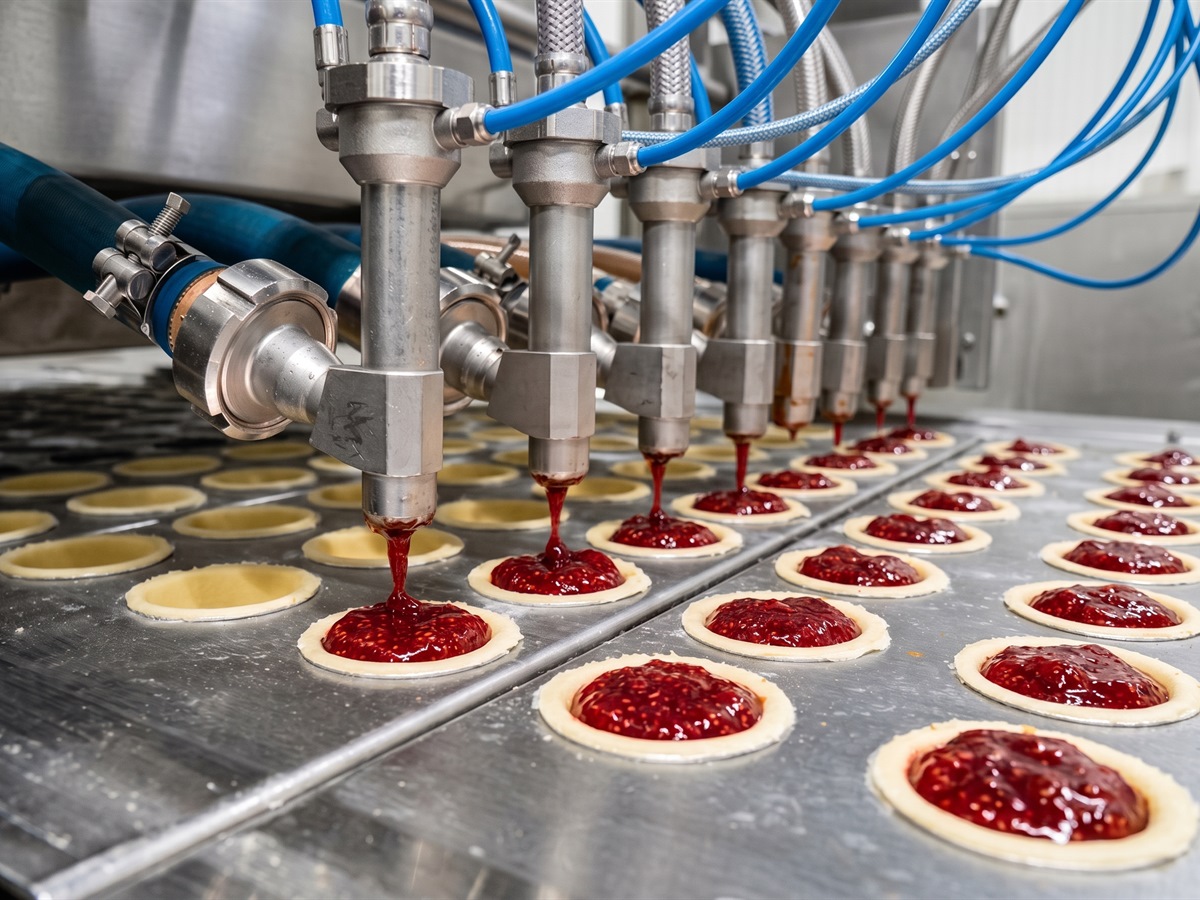
At the nozzle, a sticky tail of syrup or a stray piece of fruit landing on the dough margin behaves like a release agent. Where sugar or fat sits between them, the two dough layers struggle to bond.
Folding brings its own tension. Puff pastry rises because water in its thin dough layers turns to steam, while the fat sheets between them act as walls that force that steam to lift the layers upward.
Too little sealing pressure typically leaves a seam that opens under that steam. Too much pressure can fuse the layers along the edge, leaving a hard, flat border that barely puffs.
After baking, the problem becomes a matter of water balance. Water moves from regions of high water activity to regions of low water activity, regardless of total moisture. Water activity (aw) describes how freely water is available to move or react.
A typical fruit filling sits around 0.75 to 0.90, while a crisp baked crust sits near 0.20 to 0.40. Packaging keeps outside humidity away but cannot stop this internal transfer, so depending on formulation the crust may turn soft and leathery within a day or two while the filling dries out.
Freezing adds a slow, invisible stress. Temperature swings in storage or transport melt small ice crystals and refreeze the water onto larger ones. Those larger crystals pierce the thin dough layers and weaken the gluten network.
When the piece finally reaches the oven, steam tends to escape sideways through damaged layers instead of lifting them. The result is often lower volume, a denser bite, and a weakened seam that opens more easily.

Boil-out, soft crusts and flat frozen turnovers often share one root, uncontrolled free water, released at different moments of the product’s life.
Recommended Reading:
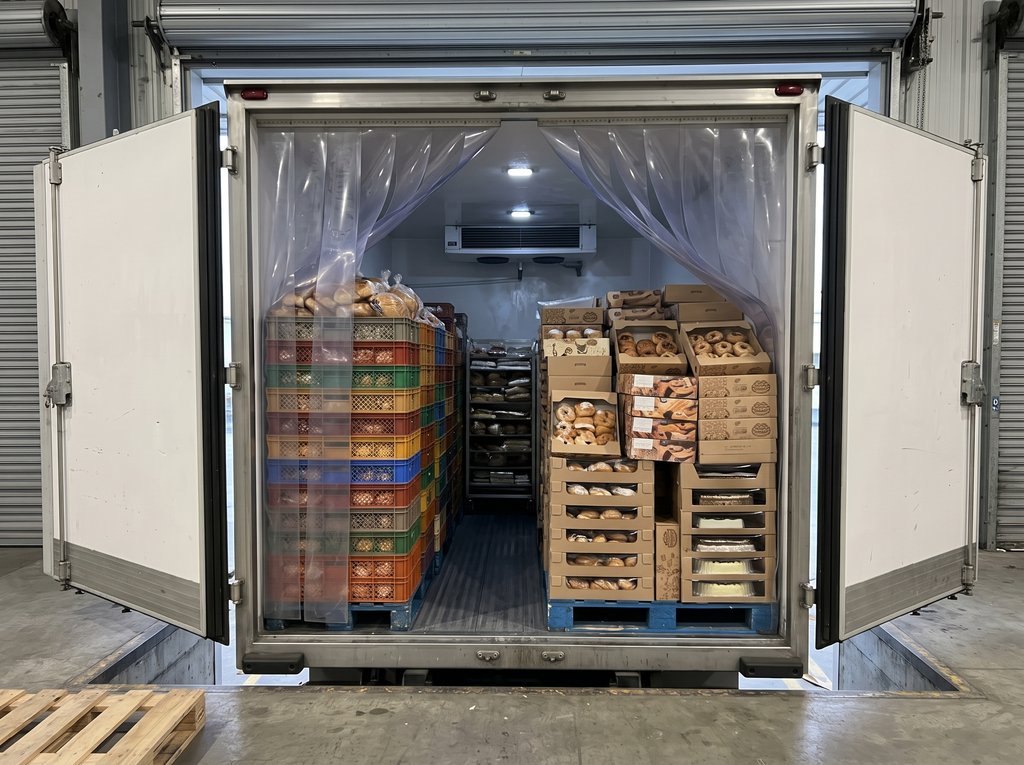
Frozen Dough Can Fail in Transit Even When the Truck Reads -20°C
Frozen dough and par-baked products often leave the plant intact and arrive damaged, even when the truck log reads -20°C. Small temperature swings in transit drive ice recrystallization and gluten loss.
Bakery Industry InsiderThe Variables That Decide Whether a Filling Holds
A simple bench test helps separate fillings that hold from those that run. A 10 g disc of filling is baked at 204 °C for 10 minutes; if it spreads less than 5%, it is usually considered bake-stable. Many plants run their own version with their real dough and oven profile.
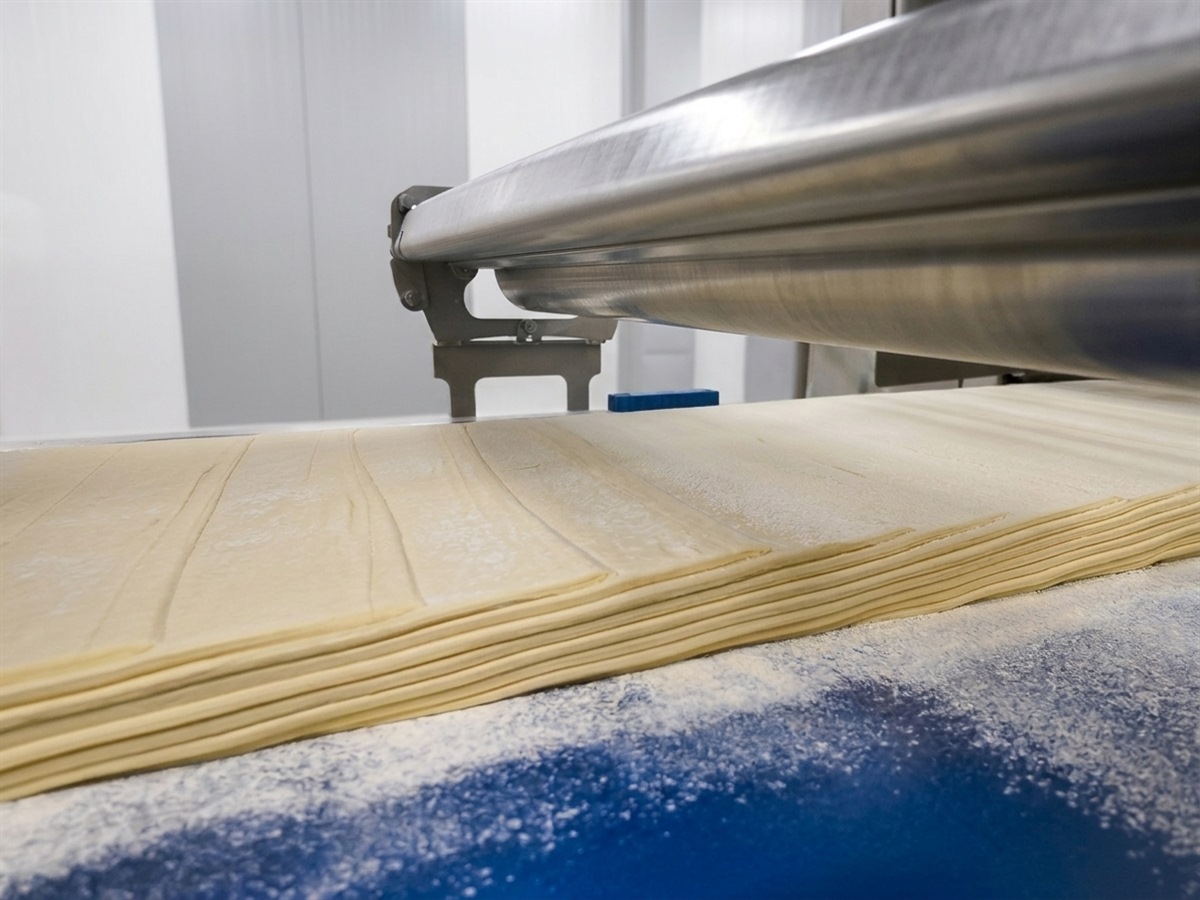
Behind that result sit a handful of variables that interact with each other:

Specifying the fruit is a formulation decision. Acidity, juice release and piece firmness largely shape the starch, pectin and pump requirements before the line even starts.
Recommended Reading:
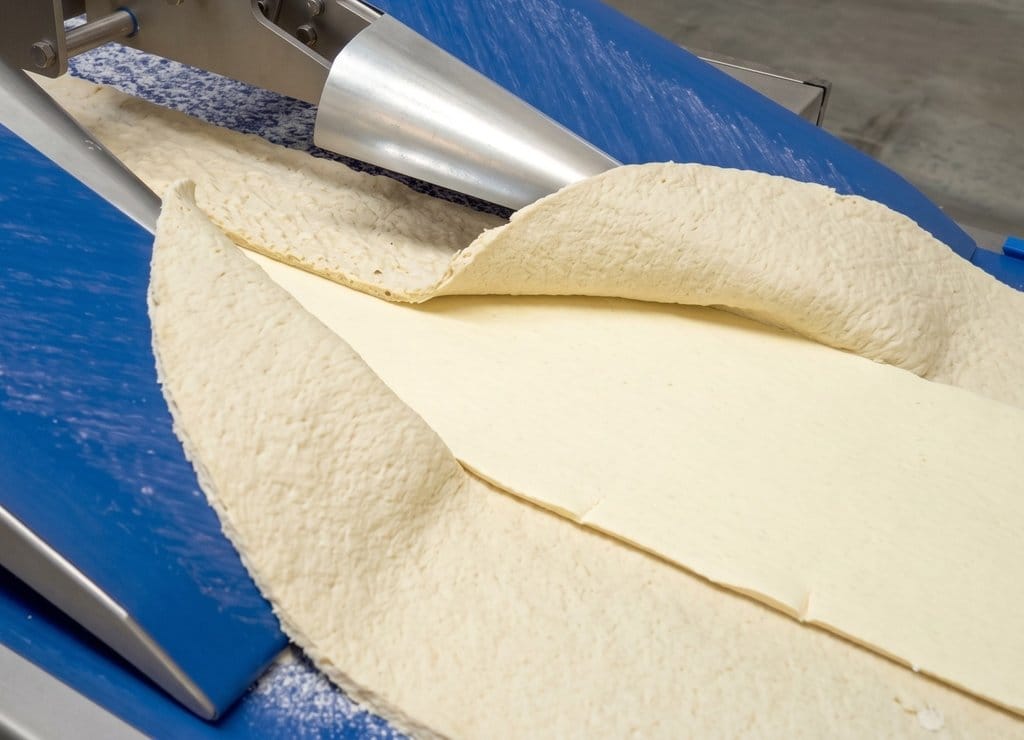
Why Danish and Croissant Doughs Require Fewer Lamination Layers Than Puff Pastry
Yeast-leavened laminated doughs demand a distinct layering strategy compared to puff pastry. Matching fat layers and sheet thickness helps preserve flaky lift on industrial lines.
Bakery Industry InsiderAdjusting the Line One Station at a Time
No single fix covers every line, since fruit variety, dough formula and freezer performance vary from plant to plant. A practical sequence follows the product along its route:
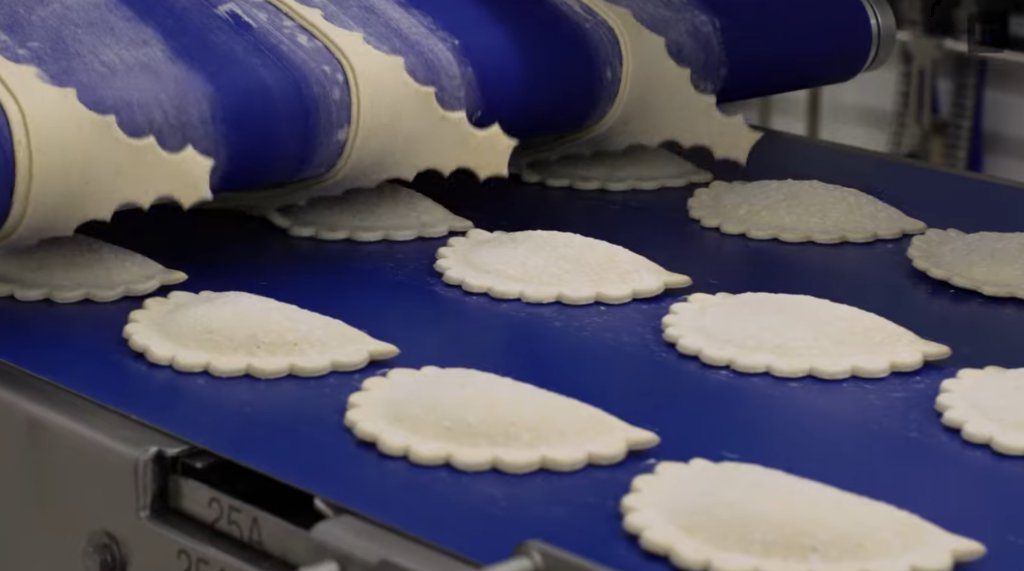
Each lever carries trade-offs. More solids lower water activity but raise sweetness and cost; barrier layers add a process step; stronger gels can be harder to pump.
Testing each change on the plant’s own dough, depositor and oven, then repeating the bake test after a frozen storage cycle, tends to reveal problems before they reach customers.
😊 Thanks for reading!
Sources
- Liu, X. et al. (2023). The Effect of Terminal Freezing and Thawing on the Quality of Frozen Dough: From the View of Water, Starch, and Protein Properties. Foods, 12(21), 3888. https://www.mdpi.com/2304-8158/12/21/3888
- Yang, J. et al. (2023). Effects of Frozen Storage Time, Thawing Treatments, and Their Interaction on the Rheological Properties of Non-Fermented Wheat Dough. Foods, 12(23), 4369. https://www.mdpi.com/2304-8158/12/23/4369
- Álvarez, M. D. et al. (2023). Functionality of Puff Pastry Olive Pomace Oil-Based Margarines and Their Baking Performance. Foods, 12(11), 2138. https://www.mdpi.com/2304-8158/12/11/2138
- Labuza, T. P. and Hyman, C. R. (1998). Moisture migration and control in multi-domain foods. Trends in Food Science and Technology, 9(2), 47 to 55. https://doi.org/10.1016/S0924-2244(98)00005-3
- Google Patents. GB2368511A, Pectin based fruit filling. https://patents.google.com/patent/GB2368511A/en
- Google Patents. US7452564B2, Bake stable low water activity filling. https://patents.google.com/patent/US7452564B2/en
- TBESAgri (2026). Bake-Stable Mango and Passion Fruit Fillings: What R&D Teams Specify. https://www.tbesagri.com/news/bake-stable-mango-passion-fruit-fillings
- Herbstreith & Fox (2022). Improving starch-based bake stable fruit fillings with low sugar. https://www.herbstreith-fox.de/en/2022/11/28/improving-starch-based-bake-stable-fruit-fillings-with-low-sugar-using-hf-pectin/
- EmkaFood (2026). Why Moisture Control Matters in Fruit-Filled Biscuits. https://emkafood.com/EN/blog/meyve-dolgulu-kurabiyelerde-nem-kontrolu-neden-onemli
- BAKERpedia. Water Activity. https://bakerpedia.com/processes/water-activity/
- BAKERpedia. Puff Pastry. https://bakerpedia.com/processes/puff-pastry/
- Unifiller. RP Depositor specifications. https://www.unifiller.com/bakery-machine/rp-depositor
- PCM. Hopper Progressive Cavity Pump. https://www.pcmpumps.com/products-and-equipment/hopper-progressive-cavity-pump
- Naegele Bakery Systems. Dough Folding and Filling. https://www.naegele-inc.com/bakery-equipment/dough-folding-filling/