Rounding and Intermediate Rest Are Critical After Dough Dividing in High-Speed Lines
Volumetric dividing, mechanical rounding, and the intermediate rest stage each modify dough rheology in ways that directly affect gas retention, surface handling, and downstream moulding performance. Understanding how these three steps connect could help diagnose common defects like flying crust, irregular crumb, and moulder tearing.
Mechanical Stress During Volumetric Division
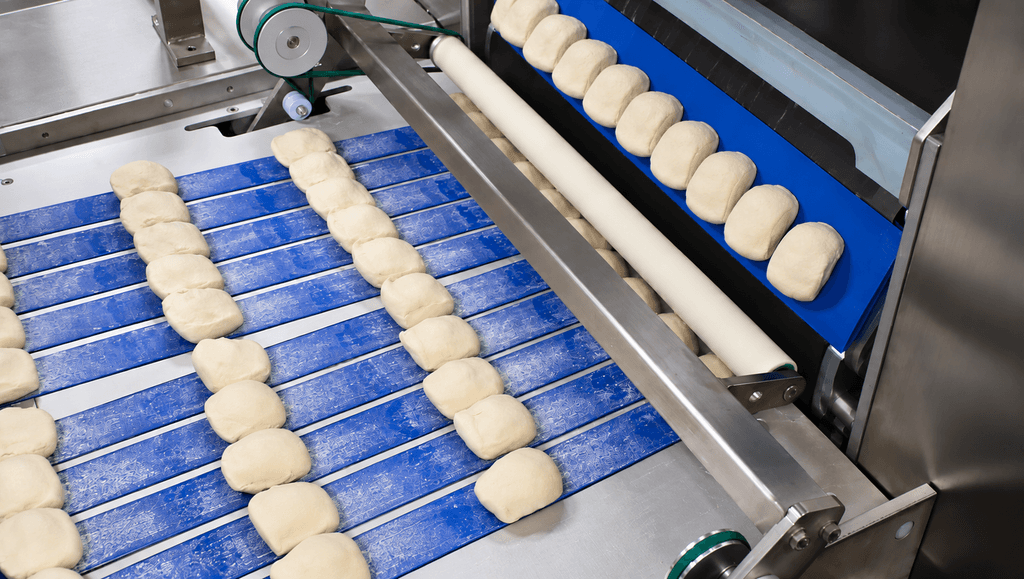
During volumetric dividing, suction pistons and cutting blades subject bulk dough to shear rates well beyond its linear viscoelastic range. At throughputs reaching tens of thousands of pieces per hour, mechanical forces inflict severe macromolecular damage.
The high-molecular-weight glutenin subunits, which function as the elastic backbone of the gluten network through their intermolecular disulfide bonds, are particularly vulnerable during this stage.
Chains aligned with piston flow undergo direct mechanical scission, reducing the average molecular weight of glutenin macropolymer aggregates responsible for elastic storage modulus.
The freshly cut plane presents three immediate physical challenges:
Rheological Recovery During Rounding
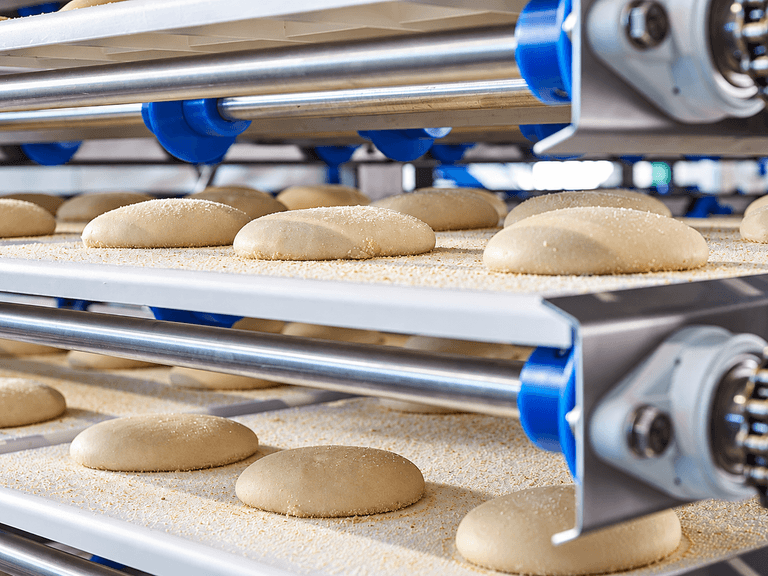
The rounder subjects each divided piece to rotational shear and biaxial elongational flow. In oscillatory eccentric designs, the dough rolls along a friction-calibrated surface in a controlled orbital path for two to five seconds, driving three concurrent structural changes:
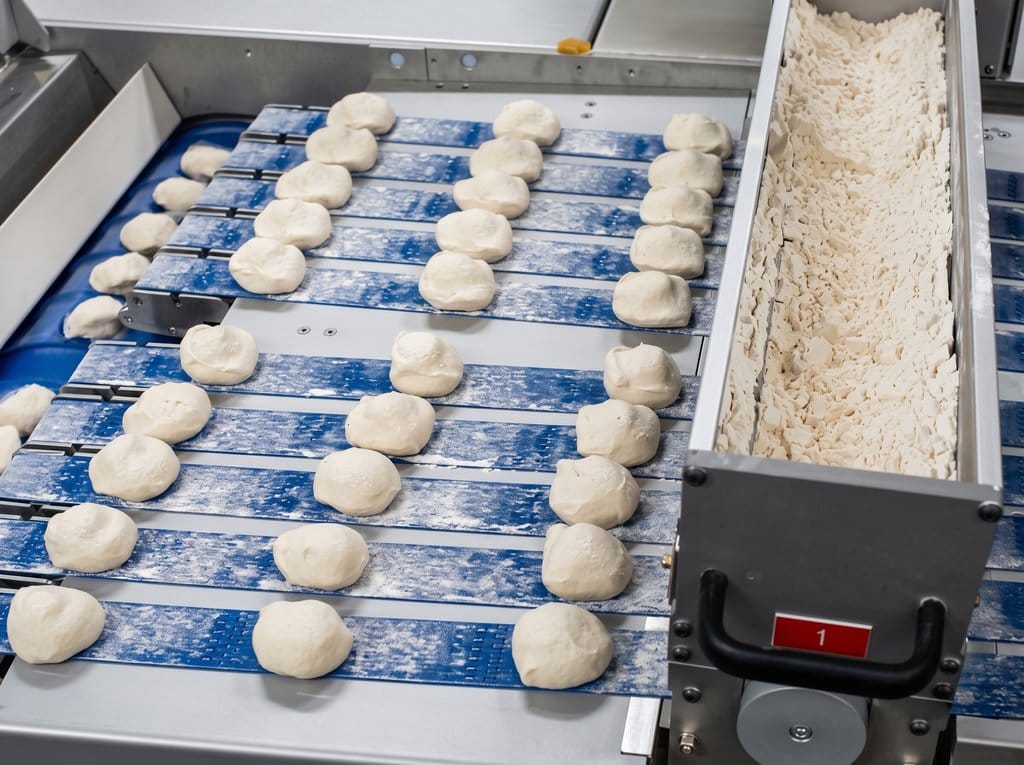
This mechanical treatment shifts dough rheology immediately. Elastic storage modulus spikes and the damping factor drops temporarily, indicating solid-elastic behavior. Alveograph tenacity can rise by 30% to 50% relative to the post-cut state, while extensibility falls as tensioned polymer chains exhaust their reversible stretch capacity. This temporary rise in elastic modulus prevents gravitational slump, maintaining spherical geometry on conveyors.
Gas Retention and the Cortical Membrane
The cortical skin directly governs fermentation gas retention. Carbon dioxide produced by yeast glycolysis first saturates the aqueous phase before diffusing into pre-existing air nuclei. Without an intact surface, dissolved gas near the periphery vents directly to the atmosphere through open pores.
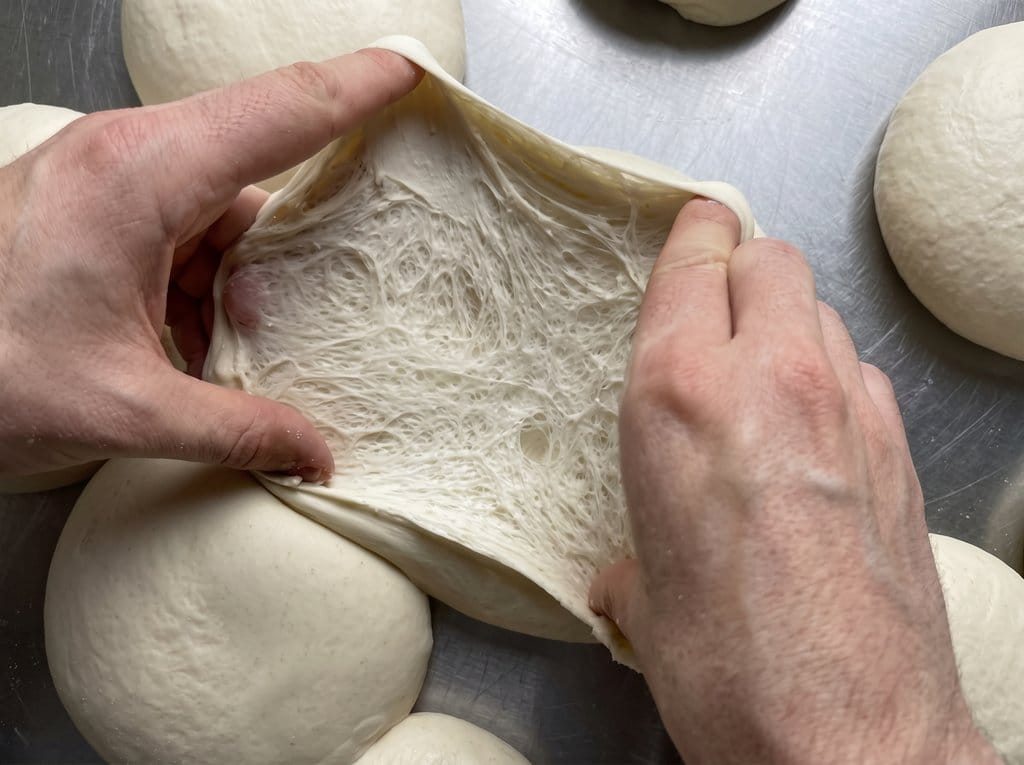
The sealed membrane behaves similarly to a pressurized balloon wall.
As gas cells expand during proofing and initial oven spring, the oriented gluten network in outer layers exhibits strain hardening, where resistance increases as the material stretches.
This prevents localized cell-wall thinning and rupture, maintaining uniform gas retention.
Rounding also subdivides air nuclei occluded during mixing. Shear forces elongate and fracture larger bubbles into smaller units, increasing the number density of gas nuclei per unit volume. This redistribution prevents two key defects:
Stickiness Reduction and Conveyor Handling
Beyond rheological conditioning, rounding resolves divider tackiness. Surface compaction reorients lipid-protein complexes toward the outer surface, encapsulating free water and damaged starch within the dough interior. The piece exits with a matte, mechanically dry surface that transfers onto conveyors and into proofer pockets without aggressive sticking, potentially reducing dusting flour requirements.
Intermediate Rest Would Be Critical Before Moulding
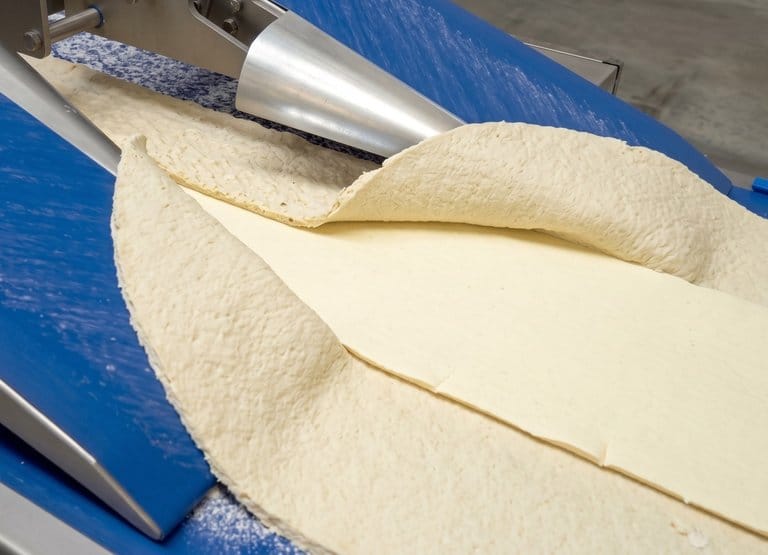
Although structurally sealed and spherical, the rounded dough exits in a state of high residual elastic stress. Feeding it directly into moulder sheeting rolls risks two compounding failures:
An intermediate rest in an overhead pocket proofer, typically five to ten minutes at an average of 26 °C (within a 24 to 28 °C range), allows stored elastic energy to dissipate through viscous flow mediated primarily by the gliadin fraction.
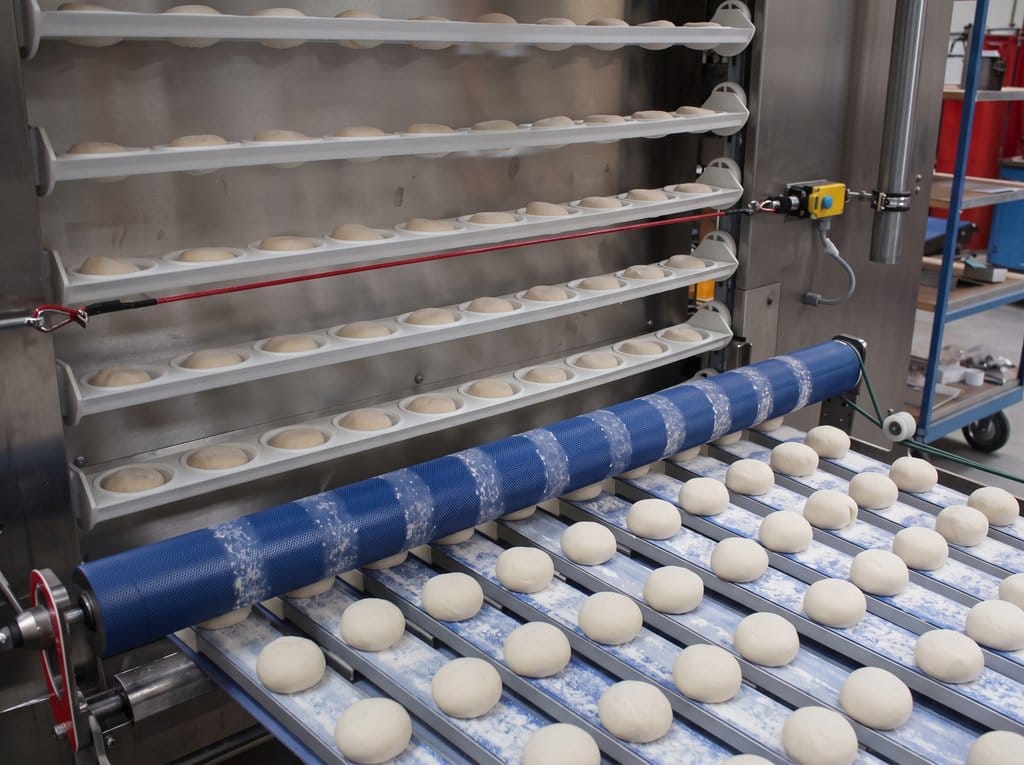
Spontaneous hydrogen bond reorganization and thiol-disulfide exchange reactions between cysteine residues permit glutenin chains to slide past one another without breaking.
Tenacity decreases while extensibility recovers, bringing the dough toward a balanced viscoelastic ratio suitable for smooth sheeting without retraction or tearing.
Connecting the Sequence to Line Performance
Each stage in this three-step sequence modifies dough rheology in a way that directly conditions the next operation. Skipping or underperforming any one step could cascade into measurable quality and efficiency losses: excessive dusting flour consumption, moulder jams from sticky or snap-back-prone dough, irregular crumb from poor gas distribution, or flying crust from inadequate surface sealing.
😊 Thanks for reading!
Sources:
- Dobraszczyk, B.J. & Morgenstern, M.P. “Rheology and the breadmaking process.” Journal of Cereal Science (2003), 38(2), 131, 145. https://doi.org/10.1016/S0733-5210(03)00059-6
- Chen, W.Z. & Hoseney, R.C. “Development of an objective method for dough stickiness.” LWT – Food Science and Technology (1995), 28(5), 467, 473. https://doi.org/10.1006/fstl.1995.0079
- Cauvain, S.P. & Young, L.S. Technology of Breadmaking (2nd & 3rd Editions). Springer Nature (2007) / Woodhead Publishing (2023).
- König Maschinen Gesellschaft m.b.H. “Verstellbarer Wirkexzenter.” European Patent EP 3 522 724 B1 (2023). https://worldwide.espacenet.com/patent/search/family/063162624/publication/EP3522724B1?q=EP3522724
- Anetsberger, R.J. “Dough rounder.” US Patent 5,277,569 (1994). https://patents.google.com/patent/US5277569A/en
- https://www.koenig-rex.com/