How to Scale Spandauer Danish Pastry: Lamination, Freezing & Filling Stability
The Spandauer demands simultaneous control of lamination rheology, fat crystallography, filling thermostability, and cryogenic preservation. At 10,000 to 40,000 pieces per hour, a single miscalculated variable collapses the entire structure.
A Multi-Phase System Under Mechanical Stress
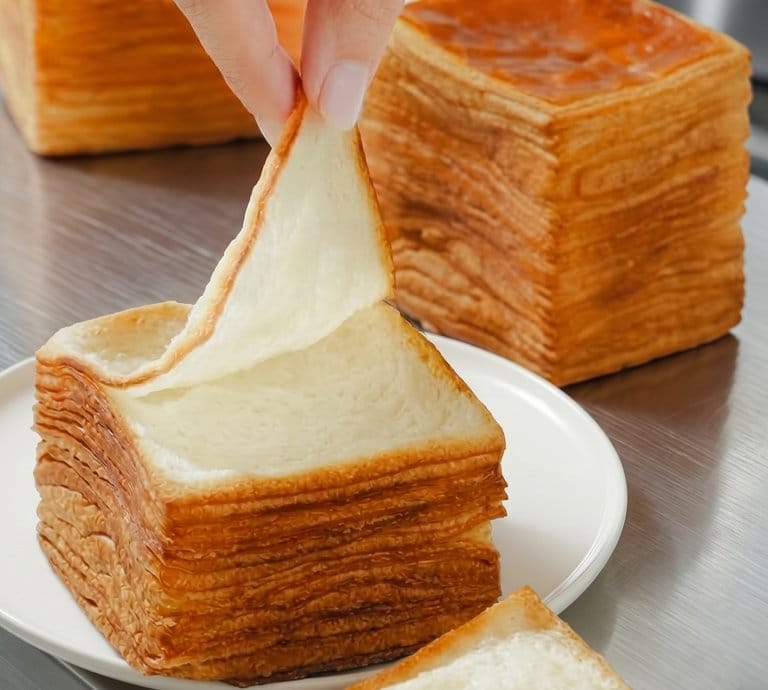
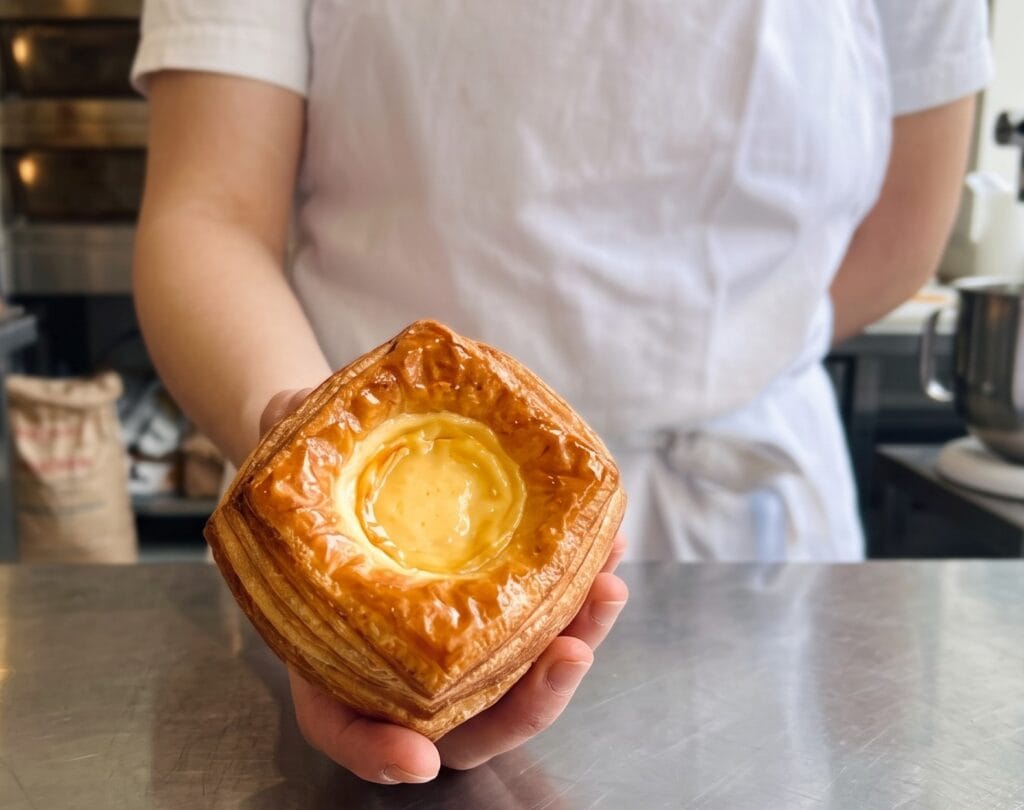
The Spandauer is not a simple laminated pastry. Its classic four-corner fold encloses a custard or fruit filling inside a yeasted, enriched Danish dough interleaved with 24 to 27 alternating layers of fat. This makes it a biologically active, multi-phase colloidal system, one where sugars, eggs, milk, gluten, and live yeast must coexist with precision-engineered fat layers across every stage of continuous production.
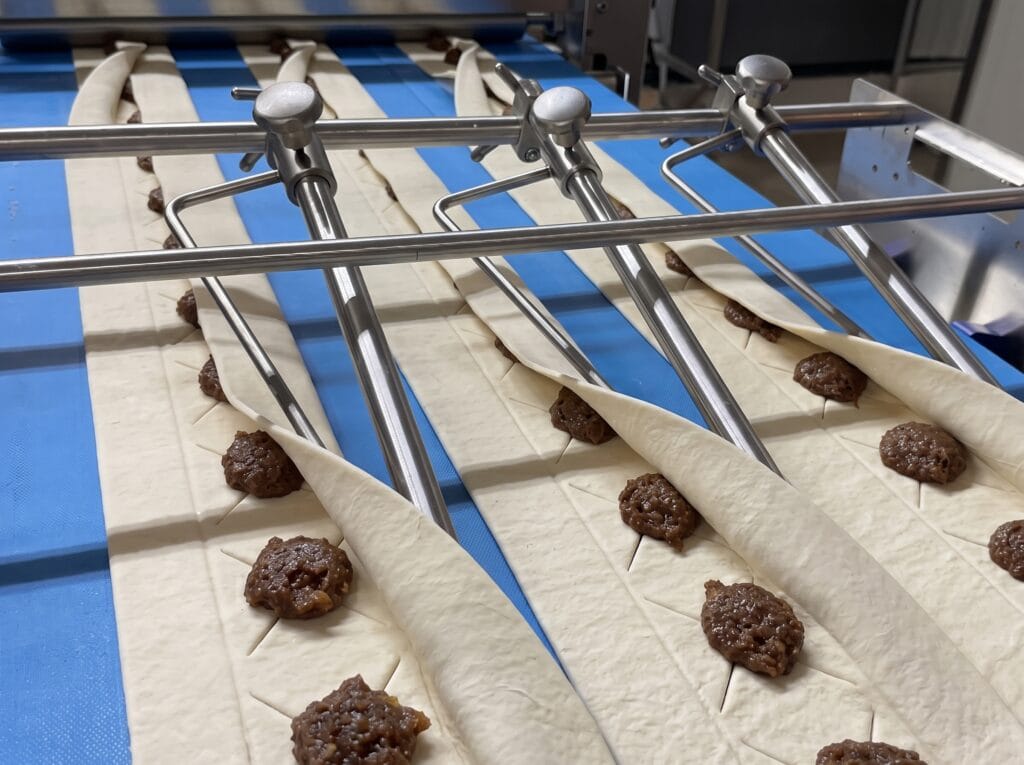
Scaling this product on high-speed lines requires solving five simultaneous challenges: matching mass and fat rheology under continuous shear, preserving gluten microstructure through freezing, stabilizing fillings against thermal breakdown, extending shelf life without chemical additives, and optimizing tunnel oven dynamics for maximum layer separation.
The Lamination Balancing Act
During continuous lamination, the dough sheet and the fat layer must behave as a single, isoviscous system at the line operating temperature of 14°C to 18°C. If they don’t, the product fails.
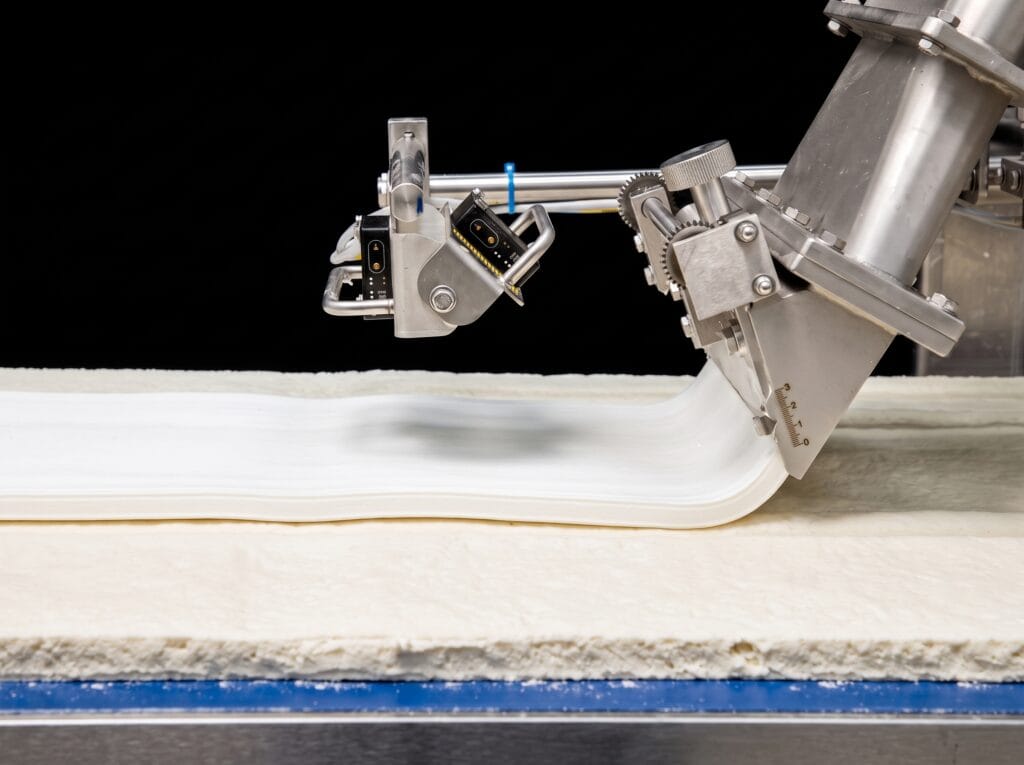
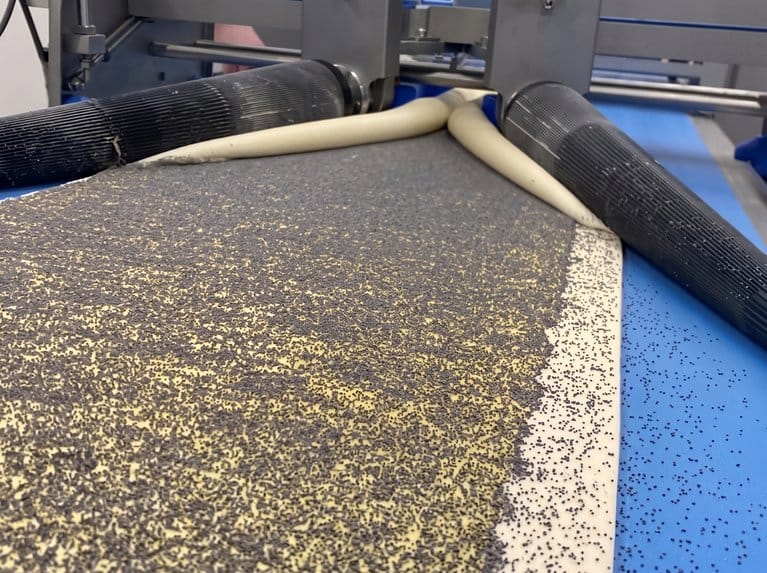
Stress-free lamination lines, from manufacturers such as Rademaker, Rondo, and Fritsch, use planetary multi-roller heads that apply gentle, progressive micro-passes. These reduce sheet thickness without overheating the dough or inducing residual elastic tension that could cause corner snap-back after cutting.
Inline cooling tunnels at 4°C to 8°C dissipate the frictional heat generated by mechanical shear and restore the fat’s working plasticity between reduction stages.
Fat Crystallography: Why Beta-Prime Matters
The fat’s crystal habit determines everything. Industrial lamination fats must be stabilized in the beta-prime crystalline form, characterized by tiny needle-shaped crystals of 1 to 5 micrometers. These crystals build a dense three-dimensional network that traps liquid oil, giving the fat sheet ductility and stretch without fracturing under roller pressure.
The alternative, beta crystals of 20 to 50 micrometers, form rigid plates that cause oil exudation and a gritty mouthfeel.
Traditional butter offers unmatched flavor from its diacetyl and short-chain fatty acid profile, but its usable plasticity window is extremely narrow. Its solid fat content drops sharply between 10°C and 30°C, making it prone to collapse on non-climate-controlled lines. Technical lamination margarines, formulated through enzymatic interesterification of palm fractions and vegetable oils, maintain a broad plasticity plateau across that same range.
Hybrid specialty fats now bridge this gap. Products like Puratos’ Mimetic combine the mechanical workability of a beta-prime technical fat with fermented dairy inclusions and thermal-release aroma precursors that activate during baking.
Taming the Filling
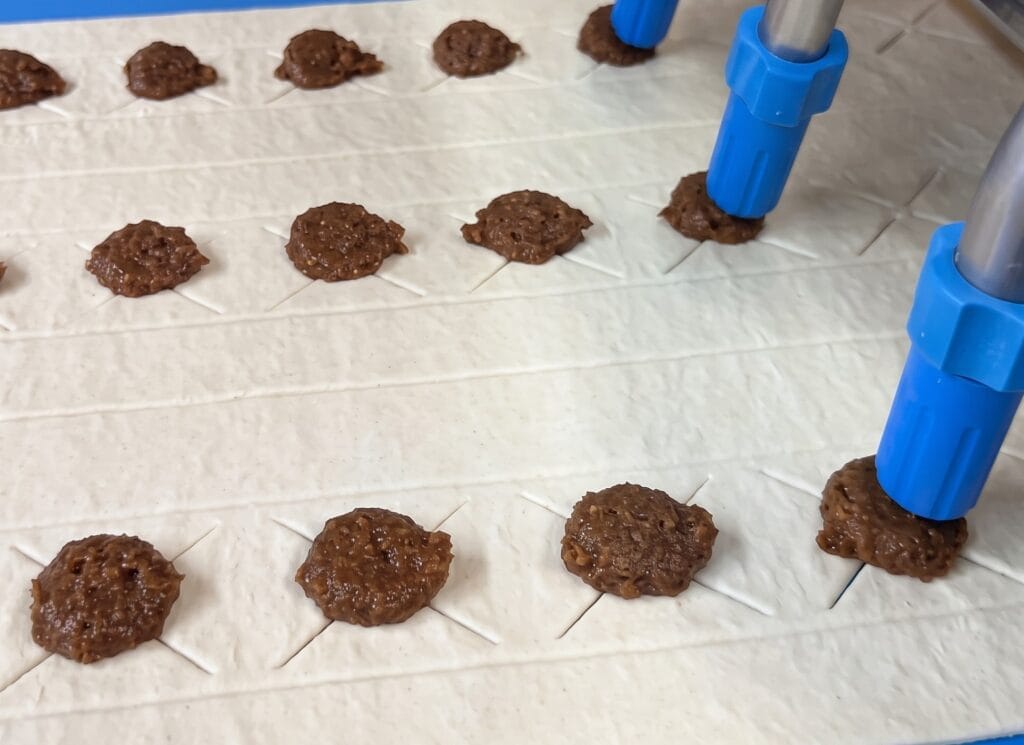
The Spandauer’s central custard or fruit deposit must survive oven temperatures of 190°C to 220°C, and often a prior freeze-thaw cycle, without boiling out, weeping, or turning the base soggy.
Three failure modes threaten the filling:
Industrial bake-stable fillings address these through multi-component polymer systems:
Clean-Label Enzyme Systems for Shelf Life
Maintaining softness in the interior crumb while preserving exterior crispness over shelf life depends on precision enzymatic intervention:
Freezing Without Destroying
For frozen distribution formats, whether unbaked, pre-proofed, or par-baked, the freezing step is where most quality could be lost. Slow passage through the critical crystallization zone of -1°C to -7°C allows large ice crystals to form, mechanically tearing gluten strands and rupturing yeast cell membranes. Damaged yeast releases glutathione, a tripeptide that cleaves the disulfide bonds holding the gluten network together, softening the dough uncontrollably.
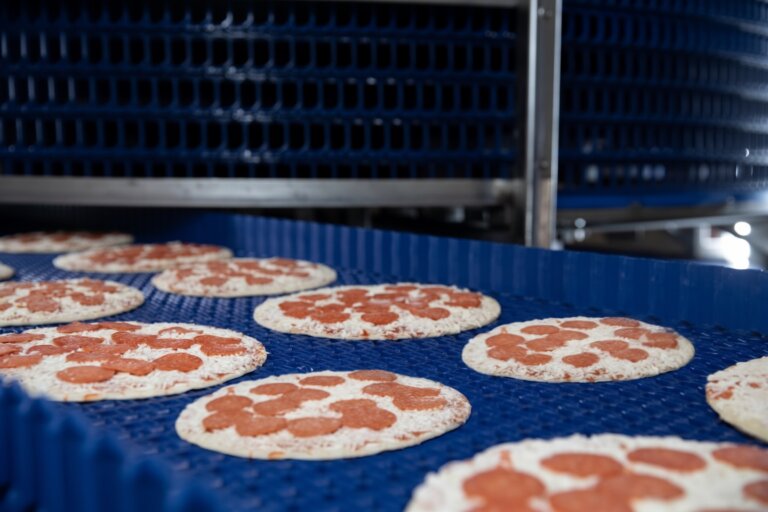
Industrial spiral blast freezers operating at -35°C to -42°C with air velocities above 4 m/s cross this danger zone in under 15 minutes, forcing water into amorphous microcrystals that preserve both the gluten architecture and the thin fat films that sustain each laminated layer.
Osmotolerant, cryotolerant yeast strains with high internal trehalose and glycerol synthesis are dosed at 20% to 40% above fresh-dough levels to compensate for freeze-related mortality.
😊 Thanks for reading!
Sources:
- Laminated Bakery Margarines: Performance, SFC and Plasticity – Meridian Food Fats
- Rheological and Layering Parameters in Laminated Doughs – Ireks Kompendium
- Lamination Fat Technology, Steam Lifting and Texture – Bakerpedia
- Viscoelastic Behavior and Rheology of Laminated Dough – CABI Digital Library
- Effect of Freezing and Ice Crystal Formation on Gluten Matrix in Dough – MDPI / ResearchGate
- Evaluation of Enzymes and Hydrocolloids in Frozen Laminated Dough Quality – NCBI / NIH
- Polymorphism, Beta-Prime Crystal Stabilization and Workability in Bakery Fats – NCBI / NIH
- Fat Crystallization and Rheological Solid Fat Content Profiles in Industrial Baking – Sonneveld
- Tailored Specialty Lamination Fats and Butter Blends (Mimetic) – Puratos
- Bake-Stable Starches and Hydrocolloids in High-Heat Pastry Fillings – Vinayak Corp
- Heat-Resistant Pectin Systems for Fruit Preparations and Custards – Herbstreith & Fox
- Freeze-Thaw and Thermal Stability of Modified Starches in Bakery Products – Cargill
- Novamyl® Maltogenic Amylases and Freshkeeping Solutions – Food Nation Denmark
- Lipopan® Lipases as Clean-Label Emulsifier Replacers in Laminated & Frozen Dough – Novonesis
- EP1272040: Freezer-to-Oven Laminated Unproofed Dough Process – Google Patents
- EP0305071: Process for Making Preproofed Unbaked and Frozen Laminated Doughs – Google Patents
- US20070218167: Frozen Sheeted Laminated Dough and Direct Baking Process – Google Patents
- Industrial Danish Pastry Lamination and Freezing Standards – Lantmännen Unibake