Extrusion, Sheeting, or Ball-Punching: Selecting the Right Industrial Donut Forming System
Industrial donut lines utilize extrusion, sheeting, or dividing-rounding-punching systems to form dough. Each method presents distinct operational characteristics, impacting raw ingredient yield, machinery footprint, and final product texture based on the chosen processing mechanics.
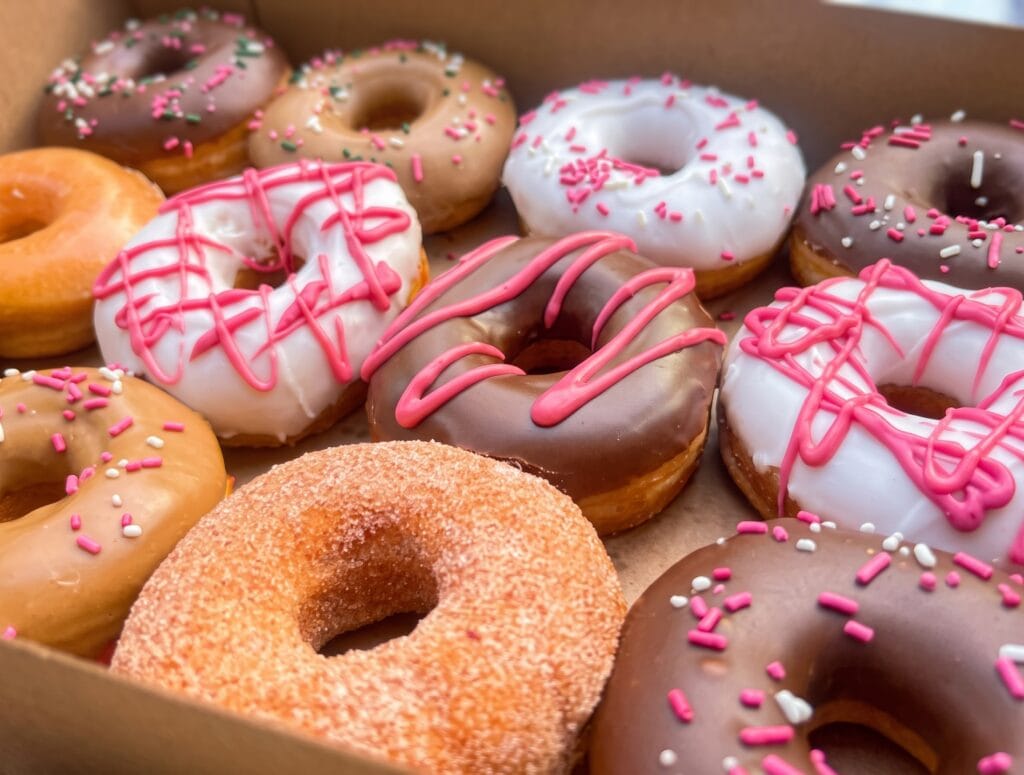
The selection of a forming method is one of the most critical decisions in configuring an industrial donut line. These methods define not only the efficiency of the manufacturing process, but also the crumb texture, overall product yield, and sensory qualities of the final donut. For producers aiming to scale operations efficiently while meeting strict market expectations, understanding the physical and structural differences between these three industrial technologies is essential.
Dough Rheology and Gluten Development
Each forming technology imposes distinct rheological demands on the dough, requiring specific hydration levels and dough handling characteristics to achieve optimal product quality.
Extrusion systems, such as those manufactured by Belshaw Adamatic, typically require doughs with slightly higher hydration levels, ranging between 58 and 62 percent. This softer dough is highly extensible, allowing it to flow smoothly through the extruder die without tearing. A strong yet highly extensible gluten network is critical in this application. If the dough is too stiff, the extruder can block, while dough that is too slack may deform immediately after deposition. Formulations often incorporate L-cysteine to relax the gluten network and emulsifiers to improve gas retention and dough flow.
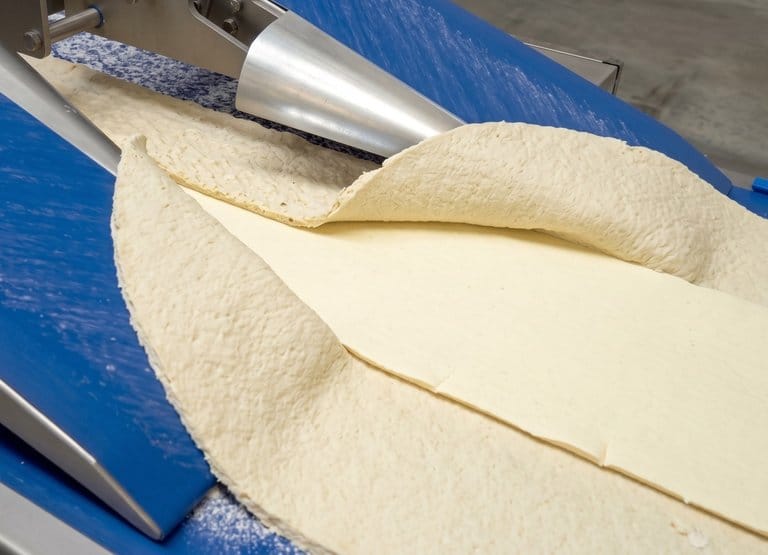
Sheeting and cutting systems, produced by companies like Rademaker and Moline, work best with firmer doughs, typically holding a hydration level of around 55 percent. The dough must be strong enough to maintain its structural integrity during rolling, laminating, and cutting. Gentle sheeting techniques, involving multiple gradual thickness reductions, minimize mechanical damage to the gluten network. This preserves the internal gas cell structure, leading to excellent volume and an open crumb after proofing.
Dividing, rounding, and punching systems, developed by WP Kemper, process dough with moderate hydration, typically between 55 and 58 percent. The dough must be highly cohesive and sufficiently relaxed to undergo rapid mechanical division and rounding. Once the dough is divided and rounded into uniform balls, it undergoes a brief intermediate proofing phase to relax the gluten network before flat pressing. This prevents the dough from shrinking or snapping back during the center-punching step.
Comparing the Three Forming Methods
Each method presents unique operational advantages and physical trade-offs on the production line.
Extrusion Systems
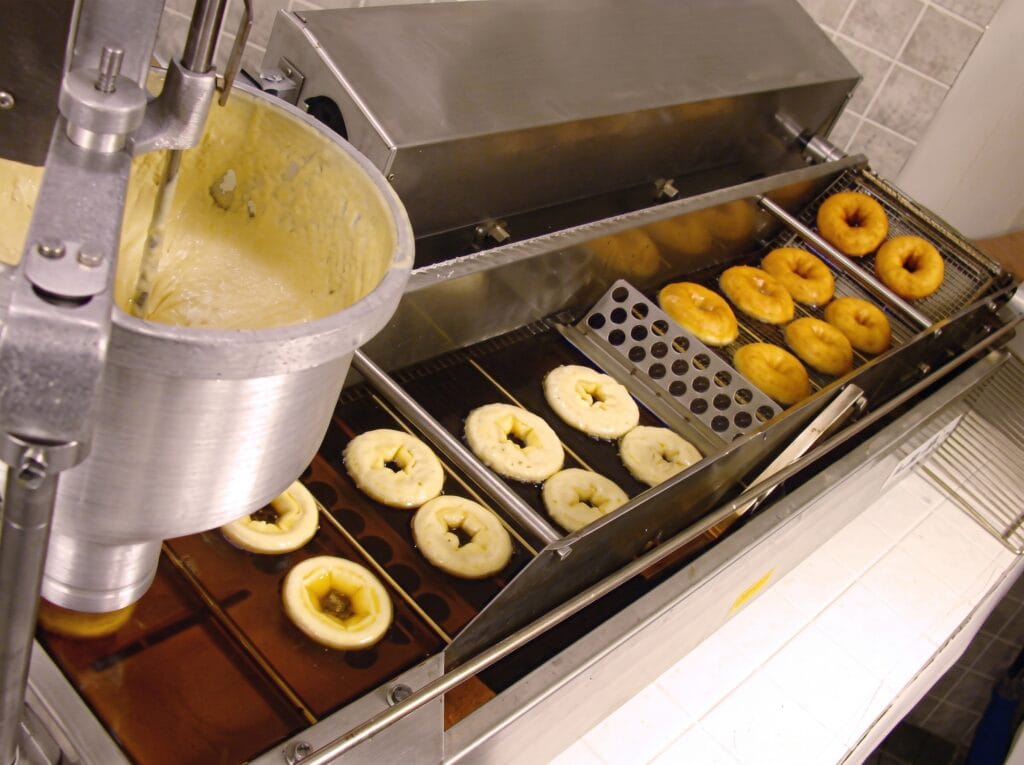
On the operational side, extrusion eliminates trim waste entirely, which directly improves raw ingredient yield and removes the need for a dedicated rework conveyor system. This method delivers precise control over individual portion weight and dimensions, ensuring even frying and a highly uniform product appearance across the line. It also supports automated operations with a minimal physical footprint and reduced labor requirements.
Conversely, extrusion offers limited shape versatility, as the mechanical dies are primarily designed to deposit standard ring formats. The system demands highly rigid control of dough temperature and consistency, where minor recipe variations may cause extrusion blocks or nozzle clogging. Finally, the mechanical pressure applied during the extrusion stroke can compress the dough, which sometimes leads to increased fat absorption and a slightly denser final mouthfeel.
Sheeting and Cutting Systems
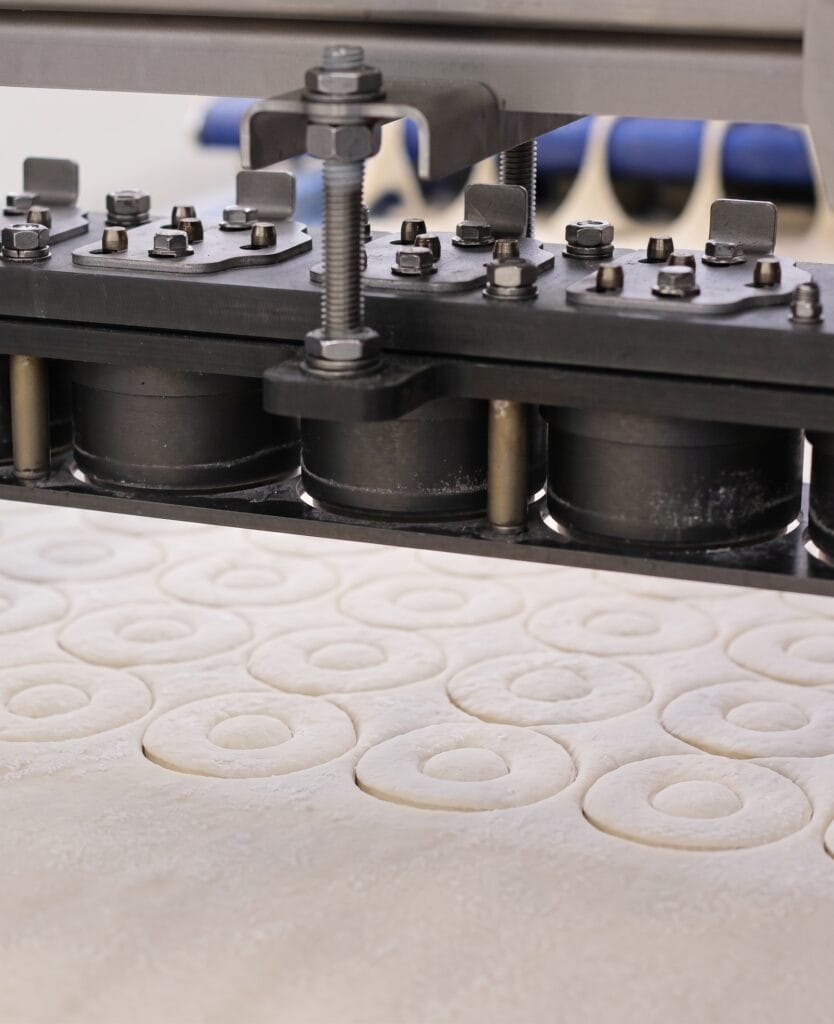
Regarding its advantages, sheeting enables the production of multiple shapes, including rings, squares, holes, and filled shells, with simple changes to the rotary cutter tools. This flexibility makes it suitable for high-capacity, multi-product lines where different dough types and pastry formats run on a single conveyor system. It also retains a highly aerated dough structure because the rolling process is gentler than high-pressure die extrusion, resulting in a lighter and fluffier crumb.
However, the system generates 10 to 20 percent scrap dough, and sometimes even higher depending on the complexity of the cut, which demands dedicated return conveyors or specialized slurry processors. Additionally, sheeting demands a larger physical footprint to accommodate the laminating, gauging, and cutting conveyors. Finally, overworking the returned dough can lead to uneven fermentation, which often results in inconsistent ring rise and varying crumb textures in the finished batch.
Dividing, Rounding, and Punching Systems
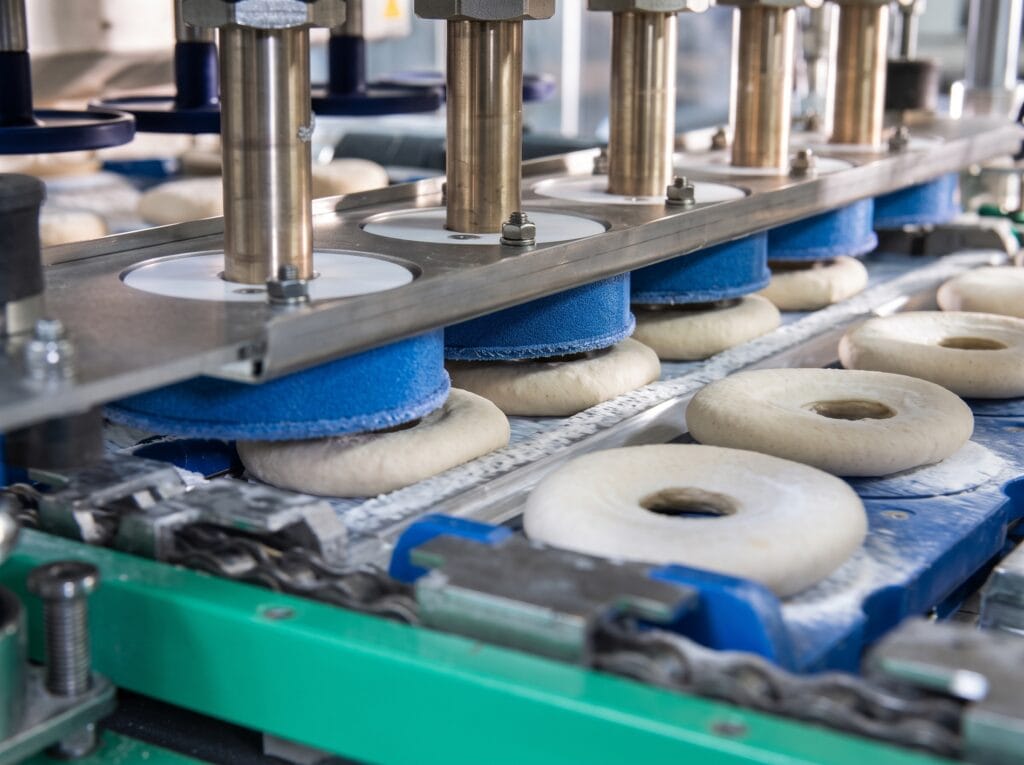
This approach offers significant technical advantages, starting with a reduction in scrap dough to approximately 8 percent, since only the small center core is removed from the pre-pressed dough ball. The rounding process also promotes a highly uniform, closed outer skin, which acts as a physical barrier to limit oil uptake during frying.
Because of the minimal amount of punched dough, this system eliminates the need for a complex slurry rework system, allowing the small center cores to be directly reincorporated into the fresh batch without altering structural properties.
On the other hand, the system demands a higher initial capital investment due to the integration of high-speed dividing, rounding, pressing, and stamping stations. Additionally, throughput speeds, though high, may not reach the absolute maximum volumes of wide-belt industrial sheeters. Finally, the product range is limited primarily to ring donuts and rounded, filled yeast products, which restricts the line from producing complex rectangular or twisted shapes.
Recommended Reading
Industrial Donut Shaping by Extrusion
Managing Scrap and Rework in Donut Lines
The management of trim and scrap dough remains a major factor in determining the overall operating efficiency of a donut facility.
Extrusion lines require no scrap management, as the dough is deposited directly into the proofing trays with zero trim.
Sheeting lines typically employ return conveyors to feed trim back into the mixer, or utilize automated slurry systems. A slurry system hydrates the collected trim, grinds it under high shear, and pumps it back as a liquid ingredient, replacing a controlled percentage of fresh flour and water. While efficient, slurry systems require precise dosing to avoid disrupting dough consistency.
Dividing, rounding, and punching lines produce a minimal, consistent stream of scrap from the punched holes. Because this scrap is not subjected to repeated rolling, lamination, or stretching, the gluten remains undamaged. This allows operators to return the center cores directly to the hopper or feed them immediately back into the primary mixer without risking over-fermentation or structural collapse.
Scalability and Line Capacities
Throughput demands heavily dictate the choice of forming technology, with sheeting and dividing, rounding, and punching systems reaching comparable peak capacities. Both technologies can achieve high-volume outputs of up to 40,000 units per hour on a single industrial line, though sheeting utilizes wide-belt conveyors while the punching method achieves this rate primarily with ball-shaped formats.
Extrusion systems operate at lower individual outputs, typically producing 1,500 to 10,000 donuts per hour per unit, requiring plants to install multiple extruders in parallel to scale production.
Product Texture, Mouthfeel, and Oil Uptake
The physical forming process directly influences how the dough cooks in the fryer and how the final product is perceived by consumers.
Extruded donuts exhibit a very uniform, fine cell structure with small, evenly distributed gas pockets, which leads to a slightly denser, chewier bite. The outer skin is highly permeable, which often results in a slightly higher oil absorption during frying, creating a rich mouthfeel.
Sheeted-and-cut donuts benefit from a highly developed, relaxed gluten network that expands freely during proofing. This creates an open, irregular cell structure and a light, fluffy texture. The intact outer surface absorbs moderate amounts of fat, providing a clean, non-greasy finish.
Rounded, pressed, and punched donuts offer a unique combination of characteristics. The rounding process seals the outer surface of the dough ball, creating a smooth, non-porous skin. This structural boundary limits oil penetration, allowing the donut to retain its moisture while absorbing less frying fat. The resulting crumb is tender and uniform, offering a melt-in-the-mouth texture with a clean bite.
Selecting the Right Technology for the Production Line
Choosing among extrusion, sheeting, and ball-punching depends on the target product portfolio, desired output, and operational yield targets. Plants focusing purely on ring production with lower production volumes can minimize capital costs and raw material handling by utilizing extrusion. Multi-category bakeries that produce donuts alongside pastries, croissants, or turnovers require the flexibility of a high-speed sheeting line, despite the added complexity of a slurry rework system.
😊 Thanks for reading!
Sources:
- Belshaw Raised Donut Extruder: https://www.belshaw.com/products/vmrf4-raised-donut-extruder
- Rademaker Sheeting & Laminating Line: https://rademaker.com/bakery-equipment/rademaker/sheeting-laminating/
- Moline Sheeting and Cutting: https://www.rvo.com.au/moline
- WP Kemper Donut System: https://www.wp-kemper.de/en/world-of-products/think-process/wp-donut/process-solution-donut-system.html