Sourdough Starter Maturation: A Day-by-Day Protocol for Industrial Fermentation Consistency
Inconsistent sourdough starters cause unpredictable fermentation rates and crumb defects in automated lines. Understanding the 11-day microbial succession from initial hydration to a mature culture allows bakers to standardize feeding protocols, ensuring consistent lactic acid production and reliable dough rheology at industrial scales.
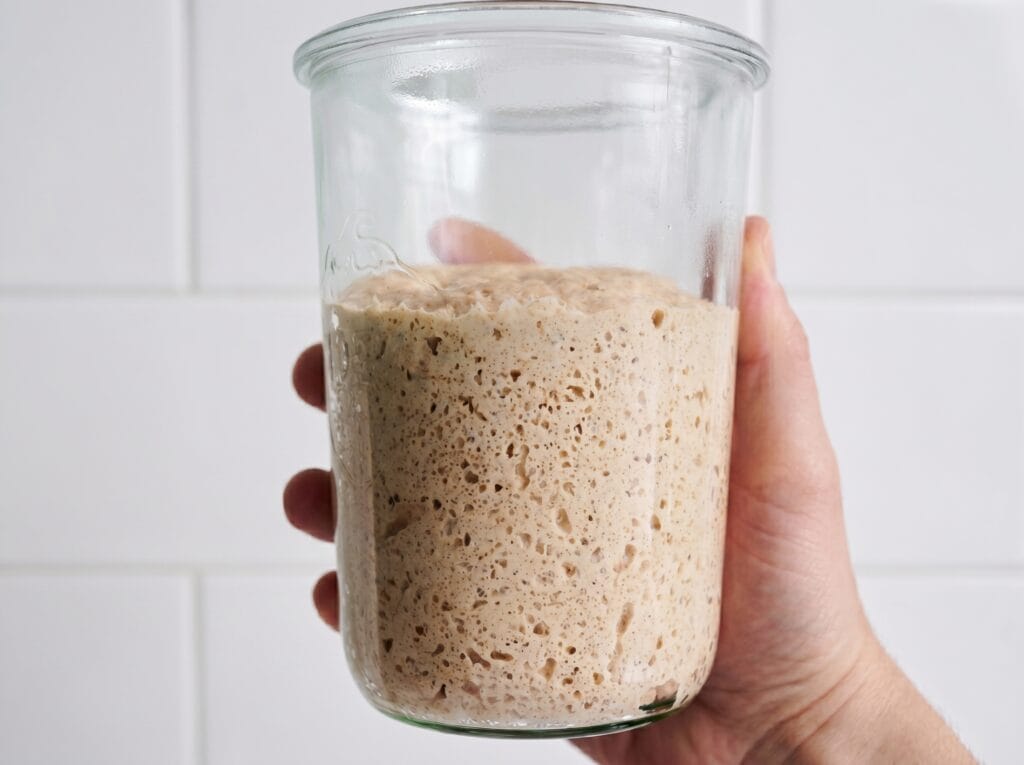
Three Key Days in the Life of a Sourdough
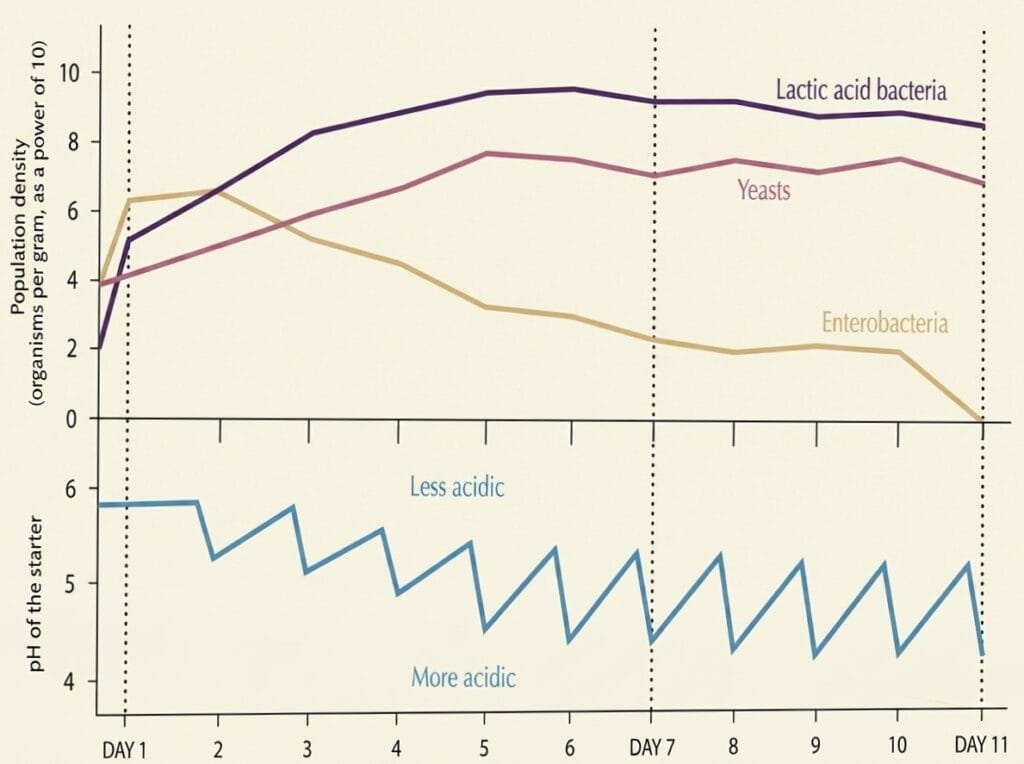
The steady drop in pH over 11 days due to regular feedings allows lactic acid bacteria and yeasts to dominate the ecosystem, driving the initial enterobacteria to near extinction.
The Initial Fermentation Phase
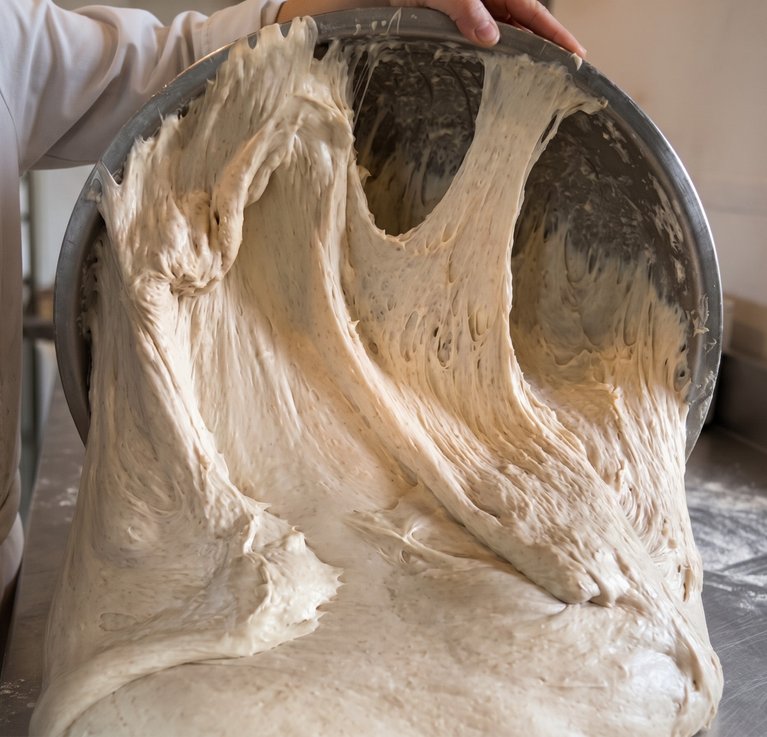
When flour and water first mix, the microbial environment is highly unstable. Using an immature starter at this stage could lead to unpredictable proofing times and inconsistent dough handling on automated equipment. During the first day of hydration, specific population dynamics occur:
As regular feeding schedules commence, the environment becomes progressively more acidic. By the fourth day, the pH dips below 5.0. This changing environment serves as a critical selection mechanism. Enterobacteria and weaker yeast strains that cannot survive the dropping pH and changing nutrient supply begin a rapid decline.
The Stabilization Phase
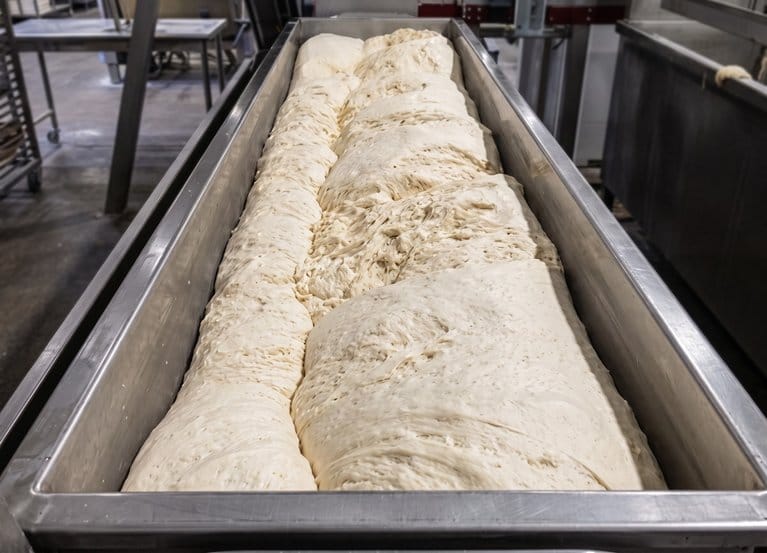
By the seventh day of the process, the relative numbers of each microbe type stabilize into a predictable hierarchy. This stabilization is necessary to prevent dough tearing or collapsing during high-speed mechanical dividing.
The Mature Culture and Line Integration
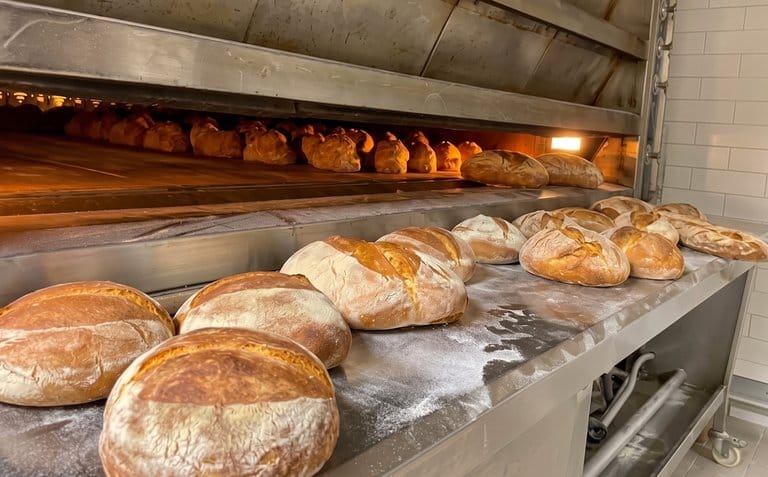
By day 11, the sourdough reaches full maturity. The starter transitions from a developing ecosystem into a highly predictable ingredient suitable for continuous dough mixing operations.
A stable, day-11 sourdough guarantees predictable acidification and consistent gas production. This baseline stability prevents downstream line jams caused by sticky or underdeveloped doughs and minimizes product waste, directly improving the overall throughput and profitability of the industrial plant.
😊 Thanks for reading!
Sources:
- Nathan Myhrvold and Francisco Migoya, Modernist Bread (2017)
For more insights on these industry topics, check out our analyses on When the Belt Goes Dark: Carbon Buildup in Baking Bands and the Technologies That Fix It, How Lactose Hydrolysis Can Help Reduce Sugar in Dairy-Based Bakery Products, and Dough Skinning in the Proofer: How Ultrasonic Humidification Prevents Surface Crust.