Industrial Cupcake Production; Managing Rheology for Cleaner Results
Messy drips and stringy tails on the production line are a constant headache; cleaning equipment stops the flow of profit. However, mastering batter rheology might offer a precise fix for smooth dosing and minimal waste.
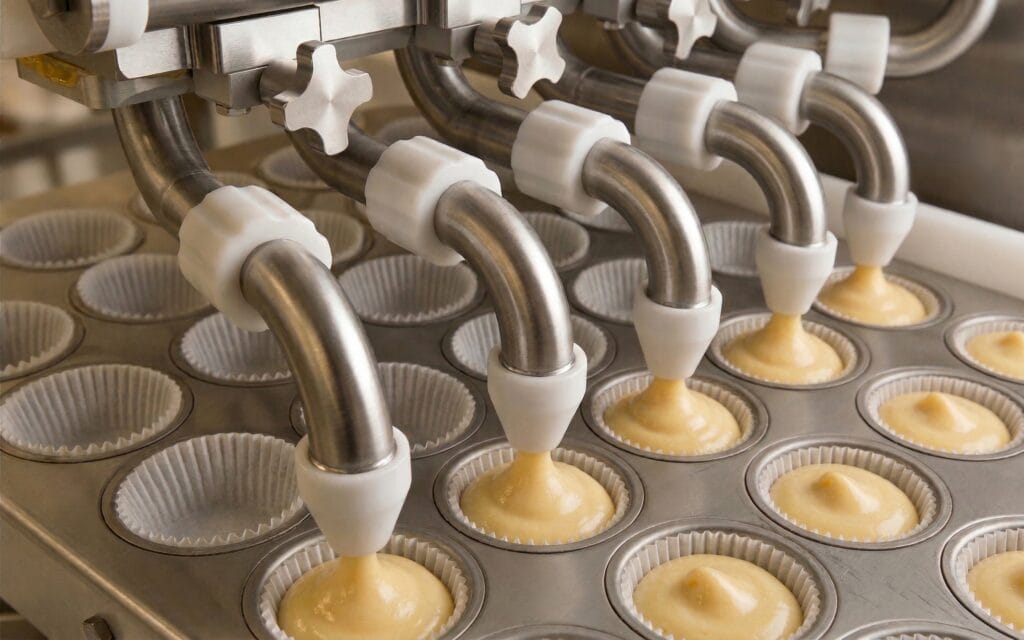
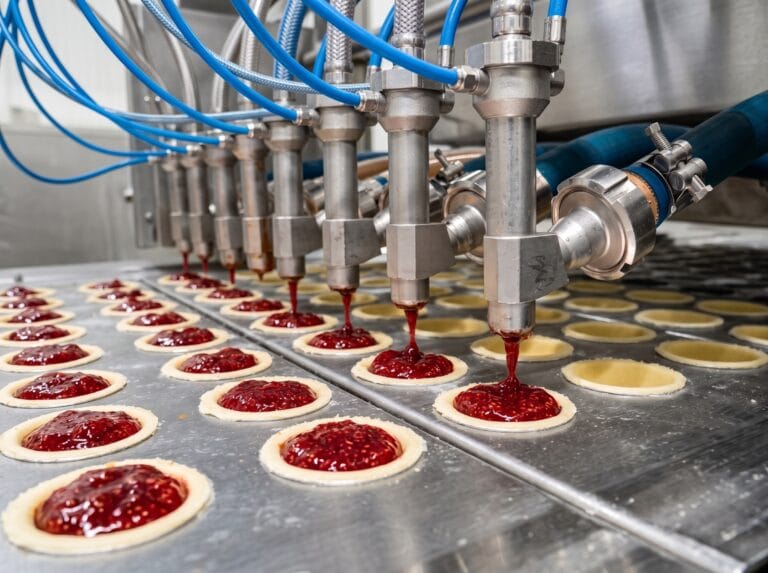
When the mixture passes through multi-head depositors, any deviation in fluidity could generate unwanted spills or the problematic “string effect”; this might affect final weight and equipment cleanliness. The key to mitigating these issues seems to be found in the rigorous control of rheology.
Hydration and Rheology: Controlling Cupcake Batter Flow
Water usually acts as the primary vehicle for the other ingredients. Excessive hydration levels might make the batter too liquid, facilitating possible drips. On the other hand, insufficient hydration could produce a mixture that is too dense, which might strain the pump motors.
Finding the exact balance should allow the batter to flow optimally under system pressure and stop cleanly when dosing ends.
Strategic Use of Hydrocolloids
Hydrocolloids, such as xanthan gum or guar gum, can represent excellent tools for modifying batter texture. These ingredients might provide pseudoplastic behavior; meaning the batter tends to decrease its resistance when subjected to the sheer force of the nozzle but usually recovers it almost immediately when flow stops.
Control of Fat Temperature
The thermal state of ingredients, especially fats, usually has a direct impact on fluidity. Fats crystallized at very low temperatures could harden the formulation; meanwhile, fats that are too hot might melt completely and drastically reduce mixture cohesion.
😊 Thanks for reading!
Sources: https://www.researchgate.net/publication/230532748_Rheological_properties_of_batter_dough_Effect_of_egg_level https://fhn.coperion.com/process/high-shear-mixer/
For further reading on key industry advancements, see our featured guides: Two Methods for Industrial Pizza Production, Inline NIR for Bakeries: Real-Time Quality Control for a Smarter Production Line, and Open Crumb vs Tight Crumb: The Hydration Factor.