Controlling Premature Crumb Staling: The Science Behind Japanese Milk Bread
Premature crumb staling and loss of softness reduce the shelf life of commercial pan breads. By using pre-gelatinized starch, the Tangzhong method increases water retention, securing a delicate alveolar network and extending product freshness on retail shelves.
The Tangzhong Method and Starch Gelatinization
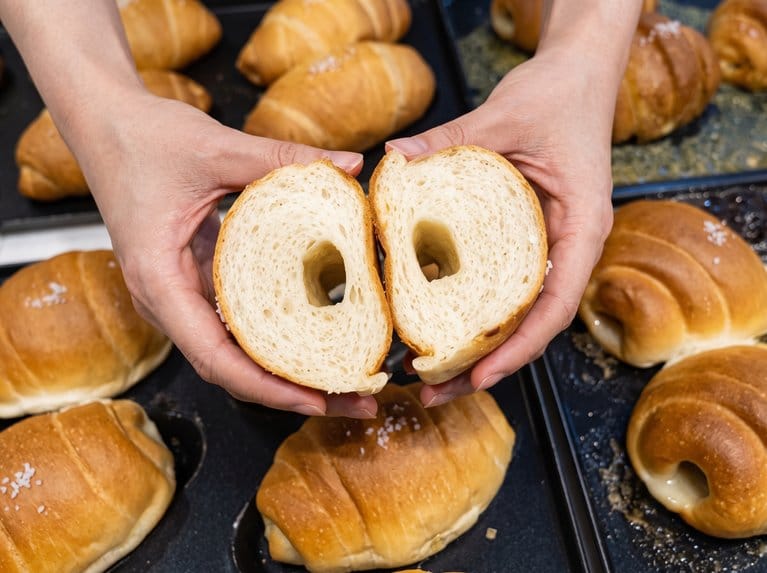
The structural softness of Japanese milk bread, known as shokupan, relies on a pre-gelatinized starch paste called Tangzhong or Yudane. This process involves heating a small portion of the recipe’s flour and liquid until the mixture reaches approximately 65°C.
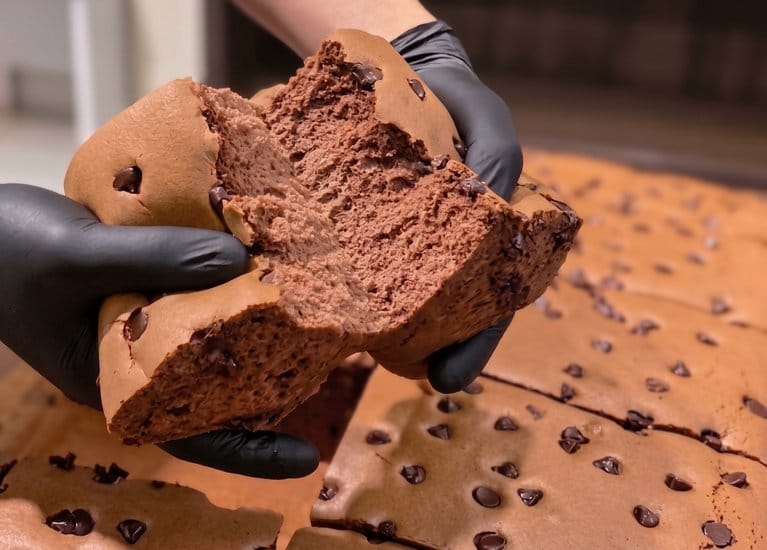
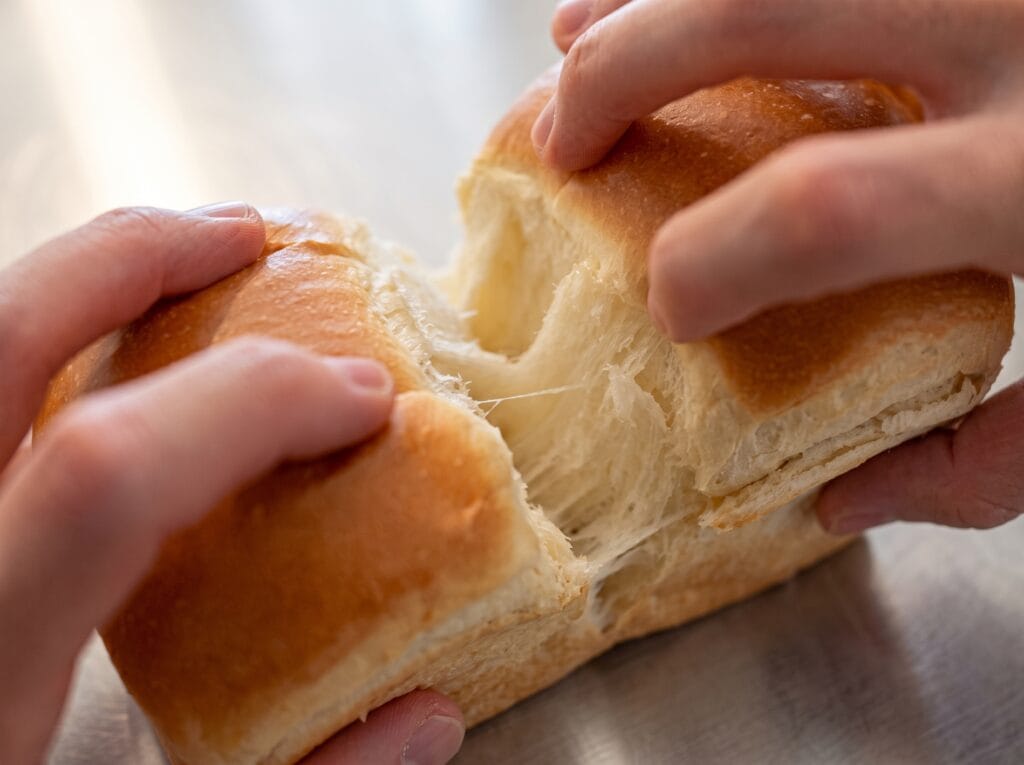
At this temperature, starch granules absorb water irreversibly and swell until they burst, a transition known as gelatinization. These modified starches trap and retain up to twice as much water as unheated flour. The trapped moisture remains bound through the mixing and baking stages, producing a finished crumb with high tenderness and resilience.
Ingredient Interactions in the Protein Matrix
Every ingredient in the formula performs a specific physicochemical role that determines crumb density and cell structure:
Viscoelastic Development in Knead-Free Systems
Developing a stable gluten matrix without high-speed mechanical shearing requires precise management of time and hydration. When flour sits in a highly hydrated state during a long rest, endogenous protease enzymes naturally break down protein chains.
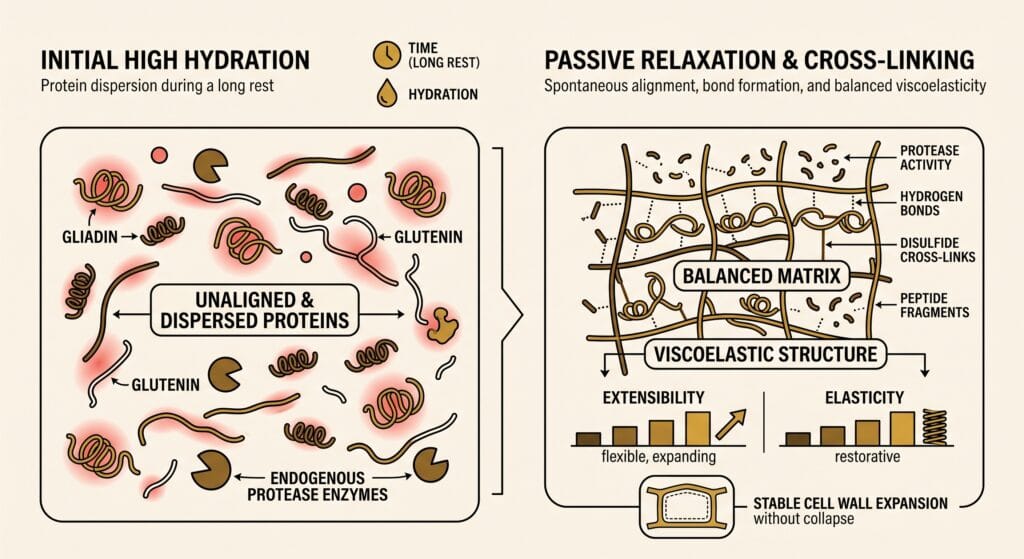
This passive relaxation allows gliadin and glutenin proteins to align spontaneously, forming hydrogen bonds and disulfide cross-links. The resulting matrix achieves a balanced ratio of extensibility, allowing cell walls to expand without tearing, and elasticity, which prevents the structure from collapsing during the early stages of baking.
Inhibiting Retrogradation to Extend Shelf Life
Bread staling occurs when amylose and amylopectin molecules, which become disordered during baking, begin to realign into a rigid crystalline structure, a process called retrogradation that forces water out of the crumb.
Because the Tangzhong paste binds water tightly and milk lipids form a protective barrier around the starch, this recrystallization process slows down significantly. The crumb retains its soft, elastic texture for several days without chemical preservatives. For industrial bakeries, this high moisture retention reduces product returns due to staling and improves ingredient yields.
😊 Thanks for reading!
Sources:
- https://bakeryinsider.com/milk-bread-so-soft/
- https://www.chefsteps.com/activities/shokupan-japanese-milk-bread
- https://www.youtube.com/watch?v=TGQyFOt-rv8