Hydration and Gluten Development: Comparative analysis of mixing technologies
When gluten fails to develop uniformly or temperatures rise uncontrollably, the final product reveals it. The challenge involves ensuring every flour particle receives free water homogeneously without oxidizing the mass or generating friction heat. Many technologies can be chosen according to each baker’s specific production needs.
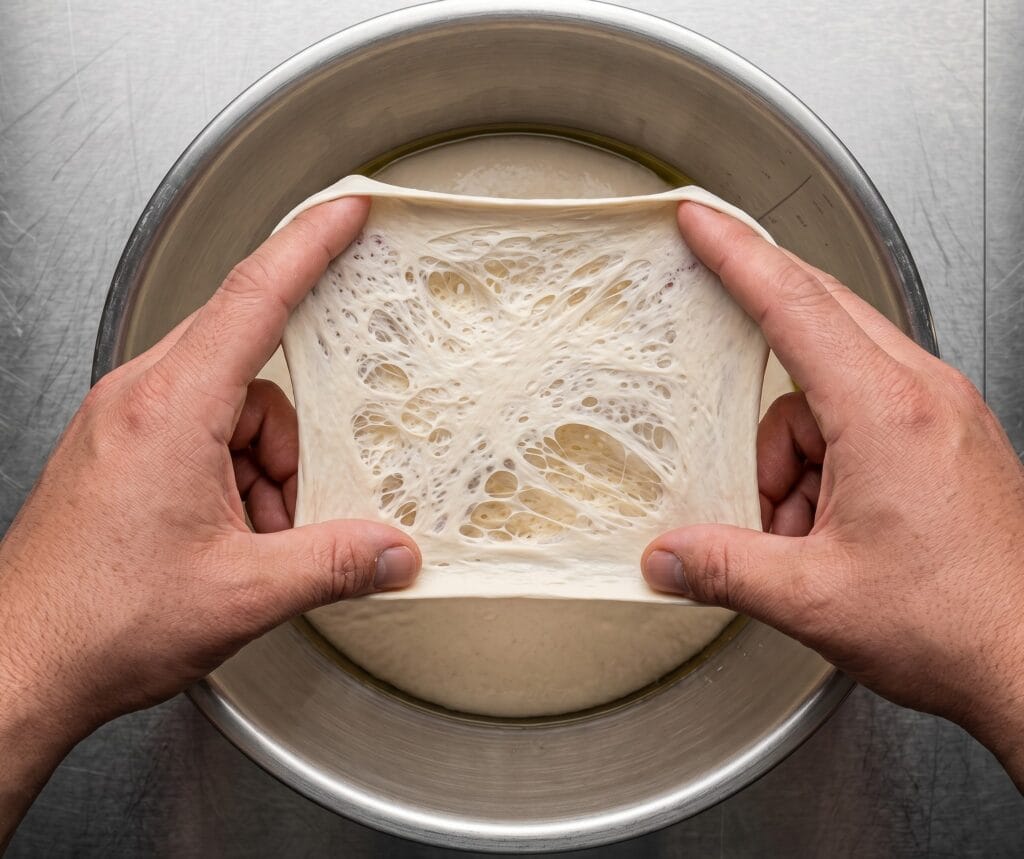
The Universal Goal: Homogeneous Hydration and an Optimal Protein Network
Regardless of the production scale or the technology used, all industrial mixers pursue the same goal: achieving uniform penetration of free water into every flour particle, facilitating the formation of the gliadin and glutenin network that constitutes the gluten structure.
Three physical variables condition this process in any mixing system:
Production scale, required versatility, and energy footprint are the factors that determine which technology is most suitable for each plant.
Kneading Technologies
Horizontal Spiral Mixer
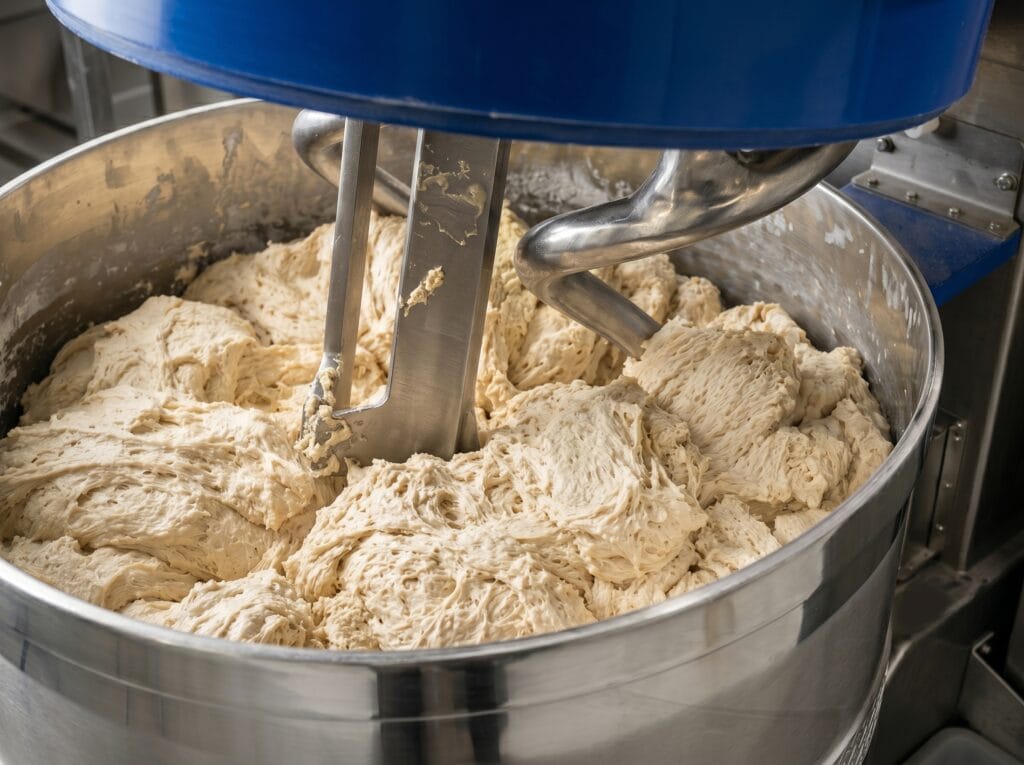
Spiral mixers are suitable for everything from artisanal production to high-volume batch processing lines. Their design facilitates gluten development through continuous axial movement, which minimizes air incorporation and ensures a controlled thermal increase.
Its main advantages include:
Its main limitation is operational rigidity: it is not the most flexible option for plants requiring high-throughput continuous mixing.
Double Arm Mixers
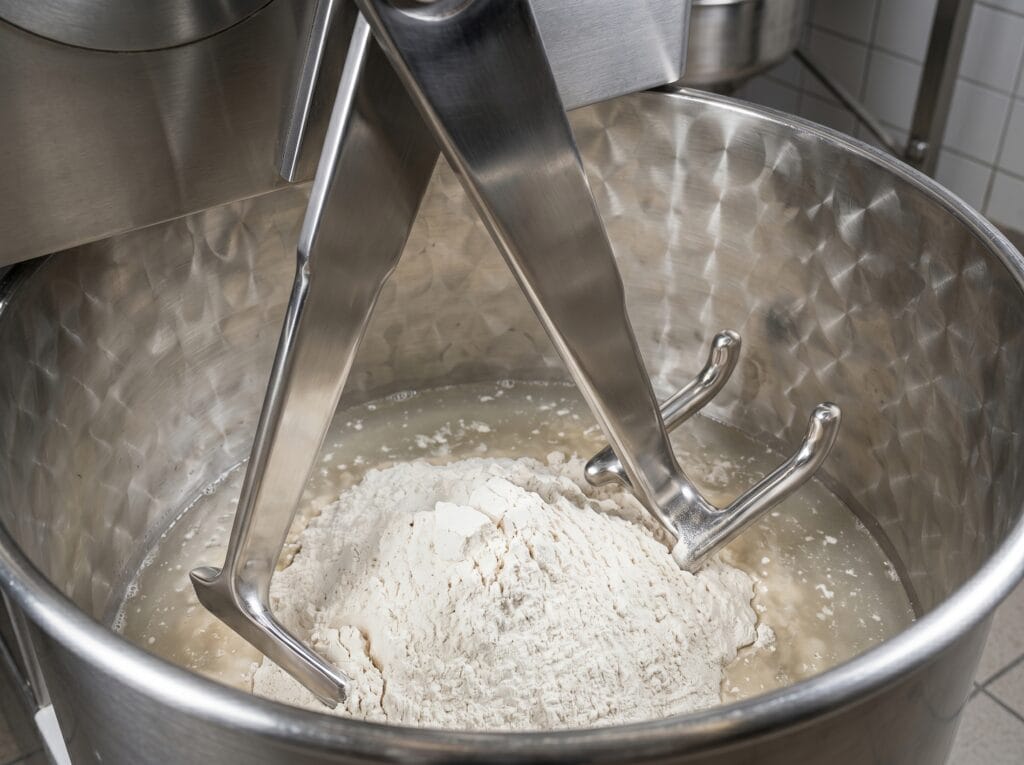
Double arm mixers replicate the manual folding movements of artisan bakers. Two mechanical arms dive into the bowl to stretch and lift the mass simultaneously.
Vertical Vacuum Mixers
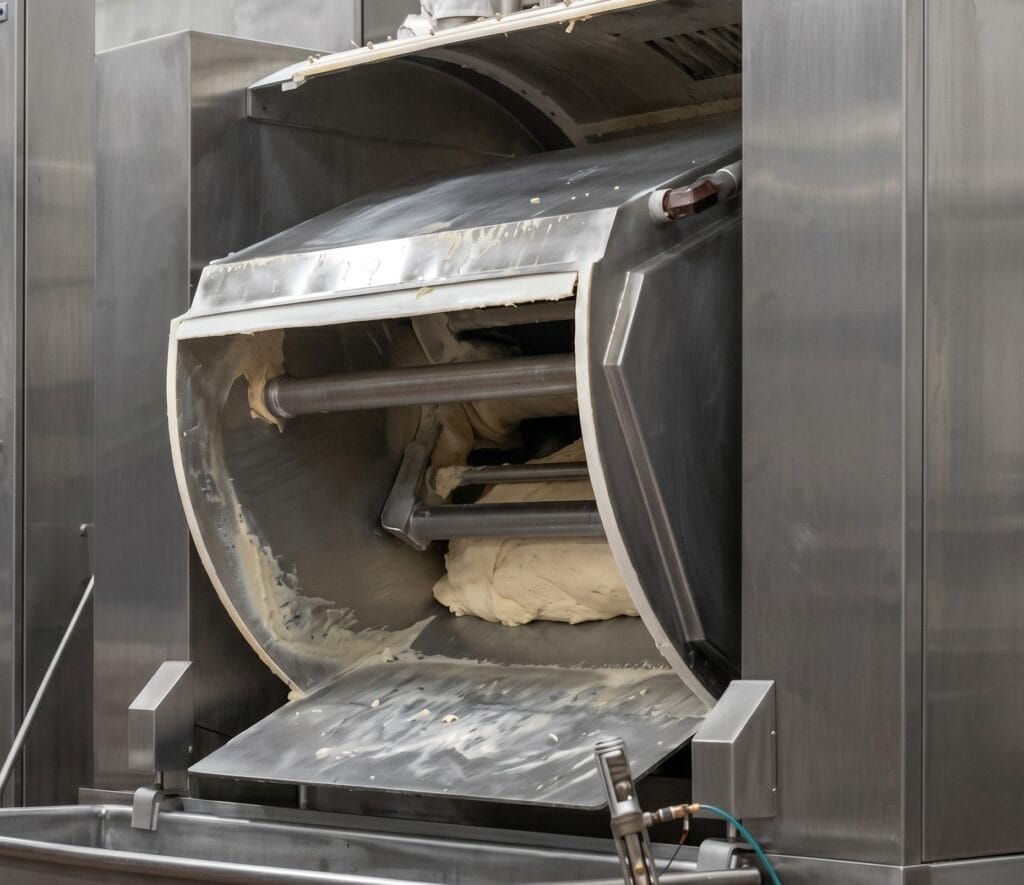
Vertical mixing under negative pressure allows precise control over the cellular structure of the dough. Extracting air from the bowl during the final stages of the mixing cycle prevents large gas pockets from expanding inside the matrix.
High-Pressure Hydration: The Rapidojet System
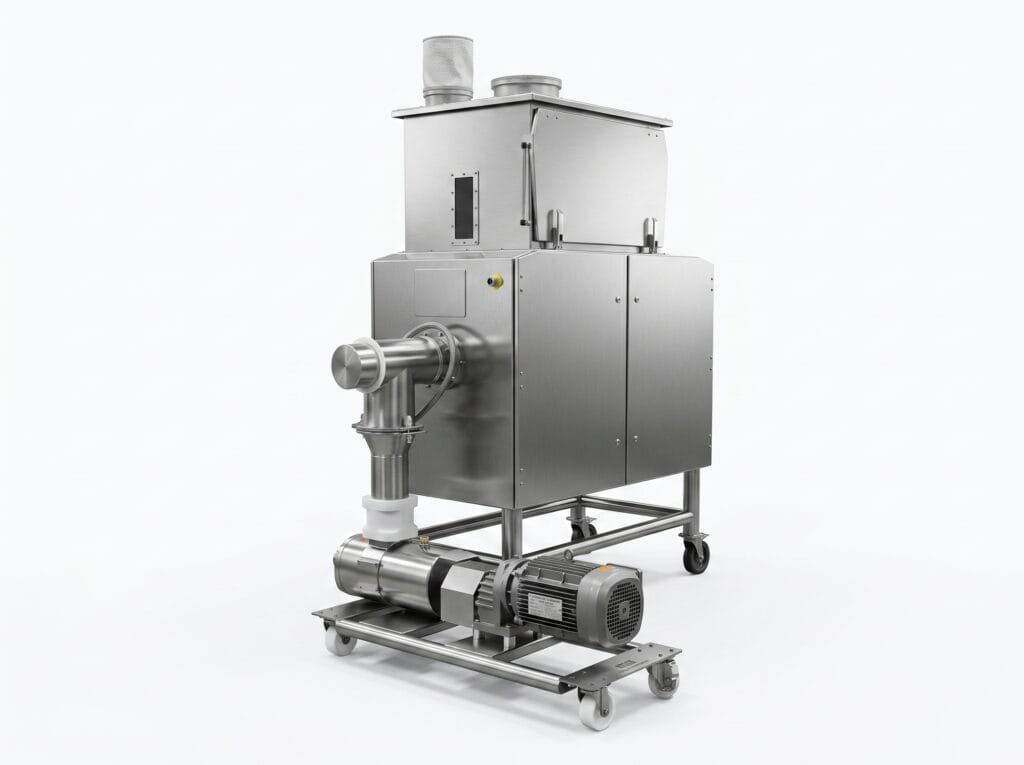
Rapidojet represents a conceptual innovation in mixing thermodynamics. Unlike conventional technologies, this system binds water and flour at the molecular level through high-pressure atomization before any significant mechanical friction is applied. The result is virtually instantaneous and homogeneous hydration from the very first contact.
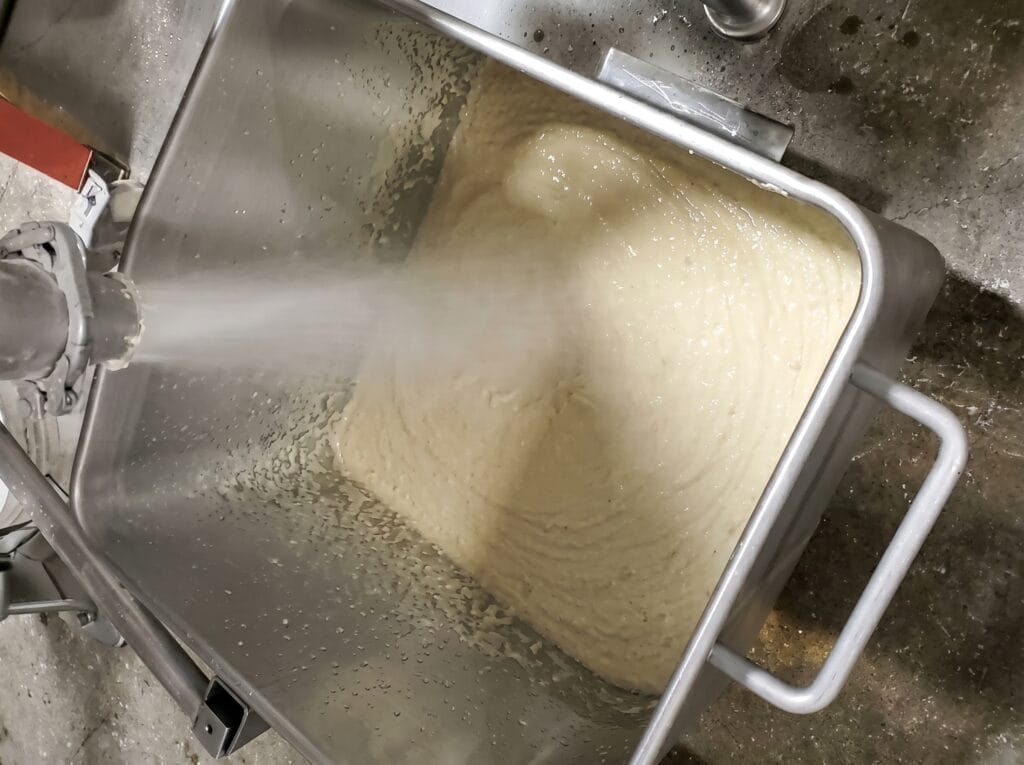
Its most prominent technical benefits include:
The Choice is Not Technical: It is Strategic
All these technologies are capable of producing quality doughs when operated correctly. The relevant question is not which one kneads best in absolute terms, but which one best fits the production profile, product mix, and business model of each plant.
😊 Thanks for reading!
Sources:
- https://www.sciencedirect.com/book/monograph/9780081007655/baking-problems-solved
https://www.bakeryconcepts.net/products/rapidojet/ - https://es.everand.com/book/345369994/El-pan-Manual-de-tecnicas-y-recetas-de-panaderia
- https://www.vmimixing.com/
- https://bakerpedia.com/bakery-concepts/
- https://www.biscuitpeople.com/magazine/post/rapidojet-mixer-advantages
- https://www.youtube.com/watch?v=QyQYZ83V9Eg
If you found this article helpful, explore our related coverage on Optimizing Rye Flour Structure, Why 71% of Consumers Just Want to Hear the Crunch?, and Thermodynamic Efficiency in Vertical Baking Systems..