Jams and Mold Claims in Industrial Bakeries: What Vision Systems and Hyperspectral Scanning Solve
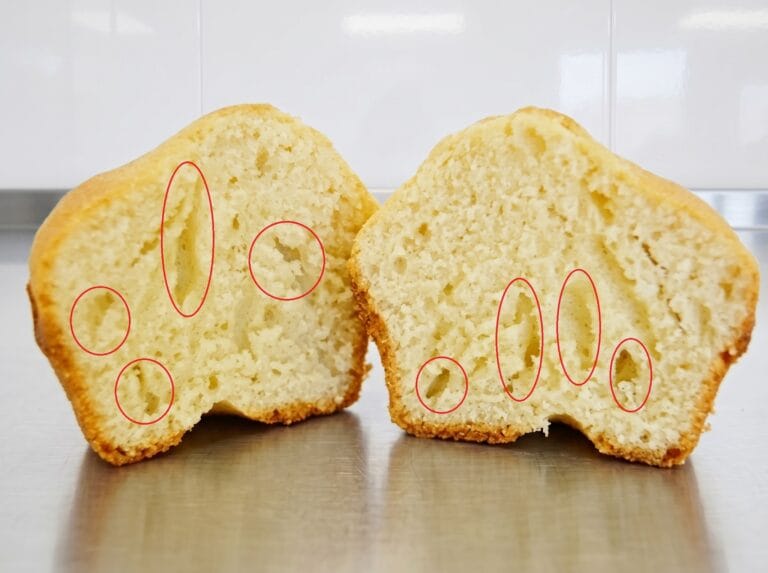
Morphological misalignments and undetectable internal moisture variations could cause severe jams and early mold growth in industrial bakery operations, compromising profitability by increasing product waste and customer claims. Advanced artificial perception systems could resolve this by continuously correcting robotic handling trajectories and mapping internal chemical anomalies.
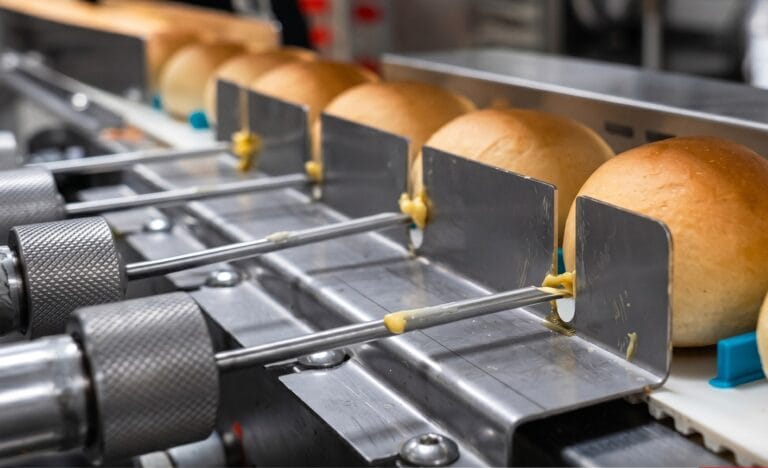
Handling baked goods at high speeds, often exceeding 100 meters per minute, easily outpaces the capabilities of traditional frame-based cameras. Older visual sensors introduce latency and motion blur.
When processing units receive delayed visual data, robotic arms calculate inaccurate coordinates for individual items. This timing failure could cause mechanical grippers to miss their targets, generating severe bottlenecks and crushing fragile crusts.
Moving to continuous tracking vision technologies solves this problem. The system records spatial variations with microsecond precision. This uninterrupted data stream allows Delta robotic systems to adjust their motion paths instantly.
Three capabilities define how these systems perform on the line:
Hyperspectral Scanning: Detecting What the Eye Cannot See
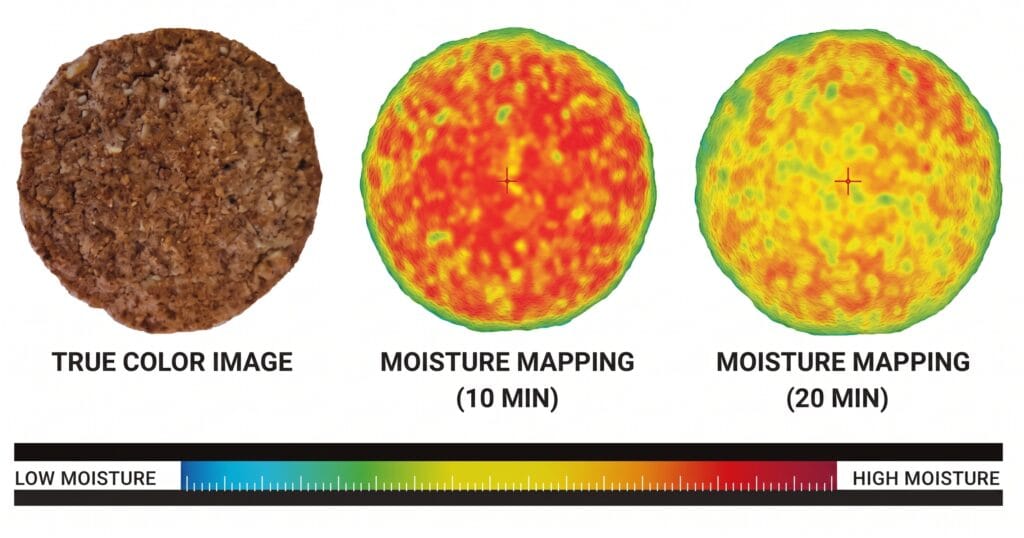
Securing perfect topography on the conveyor belt could solve only half the operational challenge. The external architecture may look perfect, but shelf-life stability is defined inside the food matrix.
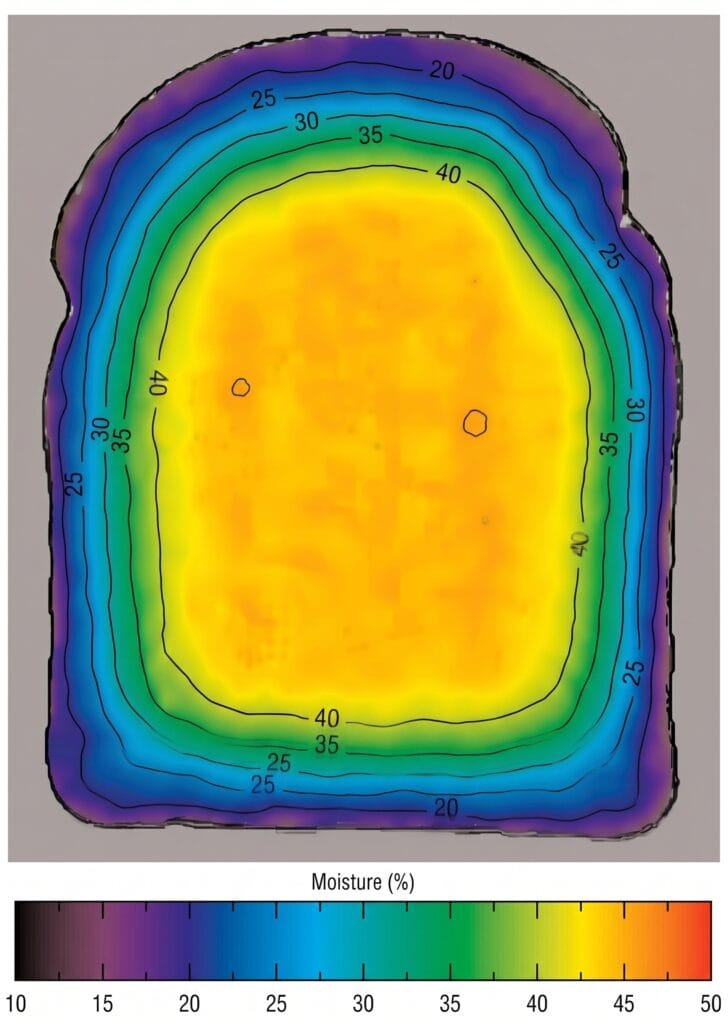
Conventional sensors measure broad surface moisture averages. They routinely fail to detect localized condensation zones caused by irregular cooling gradients.
The industry addresses this sensory limit by adopting hyperspectral scanning. This technology analyzes light reflectance across multiple electromagnetic wavelengths. The equipment captures spatial and spectral data to generate a complete three-dimensional moisture map of the crumb and crust.
This translates into three concrete operational advantages:
As sensor architectures converge, isolated packaging machines are evolving into responsive analytical networks. Combining spatial data for robotic kinematics with spectral data for water activity auditing means that only mechanically and microbiologically stable products reach the final wrapping stage, turning quality control from a downstream filter into a continuous upstream process.
Sources:
- https://www.specim.com/hyperspectral-imaging-applications/food-quality-and-safety/
- https://deltastark.com/blogs/ai-robotic-vision-systems-reduce-waste-boost-food-packaging/
- https://www.syntegon.com/solutions/food/robotic-packaging/
- Gowen, A.A. et al. (2007). Hyperspectral imaging, an emerging process analytical tool for food quality and safety control. Trends in Food Science & Technology. https://doi.org/10.1016/j.tifs.2007.06.001
- https://www.kpmanalytics.com/blog/how-is-hyperspectral-imaging-used-in-food-processing
For further reading on key industry advancements, see our featured guides: Streamlining Production with Automated Panning, Innovation: Unlocking In-Situ Emulsification Without Sensory Defects., and Solid-State Enzymatic Engineering: Redefining Logistics.