How Corn Tortilla Production Works: Key Process Steps and Quality Factors
In the industrial production of corn tortillas, raw grain must undergo a series of chemical transformations to achieve a manageable and sufficiently elastic dough that can pass through the extrusion and sheeting processes without tearing.
How Nixtamalization Builds the Dough’s Structural Foundation
The nixtamalization process involves the steeping and alkaline cooking of corn, which alters the grain’s cellular structure. Calcium hydroxide is typically used, raising the mixture’s pH to approximately 11.
This highly alkaline environment causes chemical changes in the grain that are critical for water absorption:
Friction and Emulsion in Wet Milling
The hydrated corn enters mills to be transformed into a manageable dough. These machines grind the grain using volcanic stones driven by robust motors, whose capacity varies depending on the production volume: from 8 inches for small-scale operations, up to 16 inches for medium scale.
For massive, uninterrupted production levels, due to the extreme wear and tear suffered by natural volcanic stone, massive synthetic abrasive discs are used, generally made of aluminum oxide or carborundum, with dimensions ranging from 30 to 40 inches in diameter.
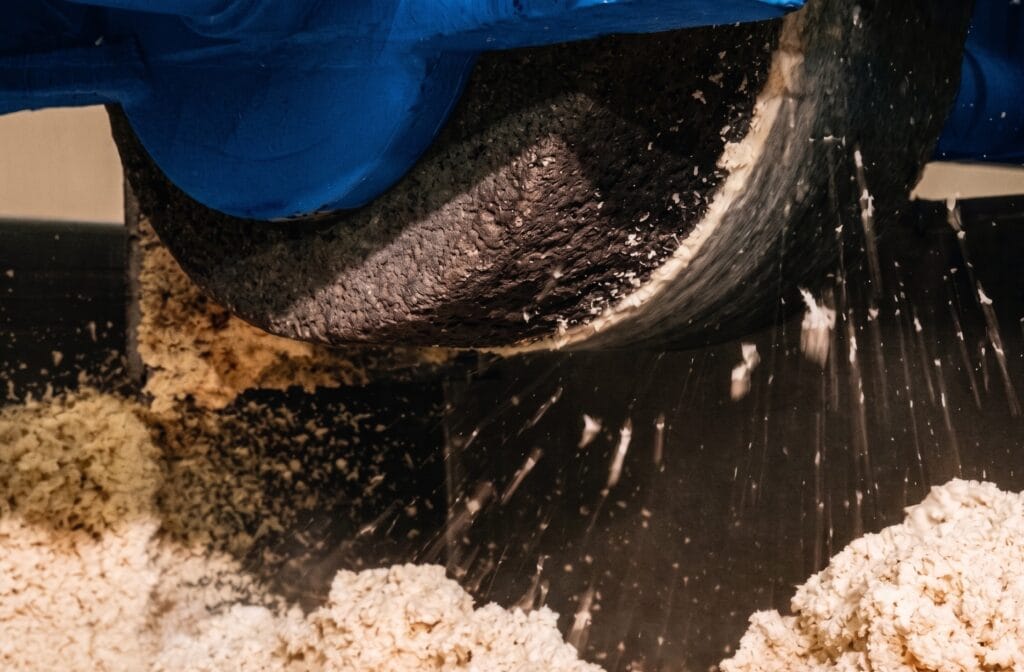
The friction generated between the stones or discs performs multiple simultaneous mechanical functions:
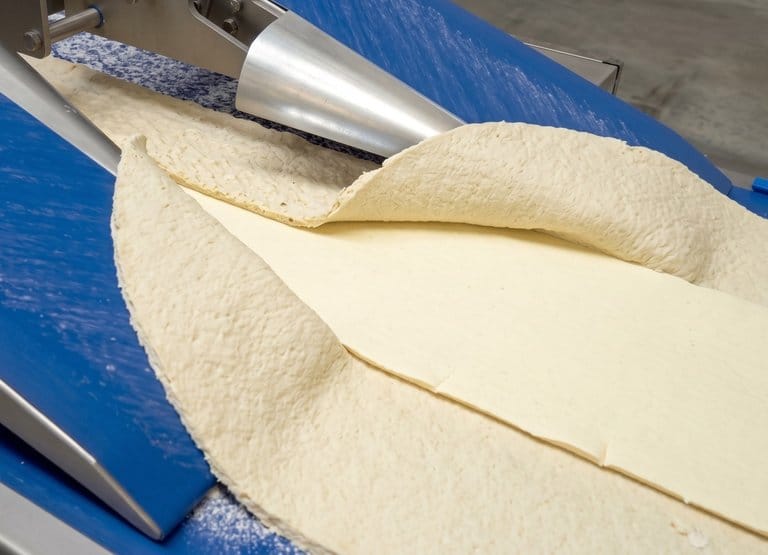
Sheeting, Cutting, and Rework Integration: Managing Dough Through the Line
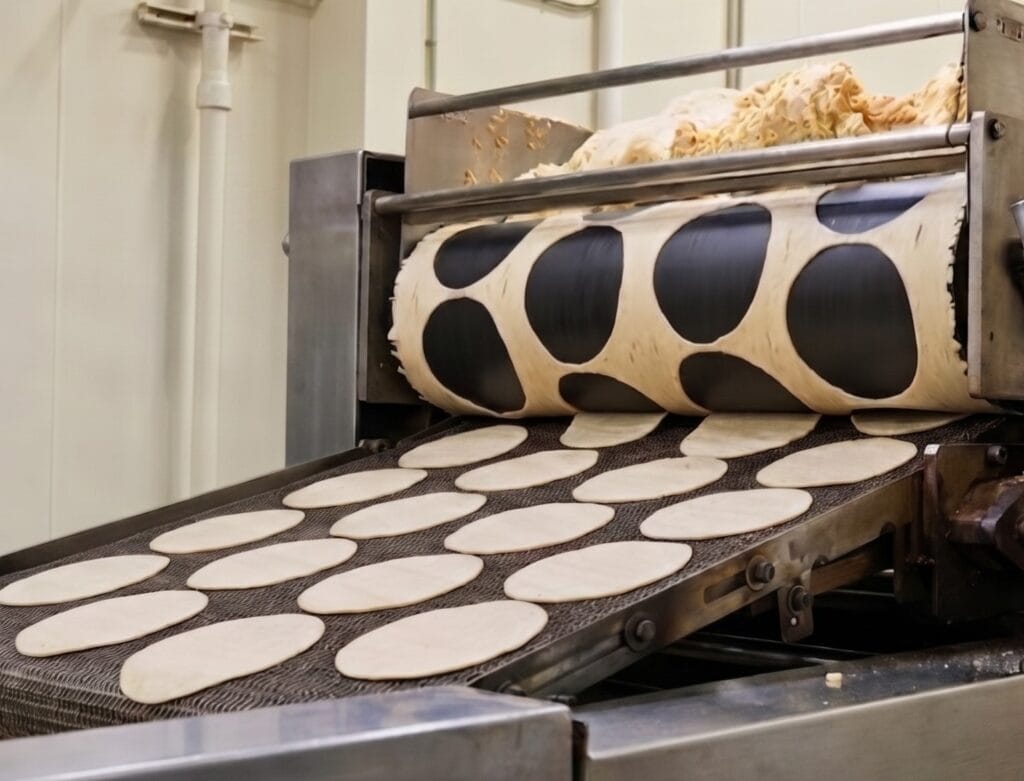
Lacking the viscoelastic matrix of wheat, the structure and rheological behavior depend entirely on the emulsion of starches and lipids achieved in the previous steps.
The flow through the extrusion equipment presents the following characteristics:
Thermal Shock in Three-Tier Ovens
After cutting, the raw pieces enter a continuous baking system. The universal standard in the corn tortilla industry is the use of three-tier (or three-pass) ovens. The burners apply direct heat and raise the temperature of the metal belts to typical operating ranges that fluctuate between 500°F and 650°F (260°C – 340°C), depending on the dough’s thickness and line speed.
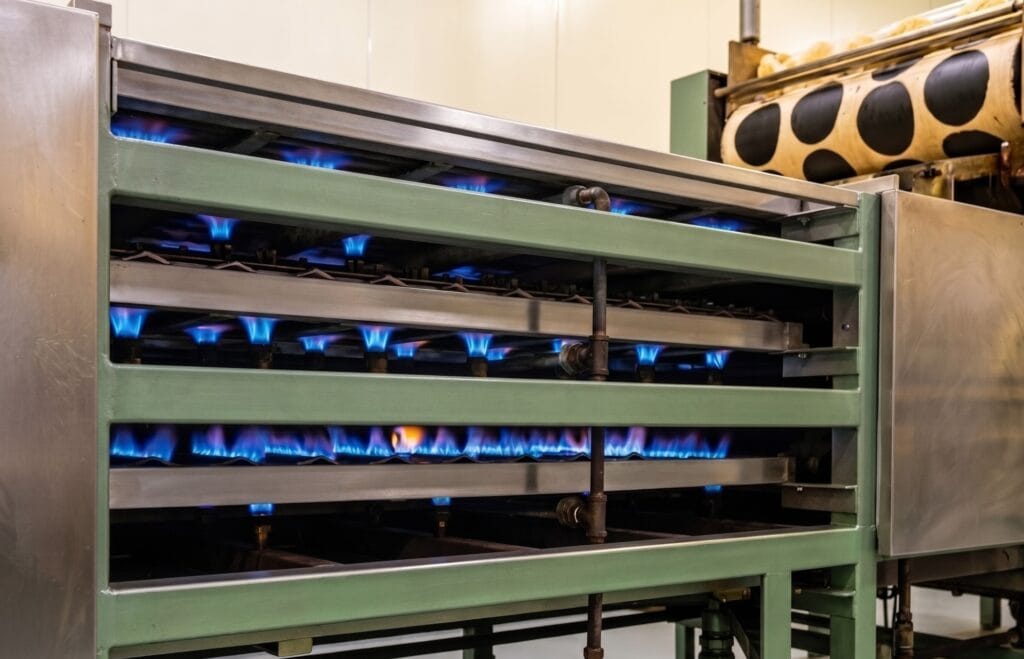
This three-tier design is necessary to replicate traditional cooking and achieve precise thermal objectives in the dough:
Cooling Conveyors and Moisture Control: The Last Line of Defense Against Spoilage
The tortillas exit the oven retaining a considerable thermal load. The product immediately enters cooling conveyor belts of up to 5 tiers that snake through the plant.
In clean label processes or traditional methods, this extensive acclimatization route defines the final product’s shelf life:
Sources:
- https://bakeryinsider.com/mastering-high-volume-tortilla-manufacturing/
- https://www.intechopen.com/chapters/55213
- https://pmc.ncbi.nlm.nih.gov/articles/PMC11811476/
- https://www.scribd.com/document/436625135/Proyecto-Productivo-Harina-de-Maiz-Nixtamalizado-PDF
- https://www.youtube.com/watch?v=RhjkPrltrD4
To deepen your understanding of these market trends, you may also find our articles on Lye Application for the Perfect Mahogany Crust., From Pneumatics to Electromagnets: Cutting Pan Handling Costs in Industrial Bakeries, and Natural Preservation for Longer Shelf Life: New Developments in Smart Packaging highly valuable.