The Day Packaging Engineering Changed the Baking Industry Forever
On July 7, 1928, the Chillicothe Baking Company in Missouri sold the world’s first commercial sliced bread: Kleen Maid Sliced Bread. Beyond a simple mechanical milestone, this breakthrough represented one of the most significant process engineering revolutions in the history of the food industry.
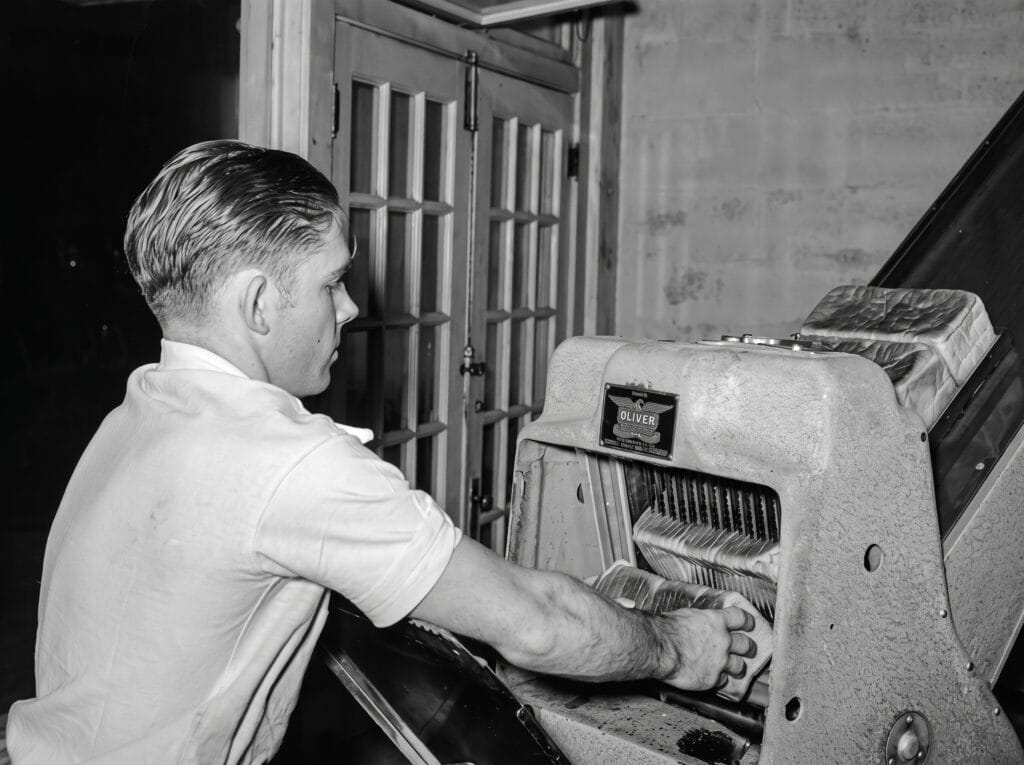
The Physical Limit of the Whole Loaf
Before 1928, the baking industry faced an insurmountable technical barrier. Bread had to be distributed and sold as a whole loaf to preserve its freshness. Attempting to commercialize pre-sliced bread meant drastically accelerating its staling process.
By slicing the bread prior to distribution, bakeries faced two critical physical challenges:
Reciprocating Blades: Solving Crumb Rheology
Otto Frederick Rohwedder’s true genius was not just designing a knife, but engineering a system that respected the delicate alveolar structure of soft bread.
Traditional slicers of the era squashed the product, tearing the gluten network apart due to compressive forces. Rohwedder’s solution consisted of a set of alternating, synchronized reciprocating band blades.
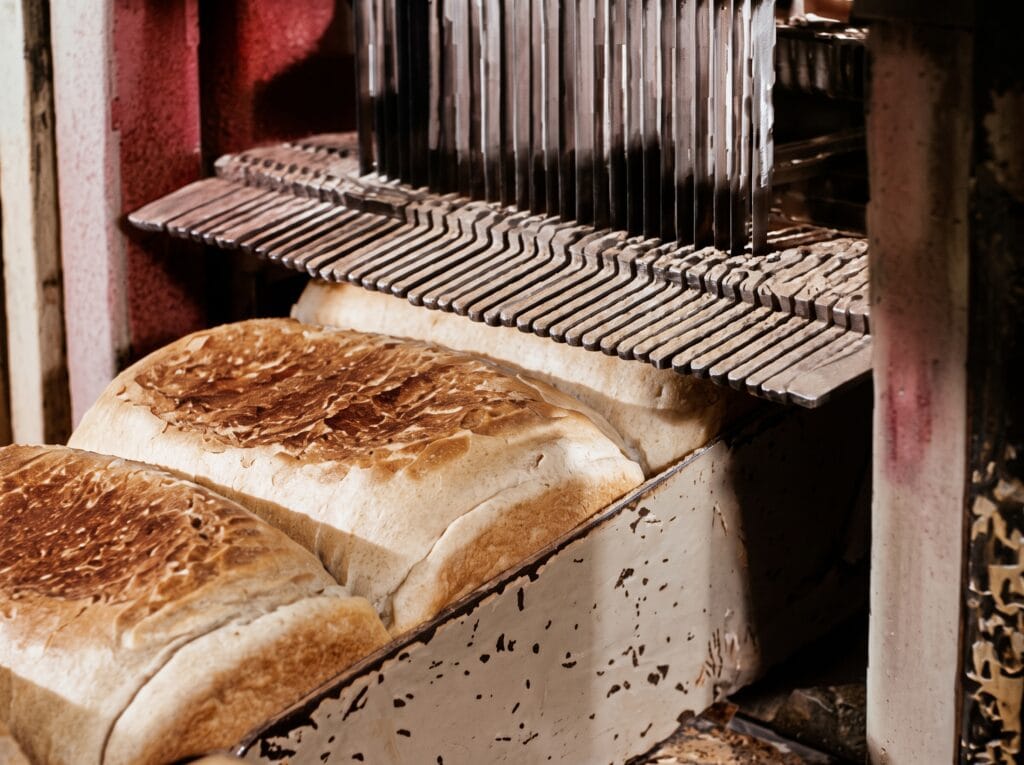
This mechanism applied pure shear force to the product. By reducing friction to a minimum, the machine sliced through the loaf without deforming the alveoli or releasing the moisture trapped within the starch gel structure.
Absolute Synchronization: Slicing and Confinement
The real brilliance of the 1928 process lay in the fact that the slicer operated in a continuous line with a packaging station. Slicing the bread and leaving it exposed to the plant’s air would have ruined the batch due to mold contamination and moisture loss.
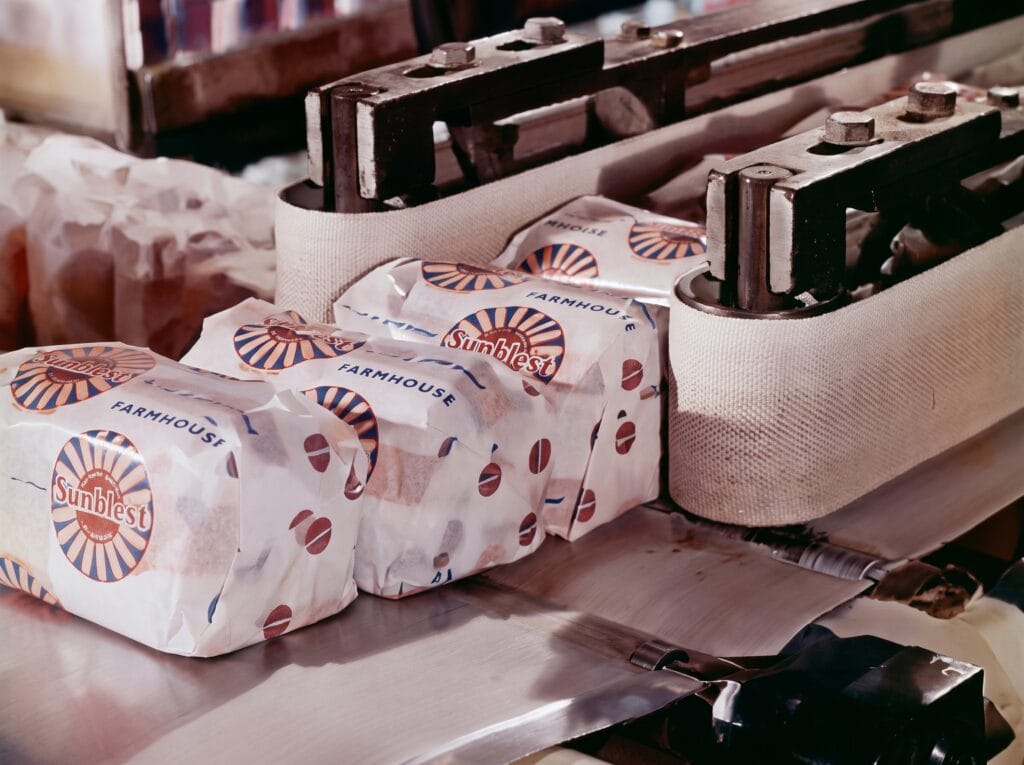
The machine resolved this critical bottleneck through an automated sequence:
The Domino Effect on Industrial Baking
Market response was immediate, the bakery’s sales skyrocketed by 2,000% within weeks, forcing the entire sector to reconfigure automated plants to standardize the process. Sliced bread drove industrial evolution across multiple areas:
😊 Thanks for reading!
Sources:
- https://www.britannica.com/today-in-history/July-7-The-Long-Road-to-Sliced-Bread
- https://time.com/3946461/sliced-bread-history/
- https://www.smithsonianmag.com/arts-culture/why-we-have-sliced-bread-116065095/