Fermentation and Preferments: The Science Behind Better Bread
Bread lacks depth. The crumb is bland, the crust smells of little, and more yeast only makes things worse. The issue is not the formula; it is the fermentation strategy. Understanding how preferments work, and choosing the right one, may be the most impactful change a baker can make.
Fermentation is the process that truly defines the final product. When yeast and lactic acid bacteria interact with flour and water, they produce carbon dioxide, ethanol, organic acids, and a range of flavor compounds that no ingredient list could easily replicate.
Combined with baking, this activity turns a simple leavened dough into bread with complex flavors, pleasant aromas, and a tender crumb. Fermentation processes typically encompass several stages, including preferments, bulk fermentation, and final proofing.
The Science of Bread Fermentation: How Yeast Drives Quality
Yeast is unusual as an ingredient. Unlike flour or salt, it must be nurtured as well as controlled, coaxed into thriving without being allowed to run out of control. As a living organism, it remains active until dough temperatures reach approximately 50-60°C in the oven.
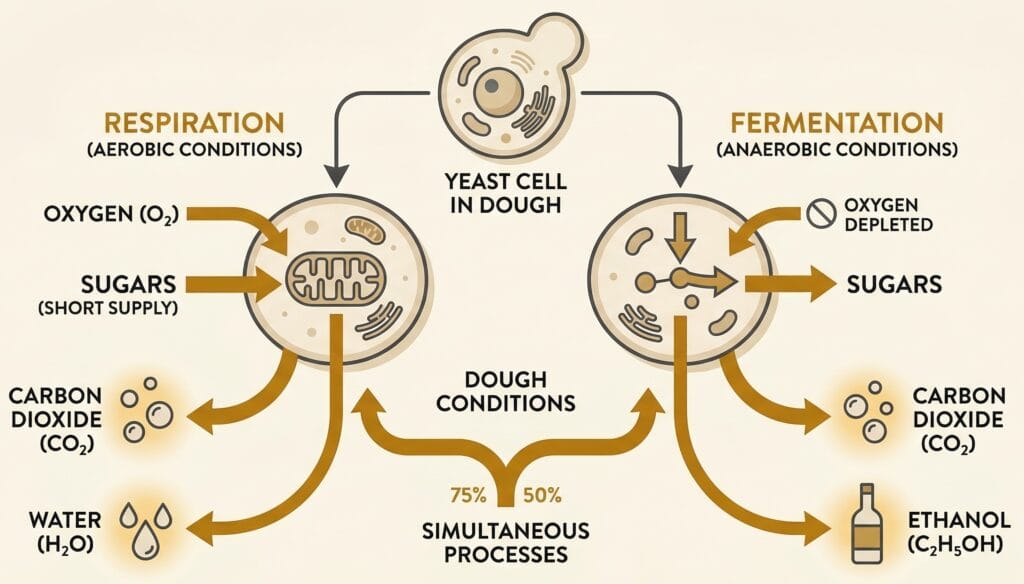
When oxygen is present and sugars are in short supply, yeast expels carbon dioxide and water in a process known as respiration. When oxygen runs out, yeast switches to fermentation, producing ethanol alongside CO2. The yeast may perform both processes simultaneously depending on dough conditions.
The CO2 produced dissolves into the aqueous ph
The ethanol produced by the yeast may be broken down into acetic acid by lactic acid bacteria. Together, these bacteria also secrete enzymes that break down starch into simple sugars the yeast can consume, completing a feedback loop that sustains fermentation while building flavor complexity.
Several factors influence the rate of fermentation:
Choosing a Fermentation Method
There could be three primary ways to incorporate yeast into a dough: adding commercial yeast directly, using a preferment, or combining both approaches.
The direct dough method might be fast and efficient, but the trade-off could be a bread with less-developed flavors. Using a preferment typically involves inoculating a portion of the ingredients with commercial yeast or levain, then leaving it to ripen over several hours. This might not be as quick, but the final bread tends to have more developed flavor.
Combination fermentation might utilize commercial yeast together with a levain. Dough made this way might be ready slightly later than a directly fermented dough, but it could carry a more pronounced flavor than a quickly proofed bread, and the wait is considerably shorter than a pure sourdough process.
What Is a Preferment?
A preferment is considered a foundational dough. It is a portion of the recipe’s flour, water, and leavening agent prepared ahead of the final mix. Preferments could add flavor and contribute to gluten development, and they all share the fundamental purpose of improving the texture and taste of the final bread.
When flour and water sit together with yeast over several hours, several processes unfold:
The composition of preferments varies, but they all help reduce mixing time and improve gluten structure in the final dough.
The Four Main Preferment Types
1. Poolish
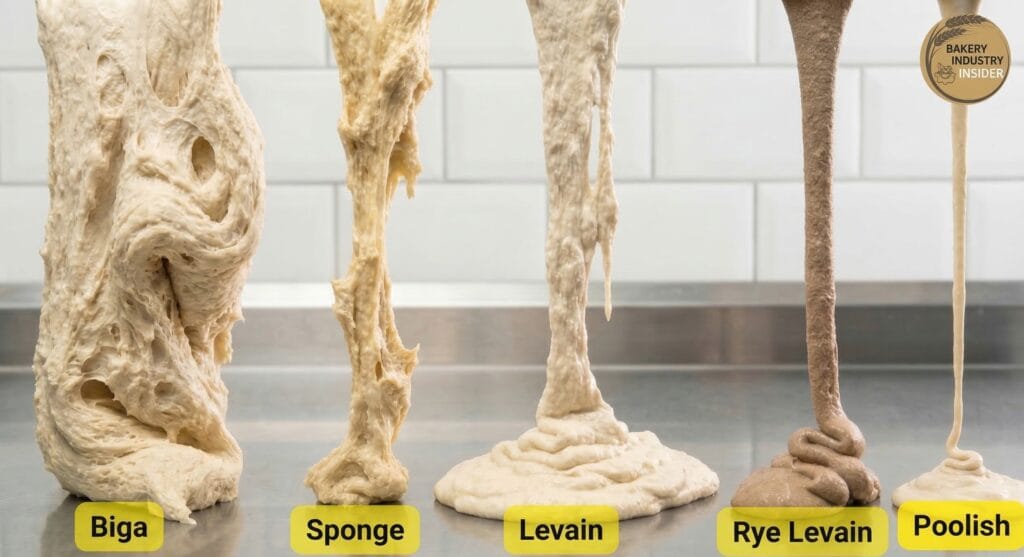
It’s a wet preferment made with equal weights of flour and water, resulting in 100% hydration. Kept at around 20 to 24°C, a poolish might take 12 to 15 hours to mature. It should be ready when it has reached its maximum height and gives off a distinct fruity aroma.
2. Biga
It’s considered the traditional Italian counterpart to the poolish, but it tends to be considerably stiffer. It generally uses approximately 50% water relative to flour by weight, giving it a crumbly, firm texture. A biga might rest anywhere from 3 to 20 hours, allowing the yeast to adapt to the dough environment before the final ingredients are incorporated.
3. Sponge
It typically contains 50% to 80% of the recipe’s total flour. Fermentation time could vary widely, from 3 hours up to 20 hours for overnight versions. In industrial baking, a quarter sponge fermented for 16 hours at 20°C might be used to intentionally enrich the flavor profile.
4. Pâte Fermentée (Old Dough)
Old dough might be considered the most straightforward preferment conceptually; it generally consists of a portion of fully mixed bread dough saved from the previous day’s batch. By incorporating yesterday’s fermented dough, bakers might introduce lactic and acetic acids that not only deepen the flavor but could also lower the final pH of the dough, potentially acting as a natural preservative.
Levains and Mother Doughs
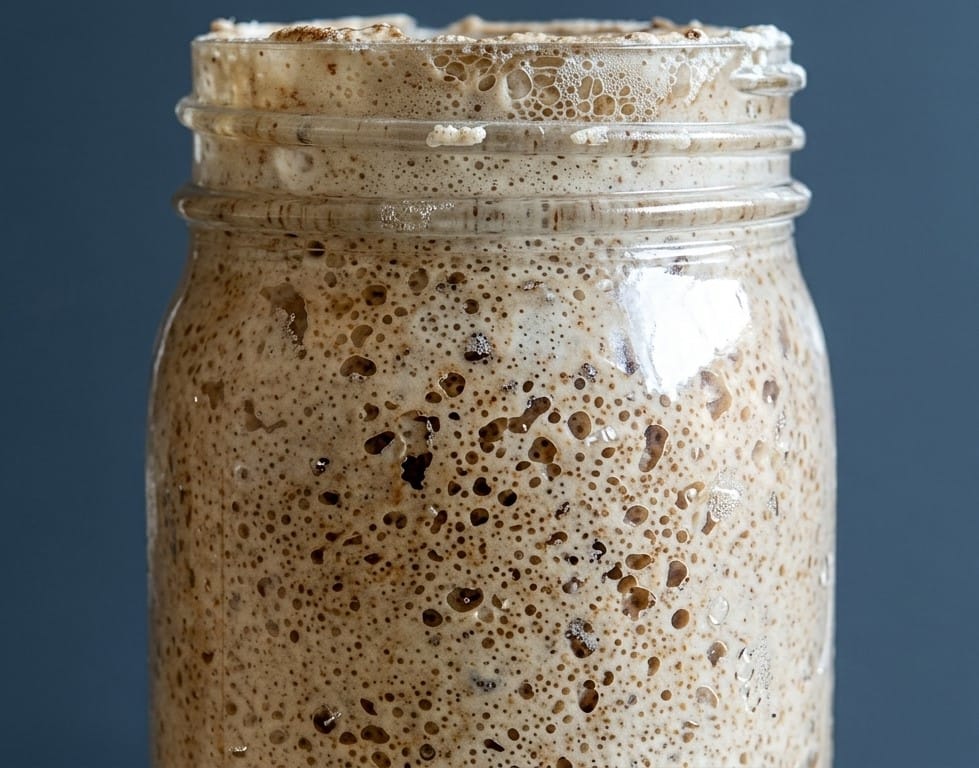
Preferments should not be confused with levains or sourdough starters. A levain is a living ecosystem, a mixture of water and flour fermented by wild yeasts and lactic acid bacteria from the environment. Unlike a sponge, which is made fresh for a single batch and fully consumed, a levain is perpetuated by retaining a portion and feeding it with fresh flour and water.
Importantly, a levain is not stable without the lactic acid bacteria that symbiotically coexist with the wild yeast. Its composition is almost certain to change in long-lived starters; think of it like a city, whose population shifts and evolves over time. What matters is not locking in a specific population of bacteria but creating a colony of yeasts and lactic acid bacteria that behaves predictably: fed on the same schedule, kept at the same temperature and hydration, and therefore ripening as expected.
Some bakers dismiss commercial yeast as not producing “real” fermentation. That purist view may not serve the industry well. Fermentation is fermentation, whether it involves levains or commercial yeast. One method is not inherently more legitimate than the other.
😊 Thanks for reading!
Sources:
- Cauvain, S.P. & Young, L.S. Baked Products: Science, Technology and Practice. Blackwell Publishing, 2006.
- Cauvain, S.P. & Young, L.S. Bakery Food Manufacture and Quality: Water Control and Effects (2nd ed.). Wiley-Blackwell, 2008.
- Cauvain, S.P. & Young, L.S. Technology of Breadmaking (2nd ed.). 2007.
- Cauvain, S.P. Baking Problems Solved (2nd ed.).
- Zhou, W. & Hui, Y.H. (eds.). Bakery Products Science and Technology (2nd ed.). Wiley-Blackwell, 2014.
- Jagarlamudi, L. Bakery and Confectionery Products: Processing, Quality Assessment, Packaging and Storage Techniques. 2023.
- Lamb, N. Sift: The Elements of Great Baking. 2024.
- Buehler, E. Bread Science: The Chemistry and Craft of Making Bread. Two Blue Books, 2006.
- Edwards, W.P. (ed.). The Science of Bakery Products. Royal Society of Chemistry, 2007.
- Calvel, R. The Taste of Bread.
- Modernist Bread (Volume 3: Techniques and Equipment).
- Justlong in Food: Factors Influencing Yeast Fermentation and Quality Assessment. https://justlonghealth.com/analysis-of-factors-affecting-yeast-fermentation-and-evaluation-of-yeast-quality/
- MDPI: Impact of Ferment Processing Parameters on the Quality of White Pan Bread. https://www.mdpi.com/2076-3417/11/21/10203
- PMC – NIH: A Review on Factors Influencing the Fermentation Process. https://pmc.ncbi.nlm.nih.gov/articles/PMC8970856/
Enhance your technical knowledge with our detailed resources on Why Whole Wheat Flour Ferments Faster Than White Flour, Hand vs. Machine: Craftsmanship, Economics and Scaling in Bread Decoration, and How Gluten Forms.