Why Danish and Croissant Doughs Require Fewer Lamination Layers Than Puff Pastry
Yeast-leavened laminated doughs demand a distinct layering strategy compared to puff pastry. Reducing the total number of fat layers could help preserve flaky structure against the mechanical stress that fermentation imposes on dough integrity during proof.
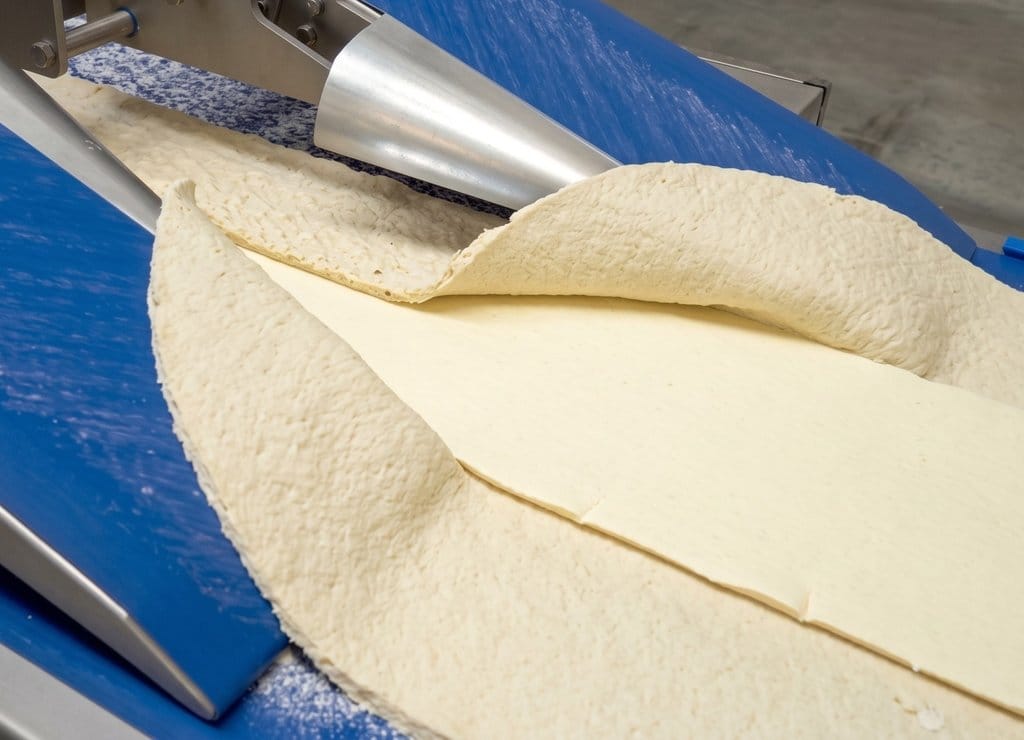
Yeast as a Structural Disruptor in Laminated Systems
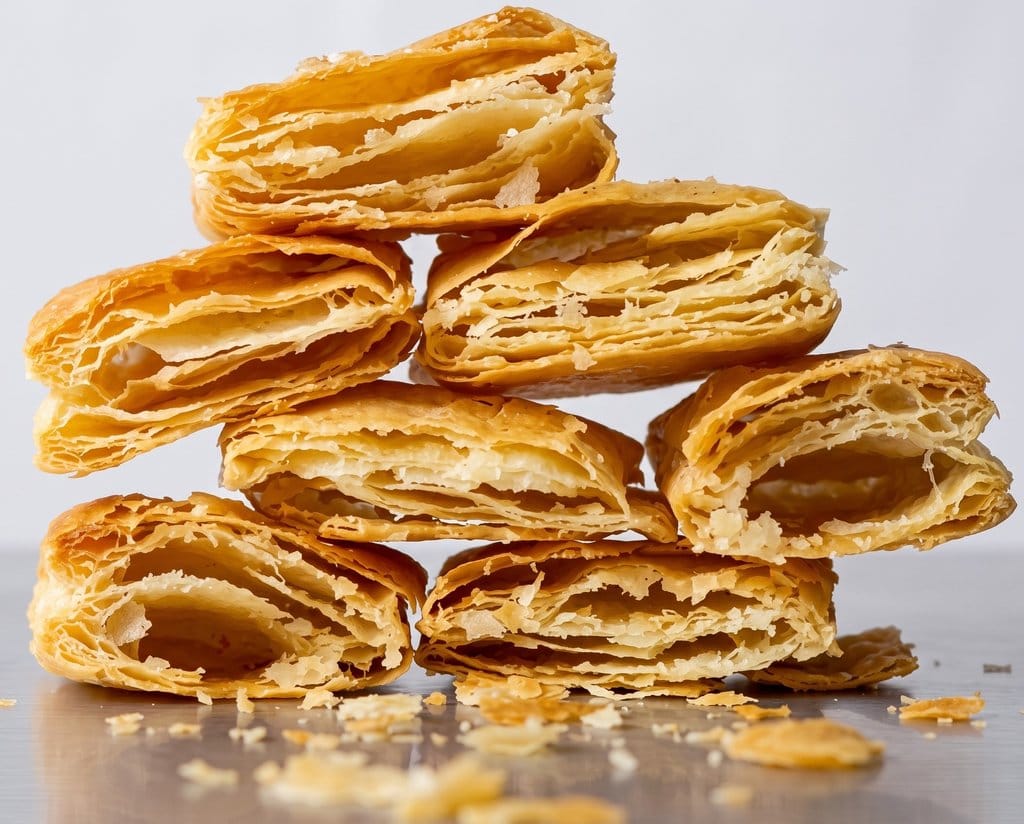
In puff pastry, aeration depend entirely on steam generated during baking, which inflate and separate thin dough-fat layers.
Danish pastries and croissants introduce a second aeration source, bakers’ yeast. This yeast-driven gas production would contribute significantly to volume development during proof and oven spring, but it could also compromise the laminated structure in ways that puff pastry never encounters.
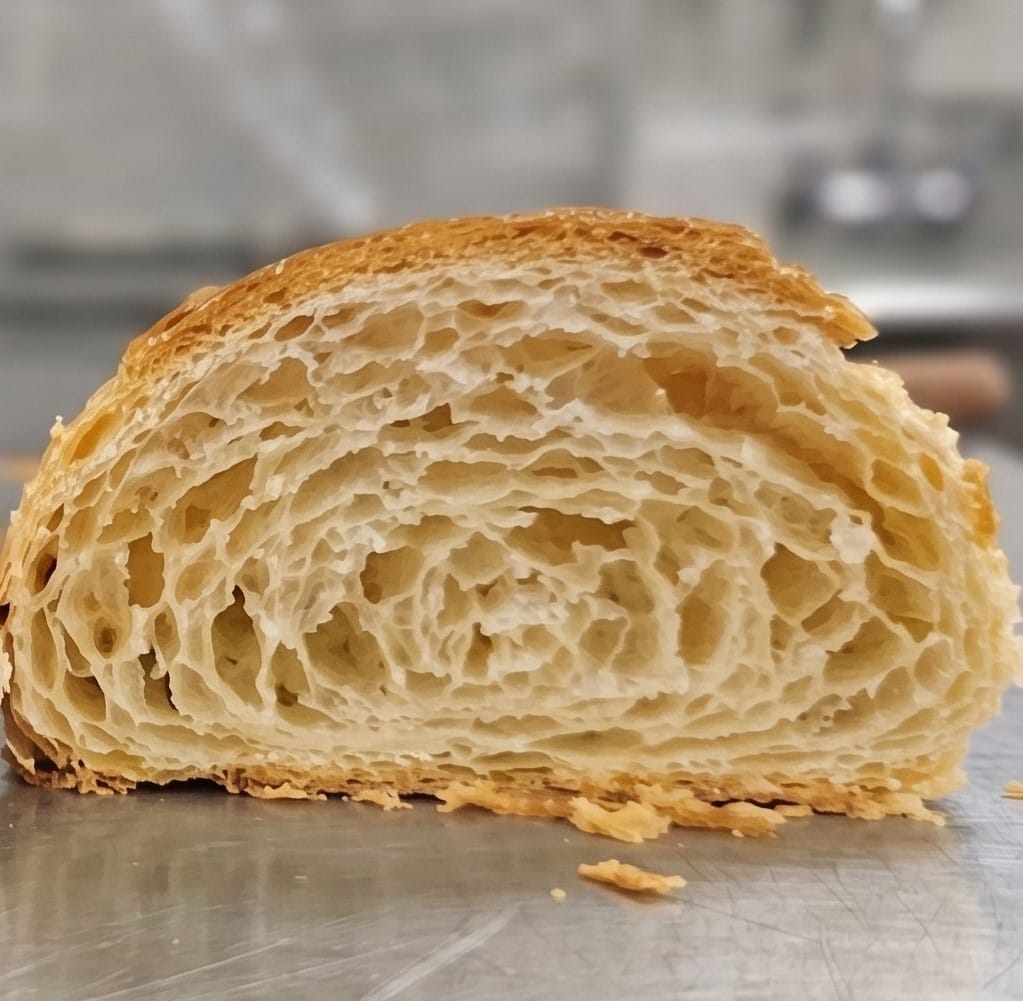
During proof, yeast generate carbon dioxide within the dough layers. This gas expansion tend to stretch and rupture the thin membranes of gluten that separate adjacent fat layers.
The thinner those dough layers, the more vulnerable they might become to tearing.
In puff pastry, where no fermentation occurs, extremely thin layers would typically remain intact through baking. In yeasted laminated doughs, however, maintaining that same thinness could result in widespread layer disruption and loss of the characteristic flaky eating quality.
Optimal Layer Counts
The difference in recommended lamination reflects this structural vulnerability:
This substantially lower layer count for yeasted doughs would keep individual dough and fat layers thicker, providing greater mechanical resilience against the internal pressure generated during proof. Thicker gluten membranes could better withstand the stretching forces that yeast activity imposes, helping to preserve a defined layered structure through both proofing and baking.
Gluten Network Demands During Proof
The aerating effect of yeast place considerable strain on the gluten network. As gas cells expand within each dough layer, the surrounding gluten matrix would need sufficient extensibility to accommodate that expansion without tearing prematurely.
Key variables that influence this balance include:
Achieving the right gluten characteristics for yeasted laminated doughs may require adjusting flour selection. A flour with moderate to strong protein content, combined with good extensibility rather than excessive tenacity, could help the dough layers survive the proof stage with their integrity largely preserved.
Balancing Flakiness and Volume
The central trade-off in yeasted laminated products would involve two competing objectives, sufficient flaky layer definition for desirable eating quality, and adequate gas retention for proper volume development.
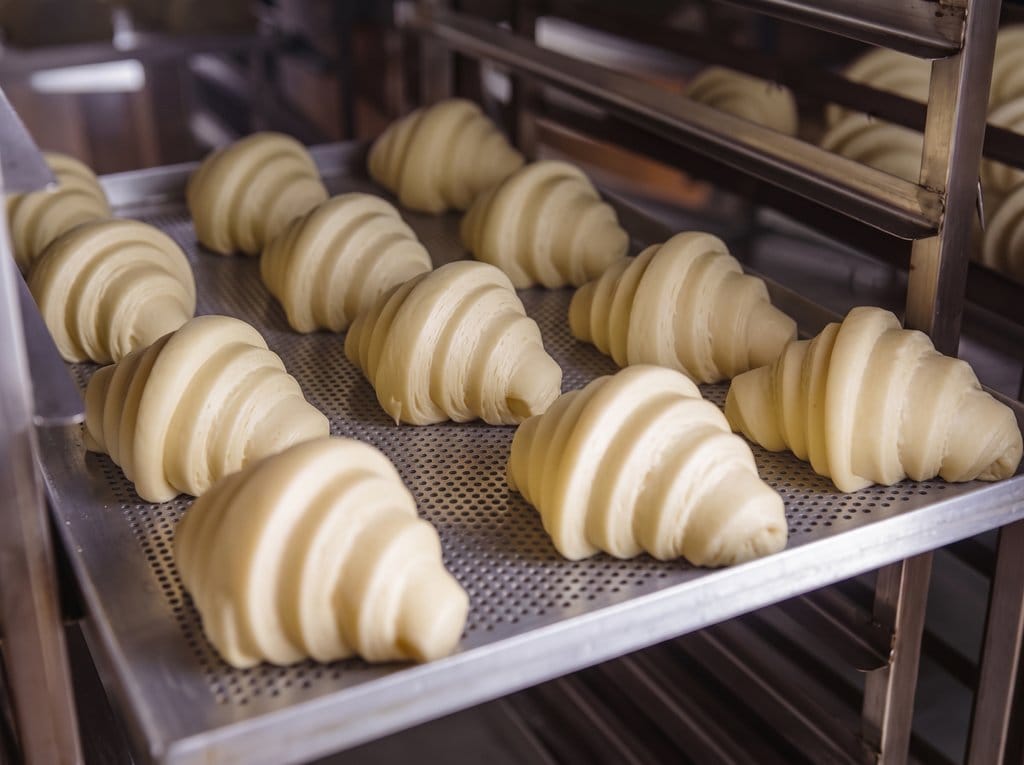
Too many lamination folds could produce layers so thin that yeast activity destroys them entirely, resulting in a product that resembles bread rather than a croissant. Too few folds might leave the fat distribution too coarse, reducing flakiness and creating visible pockets of unincorporated fat.
Within the optimal range noted above, fat layers would typically remain thick enough to create distinct separation during baking, while dough layers could retain enough structural mass to withstand fermentation pressure.
Practical Implications for Line Setup
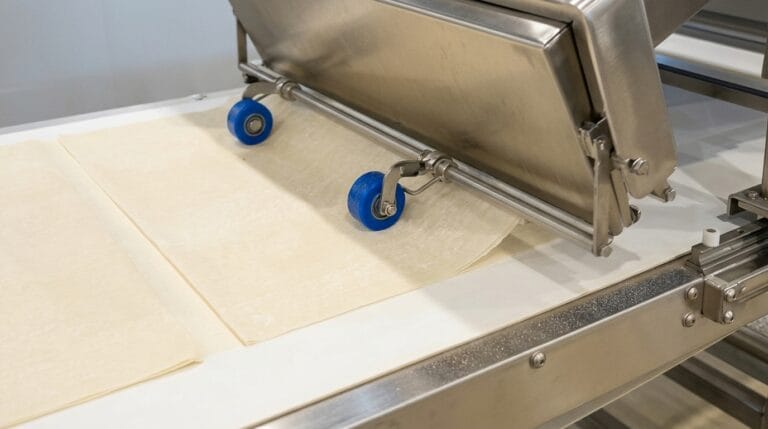
When scaling yeasted laminated doughs in a production environment, several adjustable factors influence how well the laminated structure survives through proof:
On a production line where flour batches, ambient conditions, and fat characteristics may shift between runs, matching lamination level to the specific yeast activity and proof schedule in use would typically offer a more reliable path to consistent product output. Fewer rejects tied to structural collapse or insufficient volume could directly influence line yield and margin control, even when the adjustments involved are relatively minor within the constraints of existing equipment.
😊 Thanks for reading!
Sources:
- Baking Problems Solved (Second Edition), Stanley P. Cauvain, 2017.